
Avoid Ice and Pump Damage: Winter Pressure Washing for Homeowners
Yes, you can pressure wash in winter, but only within a narrow set of conditions: surface and air temperatures above freezing, no ice on the ground, and equipment that’s properly protected against freeze damage. The two things that trip people up are refreeze on walkways after the water hits and pump damage from leftover water freezing inside the machine. Get the timing and the winterization steps right, and a winter clean can be done safely.
Quick Summary:
- Pressure washing in winter is safe only when surface temperatures stay above freezing, and runoff is managed to prevent refreezing on walkways.
- Urgent winter cleaning benefits include removing salt, grease, and mildew to prevent structural damage and maintain curb appeal during cold months.
- Key risks involve refreezing of water on surfaces and equipment damage from residual water freezing inside the machine, which can be mitigated with proper winterization.
- Proper timing, lower pressure settings, hot water use if available, and quick post-job winterizing are essential to avoid damage and refreeze hazards.
- Winter cleaning is most appropriate for sheltered surfaces, urgent contamination, or commercial clients, with the job conditions carefully checked before proceeding.
Table of Contents
- When Does Winter Pressure Washing Make Sense?
- What Are the Benefits of Cleaning in Cold Weather?
- How Risky Is Pressure Washing in Freezing Weather?
- Step-by-Step Checklist for a Safe Winter Wash
- How Do You Winterize a Pressure Washer Properly?
- When Should You Postpone a Winter Cleaning Job?
- A Contractor’s View on Accepting Winter Jobs
- Get a Winter-Ready Pressure Washing Team on Your Side
- Where This Guidance Comes From
- Sources
- FAQ
When Does Winter Pressure Washing Make Sense?
Winter pressure washing earns its place when the job can’t wait for spring or when the surface is protected enough to clean safely. Fleet vehicles that need to stay visible for branding or safety markings, urgent contamination like oil spills on a commercial lot, and covered porches or garage floors shielded from direct weather all qualify. A sheltered concrete patio under a roof overhang, for example, can pick up mold and grease all winter without ever seeing snow, and cleaning it in January doesn’t carry the same refreeze risk as an open driveway.
Winter cleaning does real work against a specific list of contaminants. Road salt tracked onto concrete, engine grease on driveways, and mildew growing in shaded, damp corners all respond well to a properly timed wash, even in cold weather.
Before committing to a winter job, run through this quick checklist:
- Urgency: Does the mess need to go now, or can it wait for a mild afternoon in early spring?
- Weather window: Is there a stretch of hours above freezing with no ice forecast overnight before or after?
- Surface type: Is it a sealed, sheltered surface, or an exposed slab prone to standing water?
- Runoff control: Can you manage water so it drains instead of pooling and refreezing?
If you can’t check most of those boxes, the job should probably wait.
What Are the Benefits of Cleaning in Cold Weather?
Road salt and de-icing chemicals are corrosive to both concrete and metal, and letting them sit all season accelerates pitting and surface breakdown. Washing them off during a mild stretch protects the material underneath rather than just improving the look of it.
There’s a structural argument for winter cleaning too, not just a cosmetic one:
- Less freeze-thaw damage: Removing organic buildup like algae and moss before it traps moisture in surface pores reduces the expansion damage that comes with repeated freezing and thawing.
- Salt and chemical removal: Clearing de-icer residue off concrete and metal siding slows corrosion that would otherwise progress unchecked for months.
- Easier maintenance later: Grease, salt film, and mildew get harder to remove the longer they sit, so a mid-winter wash on a sheltered surface can save effort come spring.
- Curb appeal: A clean exterior matters if you’re selling a home in winter or hosting holiday guests, and buildup left untreated only gets more stubborn.
None of this means every surface needs winter attention. It means the surfaces that do need it benefit from not waiting.
How Risky Is Pressure Washing in Freezing Weather?
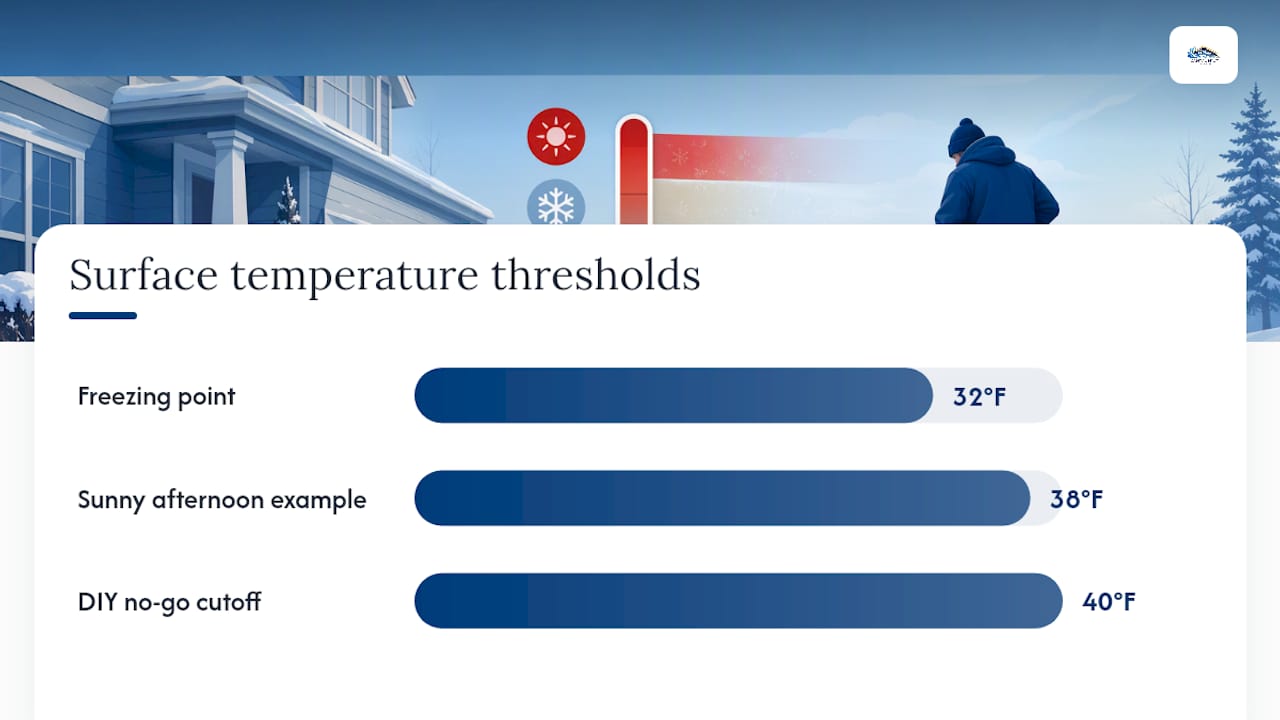
The biggest hazard isn’t the machine, it’s what happens to the water after it leaves the nozzle. Spray that lands on a walkway or driveway can refreeze within minutes if the surface temperature drops below 32°F, and that thin film of ice is often invisible until someone’s foot finds it. The National Weather Service notes that black ice and refreeze are most common in the early morning hours following a daytime thaw, which is exactly why timing a wash for midday, rather than dawn or dusk, cuts the risk significantly.
Here’s how to control the main dangers, in order of priority:
- Check surface temperature, not just air temperature. A sunny 38°F afternoon can still leave a shaded concrete slab below freezing.
- Wear slip-rated footwear and cordon off wet zones until they’ve had time to dry or drain, especially near steps and slopes.
- Keep gear dry and grounded. Wet extension cords and electric pressure washers are a bad combination in cold, damp conditions.
- Watch for hypothermia signs during long outdoor sessions. Wet gloves and prolonged cold exposure add up faster than people expect.
- Skip roof and height work unless you have fall protection. OSHA specifically flags winter exterior tasks for elevated slip and fall risk and requires a hazard evaluation before work at height proceeds.
Pro Tip: If you’re not confident checking surface temperature with a simple infrared thermometer, treat any morning below 40°F as a no-go window and wait until early afternoon.
Some jobs are simply too risky for a DIY approach. Roof cleaning, second-story siding, or anything requiring a ladder on an icy lawn is where a trained contractor with proper fall protection earns their fee.
Step-by-Step Checklist for a Safe Winter Wash
Running a winter job well comes down to sequencing: check conditions, work in small sections, and manage water before it has a chance to refreeze.
Before you start:
- Check the forecast for a stretch of several hours above freezing, with no incoming precipitation.
- Avoid early morning starts. Wait until the sun has had time to warm exposed surfaces.
- Test surface temperature on the actual work area, not just the ambient air reading.
Setting up the machine:
- Use a wider fan-angle nozzle (25 or 40 degrees) rather than a pinpoint tip. This lowers pressure spikes on cold, brittle sealants and coatings.
- Drop your operating pressure below what you’d use in summer, especially on wood, painted surfaces, or aging concrete.
- If your unit supports hot water, use it. It clears grease and salt film faster and reduces how much water sits on the surface.
- Keep the pump running continuously during breaks rather than shutting it off and restarting, which reduces the chance of standing water sitting in cold internal components.
Working the job:
- Clean in small zones, three to five feet at a time, so you can manage runoff immediately.
- Push standing water off the surface with a stiff bristle broom as you go rather than letting it pool.
- Keep sand, grit, or de-icer on hand to treat any section that starts to glaze over before you finish.
- Leave walkways salted or gritted after the final pass, even if they look dry.
Supplies worth having in the truck or garage:
- De-icer or calcium chloride pellets
- Absorbent pads or old towels for spot drying
- Sand or traction grit
- Insulated, waterproof gloves and slip-rated boots
- A pump saver or pump guard product for post-job flushing
- Fuel stabilizer if you’re running a gas unit
Wrap up by drying and winterizing the machine immediately, not the next day. Walk the property one more time an hour later to check for refreeze, and photograph any surface issues you notice for your own records, since cold-weather cleaning occasionally reveals cracks or coating failures that were hidden under grime.
For lower-pressure work on delicate materials like wood decking, keeping your distance and pressure settings conservative matters even more in winter, since cold wood and composite decking get brittle and mark easily.
How Do You Winterize a Pressure Washer Properly?
Skipping winterization is the single most expensive mistake homeowners make with this equipment. Water left inside the pump when temperatures drop below 32°F expands as it freezes, and that expansion cracks pistons, seals, and internal passages, damage most manufacturers don’t cover under warranty.
The standard winterization routine, straight from manufacturer guidance, runs like this:
- Shut off fuel and water supply, then relieve remaining pressure in the system by pulling the trigger.
- Drain the hoses, spray gun, and wand completely.
- Run a pump saver or pump guard solution through the pump. This displaces residual water and lubricates seals against freeze expansion, acting essentially as seasonal insurance for the internals.
- For gas units, add a fuel stabilizer to a full tank rather than draining it, then run the engine briefly to circulate the treated fuel.
- Store the unit somewhere temperatures stay above freezing if at all possible.
Pro Tip: A pump saver bottle costs less than a service call and a fraction of what a cracked pump head costs to replace. Treat it like an oil change, not an optional extra.
If you’re unsure how to relieve pressure safely or your unit has a more complex fuel system, this is a reasonable job to hand off. A quick winterization service costs far less than a spring rebuild.
When Should You Postpone a Winter Cleaning Job?
Some conditions are hard stops, not judgment calls. Sustained temperatures below freezing with no thaw window, an incoming ice storm, or wind chill sharp enough to make spray drift and refreeze on contact all mean the job waits.
When conditions rule out pressure washing, you still have options:
- Soft-wash treatments using low-pressure chemical application work on mold and mildew in sheltered areas without the runoff and refreeze risk of high-pressure water.
- Deferring to spring is often the right call for large, exposed surfaces like open driveways or full house exteriors, where waiting a few months costs nothing but patience.
- Hiring a pro with winter protocols makes sense for roof work, second-story siding, or any job at height, where the equipment and fall protection needed go beyond typical homeowner gear.
A Contractor’s View on Accepting Winter Jobs
Deciding whether to take a winter job comes down to weighing what the client actually needs against what the weather and equipment will tolerate. A fleet washing contract or a covered loading dock with grease buildup justifies the extra precautions. A wide-open residential driveway during a cold snap usually doesn’t, no matter how much a homeowner wants it done before the holidays.
The jobs that make sense in cold weather tend to share a pattern: sheltered surfaces, urgent contamination, or commercial clients who need visibility year-round. On those jobs, the controls are non-negotiable: surface temperature checks, staged water management, and a hard stop if conditions turn. Experience mostly teaches you which jobs aren’t worth the risk, and which ones are exactly what winter service exists for.
— Luis T
Get a Winter-Ready Pressure Washing Team on Your Side
Most homeowners weighing a winter clean aren’t choosing between doing it themselves or hiring anyone. They’re deciding whether it’s worth the risk at all, and that’s exactly where a local, experienced crew changes the math. A local pressure washing company uses soft-wash methods suited to treating sensitive winter surfaces, brittle sealants, cold wood, and aging concrete carefully throughout the year.

The team handles the calls this article walks through every season: when a covered patio or a commercial fleet job justifies working through the cold, and when a homeowner’s driveway is better off waiting for a milder week. Services that fit winter timing particularly well include house washing, roof washing, and fleet and commercial washing, all handled by the same owner and crew who quote the job, using commercial-grade equipment matched to the surface. Bundled cleaning and sealing options are also available for concrete and pavers heading into freeze-thaw season, backed by a satisfaction guarantee with free callbacks, and discounts for military and first responders.
If your property has a job that can’t wait for spring, check current pricing and service bundles or request an instant quote to get a straight answer on whether now is the right time.
Where This Guidance Comes From
The safety and winterization steps here come from manufacturer instructions and federal guidance, not general advice. SIMPSON’s winterizing instructions and pump guard guidance cover equipment protection, while OSHA’s winter task safety publication and the National Weather Service’s ice safety guidance cover the human risks. For equipment shopping, Forbes’ pressure washer roundup breaks down PSI and GPM tradeoffs worth knowing before buying a machine for winter use.
Sources
- SIMSPON pump guard guidance
- OSHA winter-task safety guidance
- National Weather Service winter ice safety
- Best pressure washers 2026 — Forbes
FAQ
Is It Okay to Pressure Wash in the Winter?
Yes, as long as surface and air temperatures stay above freezing and there’s no ice on the ground during or after the job. Sheltered surfaces and urgent cleaning needs, like fleet vehicles or covered patios, are the best candidates; open, exposed surfaces during a cold snap are the riskiest.
How Cold Is Too Cold for Pressure Washing?
Once temperatures drop toward or below 32°F, refreeze becomes a real hazard, and equipment left with water inside can suffer freeze damage almost immediately. SIMPSON’s winterizing guidance treats that threshold as the point where machines need draining and protection, not just careful use.
How Much Should I Charge to Pressure Wash a 2,000 Square Foot House?
Pricing varies by region, surface condition, and whether the job includes soft-washing or sealing add-ons, so there’s no single flat rate that applies everywhere. Capital Pro Pressure Washing lists current pricing and service bundles for homeowners who want a specific quote for their property.
What Do Pressure Washing Companies Do in the Wintertime?
Many contractors shift toward fleet washing, covered or indoor surfaces, and equipment maintenance work rather than broad exterior house cleaning during the coldest months. Some also offer winterization services for homeowners’ own machines, helping prevent the pump and seal damage that comes from leftover water freezing over the season.
Recommended
Services Related To This Article
Need a quote in the Capital Region?
Fast, free estimates from a local, licensed & insured team.
