
Start 2 to 3 Feet Away: Prevent Pressure Washing Damage for Homeowners
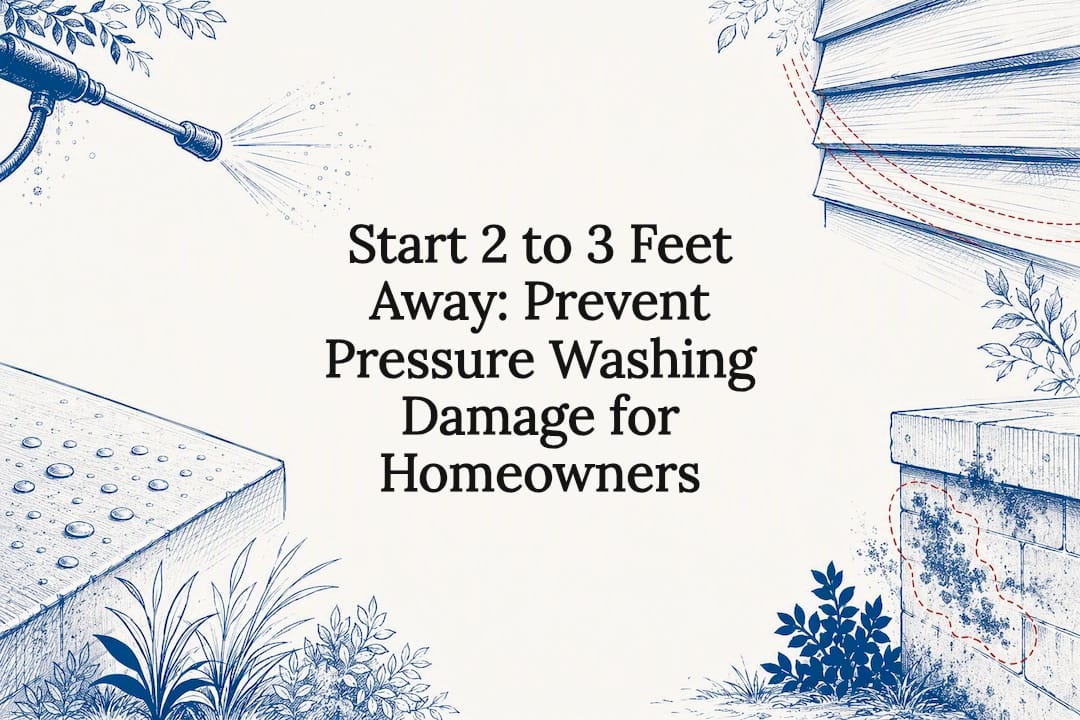
Pressure washing can absolutely damage your home, and it happens more often than most homeowners realize. Roofs, siding, and painted wood trim carry the highest risk because narrow, high-impact spray strips protective layers and forces water where it doesn’t belong. The rule that keeps you safe: match your method to the material, always test a hidden spot first, and reach for soft washing whenever the surface is delicate or biologically stained rather than just dirty.
Quick Summary:
- Use a wide, 40 or 65 degree nozzle and start at 2 to 3 feet from the surface to prevent damage on siding, roofs, and decks.
- Limit pressure washing to concrete or masonry at up to 2,500 PSI after testing a hidden spot; avoid high pressure on softwood, vinyl, or painted wood.
- Soft washing around 500 PSI with chemical solutions is recommended for roofs and siding, especially when biological stains are present, to avoid stripping protective layers.
- Always spray downward and avoid upward angles to prevent water from infiltrating behind siding or shingles, reducing hidden damage over time.
- Hire professionals for roof cleaning, historic homes, or structures with lead-based paint, as DIY pressure washing can cause health risks and surface damage.
Table of Contents
- What Kinds of Pressure Washing Damage Hit Each Surface
- Why Nozzle Choice and Spray Angle Cause Most Damage
- Safe PSI, Nozzle, and Test-Spot Settings by Material
- Soft Washing vs. Pressure Washing: Picking the Right Method
- How to Spot Pressure Washing Damage Before It Gets Worse
- A Step-by-Step Plan to Avoid Pressure Washing Damage
- When to Call a Professional Instead of DIYing It
- How Professional Pressure Washing Services Approach Surface Protection
- An Editor’s Take on Cleaning Cadence and Risk
- Book a Soft-Wash Estimate With Capital Pro Pressure Washing
- Sources
- FAQ
What Kinds of Pressure Washing Damage Hit Each Surface
Every surface on your house has a different breaking point, and knowing where yours sits changes how you should approach cleaning day.
- Decks: A concentrated stream at close range gouges wood fibers, splinters softwood like pine, and strips sealant right off the boards. Test a scrap piece of decking or a hidden corner at low pressure before committing to the whole surface.
- Roofs: Consumer Reports warns against pressure washing roofs at all in most cases, since the stream loosens shingles and blasts away the protective granules that shield asphalt from UV damage. Many shingle manufacturers explicitly void roof warranties if pressure washing caused the damage.
- Siding: Vinyl panels crack under direct high-pressure hits, and aluminum siding dents easily under the same treatment. Worse, angled or upward spray drives water behind the panels entirely, where it sits against sheathing and framing.
- Windows and trim: Aggressive spray can breach window seals, crack aging caulk lines, and in rare cases crack glass near the edges where seals have already weakened.
- Painted wood: High pressure peels paint off in sheets and etches the wood grain underneath, leaving a rough surface that won’t hold a new coat evenly.
- Concrete, stone, and brick: Concrete tolerates far more pressure than any other surface on this list, but even here, the wrong nozzle at close range etches the surface and blasts out mortar joints between bricks or pavers.
Why Nozzle Choice and Spray Angle Cause Most Damage
The physics behind pressure washing damage comes down to three variables: pressure, nozzle angle, and distance. A 0 degree nozzle concentrates the entire water stream into a pinpoint, and Consumer Reports specifically flags these red tips as too aggressive for household use. A wider 40 or 65 degree nozzle spreads that same pressure over a much larger area, cutting the per-square-inch impact dramatically.
- Spraying upward under siding seams is the single most common mistake homeowners make, and it drives water directly behind panels where it can sit for weeks.
- Standing too close amplifies every problem. Start at 2 to 3 feet away and only move closer after a test spot proves the surface can handle it.
- Chemical detergent does the actual cleaning work in most cases. Pressure just rinses the solution off, so cranking the PSI instead of using the right cleaner is often the real error.
Safe PSI, Nozzle, and Test-Spot Settings by Material
Getting your settings right before you start the job prevents most of the damage described above. Contractor guidance generally points to 1,200 to 1,500 PSI for wood and vinyl, with room to go up to 2,500 or 3,000 PSI on durable concrete and masonry once you’ve confirmed the surface can take it.
- Pick a wide nozzle first. Skip the 0 degree tip entirely and start with a 40 degree or 65 degree spray pattern.
- Test a hidden spot. Try a corner of the deck, a shaded section of siding, or an inconspicuous patch of concrete.
- Sweep, don’t hold still. Keep the wand moving in a steady side to side motion rather than parking it on one spot.
- Inspect before continuing. Check for etching, lifted grain, or stripped paint, then adjust pressure or distance accordingly.
- Increase gradually. Only raise PSI or move closer once you’ve confirmed the lower setting is safe.
Pro Tip: Always spray downward, in the same direction the siding or shingles overlap. Spraying at seams, window frames, or upward angles is how water ends up behind the wall where you can’t see it.
Soft Washing vs. Pressure Washing: Picking the Right Method
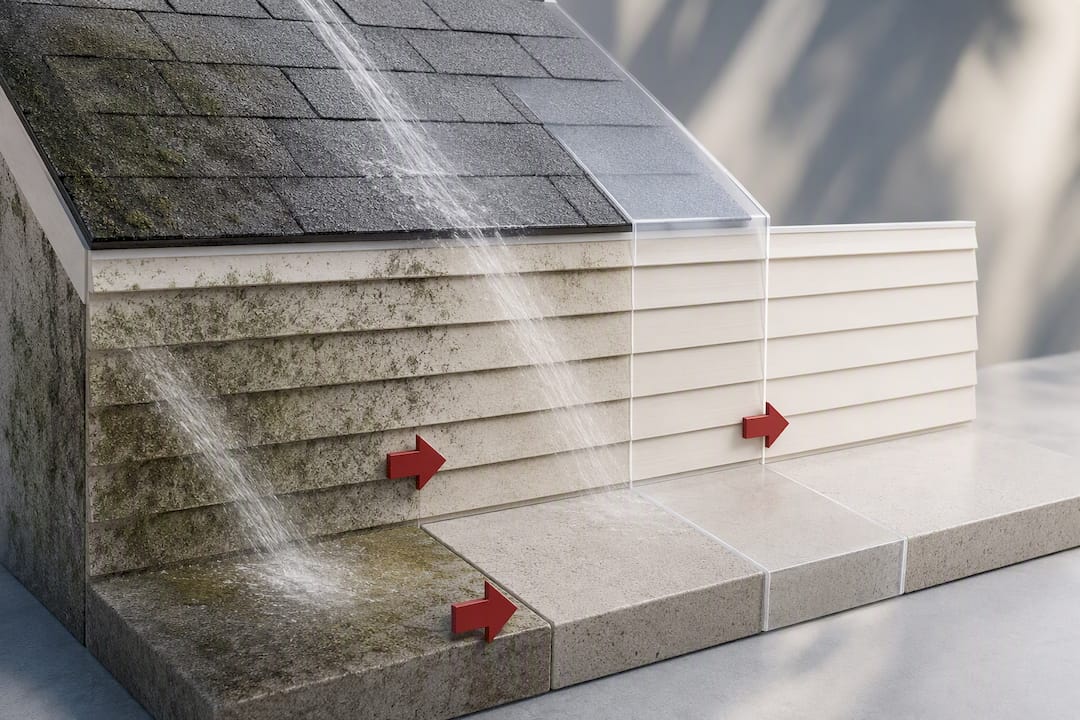
Soft washing uses low pressure, generally around 500 PSI, combined with a cleaning solution that kills algae, mildew, and moss at the root rather than blasting it off the surface. That distinction matters most on roofs and siding, where high-pressure water strips protective coatings but a chemical solution just dissolves the biological growth and rinses away.
- Choose soft washing for roofs, vinyl and fiber cement siding, and any surface with mold, algae, or moss staining. Our soft wash siding guide covers the process in more detail.
- Choose pressure washing for driveways, walkways, and most bare concrete or stone surfaces where dirt and grime, not organic growth, are the problem.
- Cover nearby plants and shrubs before applying any cleaning solution, since some detergents used in soft washing can stress or kill vegetation if runoff isn’t managed.
How to Spot Pressure Washing Damage Before It Gets Worse
Some damage announces itself immediately. Other damage hides behind your walls for months before you notice a problem.
- Look for obvious signs right away: peeling paint, gouged wood, streaking on siding, or bare patches on roof shingles where granules used to be.
- Watch for hidden signs over the following weeks: musty odors, bubbling interior paint, or damp drywall near exterior walls can all point to water that got behind siding during cleaning.
- Check for moisture with a simple hand test along baseboards and near window frames a few days after washing, and call a professional for a moisture meter reading if anything feels damp or soft.
- Photograph everything before and after the job. Those photos matter if you need to file an insurance claim or dispute work with a contractor.
A Step-by-Step Plan to Avoid Pressure Washing Damage
Reducing your risk comes down to sequencing the job correctly, not just picking the right nozzle.
- Handle repairs first. Seal gaps, re-nail loose siding, and patch obvious cracks before any water touches the surface.
- Match the method to the material. Soft wash biological growth on roofs and siding; save pressure washing for concrete and hardscape.
- Run your test spot. Confirm settings on a hidden area before working across the full surface.
- Protect what’s nearby. Cover outlets, close windows tightly, move furniture, and keep kids and pets clear of the work area.
- Wear the right gear. Safety glasses and closed-toe shoes protect against kickback and flying debris.
- Know when to stop. If you spot existing water damage, loose shingles, or you’re dealing with a pre-1978 home where lead paint is a possibility, put the wand down and call a professional.
Pro Tip: Homes built before 1978 may have lead-based paint under newer coats. OSHA warns that high-pressure water can strip that paint and scatter toxic chips and dust across your yard, so this is one situation where DIY pressure washing is a genuine health risk, not just a cosmetic one.
When to Call a Professional Instead of DIYing It
Certain jobs carry enough risk that hiring a pro makes more financial sense than risking a repair bill. Roof cleaning, siding with any sign of existing water intrusion, historic homes, and any structure with pre-1978 paint all belong on that list.
- Ask about liability insurance and whether they use soft-wash equipment for roofs and siding.
- Ask what PSI range they use on different materials and whether they test a spot first.
- Ask if the work comes with any guarantee and request before-and-after photos from recent jobs.
- Be cautious of bids that come in far below competitors. Pricing depends on home size, height, chemical use, and whether sealing is included, and a bid that ignores those variables usually cuts corners somewhere.
How Professional Pressure Washing Services Approach Surface Protection
Experienced pressure washing companies often specialize in soft-wash techniques designed to clean without stripping the protective layers underneath. Pairing soft-wash processes with sealing services can slow the return of algae and mildew, reducing surface stress and the need for repeat visits over the life of siding, roofs, or concrete.
An Editor’s Take on Cleaning Cadence and Risk
The safest approach favors soft washing and routine maintenance over brute force, with most homes needing a cleaning once a year, or twice in humid climates with heavy tree cover.
— Luis T
Book a Soft-Wash Estimate With Capital Pro Pressure Washing
Skip the guesswork of matching PSI to your siding or figuring out which nozzle won’t strip your shingles. Capital Pro Pressure Washing runs soft-wash equipment on every roof and siding job, which means algae and mildew get treated at the root instead of blasted off with force that can void a shingle warranty or crack a vinyl panel.

The team handles house washing, soft washing, roof moss removal, and concrete cleaning with sealing add-ons that protect driveways and patios through New York freeze-thaw cycles. If you’re weighing whether a job is safe to handle yourself or needs a professional, request a free estimate through the pricing and cost guide and get a straight answer on what your home actually needs before any water touches the surface.
Sources
- Can You Pressure-Wash It? - Consumer Reports
- Can You Pressure-Wash It? (Consumer Reports coverage via QZ link)
- OSHA: Lead and construction-related hazards
FAQ
Is Pressure Washing Bad for Your House?
It can be, especially on roofs, vinyl siding, and painted wood, where high pressure strips protective layers and can force water behind panels. Concrete and driveways generally tolerate pressure washing far better than these softer surfaces.
Can a 2,000 PSI Pressure Washer Hurt You?
Yes. At close range, pressure washing can easily break skin and cause deep tissue injury similar to a knife wound, which is why safety glasses, closed-toe shoes, and keeping the nozzle away from your body matter every time you use one.
How Do You Know If a Pressure Washer Injury Is Serious?
Any injection injury, where the water stream punctures skin, needs emergency medical attention immediately, even if the wound looks small, since damage often extends deeper than it appears on the surface.
Can Pressure Washing Ruin Concrete?
Yes, if you use too narrow a nozzle at too close a range, pressure washing can etch and pit the surface of concrete. Concrete handles more pressure than siding or roofing, but a 0 degree nozzle held too close will still damage it.
Recommended
Services Related To This Article
Need a quote in the Capital Region?
Fast, free estimates from a local, licensed & insured team.
