
Can You Pressure Wash Windows Without Cracking the Glass?
You can pressure wash windows, but only with a strict low-pressure technique. If you’re not confident dialing in the right settings, a water-fed pole or soft-wash method is the safer call every time. The margin for error on glass is thin: too much PSI or the wrong nozzle turns a routine cleaning job into a shattered pane or a blown seal.
Here’s the fast version before you touch the trigger:
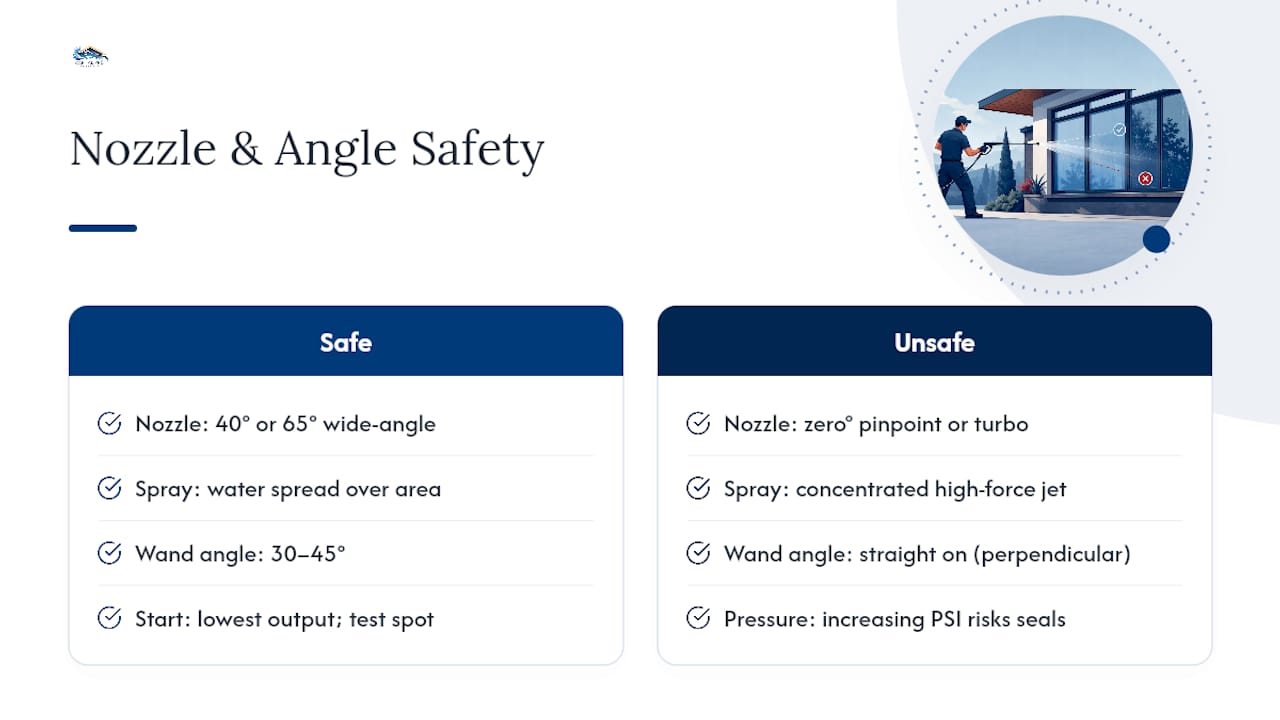
- Start at your machine’s lowest pressure setting, never above roughly 1,500 to 2,000 PSI on glass.
- Use a wide-angle nozzle (40° or 65°), not a turbo or zero-degree tip.
- Hold the wand several feet away, angled approximately 30 to 45 degrees, never straight on.
- Stop immediately if you see water pushing past the seal or the glass flexes under the stream.
- If windows sit above one story or already show cracked caulk, call a professional instead.
For homeowners in the Capital Region who’d rather skip the risk entirely, Capital Pro Pressure Washing has handled exterior window cleaning as part of soft-wash house jobs for over a decade.
Key Takeaways
Low-pressure technique with a wide-angle nozzle can clean windows safely, but a water-fed pole or soft-wash method removes the risk of cracked glass and blown seals entirely.
| Point | Details |
|---|---|
| Keep pressure low | Stay at the lowest effective setting, generally under 2,000 PSI, and never point a narrow nozzle at glass. |
| Use the right nozzle and angle | A 40° or 65° wide tip held 3 to 5 feet away at 30 to 45 degrees spreads force safely across the pane. |
| Inspect before and after | Check seals and frames for cracks or rot before spraying, and again once the glass dries. |
| Know when to skip pressure entirely | Double-pane seals, coated glass, old wood frames, and multi-story windows favor a pole or manual method. |
| Hire out the risky jobs | Capital Pro Pressure Washing offers soft-wash exterior window cleaning for homes where DIY risk outweighs the savings. |
Table of Contents
- What Damage Can a Pressure Washer Do to Windows?
- What Equipment and Settings Are Safe for Windows?
- How Should You Prep Before Spraying Your Windows?
- What’s the Right Way to Clean Windows With a Pressure Washer?
- Do Different Window Types Need Different Approaches?
- When Should You Call a Professional Instead?
- What Should You Actually Prioritize Here?
- Why Choose Professional Window Cleaning Over DIY Risk?
- Sources
- FAQ
What Damage Can a Pressure Washer Do to Windows?
Glass itself can survive a moderate blast of water, but the parts around it usually can’t. High-pressure jets concentrated through a narrow nozzle can crack a pane outright, especially on older single-pane glass that’s already lost some structural give. More often, the damage is quieter: water forces its way past the rubber gaskets and glazing seals that keep double-pane windows airtight.
Once a seal fails, moisture gets trapped between the panes and you get that permanent foggy haze that no amount of cleaning fixes. Consumer Reports and other consumer-safety coverage flag this fogged-glass outcome as one of the most common and expensive results of improper pressure cleaning, since it usually means replacing the whole insulated unit.
The risk doesn’t stop at the glass:
- Water forced under trim can soak into siding, sheathing, and insulation, creating conditions for mold weeks later.
- Screens tear or bend when hit directly with a pressurized stream.
- Wood frames absorb water and start rotting; vinyl can warp; aluminum dents under a concentrated jet.
- Low-E and other coated glass finishes are more sensitive to pressure and chemical exposure than standard clear glass.
Industry guidance is blunt about the threshold here: PSI over roughly 2,000 is considered dangerous for window glass, and that number only gets riskier the closer you hold the wand.
What Equipment and Settings Are Safe for Windows?
Dial your pressure washer down before you even think about aiming at glass. This Old House recommends starting at the machine’s lowest output and testing on an inconspicuous spot, like a door frame or a section of trim, before you get near a window pane.
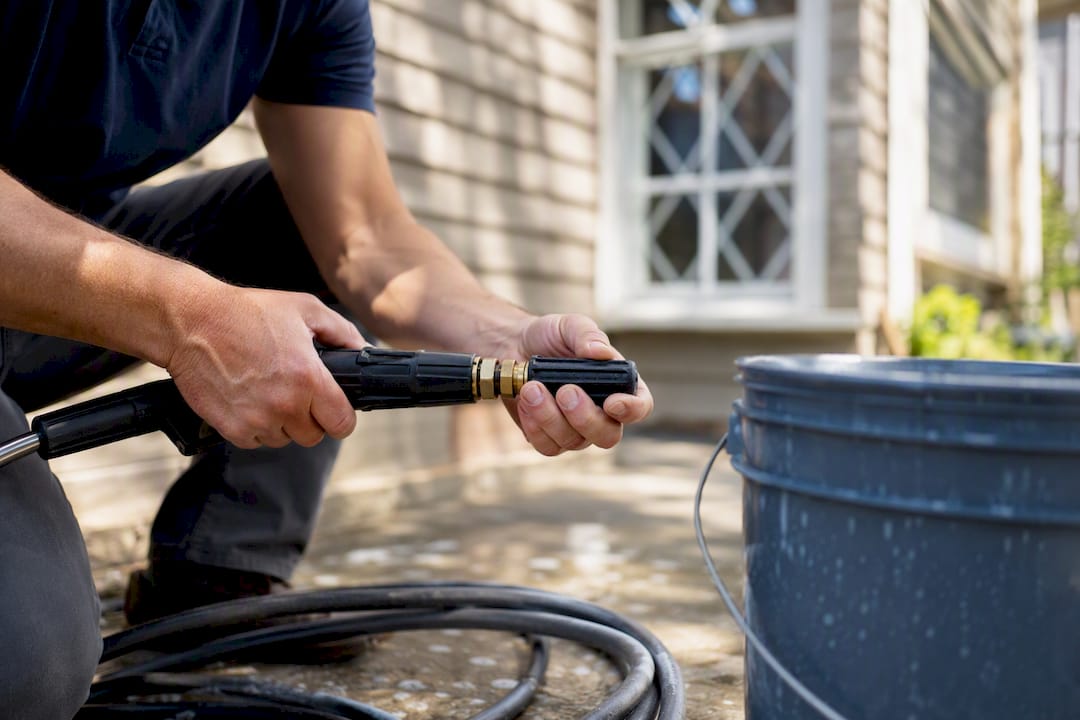
Nozzle choice matters more than the PSI number on the box. A 40° or 65° wide-angle tip spreads the water over a larger area and cuts the direct force hitting any single point. Keep the wand at a 30 to 45 degree angle rather than straight on, and skip anything marketed as a turbo nozzle or a zero-degree pinpoint tip. Those are built for stripping paint and stains off concrete, not for glass.
For the actual cleaning agent, a diluted dish soap solution works fine for most grime. Undiluted degreasers or glass cleaners meant for indoor use can streak or haze certain coatings, so stick to mild, diluted mixes. A foam or soap attachment lets you coat the glass at low pressure, but a manual sponge or soft brush works just as well and gives you more control.
Pro Tip: If a spot doesn’t come clean at low pressure, add more soap and let it dwell longer before rinsing. Reaching for higher PSI to cut through grime is exactly how seals get blown.
The professional alternative worth knowing about is a water-fed pole paired with an RO/DI purification system, which produces near-zero-mineral water that air-dries without spotting. No high pressure involved at all, just soft brushes and purified water reaching multiple stories from the ground.
How Should You Prep Before Spraying Your Windows?
- Walk the perimeter and inspect every window for cracked glass, chipped caulk, or gaps in the seal. Skip pressure washing entirely on anything that already looks compromised.
- Remove screens where possible, or make sure they’re latched tight so a stray jet doesn’t tear the mesh.
- Close all windows and tape over any exposed seams or vents nearby.
- Cover outdoor outlets, light fixtures, and nearby plants or furniture with plastic sheeting.
- Set up your ladder on level ground, or better yet, keep both feet on the ground and use an extension wand for second-story glass.
- Put on eye protection and non-slip shoes, then run a quick test spray on trim before touching any window.
What’s the Right Way to Clean Windows With a Pressure Washer?
- Set the machine on stable, level ground and connect your wide-angle nozzle.
- Test the spray at 3 to 5 feet on a hidden section of siding or trim first, not the window itself.
- Apply soap at low pressure using a foam attachment, or use a manual sponge for full control. Let it sit for a minute or two, but don’t let it dry on the glass.
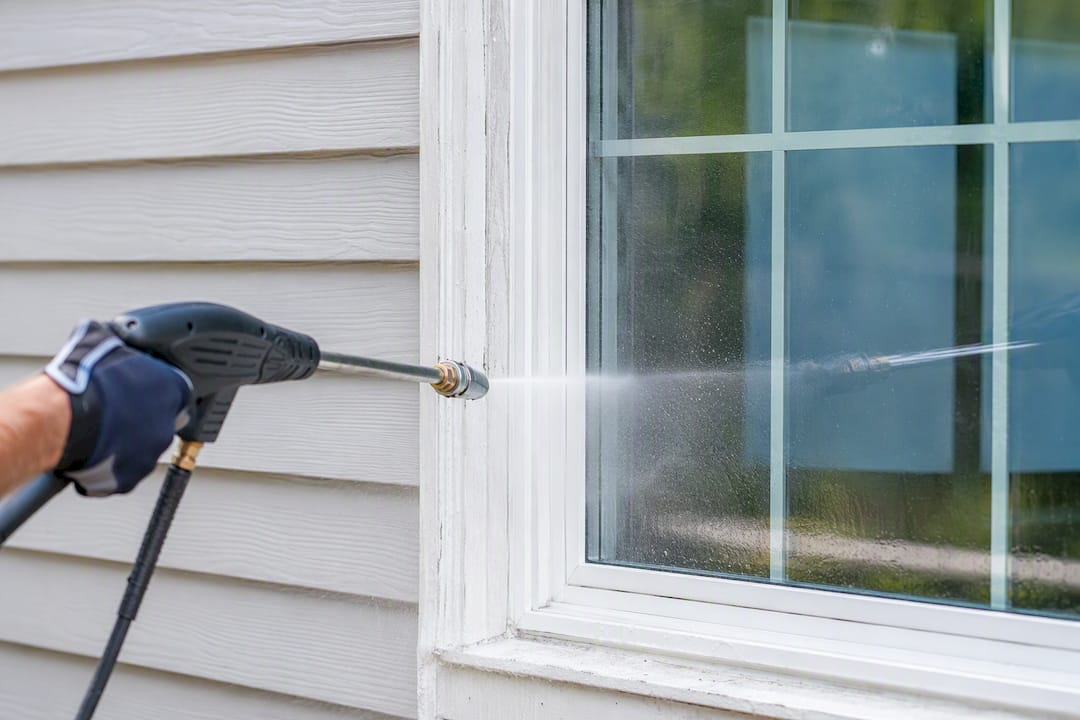
- Hold the wand at a 30 to 45 degree angle and work top to bottom in steady, overlapping passes. Keep a consistent 3 to 5 foot distance and avoid pointing directly at seams or corners.
- Rinse thoroughly with clean water until every trace of soap is gone.
- Squeegee or wipe with a microfiber cloth immediately to prevent streaking and water spots as it dries.
- If hard water spots remain, a distilled-water rinse or a dedicated glass spot cleaner usually finishes the job.
- Inspect the frame and seal once everything’s dry. Any sign of water intrusion, soft wood, or a fogged pane means you need repair or professional attention before the next cleaning.
Pro Tip: Work in the shade or on an overcast day. Soap and rinse water dry too fast in direct sun, which is what causes most of the streaking homeowners blame on their technique.
Do Different Window Types Need Different Approaches?
Double-pane windows need extra caution around the edges. Aim water at the glass center, never directly at the seal line where the two panes meet, since that’s the weak point that leads to fogging.
Low-E and other coated glass carries a factory finish that can degrade faster under pressure and harsh chemicals. Check the manufacturer’s care instructions if you still have them, and default to the gentlest setting you have.
Storm windows and skylights often make more sense to clean by hand. Removable storm windows can come down and get washed on a flat surface, and skylights are usually safer with a pole and squeegee from a stable platform than with any pressure washer at all.
Old wooden frames or window trim with cracked, missing caulk shouldn’t see a pressure washer under any circumstance. Water will find its way into that wood faster than you’d think, and repair should come before any cleaning attempt.
When Should You Call a Professional Instead?
Some jobs simply aren’t worth the DIY risk. Second-story and third-story windows, a house with a dozen or more panes to clean, or any glass that already shows cracked seals or soft frame wood all point toward hiring out.
- Multi-story or hard-to-reach glass where a ladder is the only DIY option.
- Windows with visible seal failure, fogging, or frame rot already present.
- Larger homes where the time cost of doing it by hand outweighs the savings.
Consumer Reports points toward ground-based, professional-grade tools for exactly this kind of hard-to-reach glass. Pros bring insured crews, pure-water pole systems, and soft-wash cleaning methods that skip pressure entirely, plus a post-clean inspection that catches issues before they become expensive repairs.
Who’s Behind This Guide
This guide comes from Luis T, writing on behalf of Capital Pro Pressure Washing, a veteran-owned company with more than 10 years cleaning homes across New York’s Capital Region.
- Capital Pro Pressure Washing built its reputation on soft-wash technique, treating exterior window cleaning as a natural add-on to house washing rather than a separate high-pressure job.
- The company’s approach mirrors the safety-first advice in this article: low pressure, wide nozzles, and inspection before and after every job.
- Case photos and customer feedback from completed jobs are available through the company directly for homeowners who want to see the results firsthand.
What Should You Actually Prioritize Here?
The obsession with PSI numbers misses the real point. Homeowners fixate on finding the “safe” pressure setting, as if there’s a magic number that guarantees nothing goes wrong. There isn’t. Nozzle angle, distance, and how the seals were installed in the first place matter just as much as anything on the machine’s dial.
Where the conventional advice falls short is treating a pressure washer as the default tool for glass at all. It’s a tool that can work on windows under narrow conditions, not the obvious first choice. A water-fed pole with pure water gets equivalent or better results on most homes, with none of the seal-blowing risk, and it reaches second-story glass without a ladder.
If you take one thing from this guide, prioritize inspection over technique. A window with intact seals and solid frames tolerates a careful low-pressure clean just fine. A window that’s already compromised will fail no matter how gently you spray it, and no nozzle angle fixes that. Check the glass before you check your settings.
Why Choose Professional Window Cleaning Over DIY Risk?
Capital Pro Pressure Washing gives Capital Region homeowners a way to skip the trial-and-error entirely, since a botched DIY attempt can mean a cracked pane or a fogged seal that costs far more to fix than the cleaning itself would have cost to hire out.

The company’s soft-wash approach treats exterior window cleaning as part of a broader house-washing service, so grime, pollen, and mildew get handled on the siding and the glass in the same visit without any high-pressure guesswork near your panes. Every crew is trained on seal-safe technique and inspects windows before and after cleaning, catching problems a DIY job would likely miss until it’s too late. That combination of experience and care is exactly what separates a professional soft-wash job from a homeowner’s first attempt with a rented machine.
If your windows are above one story, already showing wear around the frames, or you’d simply rather not risk it, request a quote through the exterior window cleaning page and get a straightforward estimate for your home.
Sources
- How To Pressure Wash Your Windows — This Old House
- Best way to clean high windows — Consumer Reports
- Is It Safe to Pressure Wash Windows? What You Must Know – Turn Up the Pressure
FAQ
Is It a Good Idea to Pressure Wash Windows?
It’s only a good idea under strict low-pressure conditions with a wide-angle nozzle and careful distance control. If your windows already show seal or frame damage, skip it and use a water-fed pole or hire a professional instead.
Can a Pressure Washer Be Used on Windows?
Yes, but only at low settings, generally under 2,000 PSI, with a 40° or 65° nozzle held 3 to 5 feet away at an angle. Narrow or turbo nozzles and direct, close-range spraying are what cause cracked glass and blown seals.
What Soap Should You Use in a Pressure Washer for Windows?
A diluted dish soap solution works well for most exterior grime and won’t damage coatings the way undiluted degreasers can. Apply it through a foam attachment or by hand, then rinse thoroughly before it has a chance to dry.
What Do Professionals Use to Wash Windows?
Many professionals, including Capital Pro Pressure Washing, favor water-fed poles paired with RO/DI purification systems that produce spot-free results without any high pressure at all. This pure-water approach reaches multi-story glass safely from the ground while avoiding the seal damage that pressure washing can cause.
Recommended
Services Related To This Article
Need a quote in the Capital Region?
Fast, free estimates from a local, licensed & insured team.
