
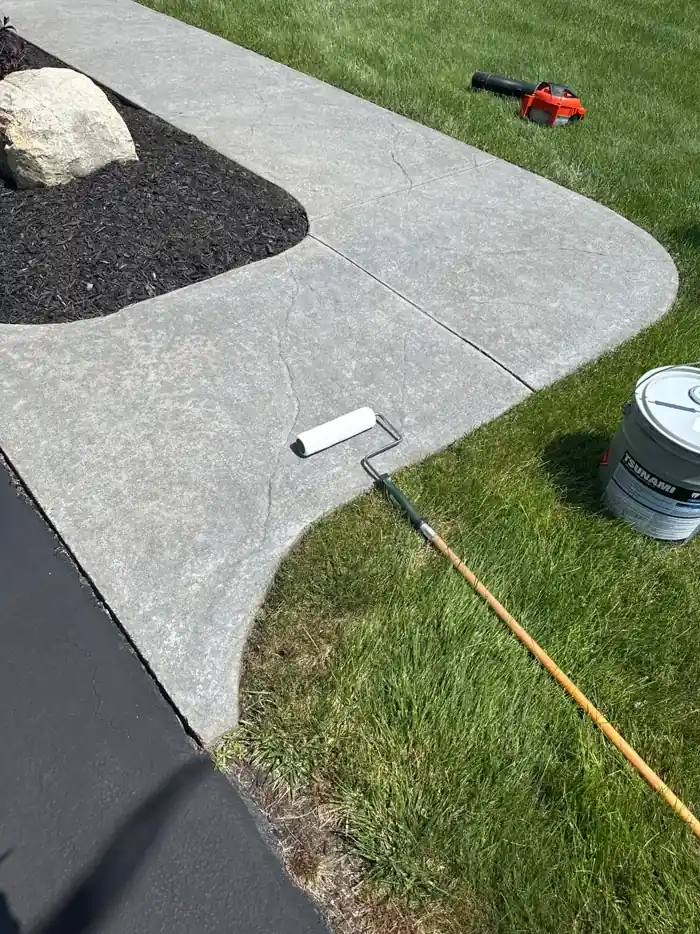
Fall Sealing Window — Capital Region NY
Seal Your Concrete
Before The Freeze
Road salt and freeze/thaw cycles destroy unsealed driveways, walkways, and steps every winter. Cleaning and sealing now stops water from getting in — and keeps the surface you have from flaking apart.
- 10+ Years Experience
- Satisfaction Guaranteed
- Commercial Equipment
- Licensed & Insured
Free Concrete Sealing Quote
Tell us what you need cleaned and we'll text or call you back fast with a no-obligation estimate. Free quotes across the Capital Region.
5.0 rating · Trusted by homeowners across the Capital Region
10+ years in business
“House looks brand new. Crew was on time and super professional.”
“Best money I've spent on the house all year. Amazing difference.”
“Fast quote, fair price, great work. Already booked them for the deck.”
What rock salt and freeze/thaw actually do
Concrete looks solid, but it's porous. Water soaks in, freezes, and expands about 9% — popping the surface apart from the inside. Rock salt makes it worse by pulling moisture into the slab and forcing more freeze cycles.
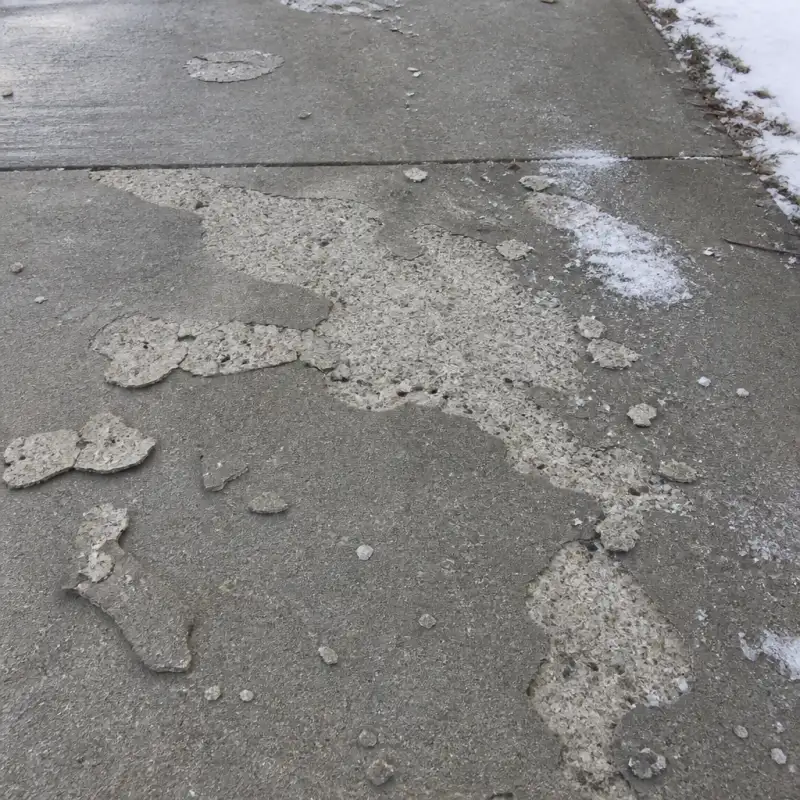
Spalling
The top layer of concrete flakes off in sheets, exposing the rough aggregate underneath. This is the most common winter damage we see on Capital Region driveways.
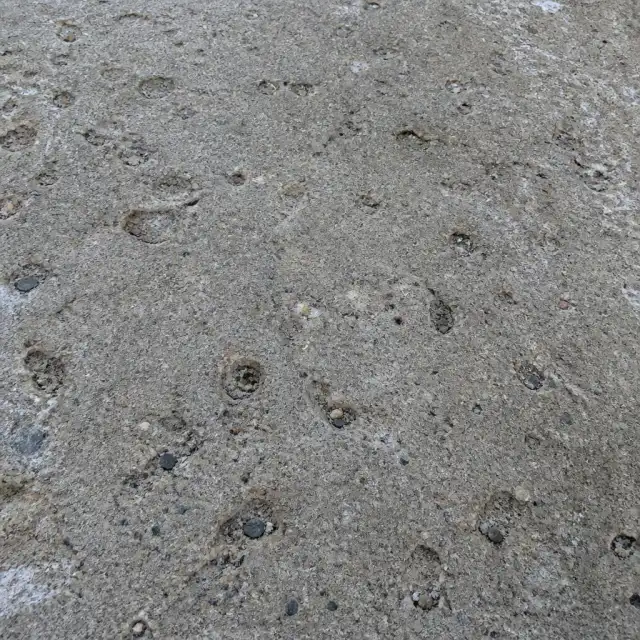
Pitting / Pop-outs
Small, round holes and chipped-out aggregate pebbles across the surface. Each pit is a place where water froze and pushed a piece of concrete loose.
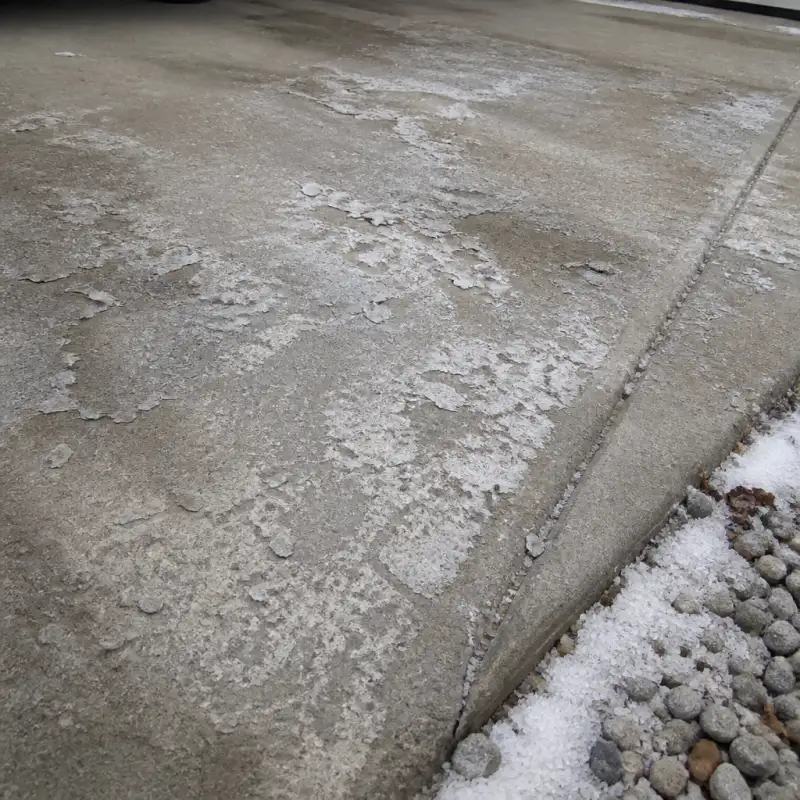
Salt Scaling
Thin, chalky layers peel away where de-icing salt has weakened the surface. It usually shows up first on the tire tracks and heavily walked areas.
What sealing can — and can't — do
Sealing is prevention and containment, not resurfacing. If your concrete is already badly spalled, it needs repair or replacement — and we don't do resurfacing. What we do is knock off the loose, failing material so it stops spreading, clean the slab thoroughly, and seal the sound concrete that's left to keep water and salt out. If the slab is too far gone, we'll tell you honestly rather than sell you a seal job that won't hold up.
Our 4-step freeze/thaw prep
We don't just spray and leave — and you don't wait days between visits. The sealer can be applied to a damp surface, so we clean, prep, and seal the same day.
Pre-treat & remove loose material
Spot-treat organic staining and salt film. Hand-scrape or pressure-remove flaking, loose concrete so the damaged area can't keep spreading under the sealer.
Commercial surface clean
Even pass with a rotary surface cleaner across the whole slab. No wand marks, no zebra stripes, no missed spots.
Blow off & flash dry — same day
Break Wall applies to dry or damp concrete, so there's no multi-day wait. We blow off dust, sand, and debris, let the slab flash dry with no standing water, and move straight into sealing.
Two coats of penetrating sealer
Two coats applied wet-on-wet at right angles, then back-rolled to eliminate pooling. It soaks below the surface and cures inside the pores — no glossy film, no peeling. Dry to the touch in about an hour.
The Sealer
Trident Break Wall
A high-performance silane/siloxane penetrating sealer that soaks in below the surface — no visible film, no gloss coat, no peeling. It repels water and salt, stays breathable so moisture and efflorescence don't get trapped, and inhibits mold, moss, and algae growth. Because it applies to dry or damp concrete, we clean and seal your project the same day.
- Applies on dry or damp surfaces — same-day clean and seal
- Invisible — won't change the look of your concrete
- Superior water repellency and salt blocking — protects against freeze/thaw damage
- Inhibits biological growth such as mold, moss & algae
- Breathable — won't trap moisture or efflorescence
- Non-film forming, penetrating chemistry — nothing to peel, flake, or turn cloudy
- No silicone or wax components — dries transparent
- Water-based, low-VOC, EPA-compliant and environmentally friendly
- Temperature stable — freeze resistant to −60°F and stable to 180°F once cured
- Dry to the touch in about 60 minutes; foot and vehicle traffic in 2–4 hours
- Works on driveways, walks, steps, garage floors, stamped & exposed aggregate
Where we apply it
- Driveways
- Walkways
- Steps & stoops
- Garage floors
- Stamped concrete
- Exposed aggregate
- Concrete & clay pavers
- Retaining walls & block
Same-day project
Clean, prep, and seal in one visit. Since the sealer can go down on a damp surface, there's no waiting days for the slab to bake dry and no second trip.
Choose Your Protection Level
Two Trident sealer options
Both are invisible, breathable, penetrating sealers that block water and salt. The difference is how much protection you want and how long it lasts.
Standard
Trident Break Wall
5-Year Protection
Superior water-repelling and salt-blocking silane/siloxane sealer. Water-based, low-VOC, EPA compliant — the right call for most residential driveways, walks, and patios.
- Superior water repellency & salt blocking
- Water-based, low-VOC, environmentally friendly
- Invisible, breathable, non-film forming
- Inhibits mold, moss & algae
- Applies on dry or damp concrete — same-day clean & seal
Premium upgrade
Trident Sea Wall
7-Year Protection
Trident's ultra water-repelling and salt-blocking sealer with advanced reactive chemistry and EZ Nano technology. Built for the surfaces that take the worst of Capital Region winters.
- Ultimate protection against water & salt infiltration
- EZ Nano technology, solvent-based deep penetration
- Prevents surface spalling from freeze/thaw cycles
- Invisible, breathable, won't trap efflorescence
- Longest reseal interval — best value over time
Not sure which one you need? We'll look at your slab, your salt exposure, and your sun/shade conditions and recommend the right level — no upsell pressure.
Surface Protection
Inhibits Mold, Moss & Algae
Concrete that stays damp and porous is a breeding ground for mold, moss, and algae — especially on shaded walks, steps, and north-facing driveways. Trident Break Wall is a breathable, water-repellent sealer that stops moisture from sitting in the surface, which inhibits biological growth before it can take hold.
That means fewer green or black stains, less slippery buildup, and less need for harsh chemical treatments year after year. It keeps the concrete cleaner and safer to walk on, while reducing the organic film that traps even more moisture against the slab.
- Reduces moisture penetration where mold and algae grow
- Helps prevent green moss and black algae staining
- Makes annual cleanings faster and easier
- Keeps walkways less slippery and better looking year-round
The biological film problem
Mold, moss, and algae don't just stain concrete — they create a thin, absorbent layer that holds water against the surface. That trapped moisture accelerates freeze/thaw damage, spalling, and salt scaling. Sealing the concrete breaks that cycle by keeping the surface drier and the pores blocked.
How often should concrete be sealed?
Trident's technical data sheet recommends reapplication every 5–8 years depending on exposure. In the Capital Region, with heavy salt and freeze/thaw cycles, every 2–3 years is the practical maintenance cycle for most residential concrete. Heavy salt exposure shortens that timeline.
Typical reseal schedule
- Trident recommends reapplication every 5–8 years depending on exposure
- Capital Region standard driveway: every 2–3 years in heavy salt/freeze-thaw conditions
- Aprons, steps, heavily salted areas: every 1–2 years
- Annual cleaning in between reseals
- Best applied in fall when the slab can dry and cure before winter
Is it time to reseal?
- Water no longer beads on the surface
- The slab darkens when it rains
- Surface looks dull, chalky, or grayish
- Fine grit or sand sweeps up off the concrete
What sealed concrete looks like
Water beads up and rolls off instead of soaking into the slab — that's the sealer doing its job. Less water in the concrete means less freeze/thaw damage all winter.
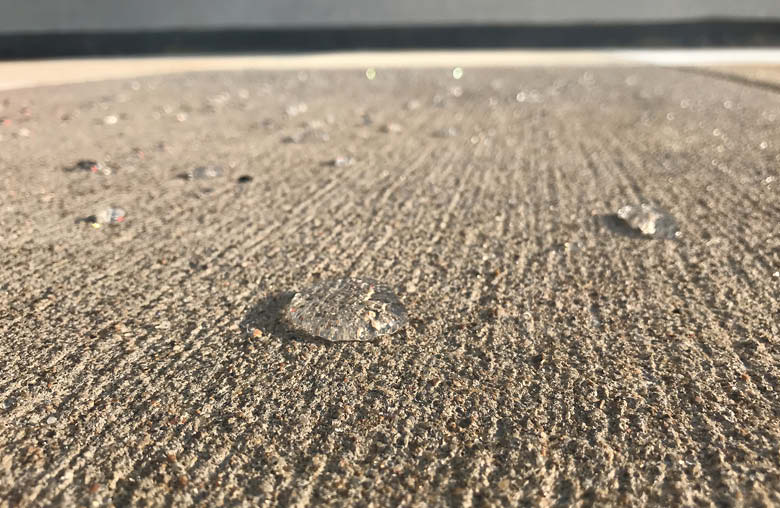 Sealed
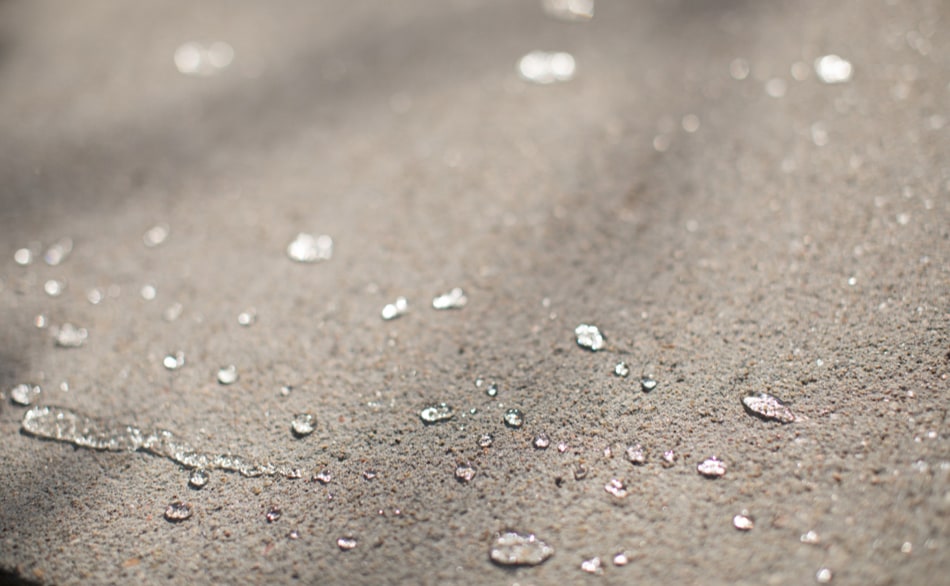 Water Repelled
Stamped Concrete
Sealing & Antiquing That Brings The Color Back
Faded, chalky stamped concrete doesn't need to be replaced. We clean it, re-apply antiquing color to restore the pattern contrast, then lock it in with a premium sealer.
Step 1: The dirty stamped concrete before restoration
Step 2: After the antiquing color was applied
Step 3: The antiquing after it dried
Step 4: The finished surface after sealing
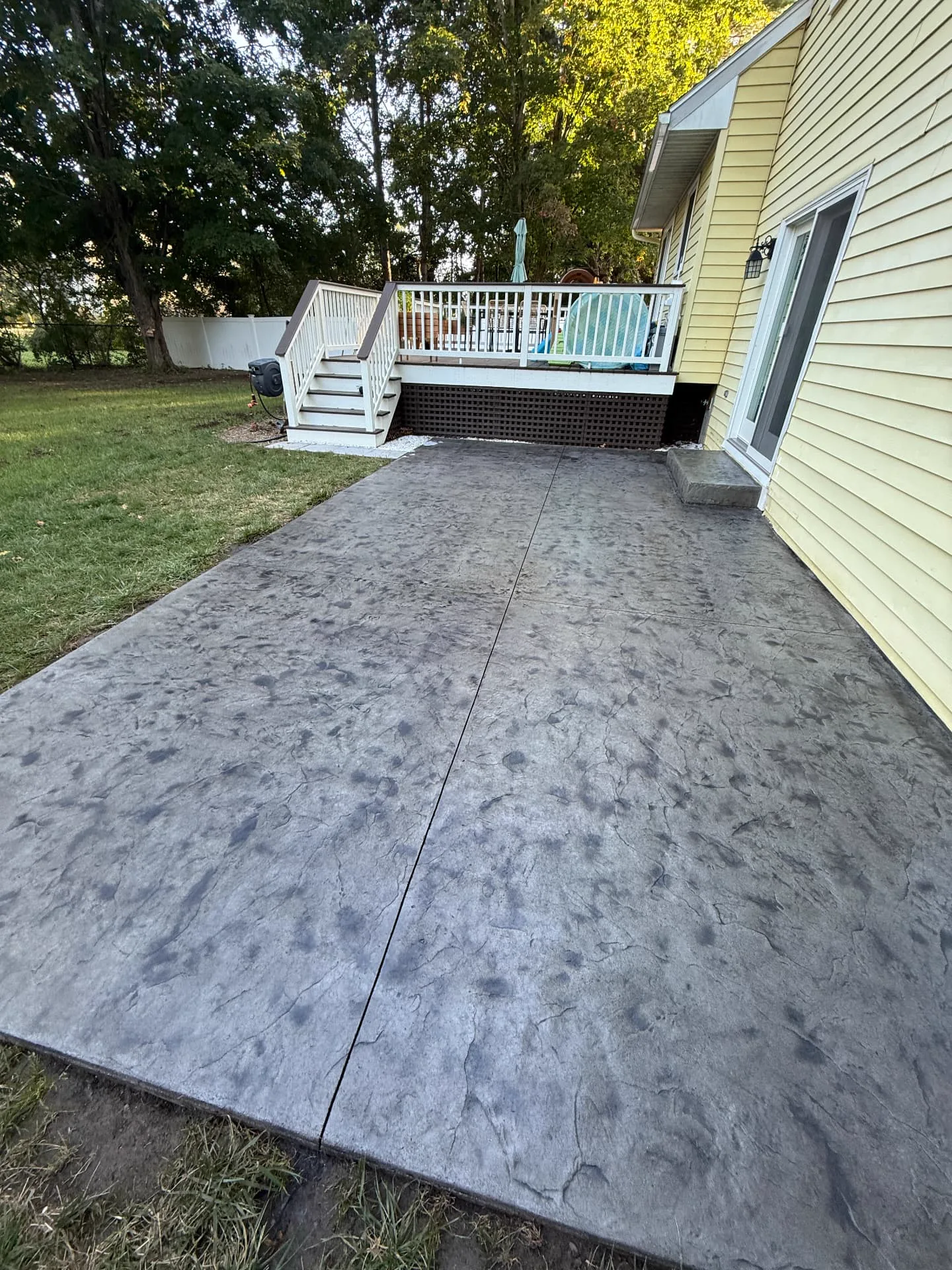
Final product — antiqued and sealed stamped concrete
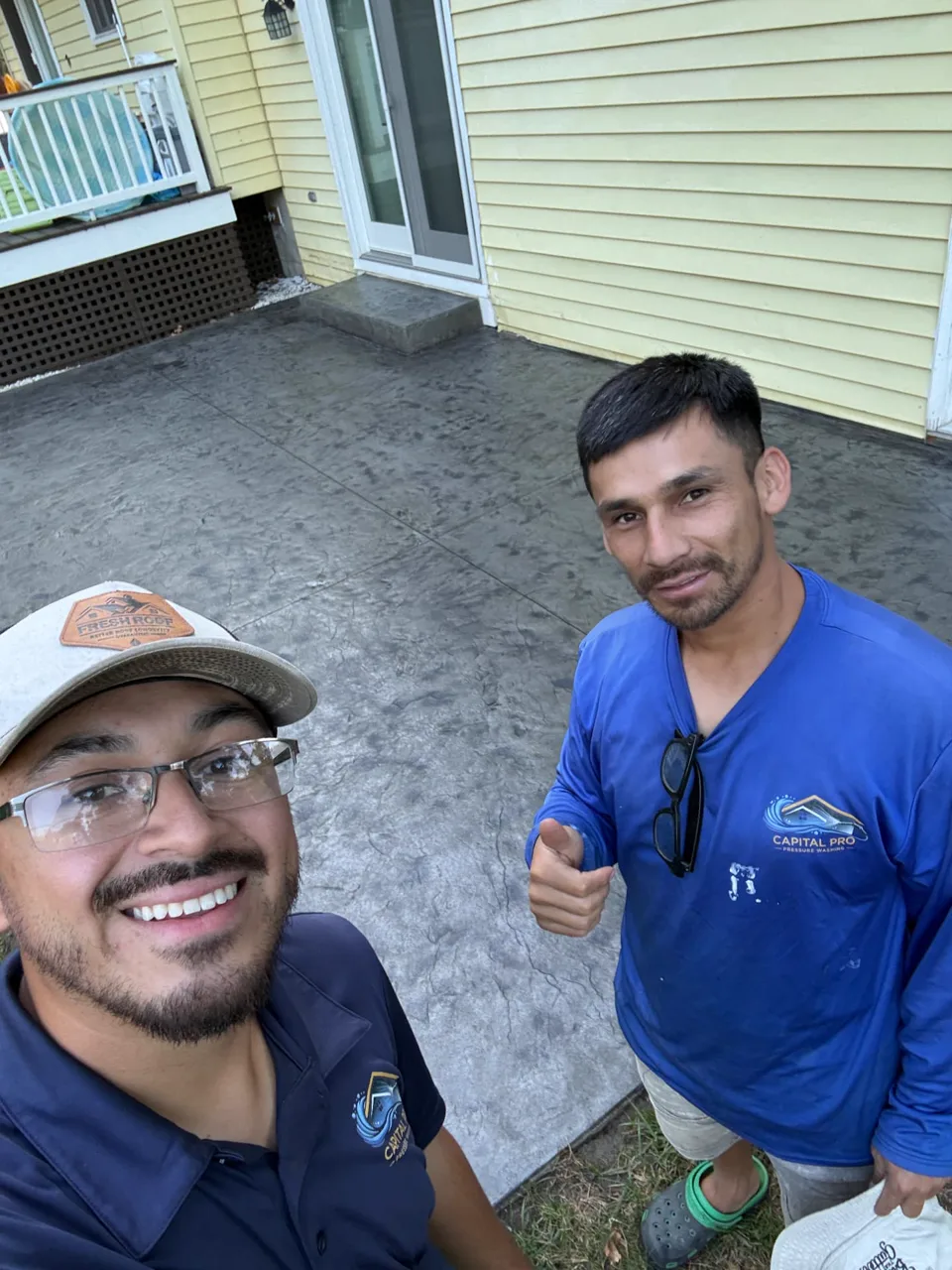
Capital Pro crew on site with the finished stamped patio
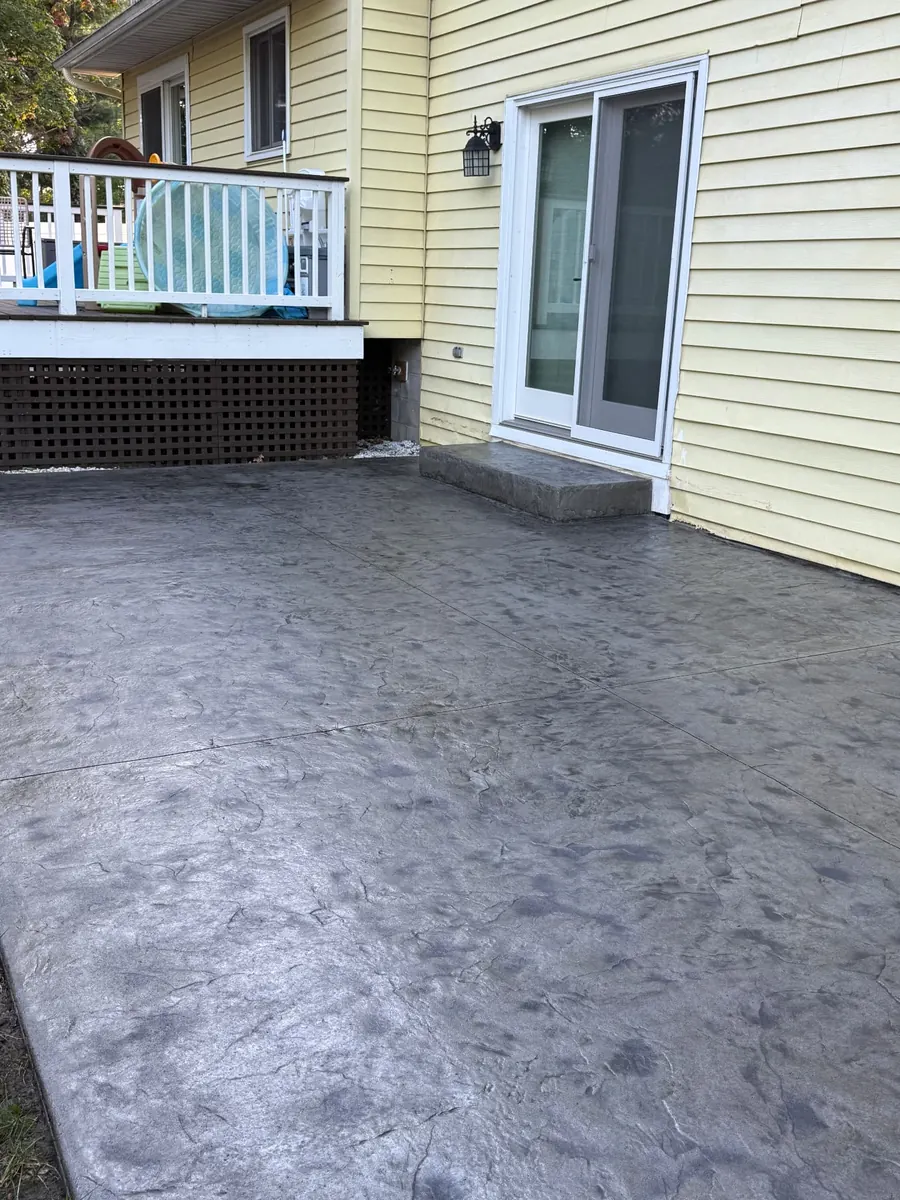
Stamped concrete — cleaned and sealed
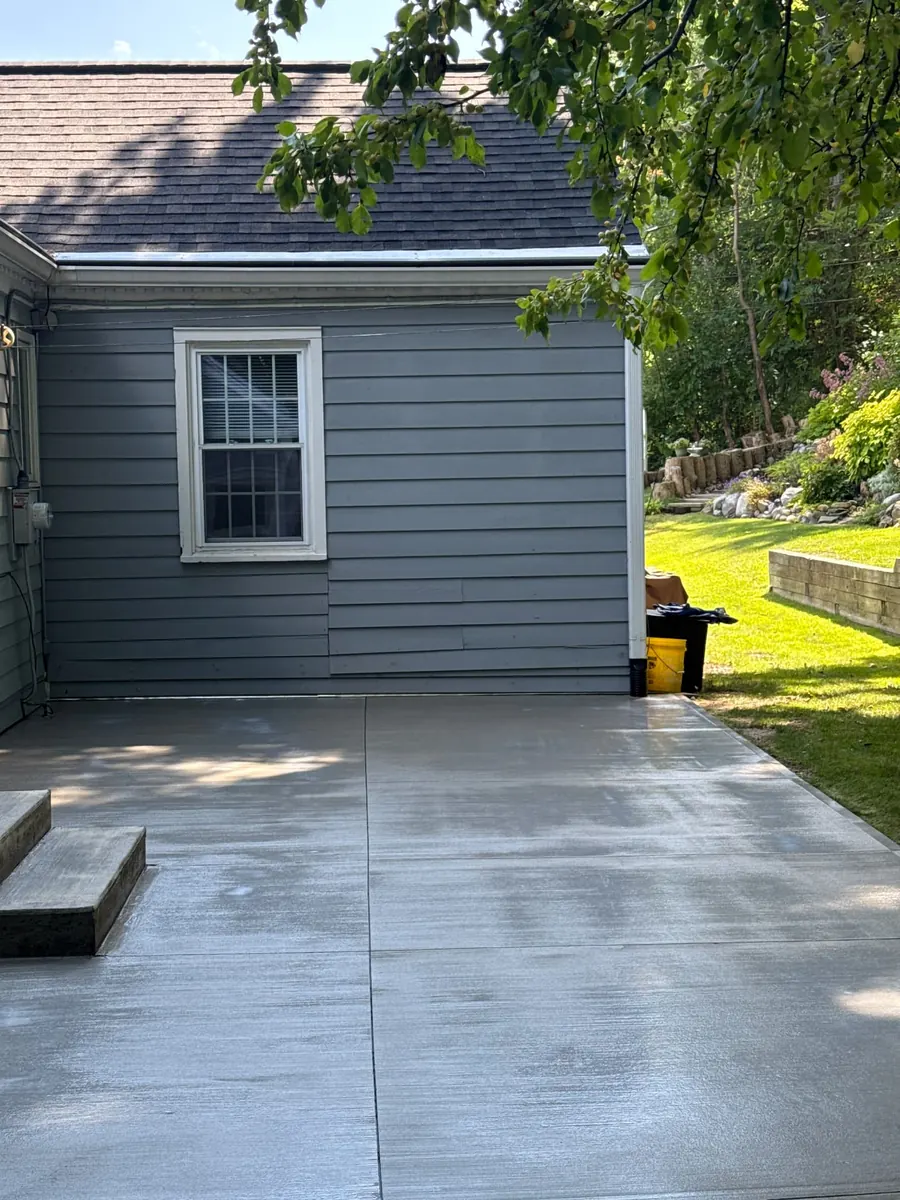
Standard concrete — professionally cleaned
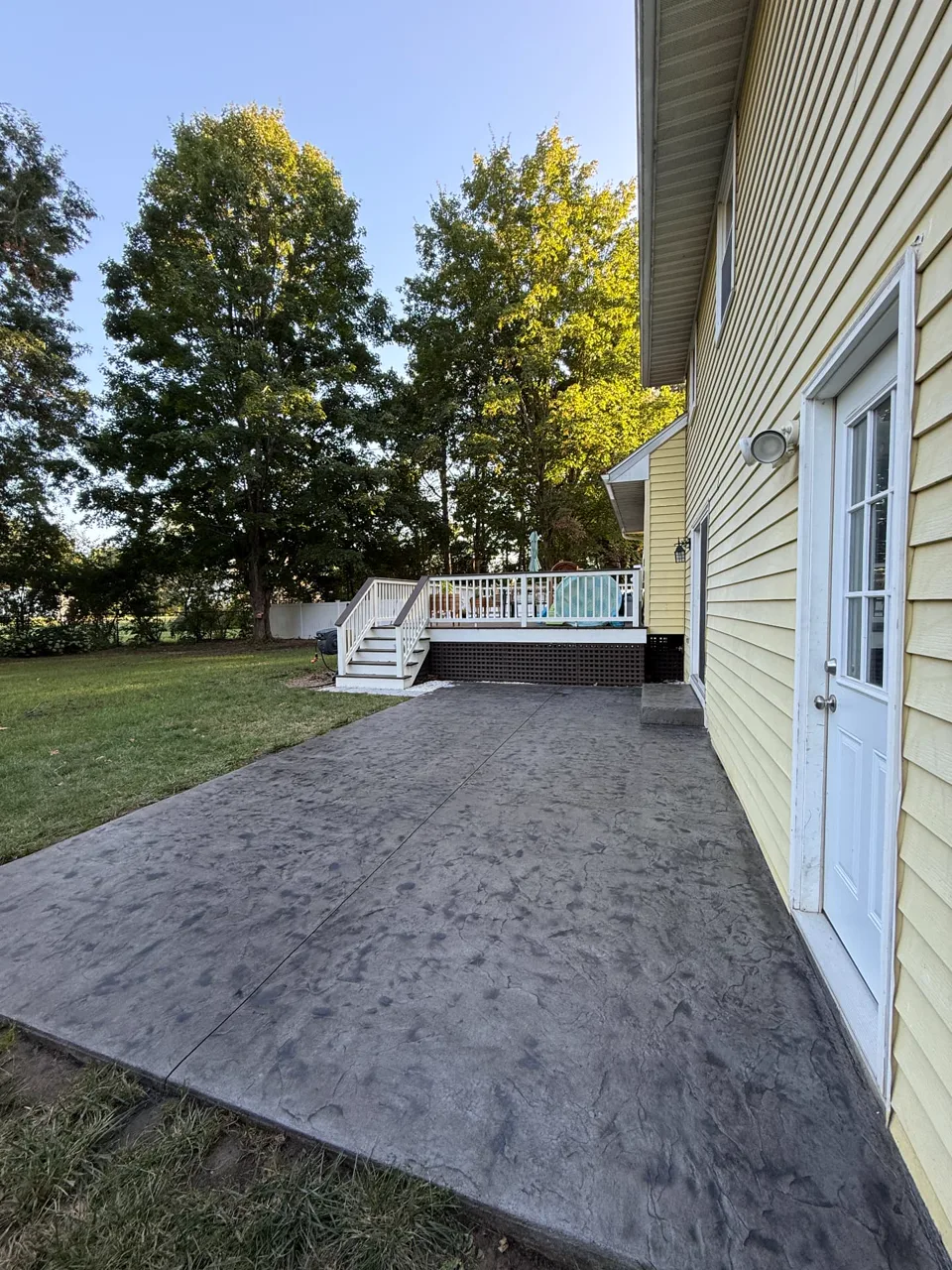
Finished stamped concrete patio — cleaned and sealed
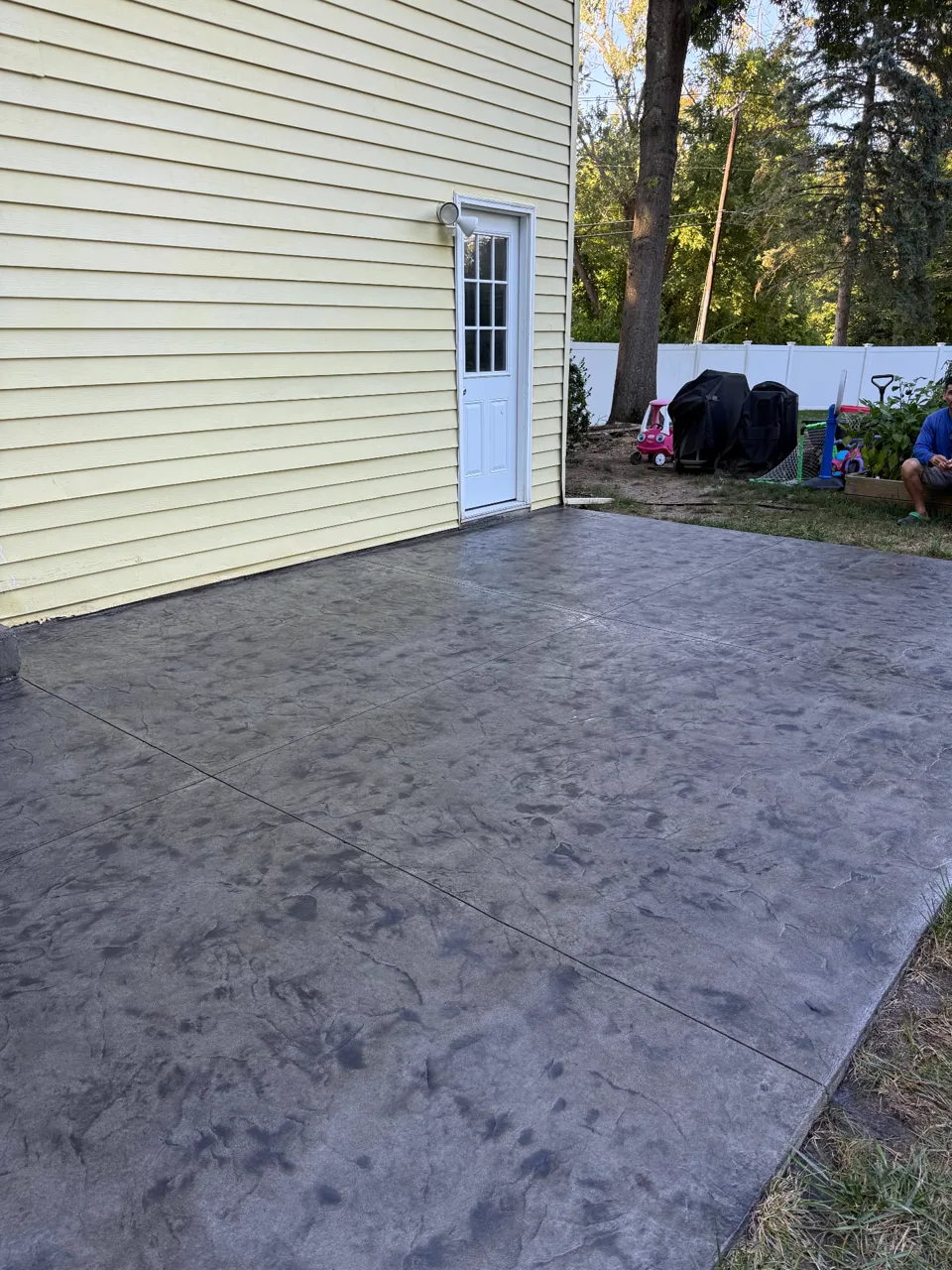
Another view of the completed patio and restored finish
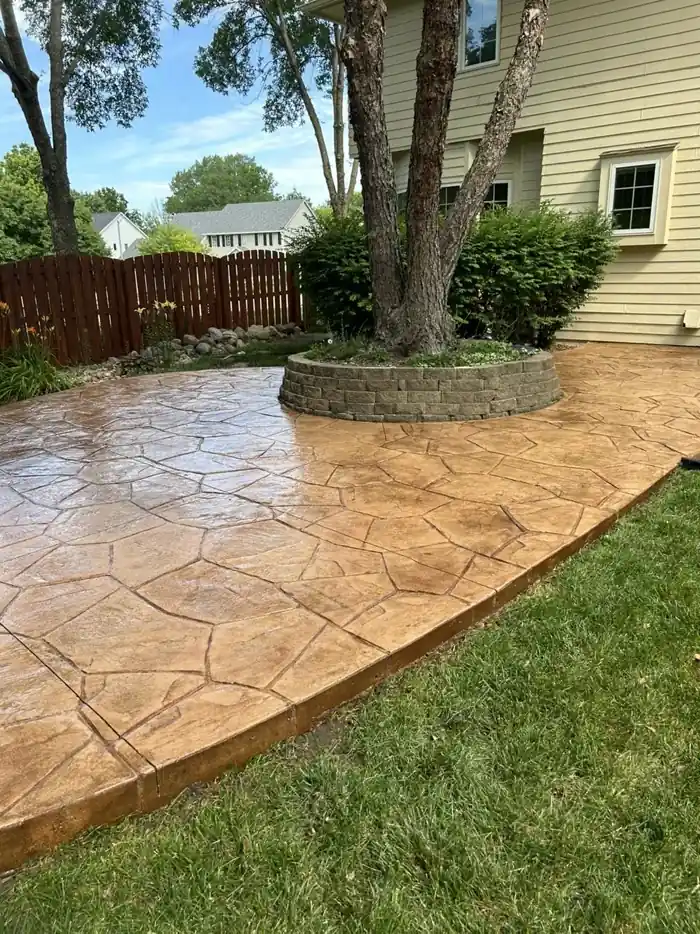
Flagstone stamped patio — cleaned, antiqued & sealed
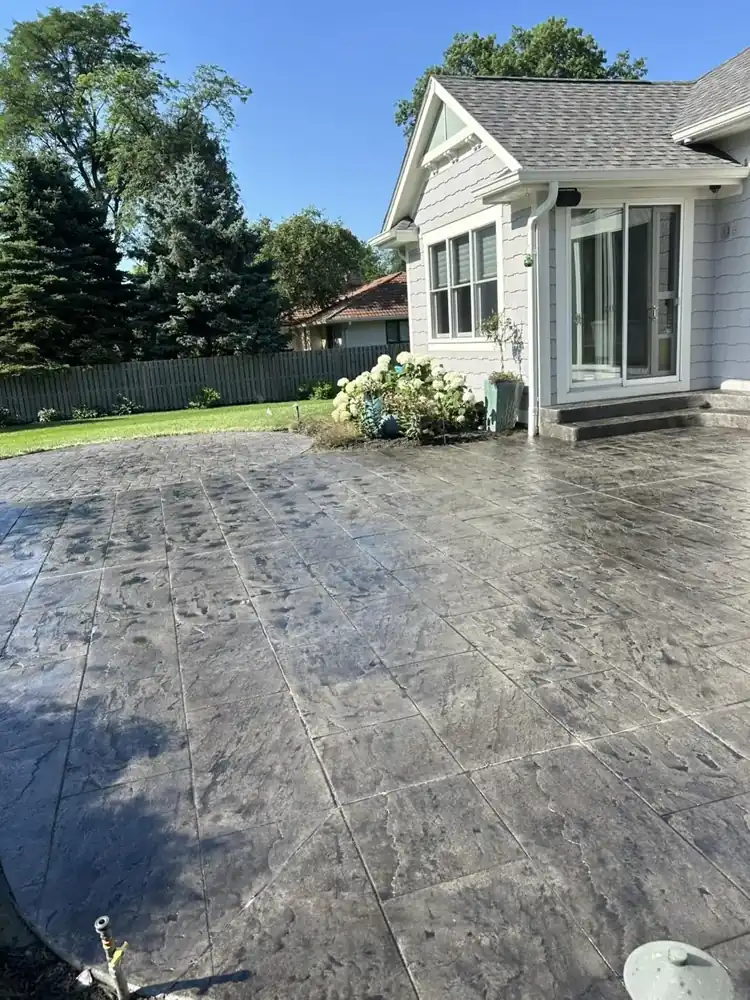
Gray slate stamp — color depth brought back with a fresh seal
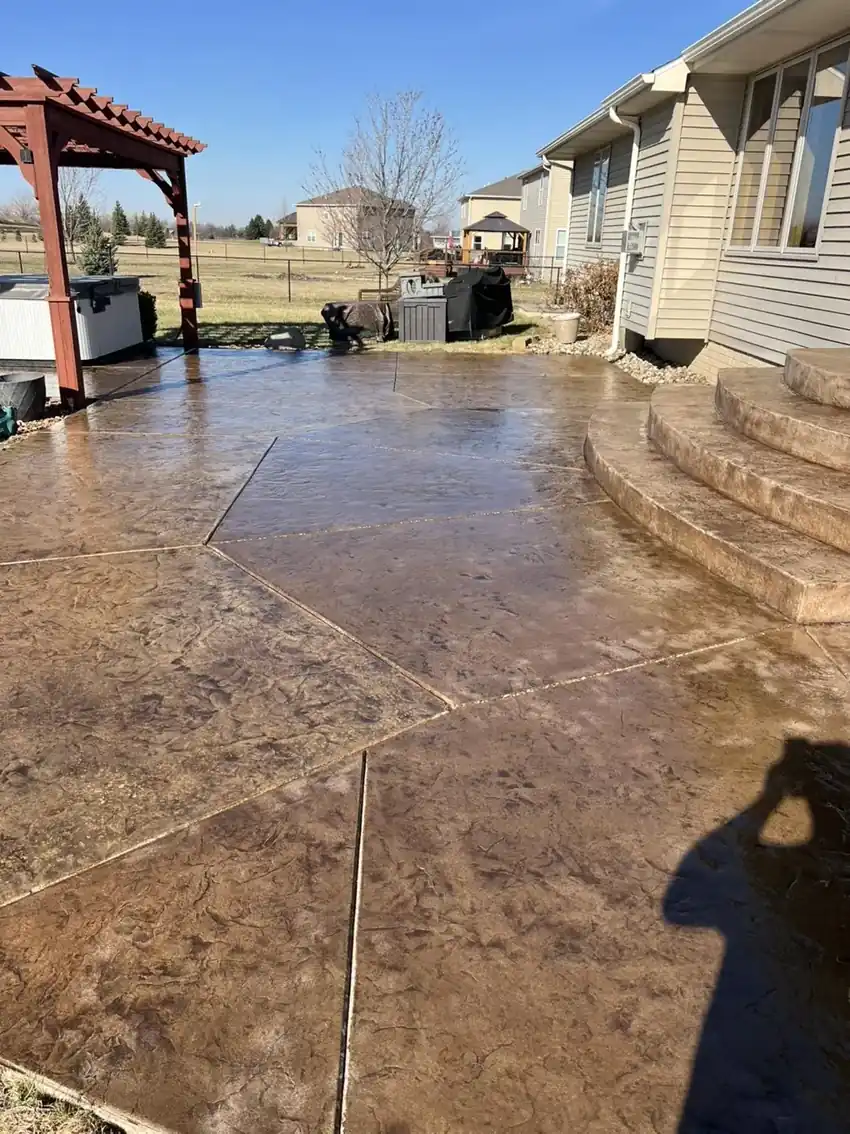
Stamped patio & steps — full clean, antique and reseal
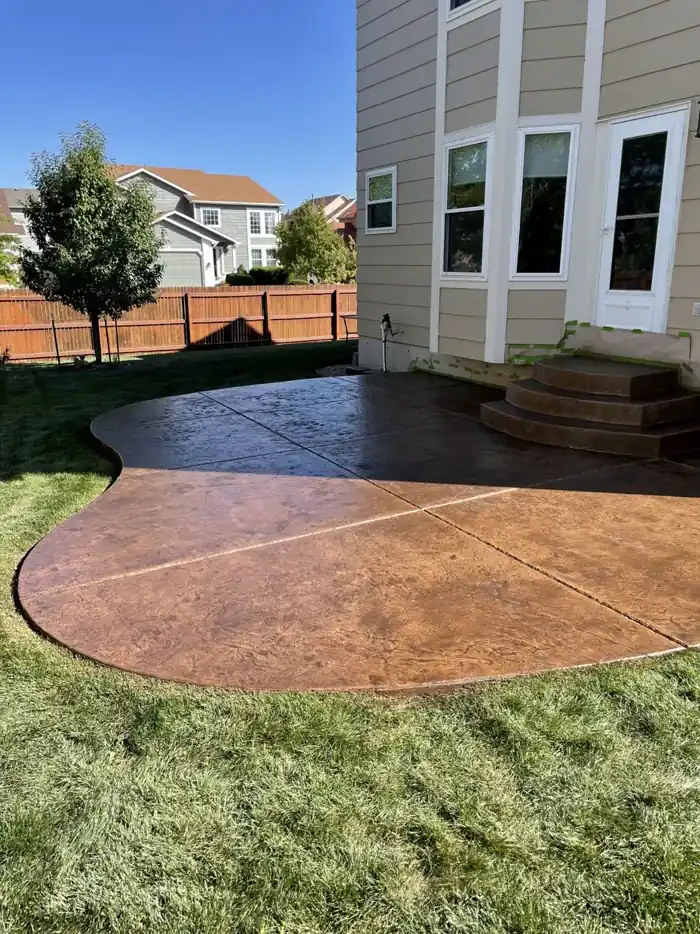
Antiquing in progress — faded slab on one side, restored color on the other
What a real clean & seal includes
Here's everything that goes into a professional concrete cleaning and sealing job — and what you're getting.
100% Satisfaction Guarantee
If you spot something we missed, call us within 7 days — we come back and make it right. No arguing, no upsells, no drama. That's the whole guarantee.
Quick questions
- Will sealing change the look of my concrete?
- No. Trident Break Wall is a penetrating, invisible sealer. It soaks in below the surface and leaves no glossy film, no wet-looking coating, and no color change. Your concrete looks the same — it just repels water and salt.
- Does sealing stop mold, moss, and algae on concrete?
- It inhibits it. Mold, moss, and algae need trapped moisture to grow. By sealing the concrete and reducing how much water soaks in, the surface stays drier and the organic film has a much harder time taking hold. You still get some buildup over time, but cleanings become easier and less frequent.
- Can you fix concrete that's already spalling?
- We don't do resurfacing. If the surface is already flaking off, the damage is structural and needs repair or replacement. What we can do is remove the loose material, clean the slab, and seal the sound concrete that's left so the damage stops spreading. If the slab is too far gone, we'll tell you honestly.
- Is it too late in the season to seal?
- Fall is actually the ideal window — the slab can dry and the sealer can cure before winter arrives. Once temperatures are consistently below about 40°F and staying there, the surface won't cure properly. We'll check the forecast and tell you if the timing is right.
- How long before I can walk or drive on it?
- Fast. The surface is dry to the touch in about 60 minutes in normal conditions, and the area is typically open to foot and vehicle traffic in 2–4 hours depending on temperature and site conditions. We'll give you exact instructions before we leave.
- Does the concrete have to be completely dry before you seal?
- No. Trident Break Wall applies on dry or damp surfaces — it just can't have standing water or puddles. That's why we clean and seal the same day instead of making you wait for a second visit. A drier surface still promotes the best penetration, so we blow the slab off and let it flash dry before we start.
- Do you clean and seal in the same visit?
- Yes. Because the sealer can be applied to a damp surface, we complete the project same day — clean the slab, remove loose material, let it flash dry, then apply two coats wet-on-wet. One crew, one trip, done.
- How often should I reseal?
- Trident recommends reapplication every 5–8 years depending on exposure. In the Capital Region, with heavy road salt and freeze/thaw cycles, we find every 2–3 years is the practical maintenance cycle for most residential concrete. Driveways, aprons, and steps that get hit hard with salt may need it sooner. Annual cleaning in between keeps the sealer performing longer.
- What's the difference between Trident Break Wall and Sea Wall?
- Break Wall is our standard protection — a water-based, low-VOC silane/siloxane penetrating sealer rated for about 5 years of protection. Sea Wall is the premium upgrade — a solvent-based ultra water-repelling and salt-blocking sealer with Trident's EZ Nano technology, rated for about 7 years. Both are invisible and breathable. Sea Wall is the better choice for driveways, aprons, and steps that take the most road salt and plow traffic.
- Does it really stop salt damage?
- It dramatically reduces it. A quality penetrating sealer limits how much water and salt solution can enter the concrete. It can't prevent every crack from a moving slab, but it stops the surface-level freeze/thaw and salt scaling that destroys the finish.
- Does it work on stamped concrete?
- Yes. Stamped concrete is even more porous than standard flat concrete because of the textured surface. Sealing is essential to protect the color and detail. We also offer re-sealing and antiquing if the stamped pattern has faded.
- Can I combine the $50 off with another offer?
- One discount per household. If you're already using a military or first-responder discount, we'll apply whichever gives you the better value.
Seal it before winter wins
Free quote. Most jobs quoted remotely. $50 off available when you mention this page.
Homeowner Guides
Learn Before You Book
Spalling, pitting and flaking concrete in Albany, Schenectady and Saratoga — what causes it, what can be saved, and how sealing prevents it.
Spring Exterior Cleaning Checklist for Capital Region HomesWhat to clean outside your Albany-area home each spring, in what order, and how to undo a Capital Region winter of salt, grit, mildew and moss.
How Much Does Pressure Washing Cost in Albany, NY? (2026 Price Guide)Real pressure washing prices in Albany and the Capital Region — house washing, roofs, driveways, decks and gutters — plus what makes a quote go up.
Get Started
Get Your Free Quote
Takes about a minute. No obligation — we'll text or call you back fast.
