
How Often to Pressure Wash Your House: A Homeowner's Schedule

For most homes, once a year is the right pressure washing frequency. That said, your siding material, local climate, and what’s growing on your walls can push that number up or down fast.
Wash more often if any of these apply to your home:
- You live in a humid region or near the coast (salt air accelerates algae and mildew)
- Large trees overhang your roof or shade your north-facing walls
- Your home sits near a busy road (exhaust and road film coat the front façade)
- You’ve had a wet spring with visible green streaks or pollen buildup
- Your neighborhood gets heavy seasonal pollen
One exception worth flagging early: wood siding, painted surfaces, and stucco need lower pressure and often less frequent washing than vinyl or brick. Roofs are a separate category entirely and should never see a standard pressure washer.
Key Takeaways
Most homes need exterior washing once a year, but shade, humidity, coastal exposure, and heavy tree cover can push that to twice yearly, and the method matters as much as the schedule.
| Point | Details |
|---|---|
| Baseline frequency | Once per year works for most homes; twice yearly for shaded, coastal, or humid locations. |
| Top triggers to wash sooner | Visible green or black streaks, slippery walkways, heavy pollen, or proximity to busy roads. |
| Soft-wash vs. high pressure | Use soft-wash for siding, roofs, and painted surfaces; reserve high PSI (2,000) for concrete only. |
| Safe temperature window | Wash between 40°F and 75°F; outside that range, risk freezing damage or streaking. |
| Capital Pro Pressure Washing | Veteran-owned soft-wash specialists serving New York’s Capital Region with a satisfaction guarantee. |
Table of Contents
- What actually changes how often you should wash your house exterior
- Recommended washing frequency by siding and surface type
- Signs your house is overdue for a wash
- When you should not pressure wash your house
- DIY vs. hiring a professional: how to decide
- What does a professional house wash typically cost?
- How long does a house wash last, and what can you do between cleanings?
- How Capital Pro Pressure Washing approaches house washing
- What most homeowners get wrong about washing frequency
- Capital Pro Pressure Washing serves the Capital Region
- Sources
- FAQ
What actually changes how often you should wash your house exterior
Frequency should be driven by environmental triggers rather than a fixed calendar date. A home in Phoenix and a home in coastal Georgia have almost nothing in common when it comes to exterior cleaning needs, even if they’re the same size and age.
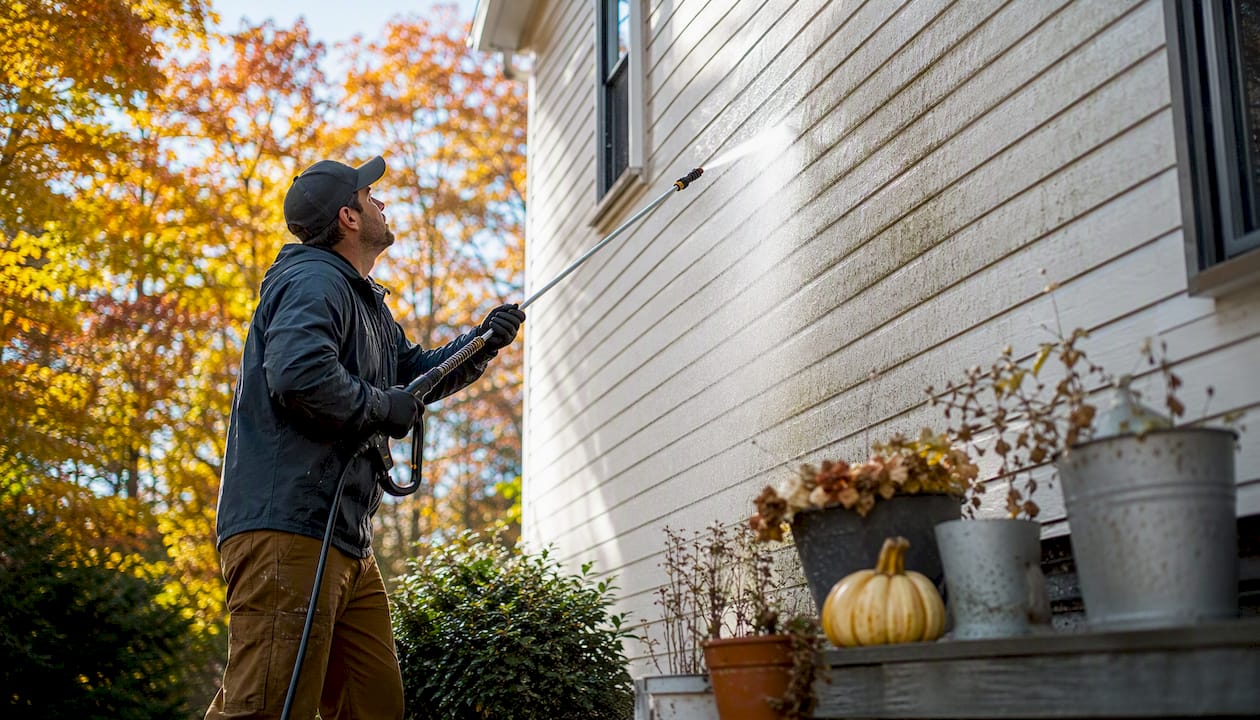
Humidity and rainfall feed mold and algae. The Southeast, Gulf Coast, and Pacific Northwest all see faster biological growth than the arid Southwest. If you’re in a humid climate and skipping years between washes, you’re likely letting mildew root into your siding rather than just sitting on the surface.
Shade and tree cover are the two biggest accelerators most homeowners underestimate. A north-facing wall that never gets direct sun stays damp longer after rain. Add overhanging branches dropping sap, tannins, and leaf debris, and that wall can go from clean to visibly green in a single season. Coastal salt is similarly aggressive: it doesn’t just look dirty, it corrodes paint and caulk over time.
Road proximity matters more than people expect. Homes within a block of a highway or heavily trafficked road pick up a visible film of exhaust particulates and tire dust, especially on the front façade. That film is harder to see than algae but just as damaging to paint over time.
- Humid Southeast and Gulf Coast: consider twice yearly (spring and fall)
- Arid Southwest: annual cleaning is usually sufficient
- Northeast (like New York’s Capital Region): late spring after pollen clears is the primary window; a fall refresh helps if you have heavy tree cover
Pro Tip: Check your north-facing walls specifically. They hold moisture longest and show mildew first. If you see any green or black discoloration there, don’t wait for your annual schedule.
Recommended washing frequency by siding and surface type
Surface material determines both how often you should clean and what method is safe. High pressure that works fine on a concrete driveway can strip paint, force water behind siding, or void a manufacturer warranty on fiber cement.
Consumer Reports recommends matching pressure and method to the surface; rental and consumer machines typically run 1,200–1,500 PSI for general tasks, but delicate siding and roofs need a soft-wash approach at far lower effective pressure.
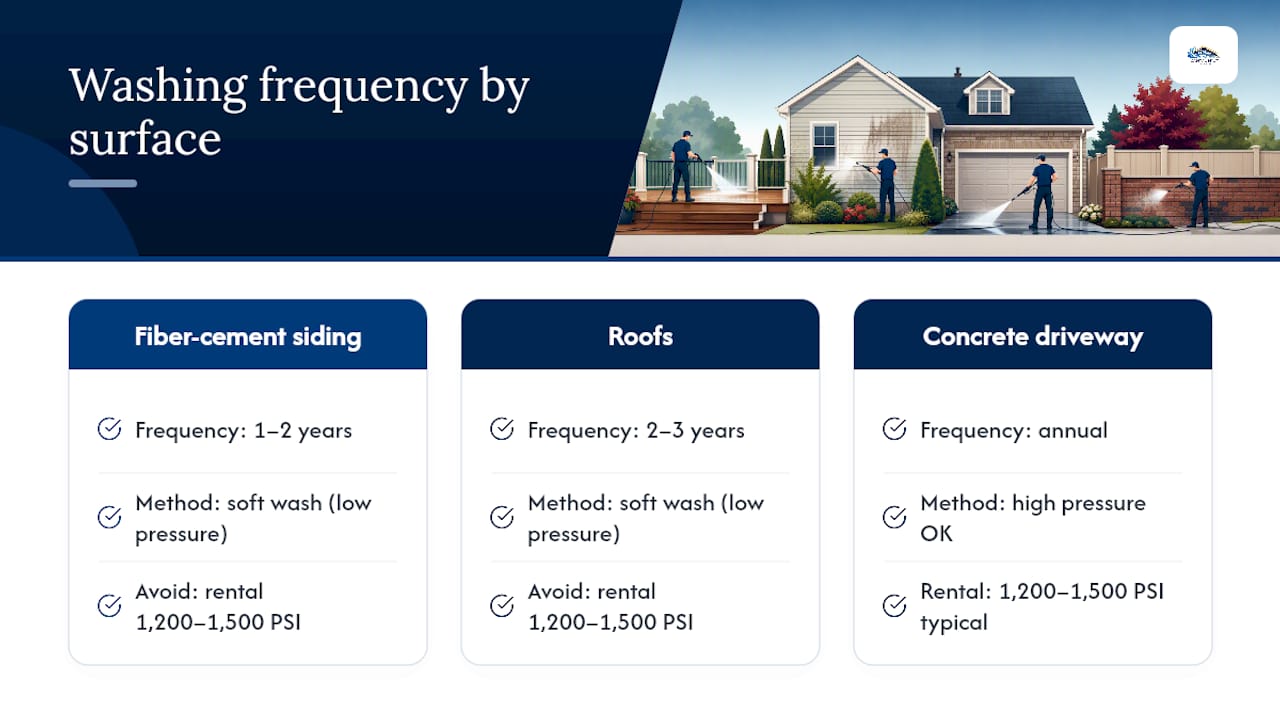
Roofs typically need soft washing every 2–3 years; siding falls in the 1–2 year range depending on exposure; concrete driveways handle annual cleaning without issue.
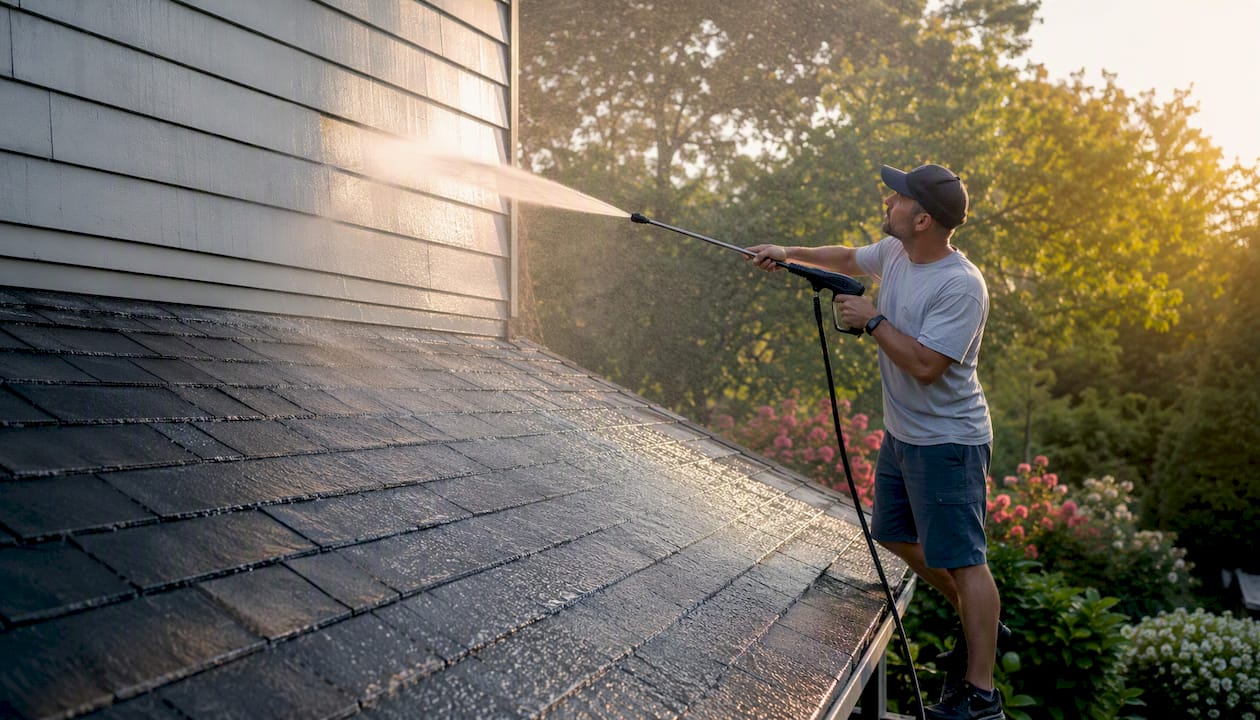
Pro Tip: For siding and roofs, chemistry does the work. A properly diluted sodium hypochlorite solution kills algae and mildew at the root. Low pressure then rinses it away. High PSI alone just blasts the surface without killing what’s growing there.
Signs your house is overdue for a wash
You don’t need a calendar to know it’s time. A five-minute walk around your home tells you more than any schedule.
Visible signs to look for:
- Green or black streaks running down siding, especially under eaves and gutters
- Patchy gray or brown discoloration on walls that don’t face the sun
- Slippery or slimy texture on walkways, steps, or the deck surface
- Heavy pollen coating (yellow-green film) that hasn’t rinsed off after rain
- Bird droppings, sap, or insect nests that have been sitting for weeks
- Raised or bubbling paint, which can signal moisture trapped beneath the surface
Quick inspection steps:
- Start at the north-facing wall and check close to the foundation where moisture pools
- Look under the eaves and at the top of window frames where dirt and mildew accumulate
- Check gutters for dark streaking on the outside face (called “tiger stripes”)
- Walk the driveway and front walkway for slippery patches or embedded tire marks
- Step back and look at the full façade from the street. Uneven color or dull patches show up better from a distance
Photograph any problem areas before calling a professional. It helps with quoting and gives you a before/after record.
When you should not pressure wash your house
Timing and temperature matter as much as technique. Washing at the wrong time of year or day can cause more damage than skipping the job entirely.
Avoid pressure washing when temperatures are consistently below 40°F or above 75°F. Below 40°F, water left in cracks and caulk joints can freeze and expand, widening gaps and damaging siding. Above 75°F in direct sun, cleaning solutions dry before they can work properly, leaving streaks and mineral deposits on the surface.
Safety and timing checklist:
- Wash between 40°F and 75°F for best results
- Avoid washing in direct midday sun; early morning or late afternoon keeps surfaces cooler and lets detergents dwell properly
- Never pressure wash a roof with a standard wand; granule loss on asphalt shingles is permanent
- Check for loose or damaged siding before washing; water forced behind loose panels causes rot
- Cover exterior electrical outlets, light fixtures, and HVAC units before starting
- Wet down nearby plants and shrubs before and after washing to dilute runoff from cleaning solutions
- Do not use high pressure on windows with older glazing or compromised seals
Late spring and fall are the most recommended windows for exterior washing: late spring clears pollen and winter grime before summer heat sets in; a fall wash removes tannins and leaf debris before they sit through winter.
Temperature window to remember: 40°F–75°F is the safe range for pressure washing. Outside that range, you risk freezing damage below or streaking and premature drying above.
DIY vs. hiring a professional: how to decide
Some jobs are genuinely manageable on your own. Others are a liability risk or a warranty issue waiting to happen.
DIY is reasonable when:
- You’re washing a single-story home with vinyl or brick siding
- The job is limited to concrete driveways, walkways, or a ground-level deck
- You’re comfortable with basic equipment and have rented or own a machine in the 1,200–1,500 PSI range
- There’s no significant biological growth requiring chemical treatment
Hire a professional when:
- Your home is two stories or taller (ladder work plus a pressure wand is a real fall risk)
- You have wood, stucco, EIFS, or fiber cement siding where the wrong PSI causes permanent damage
- The roof needs cleaning (soft-wash chemistry and low-pressure application require professional equipment)
- There’s heavy mold, mildew, or algae that needs chemical treatment, not just rinsing
- Your siding is under a manufacturer warranty that specifies approved cleaning methods
Questions to ask any contractor before booking:
- What method do you use: soft-wash, pressure wash, or both?
- What PSI do you apply to siding and roofs specifically?
- What cleaning solutions do you use, and are they biodegradable?
- How do you handle runoff near landscaping?
- Are you licensed and insured in New York?
- Do you offer a satisfaction guarantee or warranty on the work?
A professional house wash also doubles as an exterior inspection. Technicians regularly spot caulk failure, loose trim, or early rot that’s invisible under a layer of grime.
What does a professional house wash typically cost?
Pricing varies by home size, number of stories, surface condition, and add-on services. Here’s a practical breakdown of what drives the quote.
Main cost factors:
- Square footage of the exterior (not the floor plan)
- Number of stories and roof pitch (affects access and time)
- Level of biological growth (heavy algae or mildew takes longer and requires more chemistry)
- Surface type (soft-wash for siding costs more than a straight concrete rinse)
- Add-on services: gutter brightening, exterior window cleaning, deck or patio cleaning, fence cleaning
Typical time estimates:
| Job Type | Estimated Time |
|---|---|
| Single-story home, 1,500–2,000 sq ft | 1.5–3 hours |
| Two-story home, 2,000 sq ft | 3–5 hours |
| Driveway and walkways (add-on) | 1–2 hours |
| Deck or patio cleaning (add-on) | 1–2 hours |
| Roof soft-wash | 2–4 hours depending on pitch and size |
Quotes will run higher when the job includes roof washing, heavy prep work, or surface sealing after cleaning. Weather can also push scheduling by a week or two, so booking in advance of your preferred window is worth doing.
How long does a house wash last, and what can you do between cleanings?
Results vary by surface and exposure. Horizontal hardscapes like driveways and patios tend to stay clean for 12–24 months; patios typically hold for 12–18 months. Siding lifespans vary more widely depending on shade, humidity, and tree cover.
A home with heavy tree cover in a humid climate may show new growth within six months. The same home in a dry, open yard might look clean for two full years.
Between-cleaning maintenance that actually extends results:
- Rinse gutters and downspouts seasonally so overflow doesn’t streak the siding below
- Hose off bird droppings and sap within a few days of noticing them; both etch surfaces if left
- Trim branches that overhang the roof or touch the siding
- Spot-treat visible mildew with a diluted bleach solution before it spreads
- Sweep debris off the deck and patio regularly so organic material doesn’t stain
For concrete driveways and pavers, sealing after a professional clean significantly extends the interval before the next wash. Paver sealing and concrete sealing create a barrier that slows organic growth and makes the next cleaning faster.
How Capital Pro Pressure Washing approaches house washing
Capital Pro Pressure Washing is a veteran-owned company serving New York’s Capital Region with over 10 years of exterior cleaning experience. The company’s core method is soft-wash: low-pressure application of professional-grade cleaning solutions that kill mold, mildew, algae, and bacteria at the root rather than blasting them off the surface with brute force.
What that means for your home:
- Siding, roofs, and painted surfaces are cleaned without the pressure that strips paint or forces water behind panels
- Cleaning solutions are biodegradable and safe for surrounding landscaping when properly applied
- Each job includes a surface inspection that often catches caulk gaps, loose trim, or early rot before it becomes a repair bill
- Services include house washing, soft-wash roof cleaning, deck and patio cleaning, gutter brightening, exterior window cleaning, fence cleaning, and surface sealing
- Satisfaction is guaranteed; the team will return if results don’t meet expectations
For homeowners in Albany, Troy, Delmar, Saratoga Springs, and the surrounding Capital Region, Capital Pro Pressure Washing offers free estimates and flexible scheduling around your preferred season.
What most homeowners get wrong about washing frequency
The most common mistake isn’t washing too rarely. It’s washing at the wrong time of year with the wrong pressure and then wondering why the results don’t last.
Homeowners who pressure wash in August at noon with a rented 2,500 PSI machine are often doing more harm than good: the detergent dries before it can kill anything, the pressure strips surface texture from older siding, and the results look fine for three weeks before the algae comes back faster than before.
The better move: check your north-facing walls this weekend. If you see any green or black discoloration, book a soft-wash before it spreads. Don’t wait for the annual calendar reminder. The wall is telling you it’s ready.
Capital Pro Pressure Washing serves the Capital Region
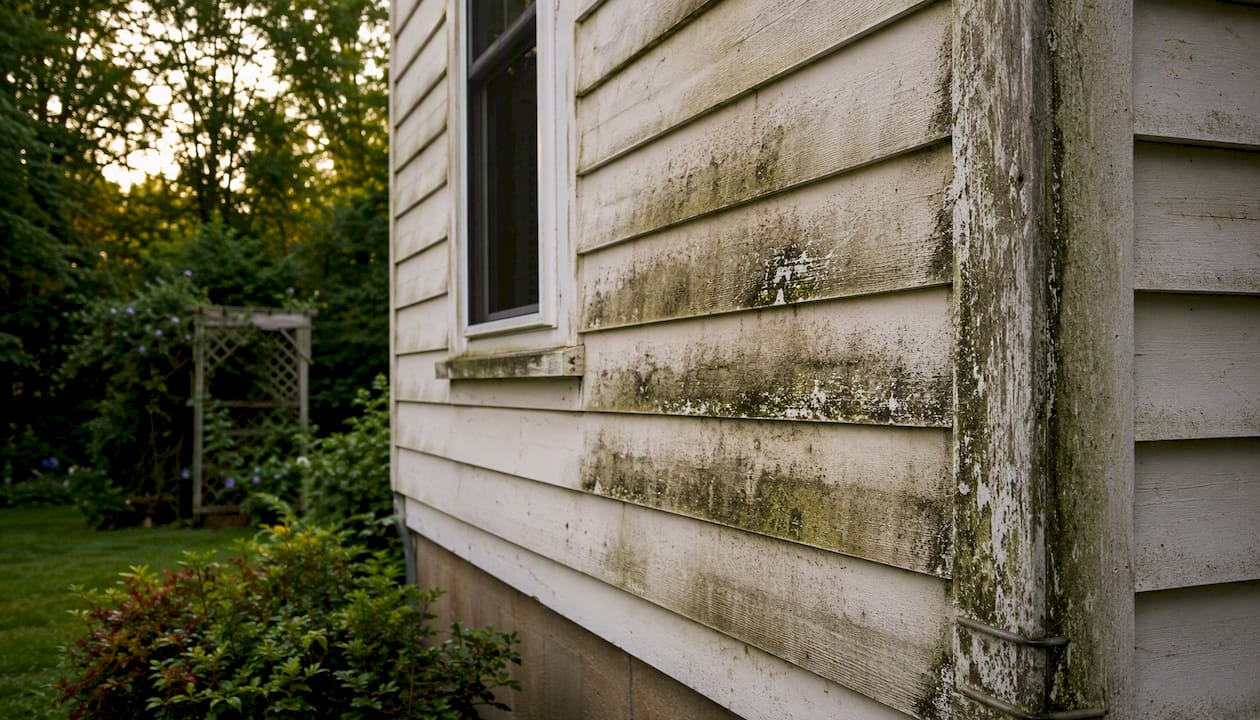
Dirty siding, algae-streaked roofs, and grimy driveways are problems that compound over time. A single professional soft-wash from Capital Pro Pressure Washing removes the organic growth that shortens paint life and damages caulk, and it does it without the pressure that voids siding warranties or strips roof granules.

Capital Pro Pressure Washing handles residential house washing across Albany, Troy, Delmar, Saratoga Springs, and the wider Capital Region of New York. Services include house washing, roof soft-washing, deck and patio cleaning, gutter brightening, window cleaning, and surface sealing, all backed by a satisfaction guarantee. The team is veteran-owned, locally operated, and has been protecting Capital Region homes for over a decade.
Request a free estimate and get a clear quote before committing to anything. Reach out through Capitalpropressurewashing to check availability and schedule your cleaning window.
Sources
- Best time to pressure wash your house | Angi
- How to pressure-wash a house | Popular Mechanics
- Surfaces safe to clean with a pressure washer | Consumer Reports
- How often to pressure wash home | Lee Company resources
- How often to pressure wash your home in Virginia | Pristine Powerwash
FAQ
How often should you pressure wash a house?
Once a year is the practical baseline for most homes. Homes in humid climates, heavy shade, or coastal areas often benefit from twice-yearly cleaning, with late spring as the primary wash and a lighter fall refresh.
How much does it cost to power wash a 2,000 square foot house?
Pricing varies by region, number of stories, surface condition, and add-on services. A single-story home in that size range typically takes 1.5–3 hours; a two-story home runs 3–5 hours. Request a free estimate from Capital Pro Pressure Washing for an accurate quote based on your specific home.
When should you not power wash your house?
Avoid washing when temperatures are below 40°F or above 75°F, during direct midday sun, or when siding is loose or damaged. Never use a standard pressure wand on an asphalt shingle roof.
Which month is the best to pressure wash a house?
Late spring (May or early June) is the most commonly recommended window: it clears winter grime and pollen before summer heat arrives. A secondary fall wash in September or October removes leaf tannins before winter.
How long does a house stay clean after pressure washing?
Siding typically stays clean for 1–2 years depending on shade and humidity. Horizontal surfaces like driveways and patios hold results for 12–24 months. Homes with heavy tree cover or in humid climates may see regrowth in as little as six months.
Recommended
Services Related To This Article
Need a quote in the Capital Region?
Fast, free estimates from a local, licensed & insured team.
