
Capital Region Homes: DIY Roof Lichen Removal, Warranty Safe
The safest, most effective way to handle roof lichen removal is a soft-wash biocide treatment, either applied carefully by hand on an easy roof or handled by a professional soft-wash crew. Skip the pressure washer entirely. Expect the chemical to kill the lichen within days, but full visual clearing usually takes several weeks as rain washes away the dead growth. Pair the treatment with tree trimming, clean gutters, and copper or zinc strips to keep it from coming back.
Quick Summary:
- Professional soft-wash treatments use a low-pressure biocide, usually a diluted chlorine solution, to kill lichen cells without damaging shingles.
- Mechanical removal methods like pressure washing cause granule loss and accelerate roof deterioration, so they should be avoided.
- DIY treatments are feasible only on low-pitched roofs with limited lichen coverage and require careful application, testing, and natural rain for removal.
- Regular maintenance such as trimming trees, clearing gutters, and installing copper or zinc strips prevents lichen regrowth in shaded and moist areas.
- Hiring a certified professional offers better protection of the roof’s warranty and ensures proper treatment for heavier or widespread lichen growth.
Table of Contents
- What Actually Kills Roof Lichen (and What Just Damages Your Roof)
- How Do You Safely Remove Lichen From Your Roof Yourself?
- Why and When to Hire a Professional Soft-Wash Service
- How to Stop Lichen From Coming Back
- Protecting Your Plants, Your Warranty, and Yourself During Treatment
- What Professional Soft-Wash Actually Looks Like on Your Roof
- Get Your Roof Cleaned the Warranty-Safe Way
- Sources
- FAQ
What Actually Kills Roof Lichen (and What Just Damages Your Roof)
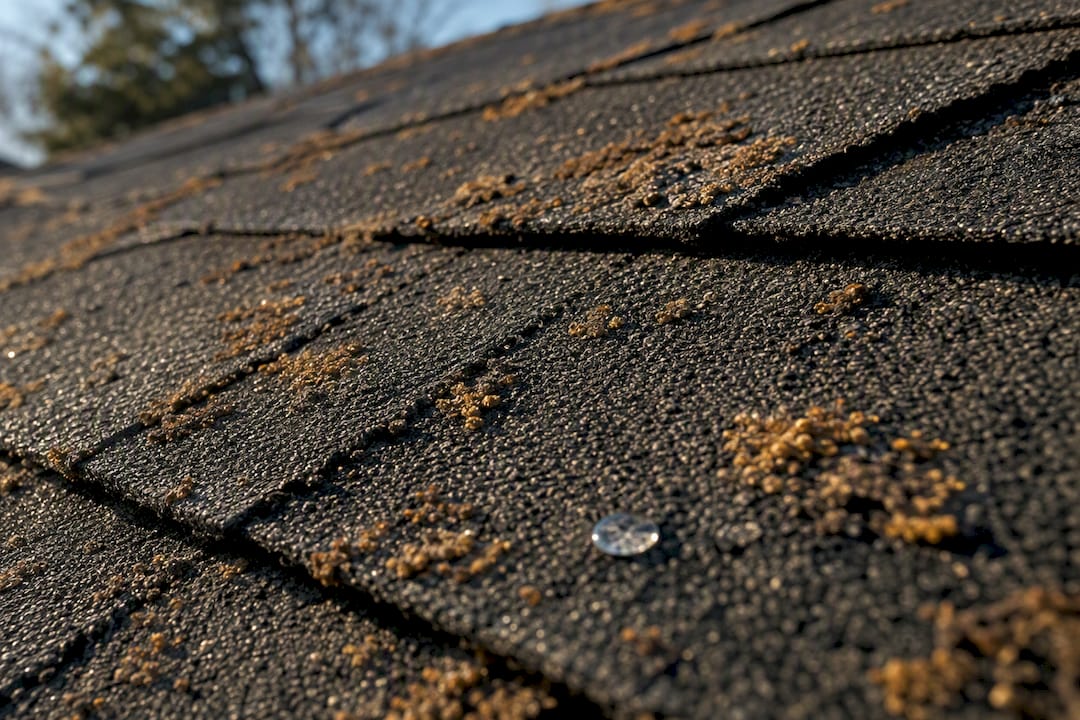
Lichen is not a single organism. It is a partnership between fungus and algae that anchors itself to shingles with root-like structures called rhizines. That grip is why scraping or scrubbing it off rarely works well. You end up pulling shingle granules loose along with the lichen, which exposes the asphalt layer underneath to sun and moisture and shortens the roof’s life. The rhizines dig in deep enough that mechanical removal almost always causes collateral damage.
The methods that work kill the organism first and let removal happen on its own.
- Professional soft-wash treatments use a biocidal mix, often a diluted sodium hypochlorite solution with a surfactant, applied at low pressure. It attacks the lichen at the cellular level, and crews typically apply it top-down and leave it to dwell rather than rinsing immediately.
- Commercial no-rinse consumer products work on the same principle at a smaller scale. They are formulated to be gentler than straight bleach, and some manufacturers claim residual protection lasting three to five years, though that depends heavily on your climate and how established the growth already is.
- Natural options like vinegar or baking soda solutions can suppress light, early-stage lichen, but don’t expect them to touch a colony that has been growing for a few seasons. They lack the sustained biocidal punch of chlorine-based treatments, and you’ll likely need repeat applications.
- Abrasive or high-pressure methods are the one category to avoid outright. Pressure washing strips the granules that protect asphalt shingles from UV damage, and once that layer is compromised, deterioration speeds up fast.
The Asphalt Roofing Manufacturers Association draws the same conclusion from the manufacturer’s side: it recommends low-pressure chemical cleaning over pressure washing, and professional soft-wash equipment typically runs under 500 PSI, often below 100 PSI. That is a fraction of what a typical consumer pressure washer puts out.
One more thing worth knowing: dead lichen doesn’t vanish the moment the chemical hits it. It browns, dries out, and flakes away gradually as rain and wind work on it. If your roof still looks a little rough a week after treatment, that’s normal. Give it time before assuming the product failed.
How Do You Safely Remove Lichen From Your Roof Yourself?
If your roof has a gentle pitch, is easy to walk safely, and the lichen coverage is limited to a section or two, a DIY treatment is realistic. Steep roofs, brittle or aging shingles, or heavy coverage across the whole surface are a different story, and we’ll get to that. For a manageable job, here’s the process professionals actually follow, scaled down for a homeowner.
- Check the roof and the weather first. Walk the roof only if the pitch is low and the shingles feel solid underfoot, not soft or brittle. Wait for a dry stretch of at least 24 hours with no rain forecast for a day or two after application, and never work on a wet or frosty roof.
- Gear up properly. Rubber-soled shoes, a harness if you have any doubt about footing, chemical-resistant gloves, and eye protection are non-negotiable once you’re mixing a biocide.
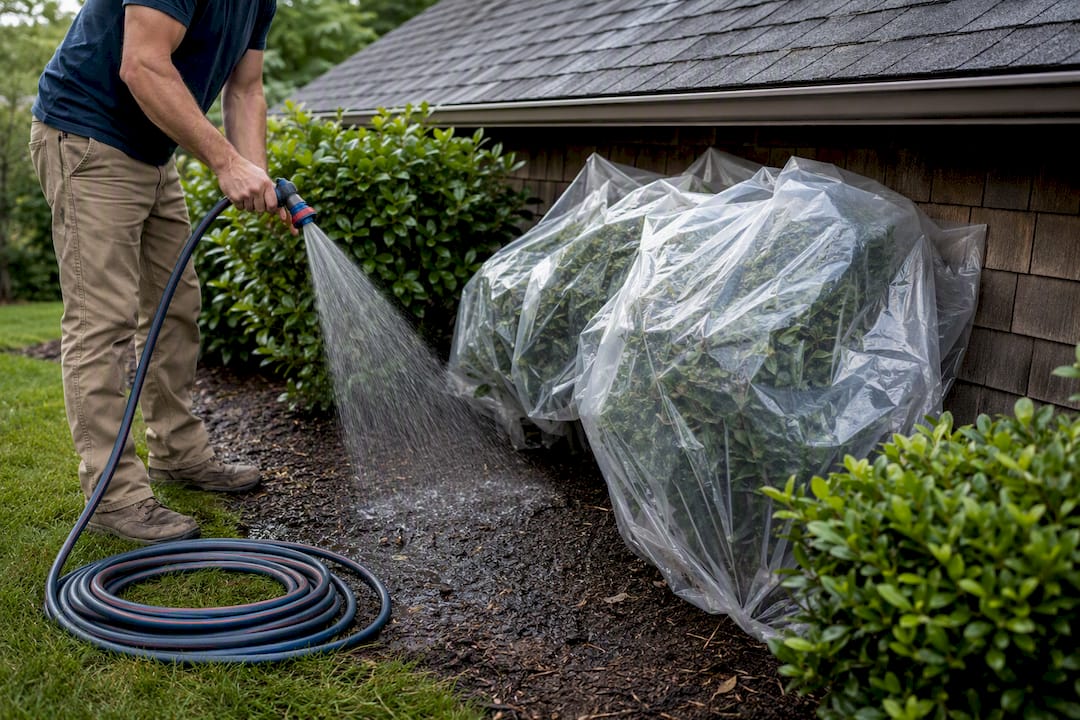
- Protect what’s below. Soak or cover shrubs and plants near the downspouts and roofline with plastic sheeting, and wet the ground around the foundation so any drips get diluted before they soak into soil.
- Test a small, hidden patch first. Apply your diluted solution to a shaded section, maybe near a vent pipe, and wait 15 to 20 minutes to confirm it doesn’t discolor or damage the shingle.
- Mix a roof-safe solution. A common approach uses a diluted stabilized chlorine or sodium hypochlorite mix with a small amount of surfactant, following the product label exactly. Skip straight bleach at full strength; it’s harsher than necessary and riskier for your landscaping.
- Apply from the ridge down. Work in small, manageable sections using a pump sprayer at low pressure, always moving top to bottom so runoff doesn’t recontaminate areas you’ve already treated.
- Let it dwell. Resist the urge to rinse right away. Most soft-wash protocols call for letting the solution sit so it fully penetrates the lichen, with the next natural rainfall handling the final rinse.
- Gently rinse or brush only if needed. If dead lichen hasn’t fallen away naturally after a few weeks, a soft-bristle brush and a garden hose on low pressure can help. Never use a pressure washer nozzle or a stiff wire brush.
- Watch for results over several weeks. Full clearing is a gradual process, not an overnight one. Expect visible browning within days and most of the dead material gone within a month or two.
Pro Tip: If you’re testing a patch and see the shingle color shift or granules loosen in your hand, stop. That’s your roof telling you the solution is too strong or the shingles are already too worn for a DIY approach.
Call a professional instead if your roof pitch makes walking unsafe, if the lichen covers more than a small portion of the surface, or if you notice soft spots, curling edges, or heavy granule loss when you inspect the roof from a ladder. Those are signs the roof needs an experienced eye, not just a spray bottle.
Why and When to Hire a Professional Soft-Wash Service
Pressure washing an asphalt shingle roof isn’t just risky, it’s specifically discouraged by the industry. The Asphalt Roofing Manufacturers Association recommends against it, and many shingle warranties can be voided if pressure washing damage shows up during a claim. That single fact is the biggest reason homeowners with anything beyond a small patch of lichen should call a professional rather than borrow a neighbor’s pressure washer.
A professional soft-wash roof cleaning service brings a few real advantages you can’t easily replicate on your own:
- A trained eye that inspects for existing granule loss or soft spots before treatment even starts, so pre-existing damage doesn’t get blamed on the cleaning.
- Chemical mixes calibrated to the severity of the growth rather than a one-size-fits-all dilution.
- Low-pressure equipment built for the job, not a rental unit designed for driveways.
- Documentation and a satisfaction guarantee that protects you if something looks off after the job.
Before hiring anyone, ask about insurance coverage, request references or before-and-after photos of past roof jobs, and confirm in writing what happens if the lichen isn’t fully cleared after the first treatment. Costs vary by roof size, pitch, and how established the growth is, but a straightforward soft-wash job on an average residential roof is often less expensive than the shingle replacement you’d be facing a few years early from repeated pressure washing damage.
How to Stop Lichen From Coming Back
Killing the lichen is only half the job. If you don’t change the conditions that let it grow in the first place, it comes back within a season or two. Lichen thrives in shade, moisture, and still air, so prevention means attacking all three.
Start with the trees. Overhanging branches keep sections of your roof damp and shaded long after the rest has dried out, which is exactly the microclimate lichen wants. Trimming back branches so more sunlight and airflow reach the roof surface does more for long-term prevention than any spray.
Gutters matter more than most homeowners assume. Clogged gutters hold water against the roof edge and fascia, feeding the moisture that organic growth needs. Cleaning gutters at least twice a year, more if you’ve got heavy tree cover, keeps that moisture from pooling in the first place. A clogged gutter system left unchecked for a full season is often where the next lichen outbreak starts.
Copper or zinc strips installed near the roof ridge are one of the more effective passive deterrents available. Rain washing over the metal releases ions that make the shingle surface inhospitable to lichen and moss, and the effect continues for years without any maintenance on your part.
- Trim tree limbs back from the roofline at least once a year.
- Clean gutters and downspouts twice yearly, more often under heavy tree cover.
- Install copper or zinc strips near the ridge line during your next roof service.
- Inspect the roof twice a year, spring and fall, for early growth you can treat before it spreads.
- Consider a light preventive spray annually in shaded, moisture-prone areas even without visible growth.
Pro Tip: Walk your roofline with binoculars from the ground every spring. Catching a lichen patch the size of a dinner plate is a five-minute treatment; catching it when it covers a third of the roof is a much bigger job.
If your roof is nearing the end of its expected lifespan and lichen keeps returning despite treatment, that’s often a signal the shingles themselves have degraded enough to hold moisture differently than they used to. At that point, roof rejuvenation or a broader conversation about materials makes more financial sense than another round of chemical treatment.
Protecting Your Plants, Your Warranty, and Yourself During Treatment
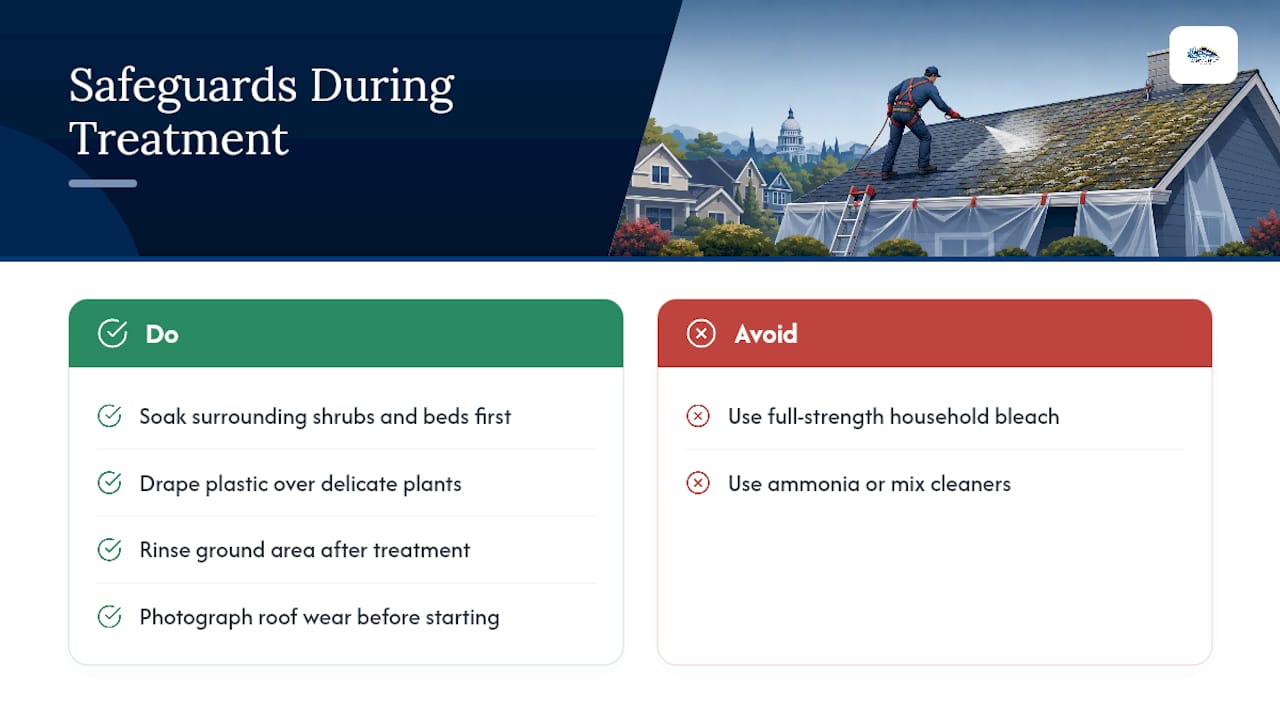
Any chemical strong enough to kill lichen is strong enough to hurt your landscaping if you’re not careful with runoff. Before applying anything, soak surrounding shrubs and garden beds with plain water, and drape plastic sheeting over anything delicate near the drip line. Rinse the ground area again once you’re done to dilute whatever runoff made it past your coverage.
Skip full-strength household bleach and ammonia. Both are more aggressive than necessary for the job, and ammonia in particular can react badly if it ever mixes with a chlorine-based product, releasing fumes you don’t want to breathe on a rooftop. Diluted, purpose-labeled roof treatments do the same job with far less risk to your plants, your shingles, and you.
Wear chemical-resistant gloves and eye protection any time you’re mixing or applying concentrate, and keep pets and kids off the lawn below until the area has been rinsed.
One safeguard that’s easy to skip but genuinely matters: take photos of your roof’s condition before you start, including any existing wear, soft spots, or granule loss. If you later need to make a warranty claim on the shingles, that documentation shows the damage wasn’t caused by your cleaning process. A quick walk around with your phone camera before you mix a single batch of solution can save you a headache down the line.
What Professional Soft-Wash Actually Looks Like on Your Roof
Homeowners in the Capital Region call Capital Pro Pressure Washing after realizing a DIY spray bottle isn’t going to touch a lichen colony that’s been building for a few years. As a veteran-owned company, the team built its process specifically around soft-wash, no scraping, no high-pressure equipment, because that’s what protects both the shingles and the roof’s warranty.
A typical job starts with an inspection of the existing roof condition, documenting any soft spots or granule wear before a drop of solution goes down. From there, the crew applies a low-pressure biocidal treatment calibrated to how established the growth is, working systematically from the ridge down. Where a roof needs more than a clean, sealing options are available to extend the results. Every job comes with a satisfaction guarantee, which matters most on a surface as unforgiving of mistakes as a roof.
What sets that approach apart isn’t a gimmick. It’s the same reasoning ARMA itself recommends: kill the organism gently, protect the shingle, and let nature finish the rinse.
— Luis T
Get Your Roof Cleaned the Warranty-Safe Way
Capital Pro Pressure Washing gives Capital Region homeowners a real alternative to the DIY spray-and-pray approach or, worse, a rental pressure washer that risks the exact granule damage this whole guide warns against. If your lichen has spread past a patch or two, or your roof’s pitch makes a DIY job unsafe, this is the point where hiring a specialist actually saves you money over the life of your roof.
The team’s soft-wash roof cleaning service uses the same low-pressure, no-scrape methods described throughout this guide, calibrated to your roof’s specific growth and condition rather than a generic treatment. For homeowners dealing specifically with established colonies rather than early growth, the roof moss and lichen removal service is built for exactly that heavier job. Every visit starts with a real inspection, not a guess, and every job comes backed by a satisfaction guarantee.
If you’re not sure whether your situation needs a DIY treatment or a professional visit, check the pricing and cost guide for a sense of what a proper soft-wash roof job runs, then reach out for a quote based on your actual roof.
Sources
- Asphalt Roofing Manufacturers Association (ARMA) — Algae discoloration of roofs
- Inspectapedia — Lichens formation on building roofs and removal guidance
- Fine Homebuilding — How to remove lichen and moss from your roof
FAQ
What Kills Lichen on a Roof?
A soft-wash biocide, typically a diluted chlorine-based solution applied at low pressure, kills lichen at the cellular level. Professional soft-wash treatments and homeowner-grade no-rinse products both use this approach rather than scrubbing or scraping.
Does Vinegar Kill Roof Lichen?
Vinegar can suppress light, early-stage lichen but rarely kills an established colony on its own. For anything beyond a small, fresh patch, a proper biocide or a professional soft-wash treatment works far more reliably.
Does Dawn Dish Soap Kill Roof Moss or Lichen?
Dish soap isn’t a biocide and won’t kill lichen or moss outright, though it’s sometimes used as a mild surfactant mixed into other cleaning solutions. Relying on it alone will leave the organism’s rhizines intact and the growth likely to return quickly.
Is Lichen Bad for Your Roof?
Left untreated, lichen and related organisms can gradually shorten shingle life by holding moisture against the surface and, over years, contributing to granule loss. It’s more of a slow, cosmetic-to-structural problem than an emergency, which is why timely treatment matters more than panic.
How Long Does It Take to See Results After Treatment?
Expect the lichen to start browning within days of a biocide treatment, but full clearing as dead growth washes and flakes away typically takes several weeks. Heavier, long-established colonies can take a couple of months and sometimes a second application.
Recommended
Services Related To This Article
Need a quote in the Capital Region?
Fast, free estimates from a local, licensed & insured team.
