
Soft Wash Roof Cleaning: The Safe Method for Shingles
Soft wash roof cleaning is the correct method for most residential roofs, including asphalt shingles, tile, slate, and many metal surfaces. It relies on chemistry rather than brute water pressure to kill algae, moss, and lichen at the root, leaving your roof clean without stripping the granules that protect shingles from UV damage. A typical job runs between $0.30 and $0.75 per square foot, which puts a 1,500 sq ft roof in the $450–$1,125 range depending on pitch, growth severity, and local labor rates. If your roof shows dark streaks, green patches, or visible moss, the right next step is a professional inspection and written quote before any cleaning begins.
Key Takeaways
Soft wash roof cleaning is the only method that removes algae and moss without stripping shingle granules, preserves manufacturer warranties, and delivers results that last 3–6 years.
| Point | Details |
|---|---|
| Correct method for most roofs | Soft washing uses chemistry under 100 PSI, not pressure, making it safe for asphalt shingles, tile, and slate. |
| Typical cost range | Expect $0.30–$0.75 per sq ft, or $450–$1,125 for a 1,500 sq ft roof. |
| Results timeline | Black streaks fade in 10–30 minutes; moss fully weathers off over days to weeks. |
| Retreatment frequency | Most roofs need retreatment every 3–6 years, depending on shade and humidity. |
| Capital Pro Pressure Washing | Veteran-owned, licensed, and insured; serves the Capital Region with a satisfaction guarantee on every soft-wash roof job. |
Table of Contents
- How soft wash roof cleaning works
- Why pressure washing damages shingles
- Benefits homeowners can expect from a soft wash
- Chemicals, safety steps, and environmental precautions
- What to expect: timeline, results, and how often to clean
- How much soft wash roof cleaning costs
- DIY vs. hiring a professional: how to decide
- Why Capital Pro Pressure Washing stands out for roof soft washing
- What most homeowners get wrong about soft washing
- Capital Pro Pressure Washing: get a free roof cleaning quote
- Sources
- FAQ
How soft wash roof cleaning works
Soft washing is a chemistry-first process. A low-pressure diaphragm pump delivers a solution of sodium hypochlorite (bleach) and surfactant through a hose and nozzle at under roughly 100 PSI at the nozzle, which is far below the 1,500–3,000 PSI a standard pressure washer produces. The chemistry does the actual killing; the water pressure is just the delivery vehicle.
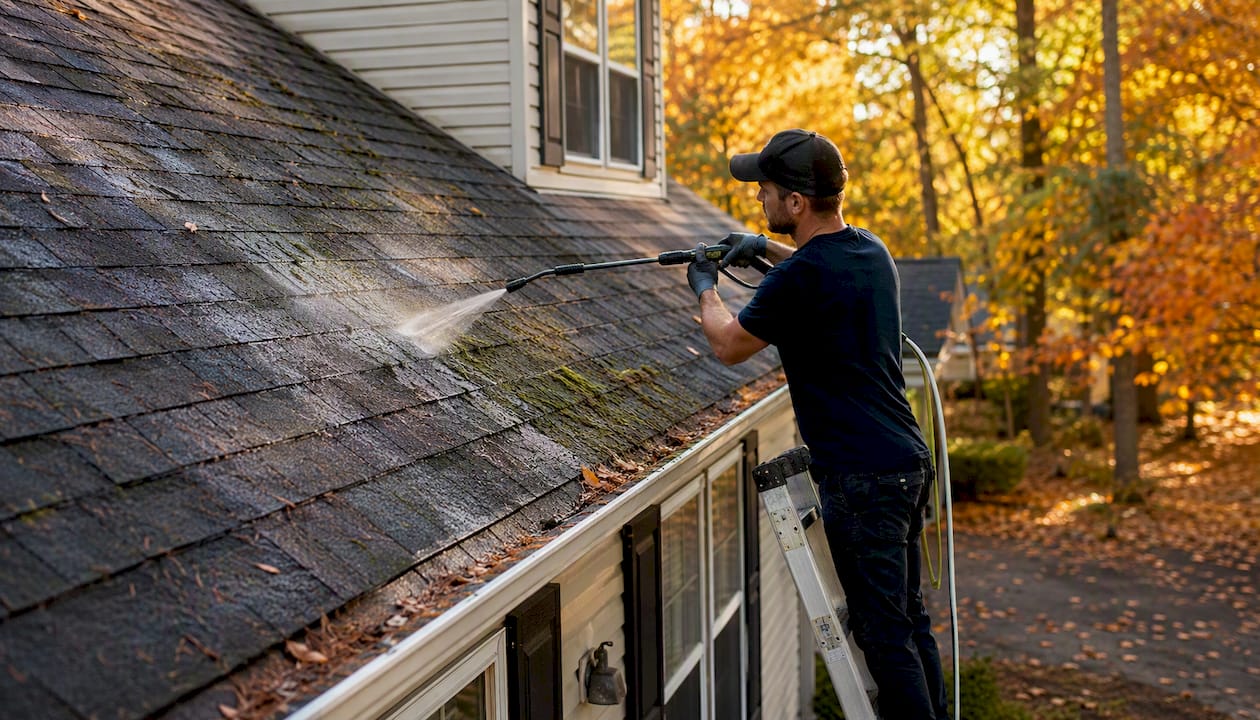
Surfactants are the underappreciated half of the formula. On steep pitches, they thicken the solution so it clings to the shingle surface instead of sheeting off immediately, which extends dwell time and improves penetration into the biological growth. Without a good surfactant, the bleach runs off before it can work.
Dwell time typically runs 10–20 minutes, sometimes longer for heavy moss or lichen. After dwell, the roof gets a low-pressure rinse to clear the dead organic matter and residual chemistry.
What a properly mixed soft wash solution kills:
- Gloeocapsa magma (the cyanobacteria behind those black streaks)
- Algae and green surface growth
- Moss colonies and their root-like rhizoids
- Lichen (the hardest to kill, often requiring a second treatment)
- Surface mildew and mold spores
Why pressure washing damages shingles
The core difference is mechanism. Soft washing kills growth chemically and removes it gently. Pressure washing blasts it off mechanically, and that mechanical force is exactly what shingles cannot handle.
Asphalt shingles are coated with mineral granules that block UV radiation and shed water. High-pressure water strips those granules, accelerating wear by years in a single cleaning session. Lifted shingle edges are another common result, creating entry points for moisture and wind damage. Beyond the physical harm, pressure washing risks stripping protective granules and accelerating shingle wear in ways that may not be visible immediately but show up as premature failure within a few seasons.
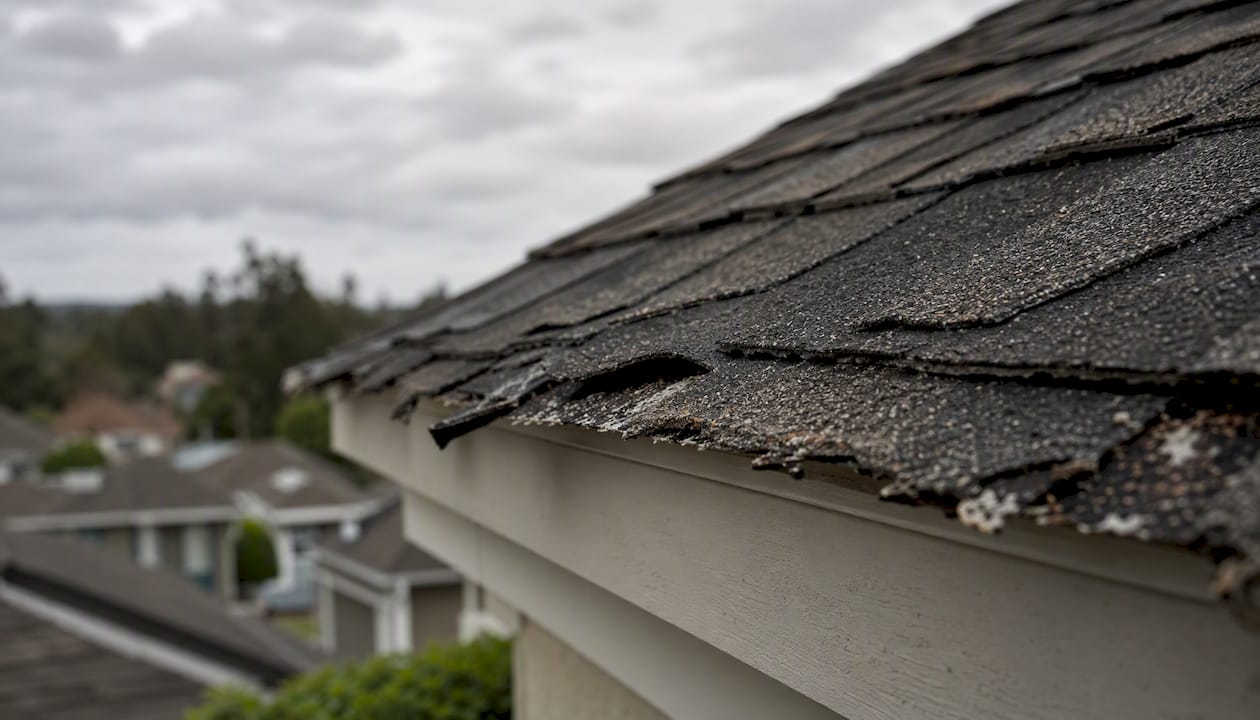
The Asphalt Roofing Manufacturers Association (ARMA) distributes consumer guidance endorsing low-pressure, chemical-assisted cleaning for asphalt shingles and explicitly identifies pressure washing as a practice that accelerates granule loss. Many shingle manufacturers, including GAF, echo this position in their warranty language. Using high-pressure cleaning on a warranted roof can void that coverage entirely.
| Factor | Soft Wash | Pressure Washing |
|---|---|---|
| Operating pressure | Under 100 PSI at nozzle | 1,500–3,000+ PSI |
| Kill method | Chemical (sodium hypochlorite) | Mechanical (water force) |
| Granule impact | Minimal | High risk of stripping |
| Shingle edge risk | Low | Lifted edges common |
| Warranty status | Preserved (ARMA-aligned) | May void manufacturer warranty |
| Results duration | 3–6 years typical | Shorter; regrowth faster |
Benefits homeowners can expect from a soft wash
The most obvious payoff is visual. Black streaks caused by Gloeocapsa magma algae fade within minutes of application, and the roof can look years younger by the end of the same day. But the longer-term benefits are where soft washing earns its cost.
- Extended cleaning intervals. Soft washing can keep a roof clean for a typical repeat interval of 3–6 years, depending on shade, humidity, and tree cover. Pressure washing tends to leave behind root systems that regrow faster.
- Warranty preservation. Because soft washing aligns with ARMA’s recommended low-pressure chemical cleaning guidance, it keeps manufacturer warranties intact. Pressure washing often does not.
- Roof reflectivity. Removing heat-absorbing algae and grime can modestly improve roof reflectivity and reduce heat gain, which may contribute to small energy savings in warmer months. Pairing a clean roof with other home improvements, like upgrading interior doors for better thermal performance, compounds those efficiency gains.
- Extended roof lifespan. Algae and moss hold moisture against shingles. Removing them consistently reduces the freeze-thaw damage that shortens roof life in climates like New York’s Capital Region.
Chemicals, safety steps, and environmental precautions
The standard active ingredient is sodium hypochlorite, the same compound in household bleach but at higher concentrations. Some contractors use sodium percarbonate-based alternatives for fragile materials like painted wood shakes, though these are less common and slower-acting.
Sodium hypochlorite can react with organic pigments in painted surfaces, so professionals perform inconspicuous test spots on nearby painted trim before full application. Staining from this reaction can be permanent, making the test spot non-negotiable on homes with painted fascia or trim.
Practical safety and environmental steps:
- Pre-wet all landscaping within the runoff zone before application, and rinse again immediately after the roof rinse.
- Cover or isolate HVAC intakes, open gutters, and any sensitive plantings that can’t be moved.
- Rinse metal surfaces (gutters, flashing, metal roofs) thoroughly after dwell, since sodium hypochlorite can accelerate oxidation on bare metal if left to dry.
- Check local regulations. Some municipalities require runoff documentation or restrict bleach-based cleaning near storm drains. A reputable contractor will know your jurisdiction’s rules.
What to expect: timeline, results, and how often to clean
The first visible change happens fast. Black streaks visibly fade within 10–30 minutes of application, and you’ll often see a dramatic difference before the crew finishes rinsing. Moss is slower: it turns brown within hours but may take days to weeks to fully weather off the surface as rain and wind carry it away.
Here’s a realistic timeline for a typical soft wash job:
- Pre-inspection (15–30 minutes). The contractor walks the roof and identifies problem areas, checks for damaged shingles, and notes any painted surfaces requiring test spots.
- Landscape protection (15–20 minutes). Plants are pre-wetted, sensitive areas covered, and gutters checked.
- Chemical application (20–45 minutes). Solution is applied at low pressure, working from the ridge down.
- Dwell time (10–20 minutes, longer for heavy lichen). The chemistry works while the crew monitors runoff.
- Low-pressure rinse (20–30 minutes). Roof is rinsed thoroughly; metal surfaces get extra attention.
- Post-treatment inspection. Contractor documents results and flags any pre-existing damage found during cleaning.
Total on-site time for a typical residential roof runs 1.5–3 hours. Results typically last 3–6 years, though roofs under heavy tree canopy or in high-humidity areas may need retreatment closer to the 3-year mark. Scheduling a follow-up inspection around year 2–3 is a reasonable habit.
How much soft wash roof cleaning costs
Price ranges vary by region, roof complexity, and growth severity, but the numbers below reflect typical consumer pricing from industry sources.
The main cost drivers are roof size, pitch, number of stories, material type, and how bad the biological growth is. A low-pitch ranch with light algae streaking sits at the low end. A steep two-story with thick moss colonies and lichen patches sits at the high end, sometimes higher.
When comparing quotes, ask each contractor to specify:
- Total square footage being cleaned
- Chemical type and approximate concentration
- Whether gutters, fascia, and downspouts are included
- What the runoff plan is
- Whether a post-inspection is included
A quote that skips these details is a quote you can’t evaluate. Unusually low bids often mean diluted chemistry, no dwell time, or a contractor who will reach for a pressure washer when the soft wash doesn’t produce instant results.
DIY vs. hiring a professional: how to decide
DIY soft washing is technically possible for a small, low-pitch roof with light algae growth, but the bar is higher than most homeowners expect. You need proper PPE (chemical-resistant gloves, eye protection, non-slip footwear), a diaphragm pump or 12-volt sprayer, the correct sodium hypochlorite concentration, a surfactant, and a solid plan for protecting your landscaping and rinsing metal surfaces. One mistake with concentration or rinse timing can damage painted trim or kill plants.
For steep roofs, heavy moss or lichen, multi-story homes, or any roof still under manufacturer warranty, hire a professional. The liability exposure and physical risk alone justify the cost.
What to expect from a reputable contractor follows a clear sequence: professional soft-wash protocols include pre-inspection, landscape protection, controlled chemical application with dwell time, low-pressure rinse, and post-treatment inspection. If a contractor skips any of those steps, that’s a problem.
Questions to ask before booking:
- Are you licensed and insured? (Ask for a certificate of insurance.)
- What chemical mix do you use, and at what concentration?
- Do you perform a pre-inspection and provide post-treatment photos?
- What’s your runoff plan for protecting my landscaping?
- Do you offer a satisfaction guarantee or warranty on results?
- Will you use soft wash only, or will you use a pressure washer at any point?
Red flags: no written scope of work, unwillingness to disclose chemical concentrations, a bid that mentions “pressure washing” the shingles, no proof of insurance, or a price so low it can’t cover proper chemical volumes and labor.
Why Capital Pro Pressure Washing stands out for roof soft washing
Capital Pro Pressure Washing is a veteran-owned company with over 10 years of experience serving Albany County, Schenectady County, Saratoga County, and Rensselaer County. The team is licensed and insured, and every roof washing job follows the full professional protocol: pre-inspection, landscape pre-wetting, low-pressure chemical application with proper dwell time, thorough rinse, and a post-treatment walkthrough.
Capital Pro uses biodegradable, EPA-aware cleaning solutions calibrated to the growth type and roof material on your specific home. Painted trim gets a test spot before any chemistry goes near it. Metal surfaces get a dedicated rinse. The company backs its work with a satisfaction guarantee, so if results don’t meet expectations, the conversation doesn’t end at the invoice.
For Capital Region homeowners considering a follow-up treatment after cleaning, Capital Pro also offers roof rejuvenation services that extend shingle life further by restoring flexibility to aging asphalt.
What most homeowners get wrong about soft washing
The most common mistake is treating soft washing as a one-and-done fix without thinking about what caused the growth in the first place. A north-facing roof under a canopy of oak trees will grow algae back faster than an open south-facing slope, regardless of how well the cleaning was done. Knowing your roof’s exposure and tree situation tells you whether you’re on a 3-year or 6-year retreatment cycle, and that changes how you budget.
The second mistake is hiring on price alone. A contractor who shows up with a pressure washer and a bottle of diluted bleach is not doing soft washing. The chemistry, concentration, dwell time, and rinse sequence are what separate a treatment that lasts 4 years from one that fades in 18 months.
Pro Tip: Schedule soft washing in mild weather, ideally between 50°F and 85°F. Extreme heat causes the solution to evaporate before it dwells properly; freezing temperatures prevent the chemistry from working at all. Spring and early fall are the sweet spots in the Capital Region.
Capital Pro Pressure Washing: get a free roof cleaning quote
Capital Pro Pressure Washing offers soft-wash roof cleaning across Albany, Schenectady, Saratoga, and Rensselaer Counties, with every job backed by a satisfaction guarantee and performed by a licensed, insured crew. Bundling your roof wash with a house washing service is a practical way to get the full exterior done in one visit at a combined price.
Request a free inspection and written quote at Capitalpropressurewashing. The quote will include chemical specifics, a scope of work, and proof of insurance, so you can compare it against any other bid with confidence.
Sources
These resources give homeowners and contractors deeper technical grounding on soft washing standards, manufacturer guidance, and chemical safety:
- Soft Wash Roof Cleaning: How It Works & What It Pays
- Soft Washing Your Roof: The Only Safe Method Explained
- Soft Washing Roofs: How It Works and When to Use It | National Roof Cleaning Authority
- Soft washing
- What Is Soft Wash Roof Cleaning? (Homeowners Guide)
FAQ
Is soft washing safe for asphalt shingle roofs?
Yes. Soft washing is the method ARMA recommends for asphalt shingles because it uses low-pressure chemical application rather than high-pressure water, which can strip granules and void manufacturer warranties.
What chemical is used to soft wash a roof?
How long does a soft wash take to show results?
Black algae streaks visibly fade within 10–30 minutes of application. Moss turns brown within hours but may take days to weeks to fully weather off the roof surface.
How do you soft wash a shingle roof without damaging it?
Apply a sodium hypochlorite and surfactant solution at under 100 PSI, allow a 10–20 minute dwell, then rinse at low pressure. Pre-wet landscaping, test painted surfaces first, and never use a standard pressure washer on shingles.
Can you pressure wash a roof instead of soft washing?
Pressure washing is not recommended for asphalt shingles. High PSI strips protective granules, lifts shingle edges, and can void your manufacturer warranty. Soft washing achieves better, longer-lasting results without the physical damage.
Recommended
Services Related To This Article
Need a quote in the Capital Region?
Fast, free estimates from a local, licensed & insured team.
