
Homeowners: Require a Test Patch to Stop Pressure Washing Lines
Those visible streaks on your driveway or siding are almost always caused by uneven technique, mismatched equipment, or incomplete rinsing, not a flaw in the surface itself. If you’re staring at zebra stripes on your concrete or faint banding on your siding, the fix starts with a test patch and a few pointed questions to your contractor about nozzle condition and rinse-down steps.
Quick Summary:
- Proper overlap of 10 to 25 percent during pressure washing is crucial to prevent streaks caused by inconsistent passes.
- Using the correct nozzle matched to the surface and replacing worn tips in pairs ensures even pressure and avoids streaks from equipment faults.
- Running a test patch before the full cleaning project helps diagnose potential issues with technique, equipment, or substrate variations.
- Applying detergent from the bottom up and rinsing from the top down minimizes streaks caused by leftover soap and dirty runoff.
- Contractors should walk the property, run a test patch, and explain their process to ensure streak prevention and accountability.
Table of Contents
- What Causes Pressure Washing Lines and Streaks?
- How Pros Prevent Streaks: Overlap, Nozzles, and Sequencing
- What Should a Professional Crew Do to Avoid Lines?
- Can You Fix Streaks After Pressure Washing Yourself?
- What Capital Pro Pressure Washing Does Differently
- Prioritize the Diagnosis, Not the Fix
- Ready to Get a Streak-Free Exterior Cleaning?
- Sources
- FAQ
What Causes Pressure Washing Lines and Streaks?
Streaking almost always traces back to one of four things: technique, equipment, chemistry, or the substrate itself. Isolating which one is responsible is the entire game.
Technique problems show up most often as inconsistent overlap between passes. Walk too fast in one stretch and slow in another, and you get bands of heavier and lighter cleaning that read as stripes once the surface dries. Pausing or “dwelling” in one spot while moving briskly through another creates the same effect. The fix is a steady pace and overlap between 10 and 25 percent depending on the tool, so no strip of surface gets skipped or double-hit.
Equipment faults are the second big culprit. A worn or partially clogged nozzle changes the spray pattern and cuts effective pressure, and a mismatched orifice size or fan angle on a surface cleaner can make one side of the tip clean harder than the other. Low inlet flow, an undersized garden hose, or a kink in the supply line starves the machine of the gallons per minute it needs, and the pressure drop shows up as faint lanes across concrete or pavers; diagnosing such low water pressure issues is essential to ensure effective cleaning with a pressure washer like those explained in Low Water Pressure: What’s Causing It and How to Fix It.
Chemistry issues cause a different kind of mark: chalky, white-ish streaks that appear only after the surface dries. That’s almost always leftover detergent. The wrong dilution or an incomplete rinse leaves residue behind, and residue reads as a streak even though the actual cleaning was even.
Substrate variation is the case nobody wants to hear: sometimes the “streak” was already there. Old sealer, patch repairs, or texture differences in concrete can become visible only once the surface is clean and wet, then more visible once it dries.
To sort out which cause you’re dealing with, run this checklist:
- Pick a test section and let it dry completely before judging the result, since wet concrete hides bands that show up once dry.
- Photograph the pattern in daylight and compare it to the layout of the passes.
- Change only one variable at a time. Test nozzle, then speed, then water flow separately, never all three at once.
- Check inlet flow and hose diameter if the machine seems to lose pressure midway through a job.
- Look for a straight-line pattern (usually technique or equipment) versus a blotchy or patchy one (usually substrate or old sealer).
How Pros Prevent Streaks: Overlap, Nozzles, and Sequencing
Reputable crews build streak prevention into the workflow rather than fixing it after the fact. Here’s the sequence that keeps a wash even from the first pass to the last.
- Set the overlap first. Passes should overlap roughly 10 to 25 percent, with wider overlap on surface cleaners spinning at higher RPM and tighter overlap on hand wands where control is easier.
- Match the nozzle to the machine. A 40-degree wide-angle tip on siding or wood, paired correctly to the unit’s PSI and GPM, spreads pressure evenly and avoids the concentrated etching a narrow tip can cause. When surface cleaner tips wear unevenly, replace them in matched pairs so one side doesn’t out-clean the other.
- Confirm flow before starting. A quick check of inlet GPM and hose condition catches the kind of pressure sag that shows up as faint lanes halfway through a driveway.
- Sequence soap and rinse correctly. Apply detergent from the bottom up to avoid streak-causing drip lines, then rinse from the top down so dirty runoff never re-lands on a section already cleaned.
- Finish with a dedicated water-only rinse. This step is what actually prevents the chalky residue streaks that show up a day later.
- Work in the right conditions. Direct sun bakes detergent onto the surface before it can be rinsed, so cooler hours and shaded timing produce more even results. Confirm the site drains water away instead of pooling.
- Run a test patch before scaling to the full job. A small dried section tells you in minutes whether the settings are right for that specific surface.
Pro Tip: Ask your contractor to walk you through their overlap and nozzle choice before they start. A crew that can explain their pass pattern in one sentence almost certainly has one, and that’s the single best predictor of an even result.
What Should a Professional Crew Do to Avoid Lines?
A contractor who takes streak prevention seriously follows a visible process, not a rush job. Before hiring, confirm the crew plans to:
- Walk the property first and flag sensitive areas, such as old sealer, hairline cracks, or repaired sections that might show unevenly once cleaned.
- Run a test patch and let it dry fully before starting the rest of the job, checking for both missed soil and any sign of detergent residue or surface etching.
- State plainly which surface cleaner or nozzle they intend to use and confirm it matches your specific siding, pavers, or concrete.
- Explain their detergent, dilution, and rinse plan in advance rather than treating it as an afterthought.
- Offer a callback or warranty if streaking or missed spots appear once everything is fully dry.
That last point matters more than it sounds. Plenty of streaking only becomes visible after the surface dries completely, sometimes a full day later, so a contractor who won’t commit to a callback is quietly pushing that risk onto you.
Can You Fix Streaks After Pressure Washing Yourself?
Start by letting the area dry completely and inspecting it in full daylight. A dry inspection tells you whether you’re looking at leftover soil, detergent residue, or actual surface damage, and each of those calls for a different response.
If the marks look chalky or faintly white, a low-pressure re-rinse with plain water often clears it, since that pattern usually points to detergent left behind from an incomplete rinse. For siding or deck boards, a targeted soft-wash pass over just the affected strip is safer than repeating a full high-pressure run.
Avoid the instinct to hit a stubborn line repeatedly with the wand at close range. Repeated heavy passes are how a faint stripe turns into actual etching, especially on softwood decks, vinyl, or aluminum trim, where lower pressure and wider nozzle angles are the safer approach.
- Dry, inspect, and photograph before doing anything else.
- Try a gentle re-rinse for chalky or dull streaks.
- Call the original contractor if the mark doesn’t budge. This is exactly what a callback guarantee is for.
Pro Tip: If a streak has a slightly rough or etched feel when you run your hand across it, stop treating it as a cleaning problem. That’s substrate damage, and it needs a professional opinion rather than more water pressure.
What Capital Pro Pressure Washing Does Differently
Luis T, writing on behalf of Capital Pro Pressure Washing, has spent over a decade in the Capital Region watching the same mistakes create the same complaints. Capital Pro is veteran-owned, built on soft-wash methods that clean mold and mildew without the aggressive pressure that causes etching in the first place.
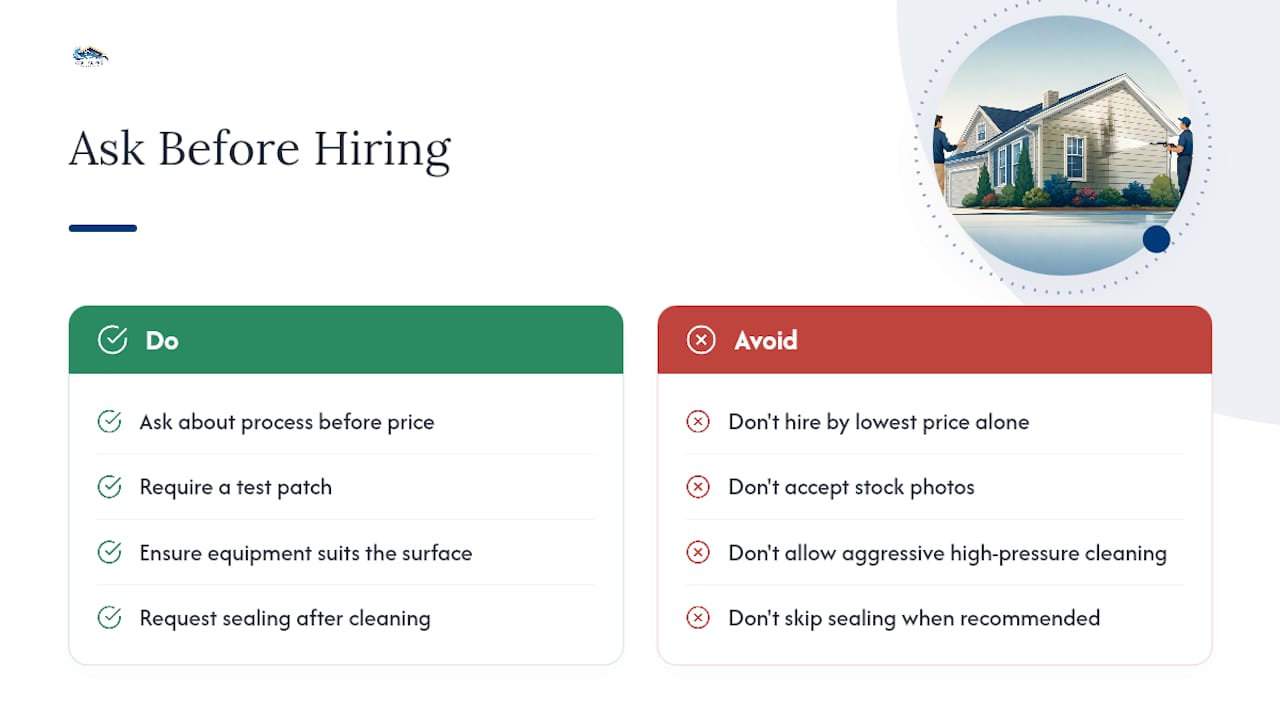
The practical takeaway for homeowners: ask about process before you ask about price. Capital Pro’s crews run test patches, match equipment to the surface in front of them, and pair cleaning with sealing services so the same staining doesn’t reappear in six months. Pricing information is available through the company’s website, and satisfaction is backed by a guarantee with free callbacks if something looks off once it dries.
Before booking anyone, ask to see before-and-after photos of real jobs, not stock images. A contractor confident in their process will hand those over without hesitation.
Prioritize the Diagnosis, Not the Fix
Most advice about pressure washing streaks jumps straight to remedies. Scrub harder, rinse again, try a different soap. That’s backwards. The research behind this guide points to a simpler truth: streaking is a diagnostic problem before it’s a cleaning problem, and skipping the diagnosis is why homeowners end up paying twice.
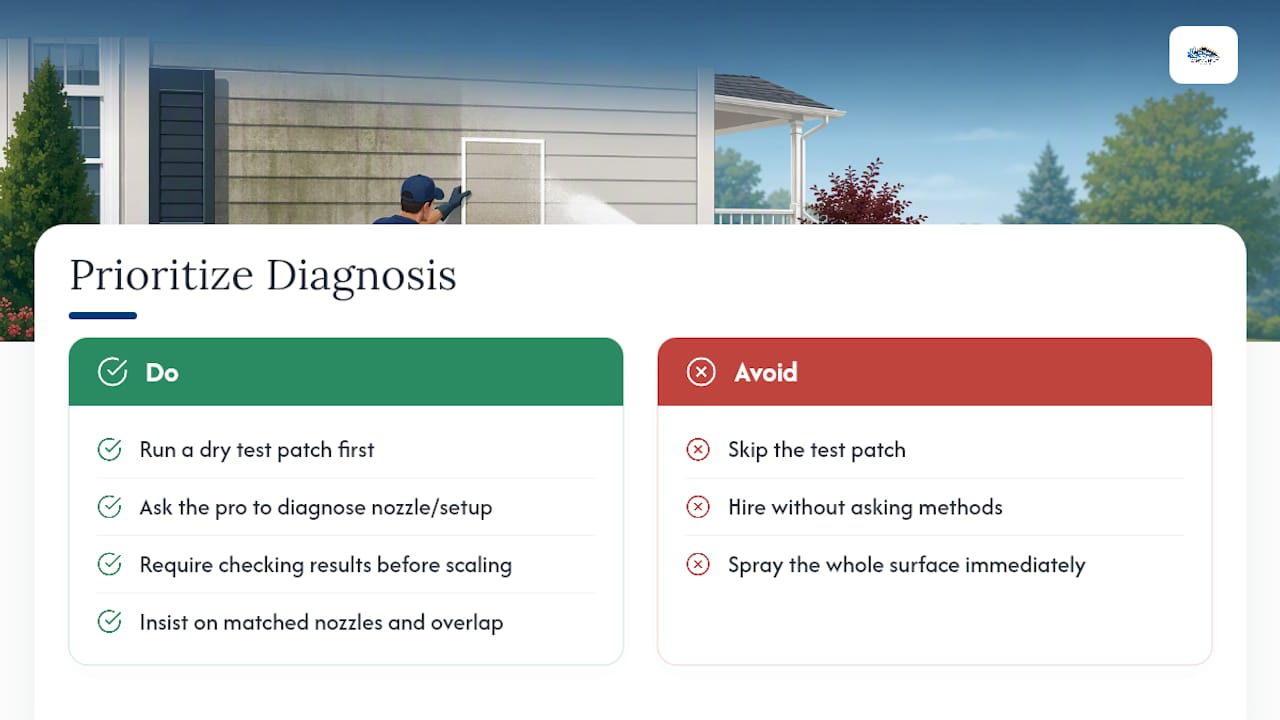
The conventional wisdom oversells “just hire a pro” as the fix, without telling you what to actually ask that pro. A crew running mismatched nozzles or skipping the dry test patch will produce the exact same streaks a rushed DIY job would, just at a higher price. The equipment and the experience matter less than the discipline of the process behind them.
If you take one thing from this article, make it the test patch. It costs you nothing, it takes minutes, and it separates a contractor who diagnoses problems from one who just sprays water and hopes. Every other prevention step, overlap, nozzle matching, rinse sequencing, only works if someone is actually checking the result before scaling it across your whole property.
— Luis T
Ready to Get a Streak-Free Exterior Cleaning?
This company addresses common problems such as mismatched equipment and skipped rinse steps that can leave homeowners with uneven results and no recourse. They use soft-wash techniques matched to each surface, whether vinyl siding, stamped concrete patio, or wood deck, with consistency from the quoting team to the crew performing the work.

Projects typically begin with an inspection and, when appropriate, a test patch before the full job. House washing, concrete and paver cleaning and sealing, deck and fence cleaning, and roof washing are all handled with the same equipment-matching approach, and sealing after cleaning helps concrete and pavers resist the staining that causes streaks to return. Pricing details are available on their website, and the company offers free callbacks if issues arise after the surface dries.
If you’re comparing quotes or just want to know what a proper test patch looks like before hiring anyone, request an instant quote and ask Capital Pro to walk you through the plan for your specific surface before a single pass is made.
Sources
- Why Does My Pressure Washer Surface Cleaner Leave Streaks? - Complete Guide
- How to prevent streaks when pressure washing concrete and paved surfaces
- How to pressure-wash a house
- How to pressure wash siding: 2026 guide
FAQ
Why Does My Driveway Have Streaks After Pressure Washing?
Streaks on concrete usually come from inconsistent overlap between passes, a worn or mismatched surface cleaner tip, or leftover detergent that wasn’t fully rinsed. Maintaining 10 to 25 percent overlap and replacing worn tips in pairs solves most cases.
How Do I Know if a Streak Is Residue or Damage?
Let the area dry completely, then run your hand across it. A chalky or dull mark that rinses away easily is residue, while a rough or etched feel that won’t rinse out points to actual surface damage that needs a specialist look.
What Should I Ask a Contractor to Prevent Lines?
Ask whether the contractor runs a dry test patch before starting the full job, what nozzle or surface cleaner they’ll use on your specific surface, and whether they offer a callback guarantee if streaks appear once everything dries.
Does Capital Pro Pressure Washing Guarantee Streak-Free Results?
Capital Pro backs its work with a satisfaction guarantee and offers free callbacks if streaking or missed spots show up after the surface fully dries. Current pricing for each service is listed on the Capital Pro pricing page.
Can I Remove Streaks Myself Without Hiring Someone?
A gentle, low-pressure re-rinse often clears chalky residue streaks on concrete or siding. Avoid repeated heavy passes with the wand, since that habit is what turns a faint line into actual etching on softer surfaces like wood or vinyl.
Recommended
Services Related To This Article
Need a quote in the Capital Region?
Fast, free estimates from a local, licensed & insured team.
