
Homeowners, Protect Your Warranty: 6 Safe Steps to Clean Hardie Board
The safest way to clean Hardie board is a garden hose on low pressure and a soft to medium bristle brush, done every 6 to 12 months. For dirt and grease, mild dish soap mixed with water handles it. For mildew, reach for a manufacturer-approved mildew cleaner or oxygen bleach instead of straight chlorine. Skip the pressure washer unless you know the safe limits, because too much force can chip edges and force water behind the boards.
Quick Summary:
- Use a garden hose with a non-metallic nozzle and a soft or medium bristle brush for routine cleaning, avoiding high-pressure equipment.
- Apply a mild dish soap solution for everyday grime and switch to manufacturer-approved mildew cleaners or oxygen bleach for organic stains and mildew.
- Keep pressure washing below 1,500 PSI with a wide fan tip, maintaining at least six feet distance to prevent damage or water intrusion.
- Always test cleaning solutions on a hidden patch, and wear gloves and eye protection when applying them to avoid chemical hazards.
- Regularly inspect and clean every six to twelve months, especially in shaded areas, to prevent mildew buildup and avoid costly repairs from neglect.
Table of Contents
- What Tools and Prep Work Does Hardie Board Cleaning Require?
- How Do You Clean Routine Dirt and Grease From Hardie Board?
- How Do You Remove Mildew From Hardie Board Safely?
- Is It Safe to Pressure Wash Hardie Board Siding?
- What Safety Precautions Matter Most When Cleaning Siding?
- How Often Should You Clean and Inspect Hardie Board?
- Why Soft-Wash Protects Hardie Board Better Than a Pressure Washer
- The Manufacturer’s Advice Beats Most of What You’ll Read Online
- Professional Soft-Wash House Washing From Capital Pro Pressure Washing
- Sources
- FAQ
What Tools and Prep Work Does Hardie Board Cleaning Require?
Fiber cement siding rewards a light touch. A garden hose fitted with a non-metallic nozzle, a soft or medium bristle brush, a bucket, some soft cloths, and an extension pole cover almost every job without a ladder. If you do need height, use proper ladder standoffs rather than leaning the rails directly against the siding, which can crack it.
For cleaning solutions, mild dish soap diluted in water works for everyday grime. Manufacturer-approved mildew cleaners or oxygen bleach handle organic growth. Skip acid-based cleaners and abrasive scouring powders entirely. Harsh chemicals and stiff abrasive brushes can strip painted or coated finishes and put your warranty at risk.
Before you start, walk the perimeter and check the caulking and board edges for gaps or damage. Cover nearby plants, close any windows or doors on that side of the house, and dab your chosen cleaner on a hidden patch first.
- Non-metallic hose nozzle and soft to medium bristle brush
- Mild dish soap solution for dirt and grease
- Manufacturer-approved mildew cleaner or oxygen bleach for organic stains
- Bucket, soft cloths, and an extension pole instead of a tall ladder when possible
Pro Tip: Keep a spare garden hose nozzle dialed to a gentle shower setting specifically for siding jobs. Swapping between a jet nozzle for the driveway and a soft spray for the house cuts down on accidental pressure mistakes.
How Do You Clean Routine Dirt and Grease From Hardie Board?
Routine grime comes off with patience more than muscle. The process below works for most exterior walls in a single afternoon.
- Rinse the whole section first. Run the garden hose over a 4 to 6 foot span to knock off loose dust and cobwebs before any soap touches the wall.
- Mix your solution. A small amount of mild dish soap diluted in water is enough for most dirt and light grease.
- Scrub along the plank grain. Use the soft brush or a cloth, working top to bottom in that same 4 to 6 foot section so drips run over areas you haven’t cleaned yet.
- Rinse before the soap dries. Dried suds attract dust and leave streaks, so keep the surface wet and rinse frequently as you go. Rinsing top to bottom while keeping the surface wet is the standard fix for streak-free results.
- Move to the next section and repeat. Work your way across the wall in overlapping bands so you don’t miss a strip between sections.
- Hit stubborn spots a second time. A grease splatter near a grill or a scuff near a downspout might need a second pass with a little extra scrubbing, not a stronger chemical.
Two-story facades change the math. Working from a ladder with a bucket and brush is awkward and genuinely risky, and it’s easy to apply uneven pressure when you’re stretching to reach a spot. If you’re also dealing with a stain that won’t budge after two honest attempts, or you notice cracked caulk or signs of past water intrusion while you’re up there, that’s your cue to call a contractor rather than push harder. Persistent staining on fiber cement sometimes points to a moisture issue behind the board, and scrubbing harder just delays finding it.
How Do You Remove Mildew From Hardie Board Safely?
Mildew needs a different approach than everyday dirt because it lives on the surface and in the pores of the coating, not just on top of it. Reach for a manufacturer-recommended mildew cleaner, a labeled fiber cement siding product, or oxygen bleach rather than a jug of straight chlorine bleach from under the sink. Oxygen bleach is a milder alternative to chlorine bleach for mildew removal and it’s considerably gentler on nearby landscaping.
Test the product on a hidden section first, then apply it to the affected area and let it sit for several minutes. The key detail people skip: don’t let it dry on the wall. Oxygen bleach works by penetrating the surface and breaking mildew down at the root, which takes a little dwell time, not aggressive scrubbing. Once it’s had time to work, scrub gently and rinse thoroughly from top to bottom.
- Choose a manufacturer-approved mildew cleaner, a labeled fiber cement product, or oxygen bleach
- Test on a hidden spot, apply, wait 10 to 15 minutes without letting it dry, then scrub gently and rinse
- Trim back bushes and tree limbs that shade the siding
- Clean gutters regularly so overflow doesn’t run down the wall and feed new growth
North-facing walls and anything shaded by trees will keep growing mildew back faster than sunny walls do, simply because they stay damp longer. Improving airflow around those spots does more for long-term prevention than any single cleaning session.
Is It Safe to Pressure Wash Hardie Board Siding?
Pressure washing Hardie board carries real risk if you’re not careful with settings. High pressure can etch the finish, chip edges, and force water behind the siding, and manufacturers point toward low-pressure rinsing for exactly that reason. A blown seam or forced gap in the caulk can trap moisture behind the board, which is a much bigger repair than the dirt you started with.
If you’re set on using a pressure washer anyway, keep the settings conservative; learn when to call in residential pressure-washing services to protect your siding.
- Start under 1,500 PSI and use a wide fan tip, never a narrow turbo nozzle
- Stay at least 6 feet back from the surface
- Angle the spray downward, never straight into a seam or upward under a board
- Test an inconspicuous section first and check for damage before continuing
Soft-wash is the alternative most contractors use instead, and for good reason. It pairs a much lower pressure setting with a cleaning solution that does the actual work of lifting dirt and killing mildew, rather than relying on force. That combination lets professionals clean full houses, including multi-story homes, without the risk that comes with a pressure washer alone. If your own soft-wash siding routine still leaves streaks or missed spots after a careful attempt, that’s usually a sign the job calls for professional equipment rather than more elbow grease.
What Safety Precautions Matter Most When Cleaning Siding?
Test first, every time. A hidden spot test before you commit to a full wall is standard advice from major retailers and contractors alike, and it takes five minutes. Give it a full rinse and let it dry before deciding whether the color and finish held up.
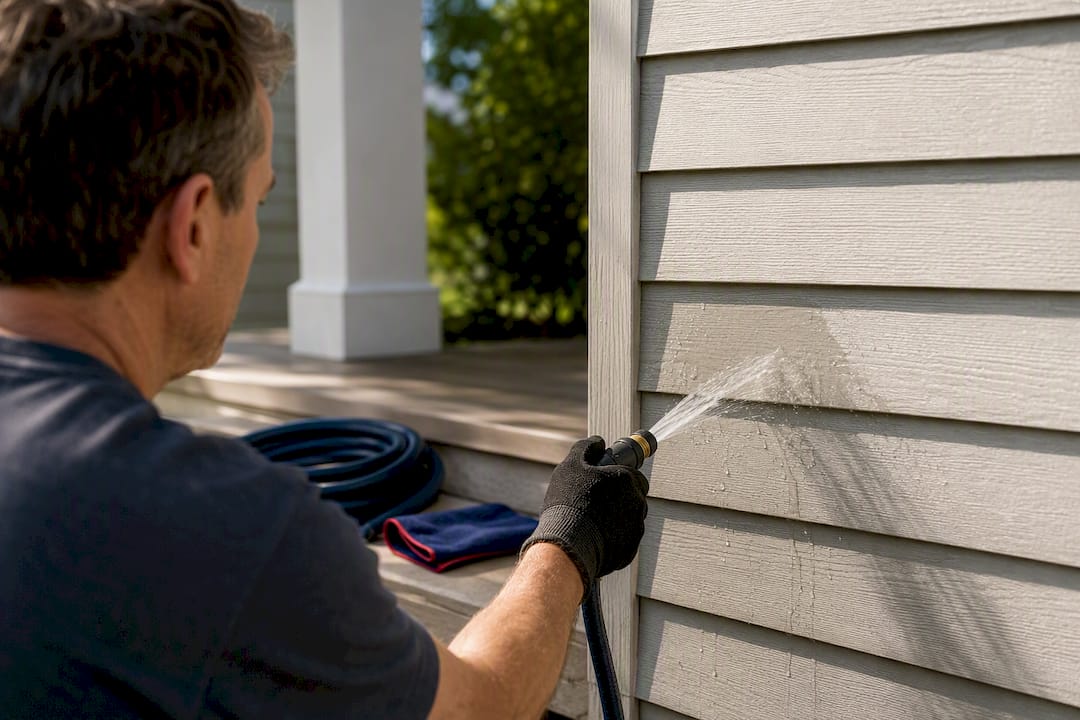
Wear gloves and eye protection any time you’re mixing or applying cleaning solutions, especially oxygen bleach or mildew-specific products. Never mix bleach with ammonia-based cleaners. That combination produces fumes you do not want to breathe.
Pre-wet garden beds and shrubs near the work area, and cover anything delicate with a tarp. Diluted runoff from mild soap is generally fine for most plants, but concentrated cleaner pooling at the base of a shrub can burn leaves or roots.
How Often Should You Clean and Inspect Hardie Board?
Every 6 to 12 months is the manufacturer’s baseline, though shaded or north-facing walls often need a closer look in between since they hold moisture longer and grow mildew faster than sun-exposed sides.
A simple seasonal rhythm keeps most homes ahead of the problem:
- Spring: a full rinse to clear winter grime and pollen
- Summer: watch shaded areas for early mildew and treat it before it spreads
- Fall: clear gutters and fallen leaves so debris doesn’t sit against the siding all winter
- After every cleaning: check caulk lines and touch up paint where needed
These small seasonal tasks add up. A homeowner who rinses twice a year and checks caulking rarely ends up needing an aggressive deep clean or a professional intervention. Letting five years pass without attention usually means calling in a house-washing crew for something that would have taken twenty minutes with a hose along the way.
Why Soft-Wash Protects Hardie Board Better Than a Pressure Washer
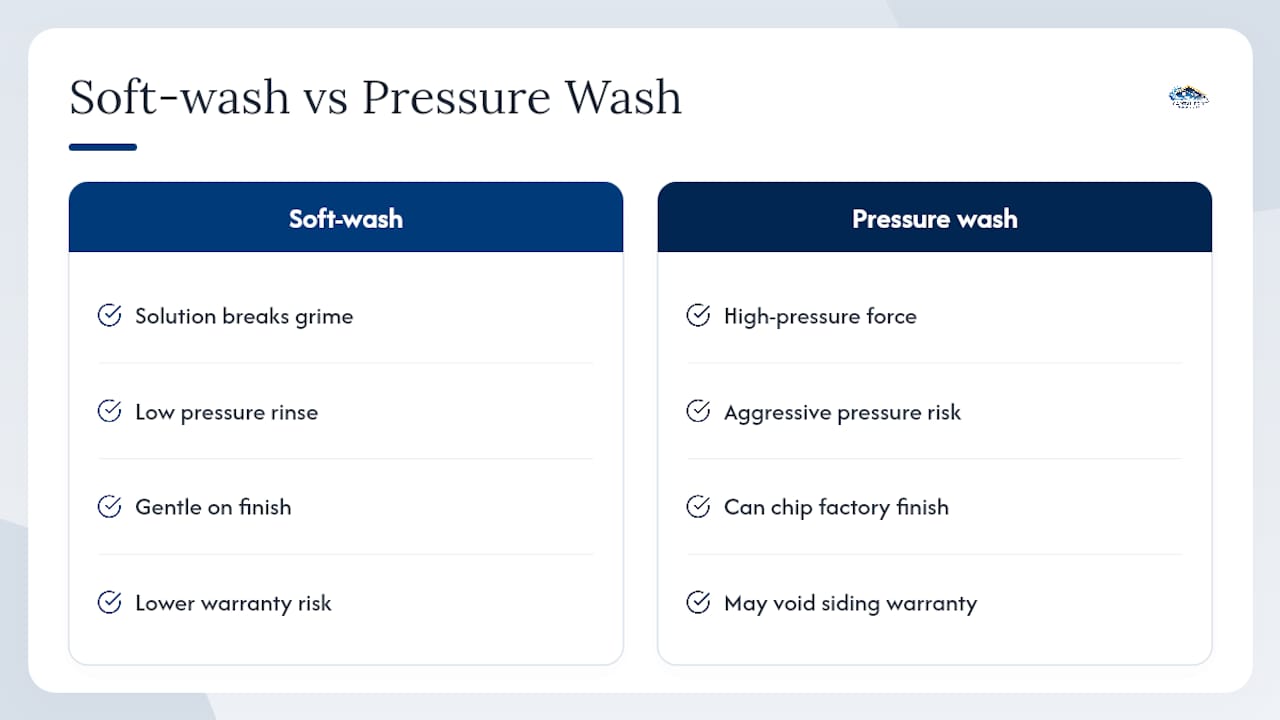
Soft-wash relies on the cleaning solution to break down grime and mildew, with just enough pressure to rinse it away. That’s a meaningful difference from a pressure washer, which relies on force and can chip a factory finish in seconds if the operator gets too close or too aggressive with the settings.
Homeowners should bring in a professional once the job involves real height, stains that won’t lift after two honest DIY attempts, or any concern about voiding a siding warranty. Before hiring anyone, ask directly about their pressure limits, what cleaning solution they use, and how they protect landscaping and windows during the job. Experienced contractors have spent years addressing those questions for homeowners, which is the kind of specificity worth expecting from any professional you consider.
The Manufacturer’s Advice Beats Most of What You’ll Read Online
Most of the cleaning advice circulating online for fiber cement siding overcomplicates a simple job. Search results are full of DIY pressure-washing tutorials that treat 2,000 or 3,000 PSI as a reasonable starting point for exterior walls, when the manufacturer guidance and contractor consensus both point toward low pressure and a soft brush as the baseline, not the exception.
The conventional wisdom that “more pressure equals more clean” is exactly backward on painted fiber cement. Force isn’t the variable that lifts mildew or grease. Contact time and the right chemistry are. That’s why oxygen bleach sitting on a stain for several minutes outperforms a garden hose blasted at max pressure for thirty seconds.
If there’s one thing homeowners should prioritize, it’s the spot test. It’s the step everyone skips because it feels unnecessary, and it’s the one that saves a $15,000 siding job from an avoidable discoloration mistake. DIY works fine for routine dirt and light mildew. The moment you’re dealing with height, a stubborn stain, or any doubt about your warranty, that’s the signal to stop and call someone who does this daily.
— Luis T
Professional Soft-Wash House Washing From Capital Pro Pressure Washing
If the DIY steps above sound doable but you’d rather not spend a Saturday on a ladder, Professional services offer soft-wash house washing, mildew removal, and optional sealing and maintenance plans to homeowners.

Whoever you hire, the questions to ask stay the same: what pressure setting will they use, what cleaning solution goes on your siding, and how do they protect your plants and control runoff. Some companies use soft-wash techniques because they offer a warranty-safe approach to these concerns. Check out the house washing services page to see what’s included, or visit the pricing guide to get a sense of cost before you book a visit.
Sources
- How to keep your James Hardie fiber cement siding clean and beautiful
- How to clean fiber cement siding
- How to remove mildew from siding - This Old House
- Is pressure washing safe for Hardie siding? | TrueWash
FAQ
Is It Okay to Pressure Wash Hardie Board Siding?
Only with strict limits, staying under 1,500 PSI, using a wide fan tip, and keeping the nozzle at least 6 feet from the wall. Most manufacturers and contractors recommend a low-pressure hose or soft-wash instead to avoid etching the finish or forcing water behind the boards.
Does Water Damage Hardie Board?
Hardie board itself resists water damage far better than wood siding, but water forced behind the boards through cracked caulk or high-pressure washing can cause rot in the wall structure behind it. The siding material isn’t the weak point; the seams and caulking are.
How Do You Clean James Hardie Fiber Cement Siding?
Use a garden hose on low pressure with a soft or medium bristle brush and a mild dish soap solution, working top to bottom in small sections. Clean every 6 to 12 months, and switch to an oxygen bleach or manufacturer-approved mildew cleaner for organic stains.
Can You Use Dawn Dish Soap to Clean Siding?
A mild dish soap like Dawn diluted with water is fine for routine dirt and light grease on Hardie board. Always test it on a hidden spot first and rinse thoroughly before it has a chance to dry on the surface.
Recommended
Services Related To This Article
Need a quote in the Capital Region?
Fast, free estimates from a local, licensed & insured team.
