
Homeowners: Stop Voiding Warranties, Power vs Pressure at 500 PSI
Power washing uses heated water; pressure washing uses unheated water at high force. Both rely on pressure to strip away grime, but that temperature difference decides what each one is actually good for. Most homes end up needing both: soft, low-pressure cleaning with detergent for the roof and siding, and stronger unheated pressure for the driveway and patio. Save heated water for grease, oil, and industrial-grade stains.
Quick Summary:
- Power washing is best suited for removing grease, oil, and industrial stains on surfaces like driveways and concrete due to its heated water.
- Soft washing is safer for roofs, siding, and delicate materials, using low pressure combined with chemicals to kill algae and mold at the root.
- Excessive pressure, nozzle misjudgment, or rushing without testing can cause significant damage to shingles, siding, and mortar joints.
- Most residential surfaces require cleaning once every one or two years, with spot cleaning for stains in between, to avoid unnecessary costs and risks.
- Contractors should be asked about proper surface techniques, insurance, and equipment, as a surface-first approach yields better results and cost efficiency.
Table of Contents
- Power Washing vs Pressure Washing: The Technical Difference
- Which Method Fits Which Surface
- Risks and Common Mistakes That Cause Damage
- What Power Washing and Pressure Washing Actually Cost
- How to Vet a Contractor or Decide to DIY
- Environmental Impact and Water Usage
- Energy Use and Operational Efficiency
- Noise and Disturbance to Consider
- Why a Hybrid Approach Beats Picking One Method
- Get a Straight Answer on Your Property, Not a Guess
- Sources
- FAQ
Power Washing vs Pressure Washing: The Technical Difference
Pressure washing sprays unheated water at high force, typically somewhere between 750 and 4,000+ PSI, depending on the machine. Power washing does the same thing but heats the water first, often to 150 to 200 degrees Fahrenheit. That heat changes the chemistry of the job. Hot water lowers the viscosity of grease and oil, which means it breaks down and lifts off surfaces that cold water just pushes around. Soft washing is a third category worth knowing: low pressure, usually under 500 PSI, combined with a cleaning solution that kills algae, mold, and mildew at the root instead of just blasting the surface layer off.
Here’s the tradeoff. Pressure alone is mechanical force. It scrubs by sheer impact, which works great on concrete but can tear into softer materials. Heat-assisted cleaning adds a chemical advantage: it doesn’t need as much force to dissolve oily residue. Soft washing skips force almost entirely and lets chemistry do the work, which is why it’s the gentler choice for delicate exteriors.
| Method | Water temp | Typical PSI | Best for |
|---|---|---|---|
| Power washing | 150–200°F | 750–4,000+ | Grease, oil, industrial stains |
| Pressure washing | Unheated | 750–4,000+ | Concrete, driveways, hardscapes |
| Soft washing | Unheated | Under 500 | Roofs, siding, algae/mildew |
Standards guidance from the PCA P22 cleaning specification recommends trained operators for pressurized water work, precisely because PSI and nozzle technique determine whether you clean a surface or damage it.
Which Method Fits Which Surface
The surface you’re cleaning matters more than which machine you happen to own. A concrete driveway can take a beating that would wreck a cedar fence.
- Concrete, brick, and masonry: Pressure or power washing works well here. Grease stains on a garage floor respond best to heated water; grime and mildew respond fine to plain pressure.
- Siding (vinyl, fiber cement, wood): Soft wash is the safer bet. High pressure can force water behind panels and cause rot you won’t notice until months later. For fiber cement specifically, proper maintenance technique matters even more since the material is more brittle than vinyl.
- Roofs: Soft wash only, in almost every case. Anything above roughly 500 PSI risks stripping shingle granules and voiding manufacturer warranties.
- Decks, fences, and older wood: Low pressure and a gentle technique, or soft wash. Splintering and gouging happen fast on weathered wood.
- Vehicles and heavy equipment with grease buildup: Hot water often wins here. Cold water plus detergent can match hot water on many residential stains, but embedded petroleum products need the heat.
Notice the pattern: soft wash for anything with a roof or cladding, pressure or power for anything you’d call a slab. A soft-wash siding guide is worth a look if your home has vinyl or fiber cement and you’re deciding between a DIY attempt and calling a professional.
Risks and Common Mistakes That Cause Damage
Too much pressure, held too close, is the root cause of nearly every horror story you’ve seen online. A few specific failure points show up over and over:
- Stripped shingle granules from pressure washing a roof that should have been soft washed.
- Water forced behind siding, leading to hidden mold and rot weeks later.
- Splintered or gouged wood on decks and fences from holding the nozzle too close.
- Eroded mortar joints on older brick from excessive PSI at close range.
Nozzle angle and standoff distance control most of this risk. A wide fan tip held 12 to 18 inches away behaves very differently than a narrow zero-degree tip held six inches from the surface. If your home has an older roof, aging siding, or heavy staining you can’t identify, that’s when to call a professional instead of renting equipment for a weekend.
Pro Tip: Before cleaning any exterior surface, test a small, hidden patch first and wait a few minutes to see how the material reacts. Protect nearby plants with a tarp and cover exterior outlets before you start.
What Power Washing and Pressure Washing Actually Cost
Pricing depends heavily on billing method and whether hot water is involved. Pressure washing labor commonly runs $50 to $160 per hour, while whole-house washing is often billed per square foot, frequently landing between $0.30 and $0.80 per square foot. Hot-water jobs cost more because of fuel and equipment demands.
- Heavy grease or industrial staining pushes the price up due to hot-water surcharges.
- Tall or architecturally complex houses take longer, which raises labor cost.
- Protective prep work, like covering plants or electrical fixtures, adds time on the clock.
Most siding and driveways only need cleaning once a year or every two years. A detailed cleaning frequency schedule breaks this down by surface type. Grease spots or fresh stains are the exception. Spot-clean those as they appear rather than waiting for the annual visit.
How to Vet a Contractor or Decide to DIY
Ask any contractor these questions before they touch your house: Are you insured? Do you soft wash roofs and siding, or only pressure wash everything? What equipment do you actually bring? Can you show references from similar homes?
- Red flag: a contractor who refuses to soft wash a roof and insists on high pressure for everything.
- Red flag: an estimate given without ever inspecting the property.
- Red flag: no proof of insurance when asked directly.
DIY makes sense for small, flat concrete jobs like a short walkway or a single-car pad, where a rented pressure washer and a careful hand get the job done. Roofs, multi-story siding, and anything with grease buildup are better left to a professional crew that carries both soft-wash and high-pressure capability and picks the least aggressive method that still works. That’s the approach most experienced operators take, treating the whole property as one job rather than forcing a single method on every surface. If you want a fast estimate without the back-and-forth, an instant quote request gets you a number based on your actual property.
Environmental Impact and Water Usage
Soft washing generally uses less water than full-pressure cleaning because the chemical solution does most of the work, not sheer volume. A soft-wash rig might run at a fraction of the gallons-per-minute rate of a high-pressure unit, since it doesn’t need to blast a surface clean, it just needs to coat it and let the detergent sit.
Heated water adds a separate environmental cost: fuel or propane to run the burner. That’s an extra input pressure washing doesn’t need, since it uses ambient-temperature water straight from the source. If you’re weighing environmental footprint alongside effectiveness, unheated pressure washing on concrete and unheated soft washing on siding covers most residential needs without the added fuel draw that power washing requires for grease-specific jobs.
Runoff matters too. Whatever detergent or chemical goes into a soft-wash mix ends up in your yard, storm drains, or nearby soil. Biodegradable, plant-safe formulas exist specifically because professional operators know this is a real concern for homeowners with gardens, pets, or property near waterways. Ask any contractor what they’re spraying before they start, not after.
Energy Use and Operational Efficiency
Pressure washing is the more energy-efficient option of the two, simply because it skips the heating step. A cold-water unit only needs a motor and a pump. A power washer needs that same motor and pump, plus a burner running continuously to keep water at 150 to 200 degrees, which means more fuel consumption per hour of operation.
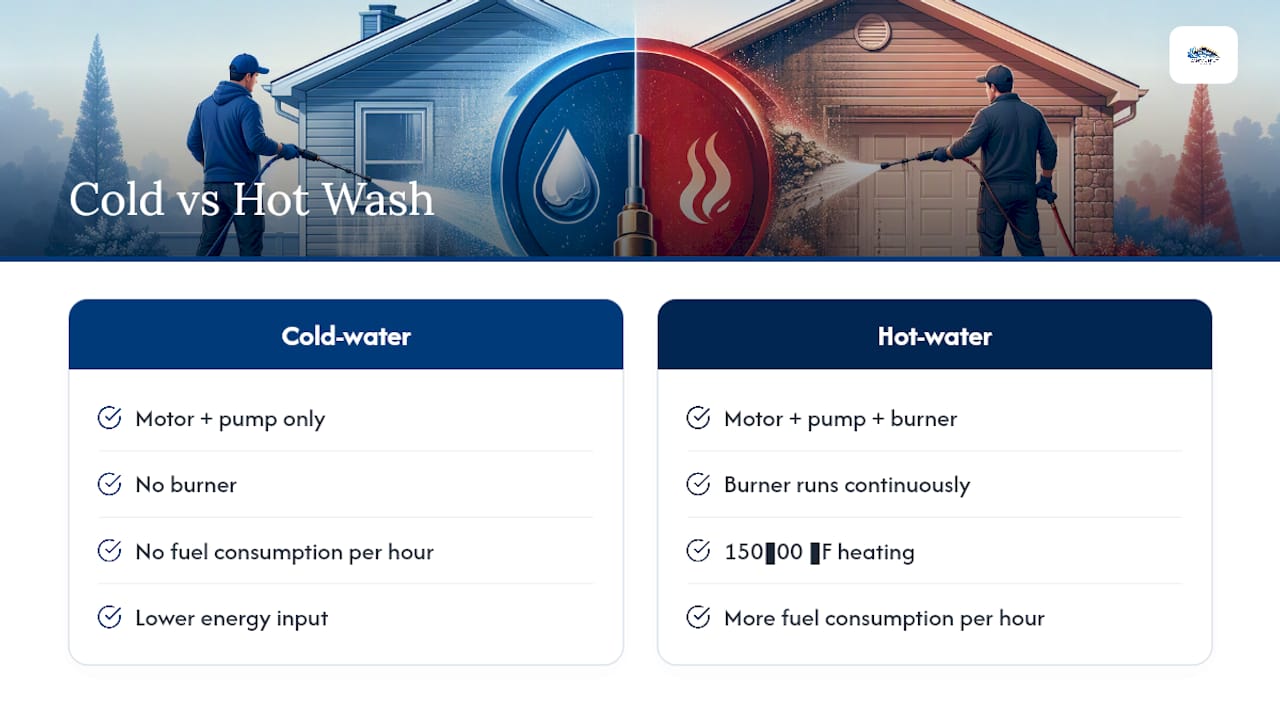
That efficiency gap is exactly why professionals reserve heated water for jobs where it earns its cost. Hot water adds fuel expense and mechanical complexity, so operators save it for grease, heavy oil, and stains that cold water and detergent genuinely can’t touch. For the bulk of residential jobs, algae on siding, dirt on a driveway, mildew on a fence, unheated equipment does the job with less energy input and less equipment wear.
If you’re comparing quotes and one contractor charges noticeably more, ask whether that price includes hot water. It usually explains the gap, and it tells you whether that surcharge is actually necessary for your specific stain.
Noise and Disturbance to Consider
Both methods run on gas or electric motors, and neither is quiet. A gas-powered pressure washer typically runs loud enough that conversation nearby becomes difficult, which matters if you live close to neighbors or have specific quiet hours in your area. Electric units tend to run quieter than gas models, though they usually can’t match gas-powered PSI output for tougher jobs.
Soft washing has a practical noise advantage during the actual application, since the equipment doesn’t need to generate the same force. The pump still runs, but it’s not working nearly as hard to push water through the nozzle. For early-morning appointments or attached housing situations, that difference is noticeable to the people next door.
Timing matters as much as equipment choice. Most professional crews schedule louder pressure work for standard daytime hours and avoid early starts in dense neighborhoods, simply out of practical courtesy to the people living around the job site.
Why a Hybrid Approach Beats Picking One Method
Homeowners get stuck on the wrong question. They ask “power washing or pressure washing?” as if it’s one choice for the whole house, when the smarter question is which method fits which surface. Roofs and siding call for soft washing because it treats algae and mildew at the root instead of just blasting the visible growth off the top layer, which comes back within a season if the roots survive.
Capital Pro Pressure Washing built its process around that surface-first logic rather than defaulting to whichever method is faster to run. Pairing soft wash for roofs and siding with targeted unheated pressure for driveways, patios, and pavers matches the guidance from industry operators who treat method selection as a per-surface decision, not a company-wide policy. Cleaning is frequently bundled with sealing services on concrete and pavers so the surface stays protected instead of just looking clean for a season.
— Luis T
Get a Straight Answer on Your Property, Not a Guess
Skip the guesswork of matching method to surface yourself. A professional local crew that quotes your job typically performs the work, using commercial-grade equipment and picking soft wash or pressure cleaning based on what your siding, roof, or concrete actually needs, not whichever method is quickest to run.
That surface-first approach means you’re not paying a hot-water surcharge for a job that never needed heat in the first place. Services range from house washing and roof soft washing to concrete cleaning and sealing, all backed by a satisfaction guarantee with free callbacks, plus discounts for military and first responders. Full pricing details are on the pricing page, and if you’d rather skip straight to a number for your property, the instant quote tool gets you an estimate without an in-person visit required first.
Sources
- Pressure washing - Wikipedia
- Soft Wash vs Pressure Wash — Power Line Industries
- Power Washing vs Pressure Washing | GreenTree Services
- Amfam
FAQ
How much should I expect to pay to wash a 2,000 square foot house?
At common per-square-foot rates, house washing costs vary depending on square footage and specifics like hot-water use or grease removal. Exact Capital Pro Pressure Washing rates are listed on the pricing page.
What are the downsides of using a pressure washer?
Too much PSI held too close can strip shingles, force water behind siding, splinter wood, and erode mortar joints, especially in untrained hands. That’s why professionals adjust pressure and nozzle angle by surface instead of using one setting for the whole house.
How often should I power wash my house?
Most siding and driveways only need a full cleaning once a year or every two years, with spot cleaning as grease or fresh stains appear in between. A full breakdown by surface type is in the cleaning frequency guide.
What should I never pressure wash?
Avoid high pressure on asphalt shingle roofs, old or painted wood, aging mortar, and delicate siding materials. These surfaces respond far better to soft washing, which cleans effectively without the mechanical force that causes lasting damage.
Recommended
Services Related To This Article
Need a quote in the Capital Region?
Fast, free estimates from a local, licensed & insured team.
