
Capital Region: 50:50 Soft Wash to Save Your Asphalt Shingle Warranty
The safest, manufacturer-aligned way to handle asphalt shingle cleaning is a low-pressure chemical soft wash using diluted sodium hypochlorite, not pressure washing. The Asphalt Roofing Manufacturers Association (ARMA) backs this method, recommending a 15 to 20 minute dwell time for algae and longer for moss. Skip a garden-variety pressure washer entirely. If your roof is steep, old, or heavily colonized, call a professional instead of risking a fall or a voided warranty.
Quick Summary:
- Applying a bleach solution from the bottom to the top of the roof ensures even coverage and prevents re-soiling already treated sections.
- The dwell time needed is 15 to 20 minutes for algae and up to 60 minutes for moss, with rinsing done from the ridge downward using low pressure.
- Pressure washing damages shingles by removing granules that protect against UV rays and fire, accelerating roof aging and voiding warranties.
- Metal strips near the roof ridge can prevent moss and algae regrowth for 15 to 20 years without frequent cleaning.
- Roofs older than 15 years or with significant granule loss should be cleaned less frequently and with caution, possibly requiring professional assessment.
Table of Contents
- How to Clean Asphalt Shingles Safely (Step by Step)
- Why You Should Never Pressure Wash Asphalt Shingles
- Preventing Moss and Algae From Coming Back
- Should You DIY Your Roof Cleaning or Hire a Pro?
- What Homeowners Get Wrong About Roof Cleaning
- Get a Warranty-Safe Roof Cleaning Without the Guesswork
- Where This Guidance Comes From
- Sources
- FAQ
How to Clean Asphalt Shingles Safely (Step by Step)
Getting asphalt shingle roof cleaning right comes down to chemistry and patience, not scrubbing power. The standard mix is a 50:50 solution of household bleach (sodium hypochlorite) and water, which matches ARMA’s recommended ratio for killing algae and moss without damaging the shingle surface. Pool-grade sodium hypochlorite works too, just dilute it further since it runs more concentrated than household bleach. If you’re worried about metal flashings or nearby plants, oxygen bleach (sodium percarbonate) is a gentler option, though it needs a longer dwell time of 30 to 45 minutes and struggles against heavy, established colonies.
Before you touch the roof, gather the right equipment:
- A pump sprayer or dedicated soft-wash rig with a low-pressure nozzle
- A garden hose for rinsing, not a pressure washer wand
- Non-slip boots, safety glasses, and gloves rated for bleach exposure
- Tarps to cover shrubs, flower beds, and anything green near the drip line
Here’s the actual sequence professionals follow:
- Pre-wet all vegetation around the house so bleach runoff dilutes on contact rather than scorching leaves.
- Apply the solution starting at the bottom of the roof and working up, which gives even coverage and keeps you from re-walking treated sections.
- Let it dwell. Algae (usually the black streaking caused by Gloeocapsa magma) needs 15 to 20 minutes. Moss, which has actual root structures gripping the granules, needs 45 to 60 minutes to fully die back.
- Rinse from the ridge down to the eaves using a garden hose or low-pressure attachment, never a pressure washer tip.
- Re-wet the landscaping one more time after rinsing to flush any residual chemical.
Never scrub. Dead algae and moss will lift and wash away with rain over the following one to two weeks. Attempting to scrape moss off while it’s still attached tears at the granules underneath and shortens the shingle’s life. Product testing on roof cleaners confirms that formulation matters less than application method. A $15 jug of bleach used correctly beats a premium product misapplied with a pressure washer.
Pro Tip: Treat on a cloudy, dry day with no rain forecast for at least six hours. Direct sun evaporates the solution before it has time to work, and rain before the dwell period washes it away too early.
Expect streaking to visibly lighten within a week and mostly disappear after two or three rain cycles. Heavy moss mats may need a second treatment 30 days later if any green regrowth is visible at the base.
Why You Should Never Pressure Wash Asphalt Shingles
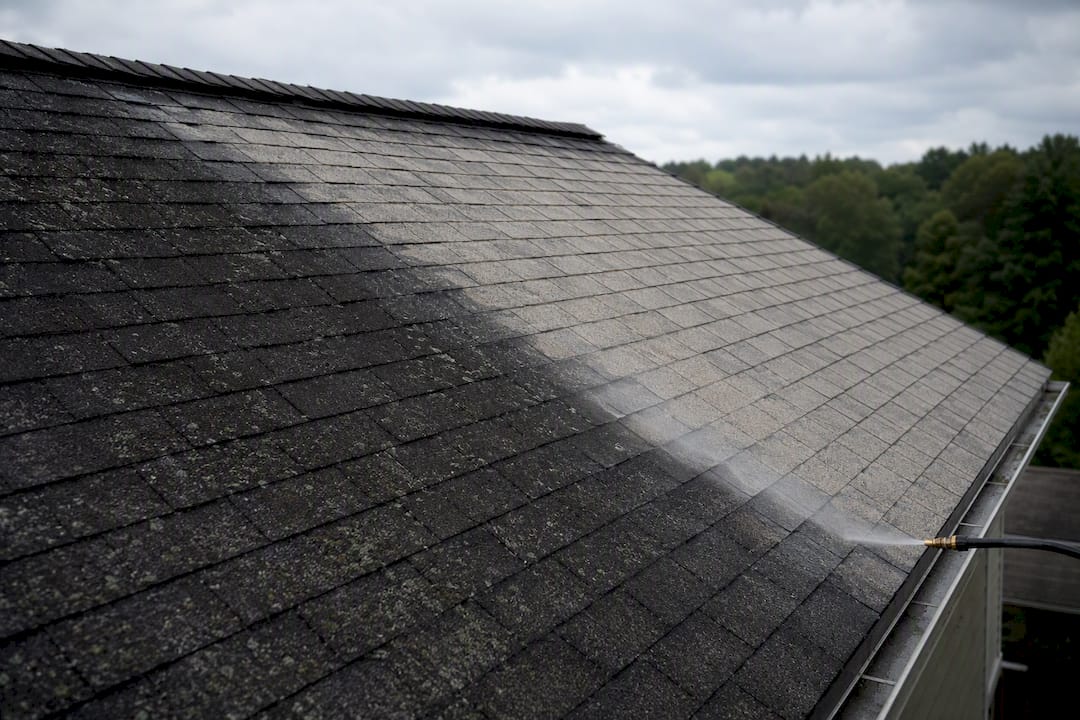
Pressure washing an asphalt roof is the single most common mistake homeowners make, and it’s the one that causes the most expensive damage. High-pressure water strips the protective mineral granules right off the shingle surface. Those granules block UV rays and add fire resistance, so losing them accelerates aging and can void your roofing warranty outright. Manufacturer-aligned guidance from groups tracking asphalt shingle cleaning standards is consistent on this point: soft wash chemistry does the work, not water pressure.
A few numbers worth knowing before you climb up there:
- Falls from residential roofs account for a large share of home-maintenance injuries every year, which is exactly why ARMA and most professional guides recommend hiring a licensed contractor for anything steeper than a gentle slope.
- Granule loss from pressure washing is not cosmetic. It’s irreversible, and it shows up as accelerated shingle wear within a few seasons.
Protect yourself and your property with a few basics:
- Wear non-slip footwear and use a harness if you’re working above single-story height.
- Never work a roof alone, and never work it wet.
- Pre-wet and tarp any landscaping directly below your work area before applying bleach.
- Rinse thoroughly to dilute runoff, and avoid pooling chemical solution against foundation plantings.
If your shingles are already past 15 to 20 years old or showing bald patches where granules have thinned, even soft washing should be gentler and less frequent. An aging roof has less margin for error, and a contractor can tell you whether cleaning is still worth it or whether you’re closer to a replacement conversation.
Preventing Moss and Algae From Coming Back
Cleaning buys you time, not immunity. Because algae spores travel through the air, a roof that gets cleaned today can pick up new colonies from a neighbor’s shaded roofline within a season or two. That’s why prevention matters as much as the cleaning itself.
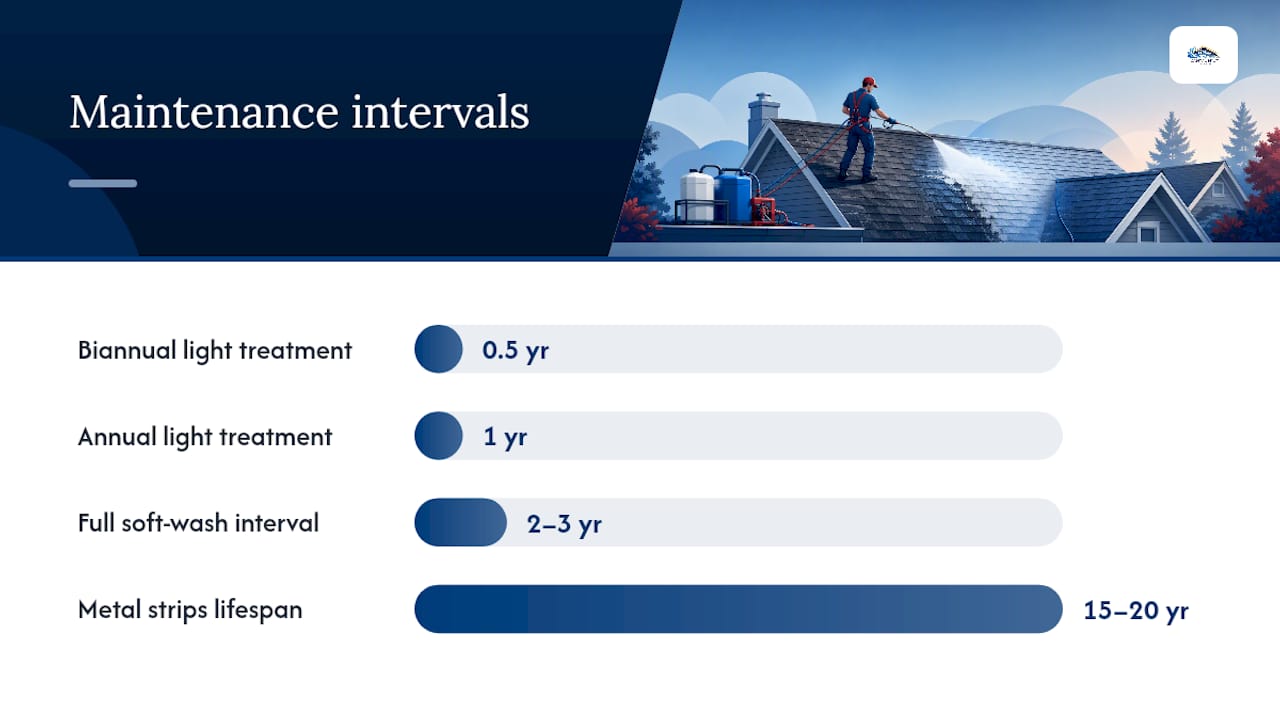
Zinc or copper strips installed just below the ridge are the most proven low-effort fix. Rain washes trace metal ions down the roof slope every time it rains, which creates an environment algae and moss can’t tolerate. They typically last 15 to 20 years and cost far less than repeated full cleanings over that span.
A few other habits keep regrowth in check:
- If you’re re-roofing anyway, algae-resistant shingles (most major manufacturers, including GAF, Owens Corning, and CertainTeed, offer them) are worth the modest upcharge if your roof sits in constant shade.
- Trim overhanging branches so shingles get more sun and airflow, which dries out the moisture algae and moss need to establish.
- Clear gutters and valleys of leaf litter at least twice a year. Trapped debris holds moisture against the shingle surface longer than open runoff ever would.
- Walk the roofline visually once a year, ideally in spring, to catch early streaking before it turns into a moss mat.
Pro Tip: *If one side of your roof always grows moss faster than the other, that’s your shade line.
Light annual or biannual maintenance treatments, paired with metal strips, stretch the interval between full soft-wash jobs to every two or three years in most climates.
Should You DIY Your Roof Cleaning or Hire a Pro?
Whether asphalt shingle roof cleaning is a weekend project or a job to hand off depends on four honest questions:
- How steep and how tall is your roof? Anything beyond a gentle single-story slope should go to a professional with fall protection equipment.
- How old are your shingles? Roofs past 15 years have less granule cushion to spare, and a misjudged mix or dwell time does more damage than good.
- How extensive is the growth? Light surface streaking is manageable. Thick moss mats covering multiple courses usually need commercial-grade soft-wash rigs to treat efficiently.
- Are you equipped to handle bleach safely? Mixing, transporting, and applying chemical solutions at height requires the right PPE and a steady hand.
Professionals bring soft-wash rigs calibrated for even chemical distribution, insurance that covers property damage, and warranty-safe application methods that protect your manufacturer coverage. If you’re getting quotes, ask direct questions: Do they follow ARMA-aligned soft-wash methods? Are they insured? Can they show before-and-after photos from similar roofs? A contractor who hesitates on any of those is a red flag.
What Homeowners Get Wrong About Roof Cleaning
The mistake I see most often isn’t the chemical mix. It’s impatience. Homeowners apply the solution, wait five minutes, then start scrubbing or blasting with a hose because the streaking hasn’t disappeared yet. That’s how granules end up in the gutter instead of on the shingle. Give the dwell time the full 45 to 60 minutes for moss, let the weather finish the job, and the roof holds up for years.
— Luis T
Get a Warranty-Safe Roof Cleaning Without the Guesswork
Capital Pro Pressure Washing is the alternative to renting equipment and risking a pressure-washer mistake on your own roof: our soft washing technique kills algae and moss at the source without stripping a single granule or touching your manufacturer’s warranty. We handle the plant protection, the runoff dilution, and the fall safety, so you get the result without the liability.
As a veteran-owned company serving homeowners across the Capital Region, we specialize in roof moss removal using no-scraping, no-pressure methods that match ARMA’s own recommendations. When you’re comparing quotes, ask any contractor about dwell time and application method before you ask about price. Check our pricing guide for a sense of typical ranges, then reach out with your roof’s age, slope, and how long it’s been since the last cleaning. That’s all we need to put together an accurate estimate.
Where This Guidance Comes From
This guide draws on ARMA’s cleaning and prevention standards, the ARMA technical bulletin on algae discoloration, independent roof cleaner product testing, and guidance on low-PSI cleaning methods from exterior cleaning specialists.
Sources
- Algae Discoloration of Roofs – ARMA (technical bulletin)
- We tested all the best roof cleaners, see our top picks — BobVila
- Asphalt shingle manufacturers cleaning guidelines — National Roof Cleaning Authority
FAQ
What is the best thing to clean asphalt shingles with?
A 50:50 mix of household bleach (sodium hypochlorite) and water, applied at low pressure and left to dwell 15 to 20 minutes, is the method ARMA recommends. Oxygen bleach is a gentler backup for sensitive landscaping, though it works more slowly.
What is the best way to clean asphalt roof shingles?
Apply the bleach solution from the bottom of the roof upward, let it sit for the recommended dwell time, then rinse from the ridge down to the eaves with a garden hose. Never scrub and never use a pressure washer.
Is it okay to pressure wash asphalt shingles?
No. Pressure washing strips the protective granules off the shingle surface, which accelerates aging and can void your manufacturer’s warranty. Soft washing at low pressure is the method both ARMA and manufacturers endorse.
What can I put on my roof shingles to help them last longer?
Zinc or copper strips installed near the ridge release metal ions with every rainfall, which suppresses algae and moss regrowth for 15 to 20 years. Pairing strips with a light annual treatment and clear gutters keeps shingles in the best shape longest.
How often should I clean my asphalt shingle roof?
Most homes need a full soft wash every two to three years, with a lighter touch-up treatment annually if you’re in a shaded, humid climate prone to fast regrowth.
Recommended
Services Related To This Article
Need a quote in the Capital Region?
Fast, free estimates from a local, licensed & insured team.
