
5–10 Min Dwell Saves Mortar: Brick House Washing for Homeowners
Soft-wash cleaning, low pressure plus a detergent left to work before you rinse, is the safest and most effective way to clean a brick house. Keep rinse pressure modest, let the cleaner sit for 5 to 10 minutes before rinsing, and skip the high-pressure wand entirely on older mortar. If the brick is historic, the mortar is crumbling, or stains run deep, call a professional instead of guessing.
Quick Summary:
- Soft-washing uses low pressure and a chemical solution, making it safer for fragile mortar and older brick, especially in historic homes.
- Rinse pressure should never exceed 50 PSI, with a wide fan-tip nozzle and a distance of 12 to 18 inches from the wall to avoid damage.
- Cleaning solutions like diluted bleach, TSP, or buffered masonry cleaners should be tested first and applied with patience, allowing a five to ten-minute dwell time.
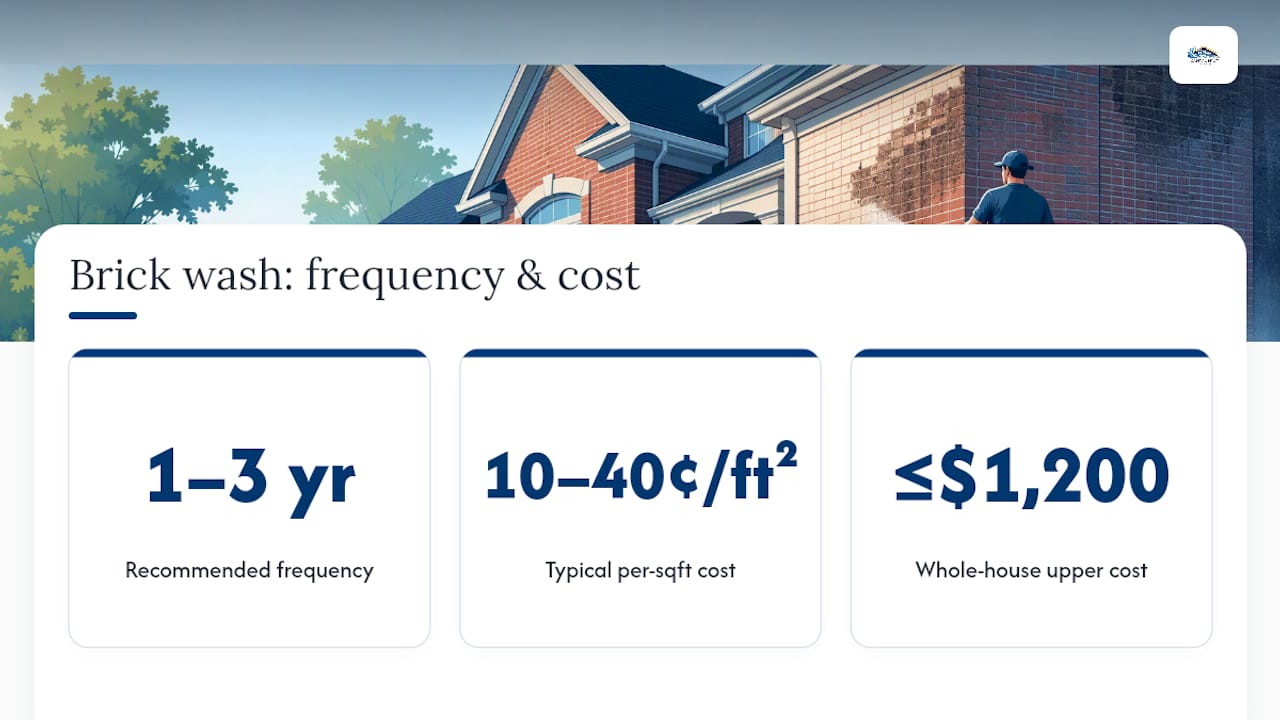
- Most brick homes should be cleaned every one to three years, with costs typically ranging from 0.10 to 0.40 dollars per square foot, depending on the condition.
- Hiring a professional is recommended for historic brick, crumbling mortar, high walls, or deep stains like paint or graffiti to prevent damage and achieve the best results.
Table of Contents
- Should You Soft-Wash or Pressure-Wash Brick?
- How to Wash Brick Walls Step by Step
- Cleaning Solutions, Mixes, and Safer Alternatives
- Safe Pressure, Nozzles, and Equipment Choices
- Fixing Mildew, Efflorescence, Rust, and Paint Stains
- How Often Should You Wash Brick, and What Does It Cost?
- When to Hire a Pro for Brick House Washing
- A Veteran-Owned Crew’s Take on Brick Safety
- Let Capital Pro Pressure Washing Handle the Risk for You
- Sources
- FAQ
Should You Soft-Wash or Pressure-Wash Brick?
Soft-washing means low water pressure paired with a cleaning solution that does the actual work of breaking down algae, mildew, and grime. Pressure washing relies on mechanical force, water alone, blasted at higher PSI, to strip away buildup. For brick, that distinction matters more than most homeowners realize, because brick and the mortar joints holding it together are more fragile than the material looks.
Soft-wash is the better call for porous or older brick, homes with original lime mortar, or any wall showing algae and mildew streaking. Low-pressure power washing can work on newer, sound brick with heavy surface dirt and no soft mortar concerns, but pushing pressure too high risks etching the brick face or blowing out mortar joints.
Before deciding, check a few things:
- The home’s age and mortar type (older lime mortar is softer than modern Portland cement)
- Visible efflorescence, that chalky white bloom, which signals moisture already inside the wall
- Any prior tuckpointing or patch repairs that haven’t fully cured
- Cracks or spalling brick faces that pressure could make worse
How to Wash Brick Walls Step by Step
Getting this right is less about scrubbing hard and more about sequencing the job correctly. Skip a step and you either waste time or risk damage.
- Inspect the wall first. Walk the perimeter and look for loose mortar, hairline cracks, peeling paint, or coatings. If the house predates 1930 or uses soft historic brick, treat that as a flag to slow down or call a pro.
- Hold off on washing over fresh repairs. New mortar needs to cure, typically several weeks, before it can handle any moisture exposure from washing.
- Protect everything nearby. Cover shrubs and flower beds with plastic sheeting, tape off window seams, and shut off exterior electrical outlets or light fixtures in the work zone.
- Pre-wet the brick. A quick rinse keeps the surface from absorbing cleaner too fast, which helps it work evenly instead of drying into streaks.
- Apply detergent from the bottom up. This prevents streaking that happens when cleaner runs down over dry, dirty brick above.
- Let it dwell. Give the solution 5 to 10 minutes to break down grime chemically, the step most DIYers skip, and the one that matters most.
- Hand-brush stubborn spots. A stiff nylon brush handles caked-on grime the detergent alone won’t lift.
- Rinse top-down at low pressure. Keep the wand moving constantly and never let it linger on one mortar joint.
- Let it dry and check your work. Some stains only reveal themselves once the brick dries; spot-treat anything that remains.
Pro Tip: Wash in sections about 10 feet wide at a time. Trying to cover an entire wall before rinsing lets detergent dry on the brick, which causes the streaking most homeowners blame on “bad cleaner.”
Cleaning Solutions, Mixes, and Safer Alternatives
Start gentle and escalate only if needed. That order protects the brick and saves you from redoing the job with a harsher product.
- Diluted bleach: A working mix runs around 1 to 1.25% active bleach solution. Standard household bleach is roughly 5 to 8% concentration, so diluting one part bleach with four to seven parts water gets you in range. Wear gloves, goggles, and old clothes, and never mix bleach with ammonia-based cleaners.
- TSP (trisodium phosphate): Effective on grease and general grime, and gentler on mortar than acid-based cleaners.
- Buffered masonry cleaners: Pre-mixed products from manufacturers like Prosoco and EaCo Chem are formulated to clean without the guesswork of a job-site acid blend.
- Muriatic acid: Reserve this for stubborn efflorescence or mortar staining that nothing else touches. It requires careful dilution, full PPE, and neutralizing afterward with a baking soda rinse.
Test any solution on a hidden section first and follow the manufacturer’s exact dilution instructions.
Safe Pressure, Nozzles, and Equipment Choices
Pressure is where most DIY brick jobs go wrong. Home Depot’s own guidance points toward low pressure throughout, with a rinse pressure of 50 PSI or less delivering the best results on most brick. Never exceed roughly 2,000 PSI even on the sturdiest modern brick, and that ceiling should feel like an emergency limit, not a target.
- Use a wide fan-tip nozzle (25 to 40 degrees), never a narrow zero-degree tip, which concentrates enough force to gouge mortar.
- Keep the wand 12 to 18 inches from the wall and moving at all times.
- A pump sprayer or dedicated soft-wash rig applies detergent evenly without any mechanical force, which is why most professional bulletins favor them over a straight pressure washer.
- Use a stabilized ladder or extension wand rather than climbing to reach upper stories, and never spray toward yourself or overhead electrical lines.
Fixing Mildew, Efflorescence, Rust, and Paint Stains
Different stains call for different fixes, and going in order from gentlest to strongest saves the brick face.
- Mildew and algae: A soft-wash biocide or diluted bleach solution with a full dwell time usually clears green or black streaking without further scrubbing.
- Efflorescence: That white, powdery bloom often responds to TSP or a buffered masonry cleaner; dry-brushing loose deposits first speeds things up.
- Rust: Test a specialized rust remover on a small area before committing. Some can discolor certain brick tones.
- Paint and graffiti: These usually need professional methods like soda blasting or chemical strippers, and even then, results vary because paint often penetrates deeper into porous brick than surface cleaners can reach.
How Often Should You Wash Brick, and What Does It Cost?
Most brick homes need a full wash every one to three years, sooner in humid climates or shaded lots prone to algae, longer in drier regions with good sun exposure.
Brick cleaning typically runs $0.10 to $0.40 per square foot, with whole-house jobs commonly landing anywhere from a few hundred dollars up to roughly $1,200 depending on square footage and condition. Height, heavy staining, mortar repairs, and specialty chemicals all push costs toward the top of that range. If you’re already paying for a professional soft-wash, adding a breathable masonry sealer afterward often makes sense, since it extends the clean look and reduces how often you need to repeat the job.
When to Hire a Pro for Brick House Washing
Some jobs are worth handing off, and knowing the difference saves you from an expensive repair bill later.
- Historic brick, soft or crumbling mortar, or extensive efflorescence are all signs to call a professional rather than experiment.
- Two-story or higher walls, steep rooflines, or awkward access points raise the injury risk enough that DIY isn’t worth it.
- Deep-set stains like old paint or graffiti usually need equipment and chemicals most homeowners don’t have on hand.
Before hiring anyone, ask about the pressure and chemicals they plan to use, proof of insurance, references from recent brick jobs, and whether they offer any satisfaction guarantee. A contractor worth keeping will walk the property first, flag any mortar that needs attention before washing, protect your landscaping, and offer sealing as a follow-up service rather than an upsell afterthought. Capital Pro Pressure Washing, a veteran-owned crew working across New York’s Capital Region, built its process around exactly that sequence: soft-wash first, protect what surrounds the house, then offer sealing for homeowners who want the results to last.
A Veteran-Owned Crew’s Take on Brick Safety
Ten-plus years of running soft-wash equipment on New York brick has taught our crew one lesson repeatedly: the homeowners who call us after a bad DIY pressure-wash attempt almost always made the same mistake, they trusted pressure over patience. Detergent and dwell time do the real work; the wand just rinses it away. Treat your brick the way you’d want a stranger treating something irreplaceable, because in a lot of ways, it is.
— Luis T
Let Capital Pro Pressure Washing Handle the Risk for You
If the idea of calculating bleach ratios and testing PSI settings on your own brick sounds like more risk than you want to take on, that’s exactly the gap Capital Pro Pressure Washing fills. The same local crew that quotes your job shows up to do the work, using soft-wash methods matched to your specific brick and mortar condition instead of a one-size-fits-all pressure setting.

Every job leans on commercial-grade soft-wash equipment rather than blunt-force pressure, and the company aims to satisfy customers and offers follow-up service if needed. Homeowners who want their clean brick to stay that way can also bundle in a sealing service, and the company offers discounts to some customers. If your brick needs more than a weekend of careful scrubbing, get a fast instant quote or check current pricing for house washing in the Capital Region. For homeowners dealing with matching stucco repairs before a repaint, this stucco crack repair guide is worth a look too.
Sources
- How to Power Wash a Brick House | Ferguson
- Brick cleaning recommendations (technical bulletin)
- How Much Does It Cost to Pressure Wash a House? | Angi
- How to Clean Brick | The Home Depot
FAQ
What Is the Best Way to Wash a Brick House?
Soft-washing, low water pressure combined with a cleaning detergent given time to work, is the safest and most effective method for most brick homes. It removes algae, mildew, and grime without the mortar damage risk that comes from high-pressure blasting.
How Much Does It Cost to Power Wash a Brick House?
Brick cleaning typically costs $0.10 to $0.40 per square foot, with most whole-house jobs falling between a few hundred dollars and around $1,200. Exact pricing depends on square footage, staining, and whether mortar repairs are needed first. Capital Pro Pressure Washing lists current house washing pricing for homeowners in the Capital Region.
Is Whitewashing Brick a Good Idea?
Whitewashing is a design choice, not a cleaning method, and it’s permanent once applied since it can’t be fully removed later. It’s worth considering only after brick is fully cleaned and any efflorescence or moisture issues are resolved, since whitewash over a damp or stained wall traps problems underneath.
How Often Should Brick Be Cleaned?
Most homes need a full brick wash every one to three years, with humid or shaded properties needing it more often due to faster algae growth. Sunnier, drier climates can often stretch that interval longer.
Can I Use a Regular Pressure Washer on Brick?
You can, but only at low settings, ideally under 50 PSI for the rinse step, and never with a narrow-angle nozzle. Anything approaching the upper end near 2,000 PSI risks etching brick faces or blowing out mortar joints, so a soft-wash sprayer is the safer default choice.
Recommended
Services Related To This Article
Need a quote in the Capital Region?
Fast, free estimates from a local, licensed & insured team.
