
How to Clean a Brick Patio Without Wrecking It
The safest way to clean a brick patio is also the slowest one, and that’s the point: sweep off debris, soak the bricks with plain water, work in a mild cleaner, scrub with a stiff non-metallic brush, then rinse at low pressure. Skip straight to a pressure washer or a jug of muriatic acid and you risk pitting the brick face or blasting the sand right out of the joints.
Here’s what you need before you start:
- A broom, garden hose, and a stiff nylon or natural-bristle brush (never steel)
- Dawn or another mild dish soap for everyday grime
- White vinegar for light mildew spots
- Bleach only if moss or algae is heavy, diluted and kept away from plants
Reach for bleach when Dawn and vinegar don’t touch stubborn algae. Stop and call a professional if the mortar is crumbling, the brick feels soft or flaky, or you’re eyeing muriatic acid.
Pro Tip: Always clean a small, hidden test patch first and let it dry completely before treating the whole patio. Some bricks react to cleaners in ways you won’t see for 24 hours.
Key Takeaways
A gentle, test-first cleaning sequence, wet the brick, apply a mild cleaner, scrub, then rinse at low pressure, restores most patios without the damage that harsh chemicals or high PSI can cause.
| Point | Details |
|---|---|
| Test before you commit | Clean a hidden 1 to 2 foot patch first and let it dry fully before treating the whole patio. |
| Start with Dawn, not acid | Mild detergent handles most dirt; save muriatic acid for cases the manufacturer or a pro approves. |
| Keep pressure washers under 1,200 PSI | Use a wide fan nozzle held at a safe distance to prevent spalling and joint sand loss. |
| Refill joints before sealing | Top off sand and wait two to three dry days before applying any sealer. |
| Call a pro for fragile or historic brick | Capital Pro Pressure Washing’s paver cleaning and sealing service uses soft-wash methods built for sensitive surfaces. |
Table of Contents
- Preparing the Patio Before You Clean Brick Pavers
- Cleaning Solutions for a Brick Patio: Start Mild, Escalate Carefully
- What Tools Actually Belong on a Brick Patio
- Step-by-Step: Cleaning a Brick Patio in Small Sections
- Treating Oil, Rust, and Other Stubborn Stains
- Getting Rid of Moss and Algae for Good
- Should You Refill Joints and Seal the Patio?
- Safety and Protecting Your Yard While You Work
- When Restoring a Brick Patio Is a Job for a Pro
- A Preservation-First Approach to Brick Cleaning
- Get a Free Estimate for Brick Patio Cleaning
- Sources
- FAQ
Preparing the Patio Before You Clean Brick Pavers
Clear off furniture, planters, and rugs, then sweep away leaves, dirt, and loose sand from the joints. Walk the whole surface and look for cracked, crumbling, or unusually soft brick. Repair or flag those spots before any scrubbing. This is not busywork. It’s how you avoid finding out mid-project that a cleaner you already spread across ten square feet was the wrong choice.
- Pick an inconspicuous 1 to 2 foot square, ideally near an edge or under a planter.
- Wet the area first with plain water.
- Apply your chosen cleaner and scrub gently.
- Rinse and let it dry fully, then check for color change, dullness, or texture damage.
Work on a mild day, above 50°F, without rain in the forecast for at least a few hours. Cover nearby plants with plastic sheeting or a tarp before you introduce any chemical.
Brick and mortar vary by age, clay source, and past coatings, which is exactly why a patch that looks fine on your neighbor’s patio can etch or discolor yours. The National Park Service’s masonry cleaning guidance treats testing on a representative area as non-negotiable, not optional, for this reason.
Cleaning Solutions for a Brick Patio: Start Mild, Escalate Carefully
Warm water and a squirt of Dawn dish soap handles most everyday grime, dust, and light dirt film. Soak the brick first. Dry brick pulls cleaner deep into its pores instead of letting it work the surface, which is how you end up with blotchy, uneven results.
- Dawn or pH-neutral detergent: the default first move for general dirt and light staining.
- White vinegar: useful against light mildew, but it’s not a cure-all, and acidic solutions can etch limestone-based mortar or acid-sensitive masonry.
- Bleach (sodium hypochlorite): effective on moss, algae, and mold when diluted, usually around a 1:1 ratio with water; always pre-wet nearby plants or cover them.
- Simple Green or a similar masonry-safe degreaser: the right call for oil and grease that soap won’t cut.
- Muriatic acid: a genuine last resort. A technical brickwork cleaning note specifically warns against acid cleaners on pavers with polymeric sand joints, since acid degrades the polymer binder.
Pro Tip: Rinse thoroughly after any chemical application. Leftover cleaner residue attracts new dirt faster than a bare, well-rinsed surface.
Home Depot’s own brick cleaning guidance backs the same order of operations: wet first, go mild, and treat acid as the option you reach for last, not first.
What Tools Actually Belong on a Brick Patio
A pressure washer isn’t required to clean brick pavers, but if you own one, technique matters more than horsepower. Bricks are softer and more porous than poured concrete, so the settings that work fine on a driveway can pit or spall a patio.
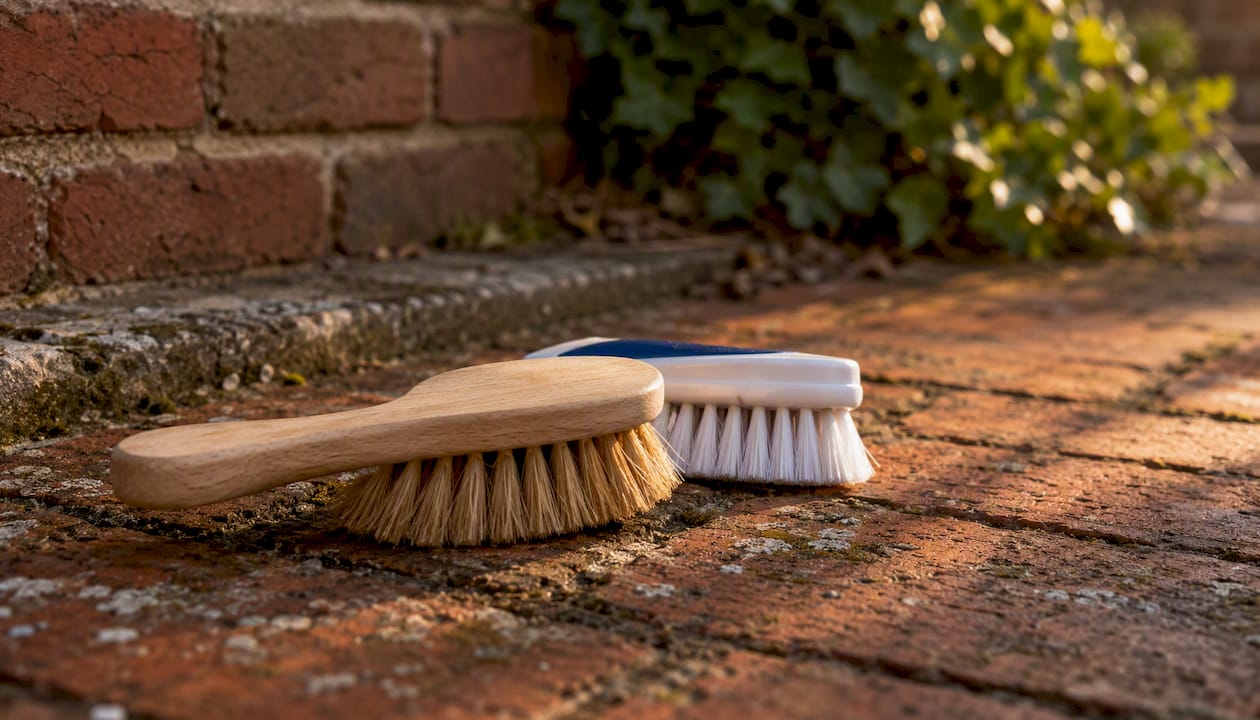
- Stiff non-metallic brush
- Pump sprayer or watering can for controlled cleaner application
- Garden hose for pre-wetting and final rinsing
- Pressure washer with adjustable PSI and a wide fan-tip nozzle
- Surface cleaner attachment for large, flat areas
Keep pressure at a relatively low PSI maximum on brick, well below what’s typical for concrete. Pressure washing guidance for brick specifically recommends a 25° to 40° nozzle held at least 24 inches from the surface.
- Set the pressure washer to its lowest effective setting first, then increase only if needed.
- Sweep the nozzle in steady, overlapping passes, never lingering in one spot.
- Keep the spray off the joints directly to avoid stripping out sand.
A walk-behind surface cleaner spreads pressure evenly across large patios and avoids the striping a narrow jet leaves behind.
Pro Tip: Never use a steel wire brush on brick. It scratches the surface and leaves behind tiny metal particles that rust and stain.
Step-by-Step: Cleaning a Brick Patio in Small Sections
Work in manageable sections, roughly 4 by 4 feet, rather than tackling the whole patio in one pass.
- Sweep and clear. Remove loose debris, pull weeds, and dig out heavy growth from the joints with a flathead screwdriver or joint tool.
- Protect and pre-wet. Cover nearby plants, wet down grass or mulch that could catch runoff, then soak the brick section with plain water.
- Apply cleaner and scrub. Spread your chosen solution, let it sit for the dwell time on the label (usually 5 to 15 minutes), and scrub with your non-metallic brush.
- Rinse thoroughly. Use low-pressure water and rinse from top to bottom or in one consistent direction so dirty water doesn’t pool and re-settle.
- Inspect once dry. Brick often looks different wet than dry, so give it time before deciding whether to spot-treat again.
Most sections dry enough to judge results within a few hours in warm weather; full drying before sealing can take a day or two. Better Homes & Gardens’ paver cleaning guidance recommends this same detergent-first, low-pressure sequence, then re-sanding joints once everything is dry.
| Step | What to watch for |
|---|---|
| Dwell time | Follow the product label; oversaturating won’t speed results. |
| Scrubbing | Stop once dirt lifts; excess scrubbing wears the brick face. |
| Rinsing | Low pressure, consistent direction, no standing water. |
Pro Tip: If a section still looks dingy after one full cycle, repeat the process rather than jumping straight to a stronger chemical.
Treating Oil, Rust, and Other Stubborn Stains
Different stains need different tactics, and treating everything with the same approach usually means over-scrubbing spots that needed almost no effort.
- Oil and grease: Cover fresh spills with cat litter or an absorbent powder before they set, then follow with a masonry degreaser like Simple Green’s brick-safe formula or a poultice for older, set-in stains.
- Rust: Use a masonry-formulated rust remover and test first. Acid-sensitive brick or joints with polymeric sand call for extra caution here, and heavy staining is often worth handing to a professional.
- Efflorescence (the chalky white mineral haze): Dry-brush it off, then rinse at low pressure. Reserve acid-based removers for stubborn cases and only if the paver manufacturer allows it.
- Paint or chewing gum: Scrape gently with a plastic tool, never metal, then follow up with a targeted chemical remover.
A poultice draws a stain out of porous brick by capillary action rather than pushing chemicals in, which is why it works on oil and rust when surface scrubbing alone doesn’t. Guidance on reclaimed brick paver maintenance recommends this method specifically for stains that have already soaked in.
Getting Rid of Moss and Algae for Good
Moss and algae thrive in shade and moisture, and killing the growth is only half the job. A technical cleaning note on brickwork recommends a 1:1 bleach-and-water mix, or a labeled masonry biocide, applied directly to the growth and left to sit before scrubbing.
- Protect surrounding plants before applying bleach; runoff can scorch grass and flower beds.
- Scrub with a stiff brush once the solution has dwelled, then rinse at low pressure.
- Improve drainage and trim back overhanging branches so the area dries faster between rains.
- Keep joints filled with sand; gaps hold moisture and give spores somewhere to root.
Soft-wash methods, which pair a cleaning chemical with light rinsing pressure, tend to outperform straight pressure washing on organic growth since they kill the roots instead of just blasting the surface layer clean.
Should You Refill Joints and Seal the Patio?
Cleaning displaces joint sand, especially if you used a pressure washer, so check the joints once everything’s dry and top them off before you consider sealing.
- Regular sand works for low-traffic areas; polymeric sand locks in place once activated with water, but follow the manufacturer’s directions exactly or it can haze the brick surface.
- Sealing brings real upside: easier future cleaning, richer color, better stain resistance.
- The tradeoff: a non-breathable sealer can trap moisture inside porous brick, leading to freeze-thaw damage in cold climates.
Pro Tip: Wait for at least two to three fully dry days after cleaning, and confirm joints are topped up, before applying any sealer.
Safety and Protecting Your Yard While You Work
Wear gloves, eye protection, and closed-toe shoes any time you’re mixing bleach or handling acid. A mask is worth adding if you’re working with muriatic acid in a confined space.
- Cover plants and grass near the patio before applying any chemical.
- Never let bleach or acid runoff flow straight into a storm drain.
- Dilute according to the product label and rinse thoroughly once you’re done.
- Mix chemicals outdoors in a well-ventilated area.
- Neutralize acid runoff if the label instructs you to.
- Check local disposal rules before pouring out leftover chemical solution.
Follow the product label and your municipality’s disposal guidelines, and call a professional for any large-volume chemical job.
When Restoring a Brick Patio Is a Job for a Pro
Some situations are worth handing off. Very old or crumbling brick, loose mortar joints, large oil stains that have set for years, historic masonry, or any scenario where you’re seriously considering muriatic acid are all signs to call in help.
- Professionals bring controlled soft-wash systems and low-PSI surface cleaners calibrated for brick specifically.
- They mix chemical blends matched to the stain and the masonry, not a one-size-fits-all bottle from a hardware store shelf.
- Joint stabilization and sealing are usually bundled in, so the patio is protected right after it’s cleaned.
Pro Tip: If the cost of a mistake (a permanently etched or discolored patio) outweighs the cost of a professional visit, that’s your answer. Capital Pro Pressure Washing handles paver cleaning and sealing across the Capital Region using soft-wash methods built for exactly this kind of delicate surface.
A Preservation-First Approach to Brick Cleaning
The biggest mistake homeowners make isn’t choosing the wrong cleaner. It’s rushing straight to maximum pressure because it feels faster. Brick rewards patience, not force.
Our crews test every surface before committing to a method, because two patios that look identical can react completely differently to the same chemical or PSI setting. If you take one thing from this guide, let it be this: test small, clean gentle, and treat the joints with the same care as the brick itself.
Get a Free Estimate for Brick Patio Cleaning
DIY works fine for light dirt and routine upkeep, but a patio with years of buildup, heavy moss, or delicate older brick often needs equipment most homeowners don’t own, and mistakes on brick don’t undo themselves. Capital Pro Pressure Washing runs soft-wash systems calibrated specifically for porous, sensitive surfaces like brick, so you get the deep clean without the risk of etching or blown-out joints.

Our deck and patio cleaning service covers the full sequence this guide walks through: pre-wash inspection, low-pressure cleaning, joint refilling, and optional sealing, done by a veteran-owned crew that’s worked on patios across Albany, Saratoga, Rensselaer, and Schenectady counties for over a decade. If your patio needs more than a weekend of scrubbing, request a free estimate and we’ll tell you honestly whether it’s a DIY job or one worth handing off.
Sources
- Cleaning historic masonry: NPS technical guidance (book-keeping-it-clean.pdf)
- Cleaning Brickwork (technical note)
- Cleaning, sealing, and maintaining reclaimed brick paver surfaces – Chief Bricks
Always check your specific brick or paver manufacturer’s instructions before using any aggressive cleaning method.
FAQ
Will Dawn Dish Soap Clean Brick?
Yes. Dawn mixed with warm water is a reliable first step for general dirt and grime on brick, and it’s gentle enough to use without a test patch in most cases.
What Does Vinegar Do to Brick?
White vinegar can help with light mildew, but it’s not a universal fix, and its acidity can etch limestone-based mortar or acid-sensitive masonry, so test it first.
Is It Okay to Pressure Wash Brick Pavers?
Yes, but only at low pressure, well below what is typical for concrete, with a wide fan nozzle held at least 24 inches from the surface to avoid pitting or stripping joint sand.
What Is the Best Cleaner for Outdoor Brick?
There’s no single best cleaner; start with mild dish soap or a pH-neutral masonry detergent, move to diluted bleach for organic growth, and reserve muriatic acid for professional-grade situations only.
When Should I Call a Professional Instead of Cleaning It Myself?
Call a professional if you see crumbling brick, loose mortar, large set-in oil stains, or historic masonry, or if you’re considering muriatic acid. Capital Pro Pressure Washing offers soft-wash paver cleaning built for exactly these cases.
Recommended
Services Related To This Article
Need a quote in the Capital Region?
Fast, free estimates from a local, licensed & insured team.
