
Restore 90–95% of Your Gutters' Color With Safe Whitening

Gutter whitening (also called gutter brightening) uses targeted chemistry and gentle agitation to remove bonded oxidation stains that ordinary washing can’t touch. DIY methods can help with light, fresh staining. Severe tiger striping calls for professional-grade brighteners applied correctly, since the wrong chemical or too much pressure can strip paint, burn plants, or pit concrete.
Quick Summary:
- Bonded tiger striping results from asphalt residues that are chemically welded to aging paint, requiring oxalic-acid-based brighteners for effective removal.
- DIY treatments like vinegar solutions work only on surface dirt or fresh stains, while bonded stains often need professional application with controlled dwell time and gentle agitation.
- Skipping interior gutter cleaning before exterior whitening causes new streaks within weeks, making interior debris removal a critical step for lasting results.
- Professional gutter brightening typically restores about 90 to 95 percent of the original color and lasts several years, unlike most DIY efforts.
- Safety precautions include wearing protective gear, pre-wetting nearby plants and surfaces, and avoiding high-pressure washing or untreated chemicals on structural or landscape elements.
Table of Contents
- What’s Actually Causing Those Gutter Stains?
- DIY Gutter Whitening Recipes That Actually Work
- How Professional Gutter Brightening Gets Better Results
- Safety Checklist Before You Start (or Hire Someone)
- A Step-by-Step DIY Whitening Process for Reachable Gutters
- Keeping Gutters Bright Longer
- What to Expect From Capital Pro Pressure Washing
- Why the DIY-Versus-Pro Debate Misses the Real Question
- Get a Gutter Whitening Estimate From Capital Pro Pressure Washing
- Sources
- FAQ
What’s Actually Causing Those Gutter Stains?
Before you buy a single bottle of cleaner, figure out what you’re dealing with. Three different problems get mistaken for each other constantly, and each one needs a different fix.
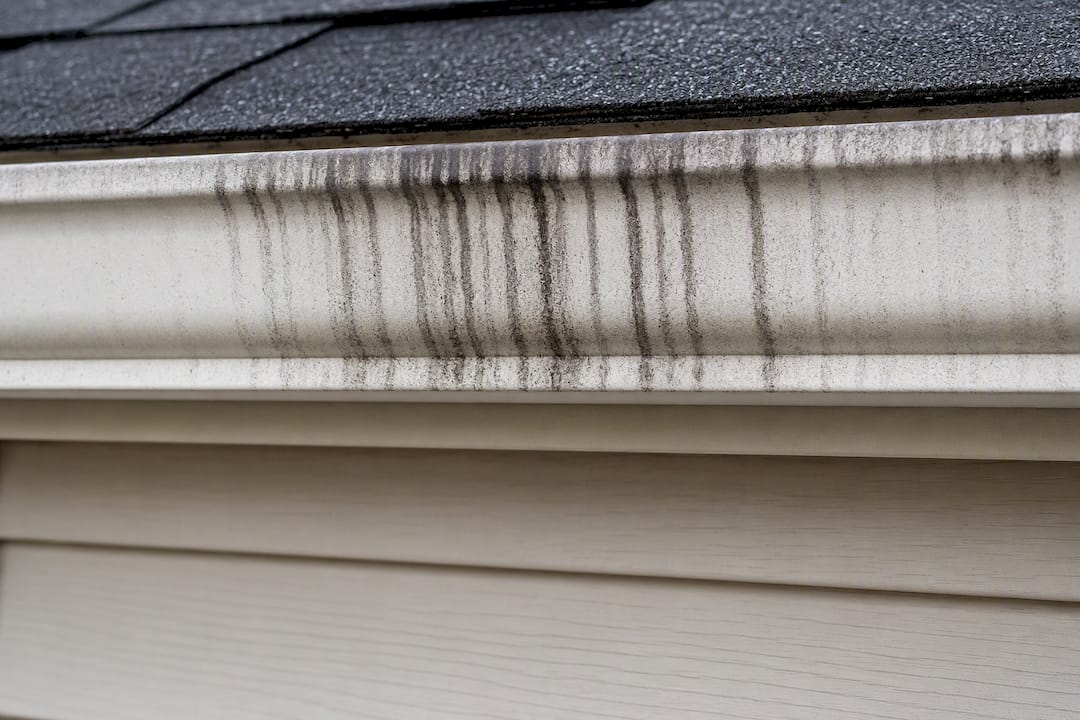
Tiger striping is the dark, vertical streaking that runs down the face of a gutter, usually starting at the seams. Rainwater picks up asphalt shingle residue and airborne pollutants off the roof, then carries that grime down the gutter face where it electrostatically bonds to oxidized paint. That bond is the problem. It’s not surface dirt sitting on top of the finish, it’s chemically welded to it, which is exactly why a pressure washer alone rarely makes a dent. You can blast that gutter at 3,000 PSI for ten minutes and the stripes will look exactly the same afterward.
Surface dirt is different. This is loose pollen, dust, and organic buildup that hasn’t bonded to the paint. It usually wipes off with soap and water or a light rinse, no chemistry required.
Paint failure is the one homeowners hope isn’t happening. If the finish is chalking, flaking, or the metal underneath shows through in patches, no whitening product will fix that. You’re looking at a repaint or replacement, not a cleaning job.
A few quick tests help sort out which one you’ve got:
- Rub a clean white cloth over a dry section. If it comes away with a chalky residue, that’s oxidized paint breaking down, a sign the finish is aging out.
- Try soap and water on a small patch first. If it lifts the stain in under a minute, you’re dealing with surface dirt, not bonded staining.
- Check for texture changes: chalking, bubbling, or bare metal spots mean the coating has failed structurally, not cosmetically.
- Look at the pattern. Streaks concentrated near seams and downspout outlets point to drainage-driven staining rather than random dirt.
If you see flaking paint, rust bleeding through, or gutters pulling away from the fascia, stop and call a professional for an inspection. Whitening a gutter that’s structurally failing just wastes product and time.
DIY Gutter Whitening Recipes That Actually Work
For light-to-moderate staining, there’s a reasonable case for trying this yourself before paying for a service call. Just go in with realistic expectations.
1. The vinegar and dish soap method. Mix 1 cup of distilled white vinegar and a quarter cup of dish soap into a gallon of warm water. This combination works on fresh, mild staining and won’t damage paint if you rinse promptly. It’s cheap, it’s safe around plants in small quantities, and it’s a smart first move before reaching for anything stronger.
2. Retail alkaline degreasers. Products like Krud Kutter can handle moderate staining, but they need more scrubbing effort than professional formulations and typically fall short against true tiger striping that’s had months or years to bond. Follow the label dilution, apply with a soft brush, and give it a few minutes of dwell time before agitating.
3. What to avoid entirely. Skip undiluted bleach. It can permanently discolor or degrade the paint finish, and it’s brutal on any grass or shrubs underneath. Skip aggressive pressure washing too. High PSI directed at an aging paint surface can peel it faster than the stain would have faded on its own.
Work in small sections, roughly 4 to 6 feet at a time, so the cleaner doesn’t dry before you can agitate and rinse it. Use a soft-bristle brush or a flocked applicator, never a stiff wire brush, and rinse from top to bottom before moving to the next section.
Pro Tip: Test any cleaner on a hidden 12-inch section first and wait 24 hours. Some paint finishes react slowly, and you don’t want to discover a problem after you’ve already treated the whole run.
How Professional Gutter Brightening Gets Better Results
The gap between DIY and professional results comes down to chemistry, not effort. Pros use specialized oxalic-acid-based brighteners formulated specifically to break the bond between oxidized paint and embedded shingle grime, something a household degreaser simply isn’t built to do.
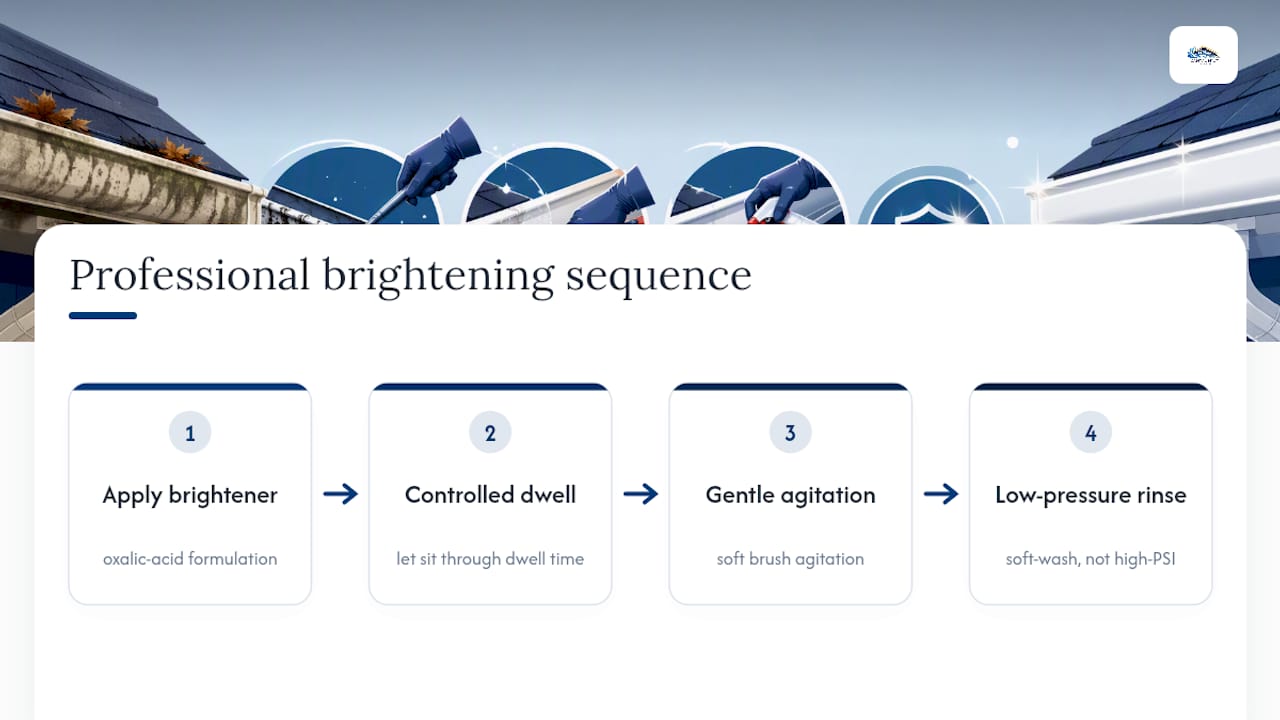
The technique matters as much as the chemical. A professional applies the brightener, lets it sit through a controlled dwell time, agitates gently with a soft brush to work the product into the bonded stain, then rinses with low-pressure soft-wash equipment rather than a high-PSI wand. That sequence, apply, dwell, agitate, rinse, is the entire method, and skipping any step is usually why DIY attempts fall short or backfire.
Before any chemical touches the gutter, a pro protects the landscape: pre-wetting plants, covering shrubs, and rinsing runoff away from root zones. Concrete and pavers near the drip line get pre-wetted too, since oxalic acid can etch bare concrete if it sits too long.
The payoff is real. Professional brightening typically restores nearly all of the original color on gutters with moderate to severe tiger striping, and results generally last multiple years before re-treatment is needed. That’s a meaningfully different outcome than what most DIY attempts achieve on bonded staining.
One detail gets skipped constantly: cleaning the interior of the gutter before whitening the exterior face. If debris and standing water are still overflowing the trough, new streaks form on top of a freshly whitened surface within weeks. Cleaning first isn’t optional if you want the brightening to last.
Safety Checklist Before You Start (or Hire Someone)
Oxalic acid and most professional-grade brighteners are corrosive. They can burn skin, damage eyes on contact, and strip more than just the stain if left on too long without proper dilution and neutralization. Treat every product like it can hurt something, because it can.
- Wear chemical-resistant gloves, eye protection, and old clothes you don’t mind ruining.
- Pre-wet all plants, grass, and shrubs near the work area, and rinse them again immediately after you finish that section.
- Cover or pre-wet concrete and pavers below the drip line to prevent etching from acidic runoff.
- Never work alone on a ladder above one story. If the gutter run requires extended reach or a second-story ladder setup, that’s the point to call a professional instead.
- Always spot-test on a hidden section first and wait a full day to check for discoloration or finish damage before treating the whole gutter.
For a broader look at safe technique around delicate exterior surfaces, this guide on pressure washing home exterior steps safely covers protective measures that carry over directly to gutter work.
A Step-by-Step DIY Whitening Process for Reachable Gutters
This workflow is built for single-story homes or sections reachable from the ground or a short ladder. If your gutters run two stories up, skip ahead to hiring a pro.
Before you start: Check the forecast. You want a dry day with no rain expected for at least 6 hours, and temperatures above 50°F so cleaners don’t freeze or evaporate too fast. Clean the gutter interior first, since leftover debris will just overflow and restain your work. Gather your soft brush, cleaner, garden hose, tarps or plastic sheeting for landscaping, and gloves.
- Pick a test section. Choose a 12-inch stretch that’s easy to see but not directly street-facing, and apply your chosen cleaner there first.
- Apply the solution. Spray or brush the vinegar and soap mix, or your chosen degreaser, evenly across a 4 to 6 foot section of gutter face.
- Let it dwell. Give the product 5 to 10 minutes to break down surface grime before touching it. Don’t let it dry out; mist lightly if the weather is hot and windy.
- Agitate gently. Use a soft-bristle brush or flocked applicator in a back-and-forth motion. Don’t scrub hard enough to scratch or dull the paint.
- Rinse thoroughly. Use a garden hose or low-pressure nozzle, working top to bottom, and rinse plants and concrete immediately afterward.
- Inspect and repeat if needed. Some bonded stains need a second application. If two rounds show no improvement, that’s your signal the staining is beyond DIY scope.
For a typical 50 to 100 foot section, expect 2 to 4 hours of work depending on how stubborn the staining is. If you’re still seeing dark streaks after two honest attempts, that’s not a sign you’re doing it wrong, it’s usually a sign the bond is too deep for consumer-grade products.
Pro Tip: Dispose of chemical runoff responsibly. Never let concentrated cleaner or rinse water drain directly into storm drains or flower beds; divert it to a grassy area where it can dilute naturally.
Keeping Gutters Bright Longer
Whitened gutters don’t stay that way forever, but a few habits stretch the results considerably.
- Clean gutter interiors once or twice a year, more often under heavy tree cover, to stop overflow before it restains the face.
- Check that gutters are pitched correctly toward downspouts; standing water and overflow repaint fresh stripes onto a clean surface faster than almost anything else.
- Consider gutter guards if overhanging trees are a chronic problem, and trim back branches that drop debris directly into the trough.
- Time exterior whitening for spring or fall, when temperatures allow proper dwell time without flash-drying the product.
- If the paint itself is failing rather than just stained, repainting or gutter replacement is the only fix that actually lasts.
What to Expect From Capital Pro Pressure Washing
This company has over 10 years of soft-wash experience in exterior cleaning services, and gutter whitening is one of the services offered. The soft-wash technique is used to remove bonded staining while minimizing risk of paint damage compared to high-pressure methods.
A typical job includes gutter interior cleaning, exterior whitening with controlled dwell time, and may include an optional sealing step for protection. When booking an estimate, the process generally includes a visual inspection, setting up protection for plants and surfaces before chemical application, and discussing realistic results depending on the staining duration.
Why the DIY-Versus-Pro Debate Misses the Real Question
Most gutter cleaning advice treats DIY and professional whitening as a binary choice, pick one, stick with it. That framing misses what actually determines the outcome: how long the stain has been bonding, not who’s holding the brush.
Fresh staining, six months old or less, responds reasonably well to a vinegar solution and some elbow grease. Give that same stain three years to cook into the paint under UV exposure and seasonal runoff, and no amount of scrubbing will match what an oxalic-acid brightener does in twenty minutes. The conventional wisdom that DIY is always “worth trying first” ignores this. Sometimes trying first just means two wasted weekends and a slightly duller finish where you scrubbed too hard.
The bigger blind spot is sequencing. Homeowners fixate on the whitening step and skip interior cleaning, then wonder why stripes reappear within a season. Fix the drainage and the interior debris first. That single habit does more for long-term appearance than any brightener on the market.
— Luis T
Get a Gutter Whitening Estimate From Capital Pro Pressure Washing
Skip the ladder, the chemical guesswork, and the risk to your landscaping. Capital Pro Pressure Washing handles the whole sequence in one visit: interior cleanout to stop overflow, exterior whitening with soft-wash equipment that protects your paint finish, and an optional sealing step for homeowners who want the results to hold longer between treatments.

A quote starts with a quick look at your gutters, so have your gutter age, the extent of staining, and roof type ready when you reach out. You can browse the full list of services to see how gutter work pairs with house washing or soft washing, or check the pricing guide for a general sense of cost before you call. On the day of service, expect an inspection, plant and hardscape protection set up before any product is applied, and a final walkthrough so you can see the results before the crew leaves. Reach out through the services page to schedule your estimate.
Sources
- The Black Stripes on Your Gutters Won’t Wash Off. Here’s Why. | Fresh Frames
- What Causes Black Streaks on Gutters (And How to Get Rid of Them) | New Home Glow
- Gutter Cleaning vs. Gutter Whitening in New London County, CT | Beachfront Softwash
FAQ
How do I make my gutters white again?
Apply a whitening solution, either a diluted vinegar mix for light staining or a professional oxalic-acid brightener for bonded tiger striping, let it dwell, agitate gently with a soft brush, then rinse thoroughly from top to bottom.
What takes black streaks off gutters?
Oxalic-acid-based professional brighteners are the most reliable option for bonded tiger striping, restoring gutters to roughly 90 to 95 percent of their original color when applied with correct dwell time and soft agitation.
What is the little-known trick for cleaning gutters?
Clean the gutter interior before whitening the exterior face. Skipping this step lets overflow and standing water restain a freshly whitened surface within weeks.
What is gutter whitening?
Gutter whitening, also called gutter brightening, is a chemical treatment that removes bonded oxidation staining from the exterior gutter face, a different service from interior gutter cleaning, which clears debris so water flows properly.
Recommended
Services Related To This Article
Need a quote in the Capital Region?
Fast, free estimates from a local, licensed & insured team.
