
What Are Tiger Stripes on Gutters and How Do You Remove Them?

Tiger stripes are dark, vertical streaks that form when asphalt-shingle runoff bonds electrostatically to an oxidized aluminum gutter finish. The fastest fix is a dedicated gutter brightener or oxidation remover paired with soft-bristle agitation—not a pressure washer, and definitely not straight bleach.
Before you grab a hose, put on gloves and goggles. The chemicals used in most oxidation removers are strong enough to irritate skin, and overspray can burn nearby plants if you skip pre-wetting the landscape below your gutters. Capital Pro Pressure Washing has spent over a decade cleaning gutters across the Capital Region using soft-wash methods built for exactly this problem, so we know where DIY jobs tend to go sideways.
- Use a gutter brightener, not bleach or a pressure washer.
- Wear gloves and goggles, and pre-wet nearby landscaping.
- Call a professional if you’re dealing with second-story access, baked-on multi-year stains, or gutters that keep overflowing.
Pro tip: If your gutters have been striped for more than two seasons, expect to need at least two cleaning passes. Baked-on stains rarely lift on the first try.
Key Takeaways
Tiger stripes form when asphalt runoff bonds to oxidized aluminum, and removing them requires a gutter brightener with soft-bristle agitation rather than bleach or a pressure washer.
| Point | Details |
|---|---|
| Identify the real cause | Tiger stripes result from asphalt-shingle runoff bonding to oxidized aluminum, often worsened by clogs or bad pitch. |
| Use the right product | A gutter brightener or oxidation remover with a two to five minute dwell time outperforms bleach or plain water. |
| Never pressure-wash gutters | High pressure can dent aluminum and force water behind seams instead of removing the stain. |
| Prevent recurrence | Clean gutter interiors twice a year and reapply wax or sealant every 12 to 18 months. |
| Call a pro when needed | Capital Pro Pressure Washing inspects drainage and pitch alongside exterior brightening, addressing the cause, not just the stain. |
Table of Contents
- Why Do Gutters Get Tiger Stripes?
- How Do You Remove Tiger Stripes From Gutters Safely?
- Which Cleaning Products Actually Work on Tiger Stripes?
- How Do You Keep Tiger Stripes From Coming Back?
- What Does It Cost to Remove Tiger Stripes?
- How Capital Pro Pressure Washing Handles a Tiger Stripe Job
- What Homeowners Get Wrong About Gutter Stains
- Get Your Gutters Professionally Brightened
- Sources
- FAQ
Why Do Gutters Get Tiger Stripes?
Tiger stripes form when tiny petroleum and tar granules washed off asphalt shingles mix with rainwater and cling to an oxidized aluminum surface. Fresh, well-sealed aluminum resists this. Aluminum that’s lost its factory finish through years of sun and weather develops a rough, porous oxide layer that grabs onto those granules the way a dry sponge grabs onto grease. That’s the electrostatic bond trade pros talk about, and it’s also why a garden hose rinse never touches the problem.
Three factors decide how bad the staining gets and how fast it comes back.
- Gutter age and finish condition. Older gutters with worn or unsealed aluminum oxidize faster, giving runoff more surface to grip.
- Roof condition. Aging or deteriorating shingles shed more granules, so a roof nearing the end of its life often means heavier staining below it.
- Regional heat and UV exposure. Hot, sunny climates bake the residue onto the metal faster, turning what could be a light film into a stubborn stain within a single season.
There’s a fourth cause that’s easy to miss: your gutters themselves. When debris clogs a section or the pitch is off, water overflows the lip instead of draining through the downspout, and that overflow drags shingle grit down the face of the gutter in exactly the streaked pattern homeowners call tiger striping. This is why cleaning the outside without checking the inside is treating a symptom rather than the cause. Carolina Seamless Gutters notes that tiger striping often points to an interior flow or alignment problem rather than a purely cosmetic one. If you scrub the stripes away and they’re back within a month or two, that’s your cue to check for a sagging hanger, a clog, or a section that’s lost its pitch toward the downspout.
How Do You Remove Tiger Stripes From Gutters Safely?
Removing tiger stripes is a chemistry problem more than a scrubbing problem, but the two work together. Skip either one and you’ll be back out there next weekend with the same gray streaks staring back at you.
1. Test and prep first. Pick an inconspicuous section and apply your chosen cleaner there before treating the whole run. Aluminum finishes vary in age and coating quality, and a product that works fine on one house can etch an older, thinner finish on another.
2. Protect what’s below. Pre-wet any plants, shrubs, or grass directly under your gutters with plain water. This dilutes any overspray before it can scorch leaves or discolor mulch. If you’re near painted siding or a concrete walkway, cover or rinse those areas too, since some oxidation removers can etch concrete if left to dry on it.
3. Gear up. Gloves and eye protection are non-negotiable. Most gutter brighteners contain acidic compounds strong enough to strip oxidation off metal, and that means they’re strong enough to irritate skin and eyes on contact. If you’re working from a ladder above the first story, work with a second person spotting the base, or skip the ladder entirely and call a pro.
4. Choose your product and dilute correctly. Gutter brighteners and oxidation removers come as ready-to-use sprays or concentrates you mix yourself. Concentrates are cheaper per gallon but require you to follow the label’s dilution ratio precisely. Too weak and it won’t touch the stain. Too strong and you risk streaking the finish worse than before.
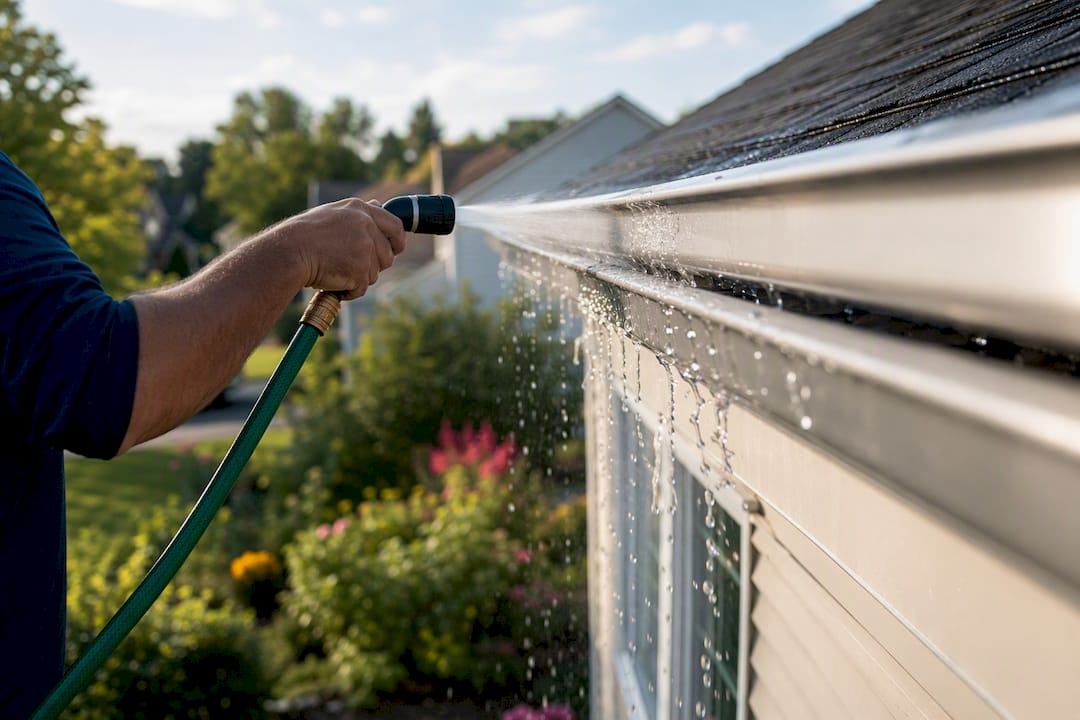
5. Work in small sections. Cover 4 to 6 feet of gutter at a time rather than soaking the whole run at once. This keeps the product from drying out before you’ve had a chance to agitate and rinse it.
6. Apply, then wait, then act. Spray or brush the diluted cleaner onto the stained section and let it dwell. Most gutter brighteners call for a two to five minute dwell time, and hot, sunny days call for the shorter end of that range since the sun accelerates drying. Letting it sit too long doesn’t make it work better. It just gives it time to dry onto the surface and become harder to remove.
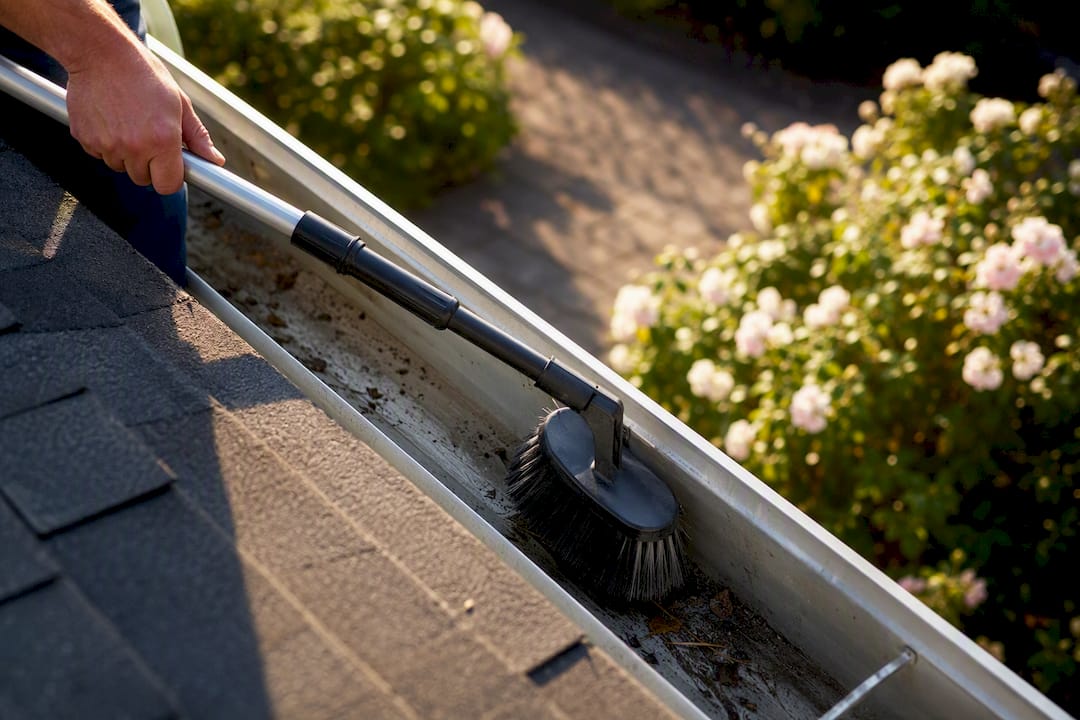
7. Agitate with a soft-bristle brush. Use a brush mounted on an extension pole, not a wire brush and not an abrasive pad. Aluminum scratches easily, and once you’ve scuffed the finish, it oxidizes faster in that exact spot, ironically setting you up for the same stripe to return sooner.
8. Rinse top to bottom. A garden hose or a low-pressure rinse attachment is plenty. Rinse from the top of the gutter down so you’re not pushing loosened residue back up into the section you already cleaned.
9. Repeat if the stain is old. Gutters carrying several years of baked-on staining rarely come clean in one pass. Plan for a second or even third application on the worst sections rather than assuming your first attempt failed.
Two things you should never do, no matter how tempting the shortcut looks. Don’t reach for a pressure washer on the gutters themselves. The force needed to blast through electrostatically bonded staining is well above what aluminum can take without denting or forcing water behind the seams, which creates a leak problem to go with your stain problem. And don’t reach for straight bleach. Sodium hypochlorite is built to kill mold and lift organic stains, not to break the petroleum bond that causes tiger striping, so you’ll use a harsh chemical and still be looking at the same streaks afterward.
Pro tip: On a hot afternoon, mist the section you’re about to clean with plain water first. A cooler, damp surface keeps your cleaner from flash-drying mid-application, which is the single most common reason DIY brightening jobs come out patchy.
Which Cleaning Products Actually Work on Tiger Stripes?
Not every bottle labeled “gutter cleaner” is built for this job, and reading the label carefully saves you a wasted afternoon.
Ready-to-use brighteners come pre-mixed and are the simplest option for a homeowner tackling one house. They cost more per ounce than concentrates but remove the guesswork on dilution, which matters if this is your first time doing this job.
Concentrated oxidation removers are the better value if you’ve got a full run of gutters or you expect to repeat the process annually. You mix them yourself, which means you control strength but also carry the responsibility of getting the ratio right.
The active ingredient is what actually matters, and it’s usually some form of acid. Professional-grade products often use oxalic acid or similar oxidation-removing compounds that dissolve the molecular bond holding shingle residue to oxidized aluminum. That’s real chemistry, and it comes with real risk: used at the wrong dilution or left on too long, these same acids can etch paint or dull a factory finish. This is the exact tradeoff that separates a strong DIY product from an industrial-strength one meant for professional hands only.
So when does DIY stop making sense? A few situations tip the scale toward hiring it out:
- Stains that have accumulated over several years and resist a first cleaning pass.
- Gutters two stories up or higher, where ladder work becomes a real fall risk.
- Older or painted gutters where the wrong dilution could strip more than the stain.
- Nearby siding, brick, or landscaping that needs careful masking to avoid overspray damage.
Environmental care matters here too. Runoff from oxidation removers shouldn’t pool directly on grass or flower beds, and if any overspray lands on concrete, a quick water rinse prevents the acid from etching the surface as it dries. A soft-wash approach, the same low-pressure, chemical-forward method Capital Pro Pressure Washing uses on roof washing jobs, keeps runoff controlled instead of blasting it everywhere at high pressure.
How Do You Keep Tiger Stripes From Coming Back?
Prevention is cheaper than repeat cleaning, and most of it comes down to keeping water moving the way it’s supposed to.
- Clean the gutter interior twice a year. Fall and spring debris removal keeps water flowing to the downspout instead of overflowing the lip and dragging shingle grit down the face.
- Check pitch and hangers while you’re up there. A gutter that’s sagging or pitched wrong holds standing water, which is a direct contributor to both overflow staining and long-term rust.
- Install gutter guards. They cut down on the leaf and debris buildup that causes clogs, though they’re not a complete fix. Gutter Guards reduce how often you need to clear the interior, but they don’t stop asphalt runoff from the roof above from reaching the exterior.
- Apply a wax or sealant after brightening. A coat of automotive paste wax or a dedicated gutter sealant creates a hydrophobic layer that helps repel new runoff. Expect this protection to last roughly 12 to 18 months before it needs reapplying.
A realistic maintenance rhythm looks like one exterior brightening a year, paired with interior cleanings each spring and fall. If you notice water spilling over the gutter edge during a rainstorm, or you spot new streaking within weeks of a cleaning, that’s your signal something upstream, literally, needs attention before you clean again.
What Does It Cost to Remove Tiger Stripes?
DIY gutter brighteners generally run $15 to $40 for enough product to cover a typical single-story home, though heavier staining or a larger house will eat through more concentrate. Add a soft-bristle brush and an extension pole if you don’t already own them, and you’re still well under $100 for materials.
Professional gutter brightening costs more upfront but includes labor, proper safety equipment, and often an inspection of the gutter system itself, not just the surface stain. Pricing varies by home size, story height, and how much interior cleaning or repair the gutters need alongside the brightening.
A few situations make hiring a pro the smarter move regardless of budget:
- You’d need a ladder reaching a second story or higher.
- The stains have been there multiple years and previous DIY attempts haven’t budged them.
- Your gutters overflow during heavy rain, which points to a repair issue beyond cosmetic cleaning.
- You’d rather not handle acidic cleaning products near your home’s siding or landscaping.
Capital Pro Pressure Washing’s gutter cleaning service includes an inspection of pitch and drainage alongside the exterior brightening, so you’re not paying to fix a symptom while the actual cause goes unaddressed.
How Capital Pro Pressure Washing Handles a Tiger Stripe Job
A professional gutter brightening job typically follows a set sequence: inspect the gutter system for pitch and clogs, clear the interior, apply and agitate the brightening solution on the exterior, rinse thoroughly, then offer a wax or sealant for extended protection. Most standard residential jobs wrap up in two to four hours, start to finish.
The interior check matters as much as the exterior scrub. Cleaning the stripes off gutters that are still overflowing just buys you a few weeks before the same streaks reappear.
Homeowners can reasonably expect a visibly restored gutter finish, controlled runoff that protects landscaping and siding, and, if a wax or sealant is applied, a longer stretch before stains return.
Pro tip: When you get an estimate from any contractor, ask three things: what chemicals they’re using, whether they carry insurance, and whether the work comes with any kind of satisfaction guarantee. The answers tell you a lot about how the job will actually go.
What Homeowners Get Wrong About Gutter Stains
Most advice on tiger stripes treats the exterior stain as the whole problem. It isn’t. The research on this is consistent: tiger striping is frequently a symptom of a gutter system that’s overflowing, clogged, or pitched wrong, not just a cosmetic issue with an ugly fix. Homeowners who scrub the stripes off without checking why water is spilling over the lip in the first place are signing up to do the same job again next season.
The other misconception is that stronger equipment beats better chemistry. Pressure washers feel like the obvious tool for a stubborn stain, but the electrostatic bond behind tiger striping doesn’t respond to force. It responds to the right acid at the right dilution, given time to work and agitated properly. That’s a patience problem, not a horsepower problem.
If there’s one thing worth prioritizing over everything else in this guide, it’s the interior inspection. Spend five extra minutes checking pitch and clearing clogs before you touch the exterior stain, and you’ll likely cut your future cleaning frequency in half.
Get Your Gutters Professionally Brightened
Capital Pro Pressure Washing offers something the bottle of gutter brightener on the shelf can’t: a trained eye that catches the pitch problem or clogged downspout causing your stripes to keep coming back. We’re veteran-owned and have spent over 10 years using soft-wash techniques across the Capital Region, which means we clean the stain without risking the finish underneath it, and we back every job with a satisfaction guarantee.

If your gutters have been striped for more than a season, or you’re not comfortable getting on a ladder to find out why, request an on-site inspection. We’ll check the interior flow, brighten the exterior, and can apply a protective seal to buy you more time before it happens again. Our house washing service often gets bundled with gutter brightening for homeowners who want the whole exterior looking consistent at once. Reach out through Capital Pro Pressure Washing to get a quote for your home.
Sources
- Tiger Striping on Gutters: What Those Dark Streaks Are — Carolina Seamless Gutters
- Gutter Tiger Stripes Sacramento | Remove Black Streaks | Sacramento Gutter Guard
- What Causes Black Streaks on Gutters (And How to Get Rid of Them) | New Home Glow
- How to Clean Black Streaks on Gutters (Tiger Striping) — Clean Pro
FAQ
What removes tiger stripes from gutters?
A dedicated gutter brightener or oxidation remover, applied with a short dwell time and worked in with a soft-bristle brush, removes tiger stripes without damaging the aluminum finish underneath.
Why do gutters get tiger stripes?
Asphalt-shingle runoff carrying petroleum granules mixes with rainwater and bonds electrostatically to oxidized aluminum, and the staining often gets worse when clogs or poor pitch cause water to overflow the gutter’s edge.
How much should you expect to pay for gutter cleaning?
DIY brightening products typically cost $15 to $40 for a standard single-story home, while professional service costs more but usually includes an inspection, interior cleaning, and brightening in a single visit lasting two to four hours.
What is the purpose of tiger stripes?
Tiger stripes don’t serve any purpose. They’re a stain, not a design feature, and their presence usually signals that shingle runoff or a drainage problem needs attention.
Can gutter guards stop tiger stripes completely?
Gutter guards reduce debris buildup and the clogs that worsen staining, but they don’t stop asphalt runoff from the roof above, so they lower the frequency of tiger stripes without eliminating them entirely.
Recommended
Services Related To This Article
Need a quote in the Capital Region?
Fast, free estimates from a local, licensed & insured team.
