
How Much Does Paver Sealing Cost in Albany, NY? (2026 Homeowner Guide)
What paver cleaning, re-sanding and sealing actually costs in Albany and the Capital Region — what drives the price up, and what a fair quote includes.
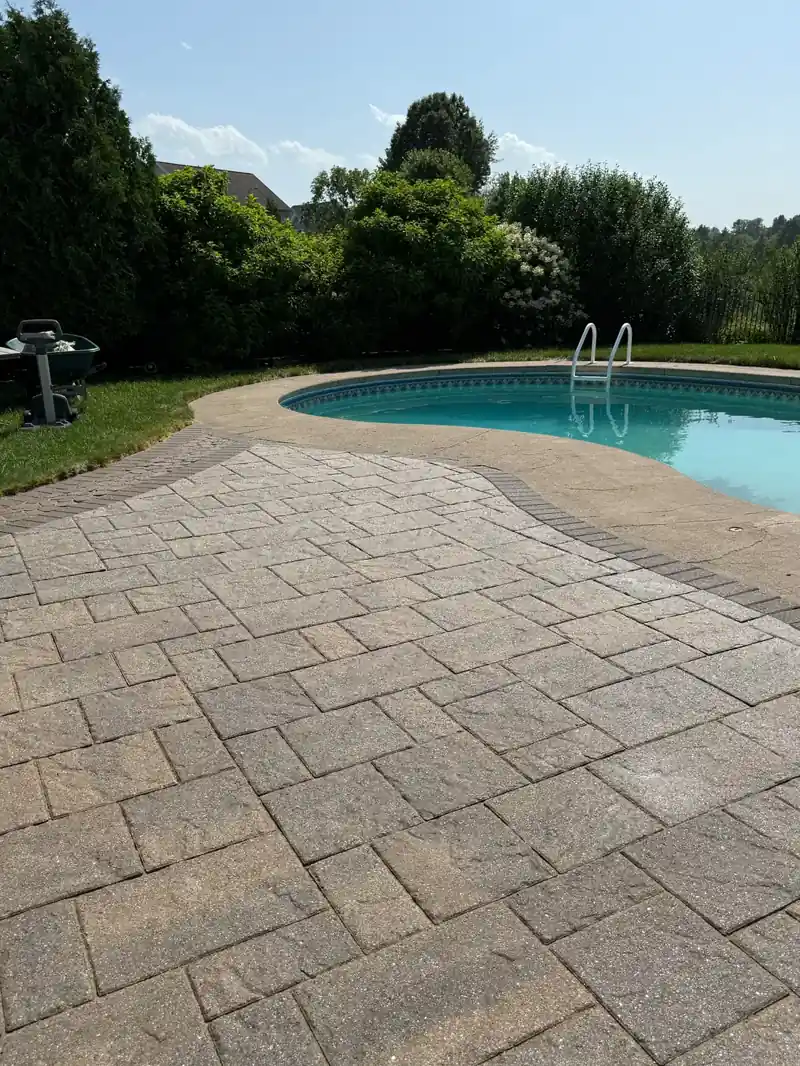
Paver sealing quotes in the Capital Region can look wildly inconsistent — one company says a number, another says triple. Usually that's because they're quoting two completely different scopes of work. Here's how paver restoration is actually priced in Albany, Schenectady, Clifton Park and the surrounding towns, what should be included, and how to tell a real quote from a lowball that fails by next spring.
Paver Work Is Priced Per Square Foot — But Scope Drives Everything
Almost every legitimate contractor quotes paver work per square foot. The confusion comes from what's inside that number. A straight cleaning is one price. A clean plus a full joint blowout, polymeric re-sand, and vibratory compaction is another. Add a premium sealer and you're at a third.
So when you're comparing two Albany quotes and one is half the other, the first question isn't 'why are they cheaper' — it's 'what are they actually doing?' Ask each company whether the joints are being blown out and re-sanded, whether the surface is being compacted after sanding, and which sealer product and coverage rate they're using.
- Cleaning only — lowest cost, appropriate when joint sand is still hard and intact
- Clean + joint blowout + polymeric sand + compaction — the standard restoration
- Full restoration + premium sealer — highest cost, longest-lasting result
What Pushes an Albany-Area Quote Higher
Access matters more than people expect. A backyard patio in Pine Hills or the Stockade with a narrow gate, stairs, or a long hose run takes significantly more labor than a wide-open driveway apron in Clifton Park. Heavy moss and weed growth adds treatment time. So does a patio that has never been sealed, or one that was sealed years ago with a topical acrylic that is now peeling and has to be handled differently.
Square footage cuts the other way — larger areas usually price lower per square foot because setup time is spread across more surface.
- Tight access, stairs, gates, and long hose runs
- Heavy moss, weeds, or organic staining in the joints
- Existing failed topical sealer that needs special handling
- Sealer choice: natural matte vs. wet-look color-enhancing vs. invisible protective
- Whether edge restraint or settled areas need attention first
Why the Cheapest Quote Usually Costs More
The two steps budget crews skip are joint blowout and vibratory compaction. Skipping the blowout means fresh sand goes on top of degraded sand, so the joint never really sets. Skipping compaction means the sand bridges in the joint instead of settling to depth — it looks full for about three weeks, then drops and washes out with the first heavy Capital Region rain.
You then pay a second contractor to do the job properly. That's the real cost of the cheap quote.
What a Fair Quote Should Include in Writing
Insist on a written scope, not a number scribbled on a card. It should name the cleaning method, whether joints are being blown out, the sand product, whether compaction is included, the sealer product and finish, and the expected number of visits — because cleaning, sanding, and sealing all need dry conditions and rarely happen in one day.
- Measured square footage
- Cleaning method (rotary surface cleaner sized for pavers)
- Joint blowout: yes or no
- Sand product and whether compaction is included
- Sealer product, finish type, and expected service life
- Number of visits and weather contingency
- Proof of insurance
Ready for a Free Quote?
Fast callback. No pressure, no obligation.
FAQ
Frequently Asked Questions
Is paver sealing worth the money in the Capital Region?
In a freeze-thaw climate, yes. Sealing locks the joint sand, blocks salt and stain absorption, and typically extends the time between full restorations by years. The alternative is re-doing joints far more often and eventually resetting shifted pavers.
How often do pavers need to be re-sealed?
Most sealers run 3–5 years depending on sun exposure and traffic. Joints should be inspected every couple of years and topped up or replaced when they start breaking down.
Can I get a quote without an on-site visit?
We can give a ballpark range over the phone, but a firm price needs eyes on the joints. Anyone quoting a final number on paver restoration sight-unseen is guessing.
Do you seal pavers in winter?
No. Both polymeric sand activation and sealer cure need dry conditions and moderate temperatures, so Capital Region paver work runs roughly late spring through early fall.
Serving The Capital Region
Get It Done In Your Town
- Paver Restoration & Sealing in Albany, NY
- Paver Restoration & Sealing in Schenectady, NY
- Paver Restoration & Sealing in Clifton Park, NY
- Paver Restoration & Sealing in Saratoga Springs, NY
- Paver Restoration & Sealing in Troy, NY
- Paver Restoration & Sealing in Colonie, NY
- Paver Restoration & Sealing in Latham, NY
- Paver Restoration & Sealing in Niskayuna, NY
Get Started
Get Your Free Quote
Takes about a minute. No obligation — we'll text or call you back fast.
