
How to Clean Cement Pavers (Without Wrecking the Joints)
A step-by-step guide to cleaning cement pavers — what to use on moss, weeds and stains, what pressure is safe, and why joint sand has to be replaced afterward.
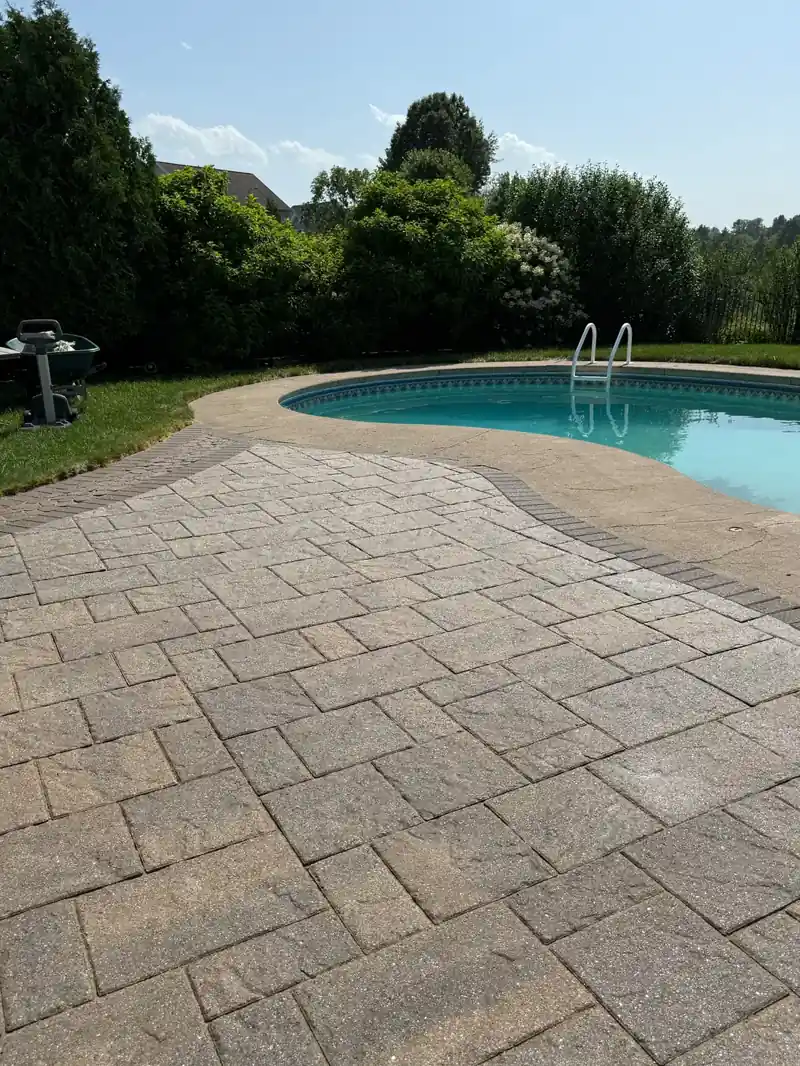
Cement pavers clean up beautifully, but the way most people do it causes damage you do not see until the following spring. The problem is not the dirt — it is the joint sand between the pavers, which blasts out easily and is the only thing holding the surface locked together. Here is how to clean cement pavers properly in New York's Capital Region, in the order that actually works.
Step 1: Clear and Treat the Surface First
Sweep off debris and pull any weeds growing through the joints, root and all. Then treat the surface for organic growth before touching it with water. Moss, algae, and lichen are living, and washing them off without killing them means they regrow within months.
A professional-grade sodium hypochlorite mix at low concentration, or a dedicated paver cleaner, kills the growth at the root. Let it dwell, keep it off the lawn and plantings, and rinse thoroughly.
- Sweep, then pull weeds including roots
- Pre-treat moss, algae, and lichen and let it dwell
- Pre-wet and protect nearby grass and plantings
- Spot-treat leaf tannin and organic staining separately
Step 2: Wash With a Surface Cleaner, Not a Wand
A rotary surface cleaner spreads pressure evenly and gives a uniform result. A wand tip held close to the pavers cuts stripes into the surface, erodes the paver face, and fires the joint sand out of the joints in seconds.
Keep pressure moderate — cement pavers do not need aggressive pressure once the surface has been pre-treated. Work in overlapping passes in one consistent direction so no section gets a second, deeper cut.
- Use a rotary surface cleaner sized for pavers
- Moderate pressure with even, overlapping passes
- Never hold a narrow tip close to the paver face
- Rinse joints and edges out with a fan tip at low pressure
Step 3: Replace the Joint Sand — This Is Not Optional
Any real cleaning removes some joint sand. Empty joints let pavers shift, invite weeds straight back, and let water undermine the base. After the surface is fully dry, the joints get blown out, refilled with polymeric sand, swept in, compacted so the sand settles to depth rather than bridging, and then activated with water per the manufacturer's directions.
This is the step budget crews skip, and it is why a patio can look great in July and be loose and weedy by the next spring.
Step 4: Seal If You Want It to Stay Clean
Sealing is optional, but in a freeze-thaw climate it does real work: it stabilizes the joint sand, blocks salt and stain absorption, and makes the next cleaning far easier. Natural matte, wet-look color-enhancing, and invisible protective finishes are all available.
Seal only over a fully dry, fully cured surface. Sealing a damp paver traps moisture and produces a hazy, blotchy finish that has to be stripped.
What to Avoid
Skip acid washes, wire brushes, and household bleach poured straight on the surface — all three can etch or discolor cement pavers. Skip high pressure on a wand tip entirely. And do not clean, sand, and seal all in one day; each stage needs dry conditions, which in the Capital Region usually means spreading the work across visits.
Ready for a Free Quote?
Fast callback. No pressure, no obligation.
FAQ
Frequently Asked Questions
How do you clean cement pavers?
Sweep and pull weeds, pre-treat moss and algae with a paver-safe cleaner and let it dwell, wash with a rotary surface cleaner at moderate pressure, then let the surface dry and refill the joints with polymeric sand. Seal afterward if you want the result to last.
Can I pressure wash cement pavers?
Yes, with a rotary surface cleaner at moderate pressure. Do not use a narrow wand tip held close to the surface — it stripes the pavers and blows the joint sand out.
What kills moss between pavers?
A dilute professional sodium hypochlorite mix or a dedicated paver cleaner, applied and allowed to dwell before rinsing. Washing moss off without killing it means it regrows in a few months.
Do I have to re-sand pavers after cleaning them?
Yes. Cleaning always removes some joint sand, and empty joints let pavers shift and weeds return. Polymeric sand goes back in after the surface is dry, then gets compacted and water-activated.
Will vinegar or bleach damage cement pavers?
Straight bleach and acidic cleaners can discolor or etch cement pavers and kill surrounding plantings. Use properly diluted, paver-appropriate products and rinse thoroughly.
How often should cement pavers be cleaned?
Every one to two years in the Capital Region, depending on shade and tree cover. Shaded patios that stay damp grow moss faster and benefit from annual cleaning.
Get Started
Get Your Free Quote
Takes about a minute. No obligation — we'll text or call you back fast.
