
Polymeric Sand vs. Regular Joint Sand: What Upstate NY Pavers Actually Need
Why plain masonry sand fails in Capital Region paver joints, how polymeric sand works, and when re-sanding is the right call.
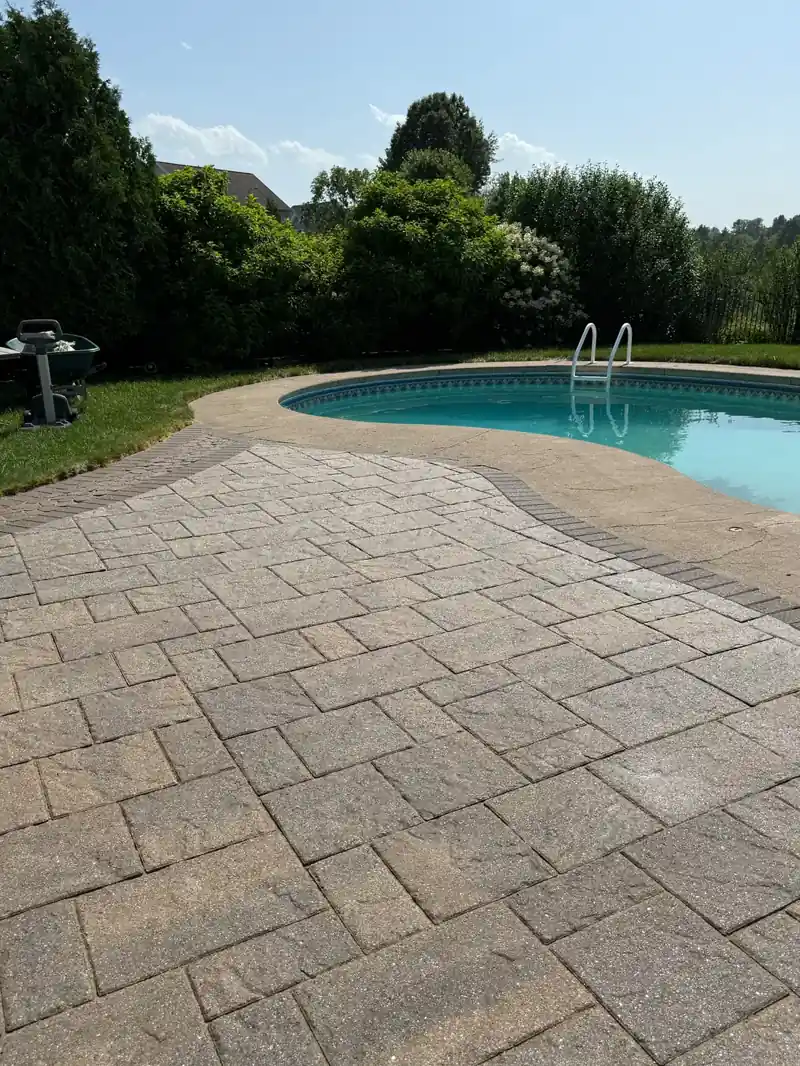
If weeds keep coming up between your pavers or the joints look sunken and washed out every spring, the sand in those joints is the problem — not the pavers. Here's the difference between the two products, and why it matters more in Upstate New York than almost anywhere else.
What Joint Sand Actually Does
Joint sand isn't filler. It's structural. Interlocking pavers work because each unit transfers load to its neighbors through the sand-filled joint. Lose the sand and you lose interlock: pavers rock underfoot, edges creep outward, and the base underneath starts washing out from below.
That's why a patio with empty joints doesn't just look bad — it's actively failing.
Why Plain Masonry Sand Fails Here
Regular sand has no binder. It sits loose in the joint, so heavy rain flushes it out, snow shovels scrape it away, and seeds land in it and germinate. In the Capital Region we get all three problems at maximum intensity: intense spring rain, 40+ freeze-thaw cycles a winter, and months of shoveling and salting.
Plain sand in an Upstate NY joint typically looks acceptable for a season or two and then visibly recedes.
How Polymeric Sand Works
Polymeric sand is graded sand blended with binding agents. It's swept dry into the joints, the paver faces are blown completely clean, and then a controlled mist activates the binders. As it cures, the sand hardens into a firm, slightly flexible mass that resists washout, blocks weed germination, and keeps ants from tunneling through.
The activation step is where most DIY jobs go wrong. Too little water and the binder never sets; too much and it washes the polymer to the surface, leaving haze on the pavers. Leftover sand dust on the faces before misting also causes permanent haze.
- Swept dry into fully cleared joints
- Faces blown completely clean before any water touches it
- Compacted so sand settles to depth instead of bridging
- Activated with a controlled mist, not a hose blast
When You Need a Full Re-Sand vs. a Maintenance Wash
Not every patio needs re-sanding. Press a screwdriver into a joint: if it's hard and full to within about an eighth of an inch of the paver surface, with no moss or weeds, a maintenance wash that preserves the sand is the right call. If it crumbles, sits low, or has growth in it, that sand is done — it needs to come out entirely.
Ready for a Free Quote?
Fast callback. No pressure, no obligation.
FAQ
Frequently Asked Questions
Can polymeric sand be installed over old sand?
It shouldn't be. Fresh sand over degraded sand can't reach depth or bond properly, so the joint fails again quickly. Failed joints get blown out to the base first.
Will polymeric sand stop weeds completely?
It stops weeds rooting in the joint, which is where nearly all paver weeds come from. Occasional windblown seed can still sprout in surface debris — that rinses off with routine cleaning.
Does polymeric sand crack?
Properly installed and compacted, it stays intact for years. Cracking usually traces back to under-compaction, poor drainage, or a base problem underneath.
How soon can it rain after installation?
It needs several hours of dry weather to cure after activation, which is why we watch the forecast closely and reschedule rather than gamble.
Serving The Capital Region
Get It Done In Your Town
- Paver Restoration & Sealing in Albany, NY
- Paver Restoration & Sealing in Schenectady, NY
- Paver Restoration & Sealing in Clifton Park, NY
- Paver Restoration & Sealing in Saratoga Springs, NY
- Paver Restoration & Sealing in Troy, NY
- Paver Restoration & Sealing in Colonie, NY
- Paver Restoration & Sealing in Latham, NY
- Paver Restoration & Sealing in Niskayuna, NY
Get Started
Get Your Free Quote
Takes about a minute. No obligation — we'll text or call you back fast.
