
Travertine Patio Cleaning: A Homeowner's Safe-Care Guide
Clean travertine pavers with a pH-neutral stone cleaner, soft-bristle tools, light moisture, a thorough rinse, and prompt drying, then reseal on a regular schedule. That combination handles almost everything a patio throws at you without etching the stone or driving water into its naturally porous surface.
- Everyday upkeep: sweep weekly, rinse monthly, and wipe up spills before they set.
- Spot treatments: match the stain to its cause (oil, rust, organic, mineral) rather than reaching for one all-purpose cleaner.
- Call a pro when you see heavy soiling across the whole patio, bubbling or peeling sealer, or cracked and shifting pavers.
A patio that looks dull after a decade of neglect is usually a cleaning and resealing job, not a replacement job. Catching the problem early is what keeps it that way.
If the job looks bigger than a garden hose and a soft brush can handle, skip ahead to the section on hiring a professional.
Key Takeaways
Travertine patios stay clean and crack-free longest when homeowners use pH-neutral cleaners, soft tools, low water pressure, and a regular resealing schedule instead of harsh, infrequent fixes.
| Point | Details |
|---|---|
| Stick to neutral pH | Use stone-safe cleaners or diluted mild dish soap; skip vinegar, lemon, and scouring powders entirely. |
| Match stain to treatment | Organic, oil, rust, mineral, and biological stains each need a different product and dwell time. |
| Check your sealer yearly | Run the water-bead test; if water soaks in fast, it’s time to reseal with a penetrating sealer. |
| Keep pressure low | High PSI settings erode travertine’s surface; low-pressure, controlled washing is safer. |
| Call a pro for tough jobs | Capital Pro Pressure Washing’s soft-wash and sealing service handles large areas, persistent stains, and full restorations. |
Table of Contents
- How to Clean Travertine Pavers Step by Step
- Which Cleaners and Tools Are Safe for Travertine?
- How Do You Identify and Treat Travertine Stains?
- When Should You Reseal Your Travertine Patio?
- Is Pressure Washing Safe for Travertine, or Should You Soft-Wash?
- What’s the Right Maintenance Schedule for a Travertine Patio?
- What Affects How Often You Need to Clean Travertine Outdoors?
- How Do You Deal With Efflorescence on Travertine?
- When Is It Time to Call In a Professional Cleaning Service?
- Sources
- FAQ
How to Clean Travertine Pavers Step by Step
The safe method comes down to four moves: clear the surface dry first, clean with light moisture and a neutral pH product, rinse completely, and dry the stone before it sits wet. Skip any of those and you risk streaking, dark water spots, or worse, permanent etching.
- Sweep or blow off debris. Leaves, dirt, and grit act like sandpaper under a wet mop, so clear the surface dry before adding any water.
- Pre-rinse with a garden hose. A light rinse loosens surface dust and shows you where the heavier soiling actually sits.
- Patch test your cleaner. Apply diluted cleaner to a hidden corner or an extra paver, wait 10 to 15 minutes, then check for color change or a dull, etched look before treating the whole patio.
- Mix and apply a diluted pH-neutral cleaner. Follow the label ratio and spread it over one manageable section at a time.
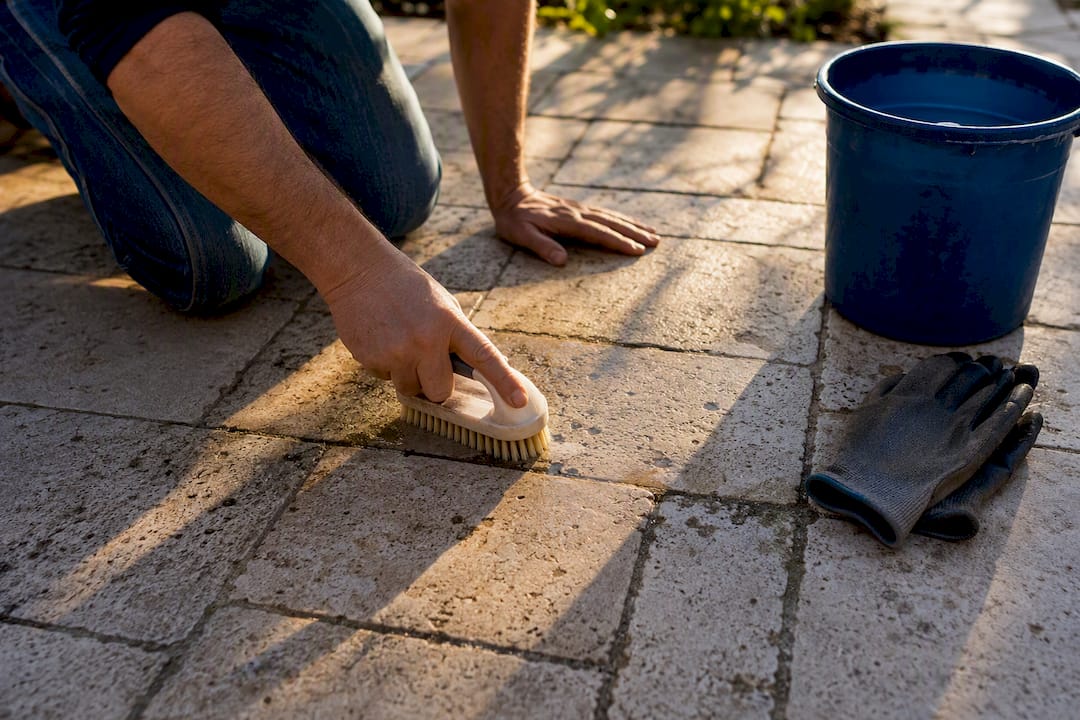
- Scrub gently with a soft-bristle brush. Work in small circles rather than digging in one direction, which helps lift grime without scratching the surface.
- Rinse thoroughly. Residual cleaner left in the pores can attract dirt faster the next time around, so flush the section completely.
- Dry the surface promptly. Squeegee or towel off standing water so it doesn’t sit in the stone’s natural pits.
Pro Tip: Work in small, four-foot sections and swap in a fresh microfiber pad or mop head every couple of sections. Dragging the same dirty pad across the whole patio just redeposits grime you already lifted.
A few habits make the whole process faster:
- Clean on an overcast day so the cleaner doesn’t flash-dry before it can work.
- Keep a second bucket of clean rinse water on hand so you’re not diluting your rinse with dirty runoff.
- Rinse tools before they dry, or the same grit that scratched your patio will scratch it again next time.
This approach lines up with stepwise cleaning guidance that stresses minimal moisture and quick drying to prevent the uneven, blotchy look that trapped water leaves behind on porous stone.
Which Cleaners and Tools Are Safe for Travertine?
Use a neutral pH stone cleaner, or a very mild dish soap diluted in warm water, applied with soft tools. Anything acidic, from vinegar and lemon juice to bathroom scouring powders, is off the table because travertine is calcareous stone, and acid etches it on contact.
Safe tools for outdoor travertine:
- Soft-bristle push broom for dry debris
- Microfiber mop pads or cloths for wet cleaning
- Soft nylon brush for scrubbing grout lines and textured stains
- Plastic scraper for stuck-on debris like gum or wax
Skip metal-bristle brushes, steel wool, and abrasive scouring pads. They dull the stone’s finish and leave micro-scratches that trap dirt permanently.
Concentration matters more than most homeowners realize. Many stone-safe cleaners are sold as concentrates meant to be diluted somewhere around 1:10 with water, but that ratio varies by product, so read the label and patch-test regardless of what the bottle claims. The Natural Stone Institute’s care guidance is explicit that acids and abrasives can etch or scratch natural stone, which is exactly why neutral cleaners and soft cloths are the standard recommendation across the stone-care industry.
Never mix ammonia and bleach. And be careful with rust removers and some toilet-bowl cleaners. A number of them contain hydrofluoric acid, which attacks the mineral structure of stone and can cause permanent damage.
Bleach itself isn’t automatically off-limits. Diluted and used specifically against algae or mildew, then rinsed thoroughly, it’s a controlled exception rather than a general-purpose cleaner.
How Do You Identify and Treat Travertine Stains?
Stain treatment only works when it matches the stain’s actual chemistry. Organic stains, oil, rust, mineral deposits, and biological growth each need a different fix, and using the wrong one can set a stain permanently or damage the sealer.
- Organic stains (leaves, coffee, tannins) look brownish and often appear where mulch or plant debris sat wet. Mix a baking-soda paste with water, apply a thin layer, cover with plastic wrap, and let it dwell for several hours to overnight. Rinse and dry. Expect noticeable lightening; full removal on old stains can take two or three attempts.
- Oil and grease stains darken the stone and feel slightly slick. Blot excess oil immediately with an absorbent powder like cornstarch, then follow with a poultice made from a stone-safe absorbent material and a mild degreaser for anything already soaked in. Dwell time runs 24 to 48 hours under plastic. Fresh spills lift easily; grease that’s had weeks to soak in may need repeat treatments.
- Rust stains show up as orange-brown rings, often below planters or metal furniture legs. Use a rust remover formulated specifically for natural stone, since generic rust removers frequently contain acids that etch travertine. Test in a hidden spot first.
- Mineral deposits and efflorescence appear as a white, hazy film, usually from hard water or moisture wicking salts up through the stone. A soft brush and plain water often clear light efflorescence; heavier deposits need a stone-safe mineral remover.
- Algae, moss, and mildew create green or black patches in shaded, damp corners. A diluted, stone-safe algaecide, or controlled diluted bleach, kills growth. Scrub gently and rinse well.
Pro Tip: Photograph the stain before treating it. If it hasn’t changed after two honest attempts with the correct product, stop treating it yourself, since repeated scrubbing on the same spot is a common way homeowners create a dull patch that stands out worse than the original stain.
Rust that’s had years to set, or oil that’s soaked deep into the stone’s pores, is where DIY methods hit their ceiling. Persistent staining after proper treatment is a sign the contaminant has moved below the surface, and that calls for professional-grade poultices and equipment.
When Should You Reseal Your Travertine Patio?
Sealing extends how long travertine resists staining, and a penetrating (impregnating) sealer is generally the right choice for pavers exposed to weather and pool chemicals. Unlike topical sealers that sit on the surface, penetrating sealers soak into the stone’s pores and repel water and oil from within, without changing the surface texture.
Test your current sealer with a simple water-bead check: pour a small amount of water on the surface and watch what happens. If it beads up, the sealer is still working. If it soaks in within a minute or two, it’s time to reseal.
- Clean the entire patio thoroughly, following the steps above, and let it dry completely, often 24 to 48 hours depending on humidity.
- Choose a penetrating sealer rated for outdoor, high-traffic natural stone.
- Apply according to the label, usually in thin, even coats with a roller or sprayer.
- Allow the recommended cure time, commonly a full day before light foot traffic and several days before moving furniture back.
For a mid-size patio, DIY sealer and supplies typically run under $200, while professional cleaning-and-sealing packages cost more but include equipment, labor, and warranty backing that DIY can’t match. Resealing every two to five years is a reasonable target depending on sun exposure and foot traffic, according to guidance from D and G Flooring’s travertine care overview.
Is Pressure Washing Safe for Travertine, or Should You Soft-Wash?
Low-pressure, controlled washing with a stone-safe detergent is the safer approach for travertine. High PSI settings can erode the surface texture and force water deep into the stone’s naturally porous structure, which shows up later as dark spots or accelerated wear.
- Professionals typically favor wide fan-tip nozzles, moderate pressure, and a consistent working distance and angle to spread force evenly instead of concentrating it on one spot.
- Consumer pressure washers set too high, or held too close, are the most common cause of DIY damage to travertine.
- Stone-care guidance recommends testing in an inconspicuous area first and staying at low-to-medium pressure settings for natural stone hardscapes.
Pro Tip: If you’re unsure what your pressure washer is actually putting out, treat that uncertainty as your answer: hire it out. The difference between a safe wash and an etched patio often comes down to nozzle choice and distance, not raw effort.
Call a professional when you’re dealing with structural cracking, sealer that’s already bubbling or peeling, widespread algae or mildew, or a patio too large to safely section off yourself.
What’s the Right Maintenance Schedule for a Travertine Patio?
A simple recurring routine prevents most of the damage homeowners end up paying to fix. Sweep weekly to clear grit before it grinds into the surface. Rinse monthly with plain water. Spot-clean spills the same day they happen. Inspect joints and sealer condition each season, and run the water-bead test annually to catch resealing needs early.
The mistakes that cause the most damage are avoidable:
- Using vinegar, lemon juice, or other acidic “natural” cleaners
- Over-wetting the surface and letting water pool
- Scrubbing with steel wool or abrasive pads
- Skipping the patch test on a new cleaner
- Sealing over a dirty surface, which traps contaminants under the sealer permanently
Preventive touches help too: rubber mats under planters, felt pads under furniture legs, and pulling weeds from paver joints before roots widen and shift the stone.
What Affects How Often You Need to Clean Travertine Outdoors?
Sun and climate do most of the work in determining how fast your patio gets dirty and how well its sealer holds up. Intense, direct sun accelerates sealer breakdown, since UV exposure gradually degrades the polymers in most penetrating sealers, shortening the interval before you need to reapply.
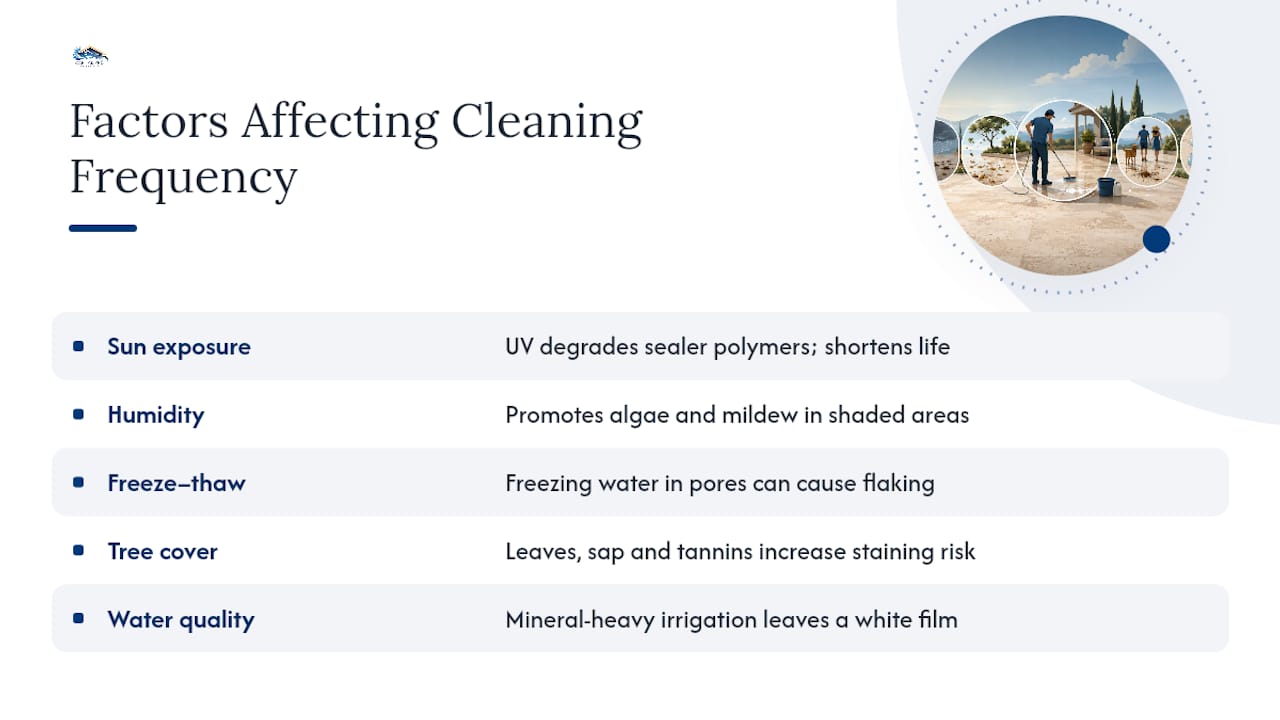
Climate shapes the type of grime you’re fighting, not just the amount. In humid regions, algae and mildew take hold faster in shaded corners that stay damp between rains. In drier climates, dust and mineral-heavy irrigation water are the bigger culprits, often showing up as that hazy white film from hard water rather than green biological growth.
Freeze-thaw cycles add another variable. Water that soaks into unsealed or under-sealed travertine and then freezes can expand inside the stone’s pores, contributing to surface flaking over time. That’s one more reason a properly maintained sealer matters more in a patio that sees real winters than one in a mild, dry climate.
Heavy tree cover changes the equation too. A patio shaded by trees collects more organic debris, leaf tannins, sap, and berries, which means more frequent sweeping and a shorter window before organic staining sets in if debris isn’t cleared. An exposed, sun-baked patio in a dry climate might only need the water-bead sealer check once a year. A shaded, humid-climate patio might need it checked twice.
Match your cleaning frequency to your actual conditions rather than a generic calendar. A patio under a maple tree in a humid region needs a different rhythm than one on an open, sunny deck in the desert Southwest.
How Do You Deal With Efflorescence on Travertine?
Efflorescence shows up as a white, powdery or hazy film on the surface. It happens when water moving through the stone or the setting bed carries mineral salts up to the surface, where the water evaporates and leaves the salts behind.
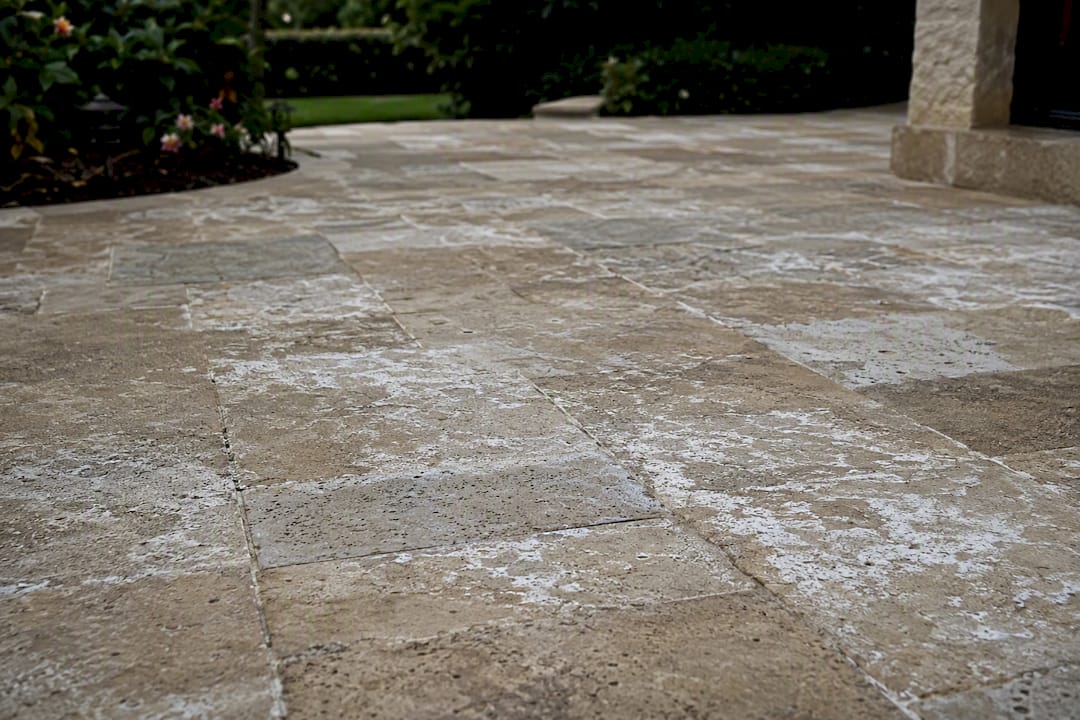
Don’t panic, and don’t scrub it aggressively at first. Most light efflorescence responds to a soft brush and plain water, since the deposit sits on the surface rather than embedded in it. For heavier buildup, a stone-safe mineral remover, applied per label instructions and rinsed thoroughly, clears what plain water can’t.
The real fix is addressing the moisture source, not just wiping away each new bloom. If efflorescence keeps returning after you clean it, check for:
- Irrigation heads spraying directly onto the patio
- Poor drainage that lets water pool against or under the pavers
- A cracked or missing sealer letting groundwater migrate upward more freely
Resist the urge to reseal over efflorescence hoping it’ll trap the problem. Sealer applied over an active salt deposit traps moisture underneath, which tends to make the problem worse, not better. Clean it off completely, let the stone dry fully, fix the underlying moisture issue where you can, and only then reseal.
Persistent efflorescence that keeps returning within weeks despite proper cleaning usually points to a drainage or grading issue beneath the patio, which is worth a professional assessment rather than an endless cycle of surface treatments.
Why Gentle, Consistent Care Beats One-Off Fixes
The biggest misconception about travertine care is that a single deep clean or aggressive pressure wash “resets” the stone. It doesn’t. Travertine responds better to frequent, gentle maintenance than to occasional harsh intervention, because every etch, over-pressured pass, or acidic cleaner leaves damage that no amount of later cleaning reverses. That’s the same principle behind soft-wash techniques: lower force applied more thoughtfully protects the surface while still getting it clean.
When Is It Time to Call In a Professional Cleaning Service?
A professional job combines three things a homeowner’s weekend project usually can’t match: the right cleaning chemistry for your specific stains, controlled pressure equipment calibrated to travertine rather than concrete, and full drying time before a properly applied penetrating sealer goes down.
A typical professional visit includes:
- A full inspection of stone condition, sealer status, and drainage
- A deep clean using stone-safe detergents and low-pressure soft-wash equipment
- Targeted treatment for stubborn rust, oil, or biological staining
- Sealer selection matched to your patio’s sun exposure and traffic
- Application plus guidance on cure times and post-job care

Choosing a pro makes the most sense for large patios, staining that’s survived two DIY attempts, a full restoration job on a neglected surface, or simply not having a free weekend to dedicate to it. Capital Pro Pressure Washing has spent over a decade refining soft-wash methods across New York’s Capital Region, built specifically to clean sensitive surfaces like travertine without the etching risk that comes with consumer pressure washers turned up too high. As a veteran-owned company, the team pairs that cleaning process with professional sealer application, so you’re not paying twice when a rushed DIY seal job fails within a year.
If your patio’s sealer has already failed the water-bead test, or the stains have outlasted your patience, get a quote through Capital Pro Pressure Washing’s paver cleaning and sealing service and find out what a proper deep clean and reseal actually costs for your space.
Sources
- Natural Stone Institute — Care & Maintenance
- SurfaceCarePros — Stone hardscapes care guide (PDF)
- Narwal — How to clean travertine floors without causing etching or water damage
FAQ
What is the best cleaner for outdoor travertine?
A neutral pH stone cleaner formulated for calcareous stone is the safest choice, since it cleans effectively without breaking down the stone’s mineral surface the way acidic cleaners do.
Can I use Dawn dish soap on travertine?
A small amount of mild dish soap diluted heavily in warm water is generally safe for occasional cleaning, but it’s not a substitute for a dedicated stone cleaner and should never be used at full strength.
What is the best way to clean travertine pavers?
Sweep away debris, pre-rinse, patch test your cleaner, scrub gently with a soft brush in small sections, rinse thoroughly, and dry the surface promptly to prevent water spots and uneven color.
How much does it cost to clean and seal travertine?
Costs vary with patio size and surface condition, but DIY sealer and supplies for a mid-size patio typically run under $200, while professional cleaning-and-sealing packages cost more upfront and include equipment, labor, and warranty coverage that DIY jobs don’t carry.
How often should I reseal my travertine patio?
Most travertine patios need resealing every two to five years depending on sun exposure and foot traffic, and the water-bead test tells you exactly when it’s time.
Recommended
Services Related To This Article
Need a quote in the Capital Region?
Fast, free estimates from a local, licensed & insured team.
