
The Right Way to Clean Pavers Without Ruining Them
The safest, most effective way to clean pavers is to sweep off debris, pretreat any organic growth, scrub or soft-wash the surface, rinse thoroughly, and reseal once everything is bone dry. For small patios with light dirt, hand-scrubbing with dish soap and a stiff nylon brush gets the job done. For heavier grime, moss, or years of buildup, a soft-wash or controlled low-pressure wash works faster without chewing up the joints.
Call a professional when you’re dealing with more than a few hundred square feet, stains that won’t budge after two attempts, or signs of joint failure and poor drainage.
- Sweep and clear debris
- Pretreat mold, algae, or moss
- Hand-scrub or soft-wash
- Rinse completely
- Let dry, then resand and seal if needed
Key Takeaways
Paver cleaning succeeds when homeowners match the method to the soil type, protect joint sand from high pressure, and always dry pavers fully before sealing.
| Point | Details |
|---|---|
| Start with the gentlest method | Sweep and hand-scrub with dish soap before reaching for a pressure washer. |
| Respect PSI limits | Keep pressure washers under roughly 3,100 PSI and angle the spray away from joints. |
| Match cleaner to stain | Use oxygenated cleaners for organic stains and oxalic-based removers for rust. |
| Never seal over moisture or efflorescence | Wait a sufficient dry weather period and remove white mineral bloom before sealing. |
| Hire a pro for scale or structural issues | Capital Pro Pressure Washing uses chemical pretreatment and rotary cleaning for lasting results. |
Table of Contents
- Tools and Safety Checklist Before You Start Paver Cleaning
- How Do You Clean Pavers Without a Pressure Washer?
- Fixing Stains: Oil, Rust, Mold, and Efflorescence
- When Should You Resand and Seal Pavers After Cleaning?
- When Should You Hire a Professional Paver Cleaner?
- What Actually Matters Most in Paver Cleaning
- Get Professional Paver Cleaning and Sealing Done Right
- Sources
- FAQ
Tools and Safety Checklist Before You Start Paver Cleaning
Grab the right gear before you touch a single paver. You’ll want a stiff-bristled broom, a nylon scrub brush (never wire, which scratches the surface), a bucket, a garden hose, a pump sprayer for cleaning solutions, a mild degreaser, polymeric sand for gaps that need refilling, and a sealer if you’re finishing the job. Techo-Bloc’s care guidance specifically warns against wire brushes and strong acids like muriatic or sulfuric acid, both of which can etch or discolor the surface permanently.
- Cover nearby plants and pre-wet garden beds before applying any chemical cleaner.
- Use a pressure washer at a controlled low to moderate pressure on most concrete pavers, and test an inconspicuous corner first.
- Angle the nozzle at roughly 45 degrees, never straight down into the joints.
- Hold the wand at least 8 to 12 inches from the surface and keep it moving.
- Divert rinse water away from storm drains when you’re using detergents or bleach.
Pro Tip: Run a test patch behind a planter or under a deck stair before you clean the whole patio. Some paver finishes react differently to cleaners and heat, and a hidden test spot saves you from an obvious blotch out front.
How Do You Clean Pavers Without a Pressure Washer?
Start by clearing the space. Move furniture and planters, sweep away loose dirt and leaves, pull any weeds poking through the joints, and pick one hidden spot to test your cleaner before treating the whole surface.
Hand-cleaning method:
- Mix dish soap into warm water to create a mild cleaning solution.
- Wet the pavers first so dirt doesn’t grind in as you scrub.
- Scrub in small circular motions with a stiff nylon brush, working one section at a time.
- Let the soap sit for 5 to 10 minutes on stained spots before rinsing.
- Rinse thoroughly with a garden hose, then repeat on any stubborn areas.
Family Handyman’s testing confirms this soap-and-brush approach handles light to moderate grime just fine, and it’s the gentler option when your joint sand is already loose or thin.
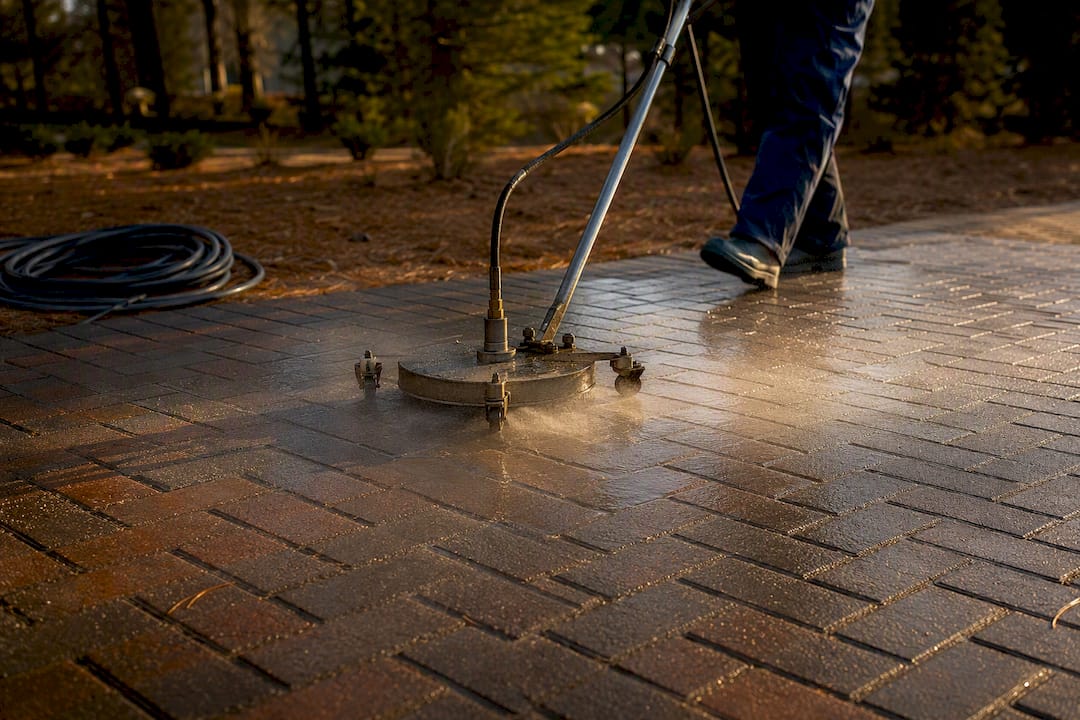
Pressure washing pavers safely takes more finesse. A surface cleaner attachment produces far more even results than a wand alone, spreading water pressure across a wider path and avoiding the striping that comes from uneven wand passes. Keep pressure in a moderate range suitable for most concrete pavers, use a 25 or 40 degree nozzle, and always spray at an angle rather than straight down into the joints, which is the fastest way to blast out your sand and destabilize the surface. Belgard’s care guide echoes this: test first, keep pressure moderate, and never aim directly into the seams.
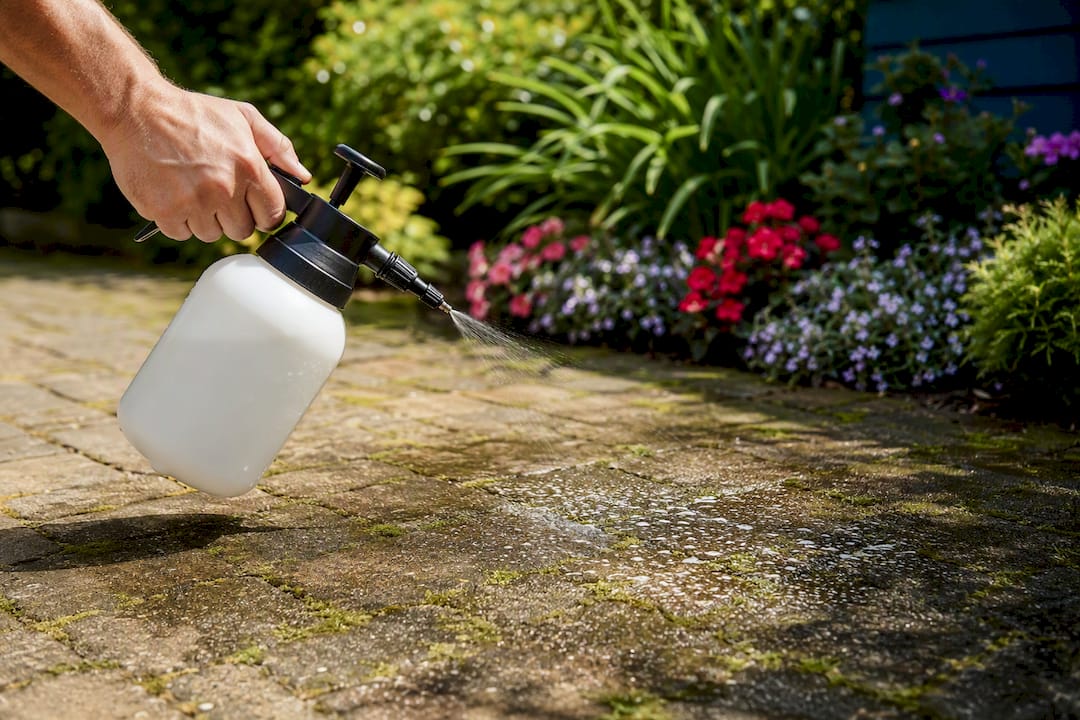
For algae, moss, or mildew, a soft-wash pretreat beats brute force. Mix a diluted bleach solution (roughly 1 part bleach to 4 parts water) or an oxygenated cleaner, apply it with a pump sprayer, let it dwell for 10 to 15 minutes, then rinse. Oxygenated cleaners are gentler on surrounding grass and plants, while bleach works faster on tough black mildew stains but needs more careful runoff control.
Fixing Stains: Oil, Rust, Mold, and Efflorescence
Different stains need different weapons, and using the wrong one just wastes a Saturday.
- Oil and grease: Cover fresh spills with cat litter or baking soda immediately to soak up excess oil, then scrub with a degreaser formulated for concrete. Old, set-in stains often need two or three treatments; if it’s still visible after that, a professional-grade degreaser or soft-wash service usually finishes the job.
- Rust: An oxalic-acid-based rust remover works on most paver materials, but test it on a hidden spot first since some finishes can lighten or streak. Rinse thoroughly after treatment.
- Organic and tannin stains (leaves, berries, mold): Oxygenated cleaners are the safer first choice; reach for diluted bleach only when the oxygenated version doesn’t cut it, since Family Handyman notes bleach requires more caution around nearby plants and grass.
- Efflorescence (that chalky white residue): It’s mineral salt migrating up through the paver as moisture evaporates, and it’s common on new installations. Use a dedicated efflorescence cleaner or diluted white vinegar, scrub gently, and rinse well.
Never seal over active efflorescence. Trapping that white bloom under a sealer locks in haze and blotching that no amount of scrubbing will fix later, and if it keeps coming back after cleaning, the real problem is usually moisture working up from the base rather than anything on the surface.
When Should You Resand and Seal Pavers After Cleaning?
Cleaning is only half the job. Skip the resanding and sealing, and you’ll be back out here in six months watching weeds push through the same joints.
- Refill joints with polymeric sand rather than plain sand if you want weed resistance and better stabilization. It hardens when activated with water, locking sand in place instead of washing out with the next hard rain.
- Choose a film-forming sealer if you want a wet-look color boost, or a penetrating sealer if your main goal is joint stabilization without changing the paver’s appearance.
- Wait a sufficient dry weather period after cleaning before you sand or seal to prevent moisture-related problems. King of Pressure Wash’s process guide points to this window as the standard, since trapped moisture under a sealer is what causes hazing and flaking down the line.
- Sweep excess sand off the paver faces before it sets. Left on the surface, it dries into a dusty film that’s a pain to remove later.
Pro Tip: Check the forecast before you seal. Sealing right before rain is one of the most common DIY mistakes, and it usually means redoing the whole project a week later.
When Should You Hire a Professional Paver Cleaner?
DIY works fine for a small patio with light dirt. It starts to make less sense once you’re dealing with a large driveway, deeply set stains that survive two cleaning attempts, or joints that are cracking, sinking, or draining poorly, because those point to problems under the surface that scrubbing alone won’t fix.
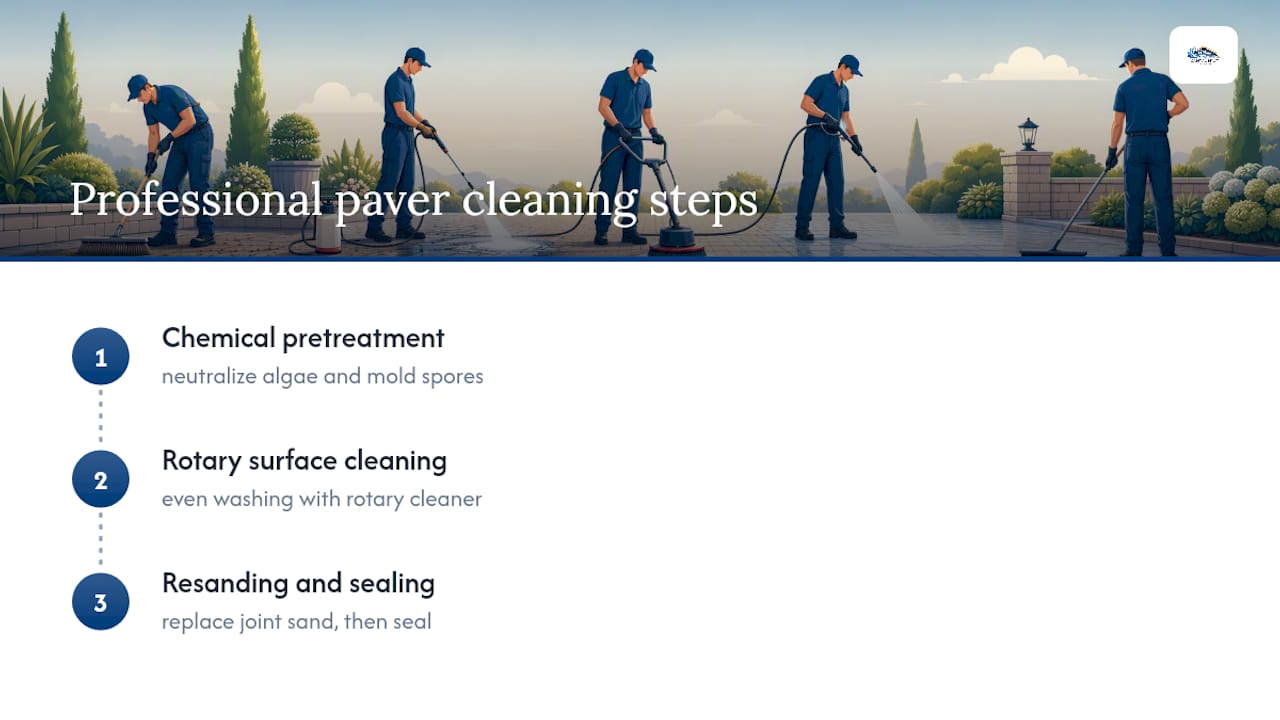
Professionals also approach the job differently than most homeowners do at home. King of Pressure Wash’s process starts with a chemical pretreatment that neutralizes algae and mold spores at the root, not just on the surface, which is often the difference between results that last one season and results that last several. Skipping that step is why pressure washing alone tends to leave regrowth within weeks.
- Rotary or surface-cleaner attachments deliver even results across large areas without visible striping.
- Polymeric sand gets installed and properly activated, not just swept in and hosed off.
- Professional-grade sealers are applied in controlled conditions with the right dry-time buffer built in.
Chemical pretreatment that neutralizes spores at the source is often what separates a clean patio that stays clean from one that is green again by midsummer.
Capital Pro Pressure Washing brings this exact sequence to jobs across the Capital Region, and homeowners can see the full scope of that paver cleaning and sealing process directly on the service page.
What Actually Matters Most in Paver Cleaning
Most paver advice online obsesses over pressure settings and product brands, but that’s not where the real damage happens. The failures I see traced back most often are timing mistakes: sealing over wet pavers, sealing over active efflorescence, or skipping pretreatment entirely and wondering why the moss is back by July.
Conventional DIY advice treats pressure washing as the finish line. It isn’t. A pressure washer removes what’s visible on the surface, but algae and mold spores survive underneath unless something actually kills them first. That’s the gap between a patio that looks clean for a weekend and one that stays clean through a full season.
If you take one thing from this, prioritize the pretreatment step and the dry-time window over the exact PSI number. Homeowners fixate on pressure because it’s the part that feels technical, but the sequence and patience around it matter more than the number on the gauge. Get those two things right, and the rest of the process mostly takes care of itself.
Get Professional Paver Cleaning and Sealing Done Right
Capital Pro Pressure Washing gives Capital Region homeowners the one thing DIY paver cleaning can’t reliably deliver: a pretreatment step that actually kills algae and mold spores before they regrow, backed by professional-grade equipment that handles large patios and driveways in a fraction of the time a weekend project takes.

As a veteran-owned company with over 10 years working on homes across Albany, Saratoga, Schenectady, and Rensselaer counties, the team combines soft-wash techniques with a full clean-sand-seal sequence, so joints get properly stabilized and sealers go on dry pavers under the right conditions instead of guessed-at ones. That’s the difference between a patio that needs redoing every year and one that holds up. If your pavers are past the point where scrubbing helps, or you’d rather not spend a weekend on it, request a quote through the paver cleaning and sealing page and get a real assessment of what your patio needs.
Sources
- How to Clean Patio Pavers: A Complete Guide — Belgard
- How to Clean Pavers Without a Pressure Washer — Family Handyman
- How to Seal Pavers: Step-by-Step Sealing Guide — DG Floors
- How to Clean, Sand, and Seal Pavers — King of Pressure Wash
FAQ
What Is the Best Way to Clean Pavers?
Sweep off debris, pretreat any mold or algae, hand-scrub or soft-wash the surface, rinse well, and let it dry fully before resanding and sealing.
How Do You Make Old Pavers Look New Again?
Deep clean with a degreaser or soft-wash treatment to strip years of grime, then refill joints with polymeric sand and apply a fresh sealer once the surface is completely dry.
What Do Professionals Use to Clean Pavers?
Professionals typically start with a chemical pretreatment to neutralize algae and mold spores, then use rotary surface cleaners for even results before resanding and sealing, an approach Capital Pro Pressure Washing follows on every paver job.
Can I Use a Pressure Washer on Pavers Without Damaging Them?
Yes, as long as you keep pressure under roughly 3,100 PSI, angle the nozzle away from the joints, and keep the wand moving at a safe distance from the surface.
How Often Should Pavers Be Cleaned?
Sweep and rinse pavers regularly, and plan on a deeper wash or pressure clean about twice a year for high-traffic areas like driveways and walkways.
Recommended
Services Related To This Article
Need a quote in the Capital Region?
Fast, free estimates from a local, licensed & insured team.
