
How to Get Leaf Stains Off Concrete for Good
Start with what’s already in your kitchen: powdered dishwasher detergent, water, and a stiff brush. That combination handles most fresh leaf stains on concrete without any special chemicals, and it’s the right first move even before you think about bleach or a pressure washer.
Here’s the quick decision path:
- New, light stains: wet the concrete, sprinkle powdered dishwasher or laundry detergent, scrub, and rinse.
- Older or dark stains: move up to oxygen bleach or a labeled tannin remover and give it time to soak.
- Stains that shrug off both: consider a pressure washer, then plan to seal the concrete so it doesn’t happen again.
Try the mild method first on a test patch. If it lifts even part of the stain within a few minutes of scrubbing, keep going on the whole slab. If nothing changes after two attempts, skip straight to oxygen bleach rather than wasting a weekend scrubbing something that needs a stronger soak.
Key Takeaways
Fresh leaf stains respond to mild detergent scrubbing, but set-in tannin stains need oxygen bleach’s longer soak time and a sealer to prevent them from coming back.
| Point | Details |
|---|---|
| Start mild first | Try powdered dishwasher or laundry detergent with scrubbing before reaching for stronger chemicals. |
| Escalate with patience | Oxygen bleach or tannin cleaners need 15 to 48 hours of contact time to lift deep stains. |
| Use pressure washers carefully | Start around 1,500 PSI, keep the wand moving, and pair with a cleaner rather than water alone. |
| Prevent with speed and sealing | Remove wet leaves within a day or two, and reseal clean concrete every 2 to 3 years. |
| Call a pro for tough jobs | Capital Pro Pressure Washing combines soft-wash cleaning with sealing for longer-lasting results on set-in stains. |
Table of Contents
- Why Leaf Stains Happen on Concrete
- How Do You Remove New Leaf Stains From Concrete?
- What’s the Best Chemical for Set-In Leaf Stains?
- Should You Use Bleach or Hydrogen Peroxide on Concrete?
- When Should You Pressure Wash Leaf Stains?
- How Do You Stop Leaves From Staining Concrete Again?
- Safety Checklist Before You Start Cleaning
- Is That Really a Leaf Stain? How to Tell
- When It’s Time to Call in a Professional
- Sources
- FAQ
Why Leaf Stains Happen on Concrete
Leaf stains come from tannins, the same water-soluble compounds that turn steeping tea leaves into a brown liquid. When wet leaves sit on concrete, tannins leach out and soak into the surface, and porous concrete takes that dye almost like fabric.
Not all leaves are equal. Maple and oak leaves carry more tannin than thinner, less fibrous species, which is why a driveway under an oak tree usually looks worse by November than one under a birch. The horticulture notes at the University of Washington confirm tannins behave chemically the same way whether they’re coloring your driveway or your teacup.
Three things speed up staining:
- Leaf type — oak and maple leach more tannin than lighter species.
- Moisture — standing water or repeated rain keeps pulling tannins deeper into the pores.
- Concrete porosity — older, unsealed, or broom-finished concrete absorbs faster than smooth, sealed surfaces.
Timing matters more than most homeowners expect. Under damp conditions, discoloration can begin setting into the surface within a couple of days, so a pile of wet leaves left over a rainy weekend can cause damage before you’ve even noticed it.
How Do You Remove New Leaf Stains From Concrete?
This is the method to try before anything stronger. It costs almost nothing, takes under an hour, and works on the majority of fresh leaf stains.
What you’ll need:
- Powdered dishwasher detergent or a powdered laundry detergent that contains bleach
- A stiff nylon scrub brush
- A garden hose with a spray nozzle
- Rubber gloves and eye protection
Steps to follow:
- Clear all leaves and debris off the slab so you can see the full extent of the stain.
- Wet the concrete thoroughly with the hose.
- Sprinkle powdered detergent generously over the stained area, or mix a strong solution and pour it on.
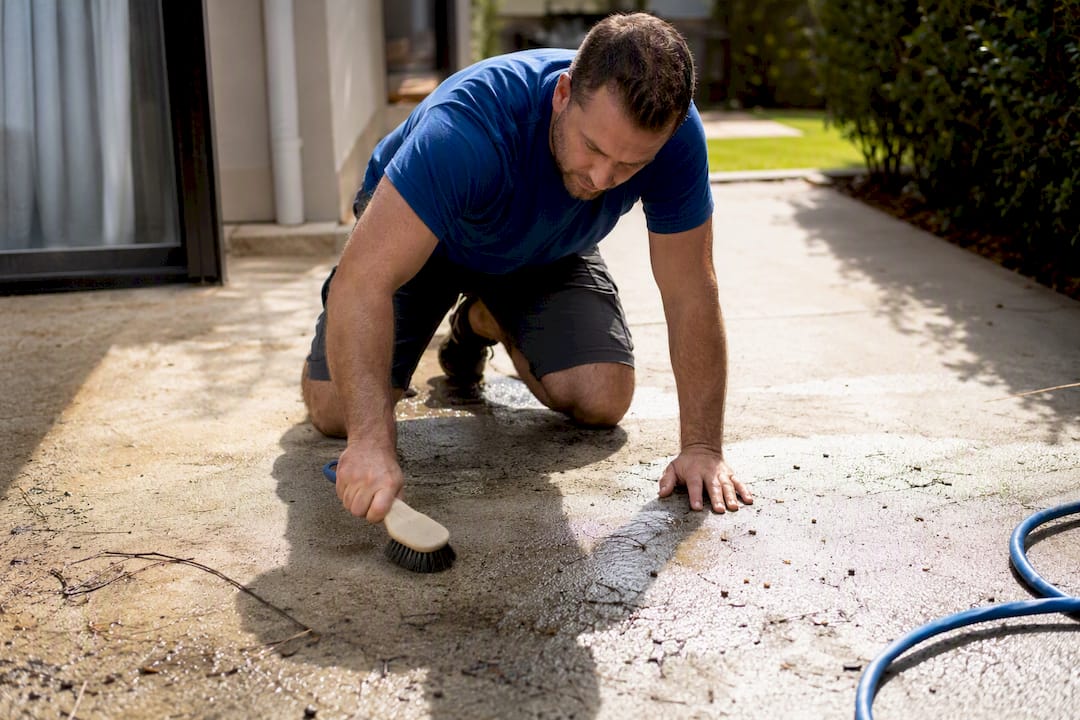
- Scrub in small circular motions, working the powder into the pores rather than just across the surface.
- Let it sit for 5 to 10 minutes, then scrub again.
- Rinse thoroughly with clean water until no residue or suds remain.
The detergent’s surfactants break the tannin’s grip on the concrete surface, while any bleach component in the powder helps oxidize the pigment so it lifts free during rinsing. This starter approach is the recommended first step in WikiHow’s step-by-step removal guide, and it’s popular precisely because it’s cheap and low-risk to your plants and pets compared to stronger chemicals.
Pro Tip: Clean the entire slab, not just the stained patch. Spot-treating leaves a visibly cleaner rectangle surrounded by dingier concrete, and that patchwork look is often more noticeable than the original stain.
What’s the Best Chemical for Set-In Leaf Stains?
When detergent and scrubbing don’t fully clear a stain, oxygen bleach is usually the next call. Sodium percarbonate products, OxiClean being the most familiar brand name, work through a slow soak rather than a fast scrub, which makes them effective on tannins that have worked their way deeper into the concrete.
Commercial cleaners labeled specifically for tannin or organic stains follow the same principle and sometimes use oxalic acid, which targets the metallic and organic compounds tannins leave behind.
How to apply oxygen bleach or a tannin cleaner:
- Mix the product according to the label, usually into a thick paste or concentrated solution.
- Spread it evenly over the stain, thicker than you’d think necessary.
- Cover with plastic sheeting if the label recommends it, to slow evaporation and extend contact time.
- Let it sit, often anywhere from 15 to 48 hours depending on the product and stain depth.
- Scrub once more and rinse thoroughly.
Contact time is the whole game here. According to a breakdown of stubborn leaf stain removal from Everyday Cheapskate, oxygen-based cleaners need that extended soak to pull pigment out of deep pores, something a five-minute scrub simply can’t do. Keep the treated area damp while it works, since letting it dry out mid-soak cuts effectiveness. Rinse well when you’re done, since dried cleaner residue can leave its own dusty film.
Should You Use Bleach or Hydrogen Peroxide on Concrete?
Both work, but they suit different situations. Household chlorine bleach (sodium hypochlorite), diluted per the label, breaks down organic staining fast and brightens concrete in a single application. It’s a reasonable choice for a quick job on plain gray concrete with no nearby landscaping to worry about.
It’s the better pick near flower beds, lawn edges, or anywhere runoff might reach plants since it breaks down into water and oxygen rather than leaving chlorine residue behind.
A few cautions apply to both. Chlorine bleach can dull or discolor sealed or colored concrete, and repeated use tends to break down sealers faster than plain water ever would, a point the Everyday Cheapskate guide also flags. Always test a small hidden corner first, and rinse thoroughly no matter which one you choose.
When Should You Pressure Wash Leaf Stains?
A pressure washer can knock loose surface grime fast, but it’s a finishing tool, not a first resort for tannin stains buried in the pores. Start low, around 1,500 PSI with a wide fan tip, and only increase toward 3,000 PSI if the concrete is holding up fine, following the ranges outlined in WikiHow’s concrete cleaning steps.
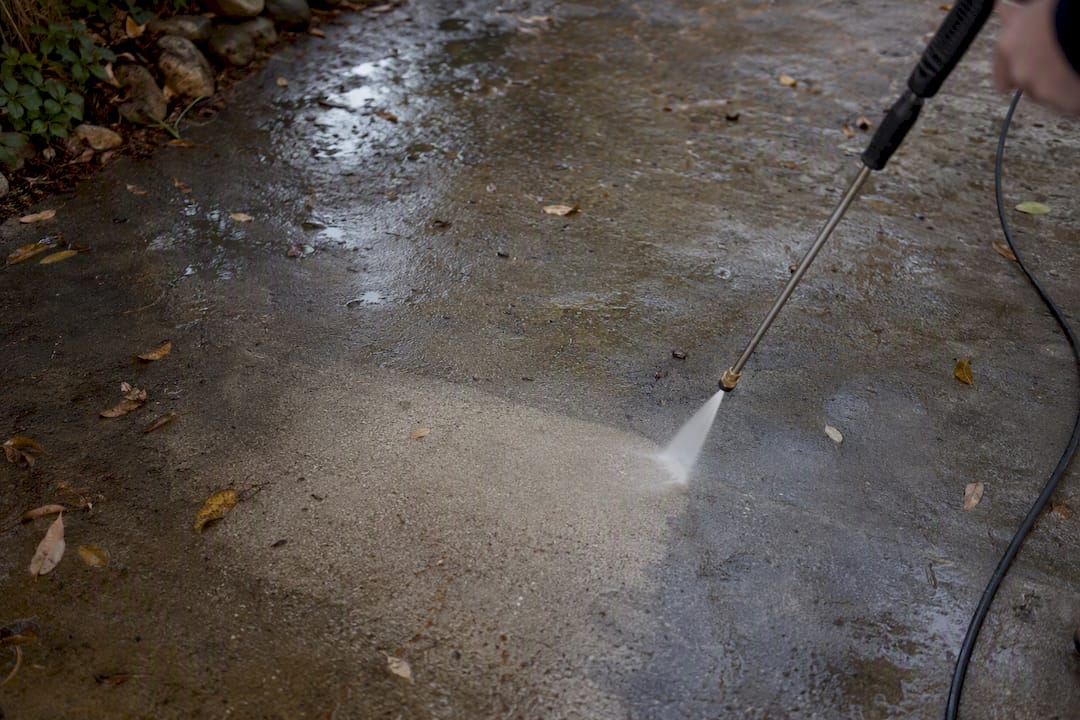
Keep the wand moving constantly and hold it at a consistent distance, roughly 12 inches out. Stopping in one spot, even briefly, can etch or pit the surface. Pressure washing alone usually won’t clear a set-in tannin stain since water pressure removes surface debris, not embedded pigment. Pair it with detergent or oxygen bleach for real results.
Pro Tip: If you’re unsure how your concrete will react to higher pressure, a professional using calibrated equipment and commercial-grade pressure washing techniques can safely handle larger driveways and walkways without the trial and error.
- Start at low pressure and work up gradually.
- Keep the nozzle moving in overlapping passes.
- Combine with a chemical cleaner rather than relying on water alone.
How Do You Stop Leaves From Staining Concrete Again?
Cleaning solves today’s problem. Prevention is what keeps you off this page next October.
The simplest habit is speed: pick up or blow off wet leaves within a day or two of them falling, since staining risk climbs fast once leaves sit damp on the surface for more than 6 to 48 hours. A quick rinse with the hose during peak leaf season, even without soap, washes away tannin-loaded debris before it has time to soak in.
The longer-term fix is sealing. A penetrating concrete sealer fills the pores that tannins would otherwise stain, and Deco-Crete’s guide to leaf stains on concrete recommends resealing every 2 to 3 years to keep that protection active. One important rule: never seal over a stain you haven’t cleaned first, since the sealer will lock that discoloration in permanently.
- Remove wet leaves within a day or two whenever possible.
- Rinse driveways and patios periodically through fall.
- Reseal clean, dry concrete roughly every 2 to 3 years.
- A penetrating sealer applied after cleaning is more effective than one applied over dirty concrete.
If you want a broader case for why resealing pays off beyond just stain prevention, this driveway resealing guide covers the curb-appeal and repair-avoidance angle well.
Safety Checklist Before You Start Cleaning
A few basics protect you and your yard while you work:
- Wear gloves, eye protection, and closed shoes, and keep pets and kids off the surface until it’s fully rinsed.
- Cover nearby plants with plastic or soak them with plain water beforehand so cleaner runoff doesn’t scorch them.
- Never let concentrated cleaner run directly into a storm drain. Dilute and rinse thoroughly, following guidance like that in NY Masonry & Paving’s advice on wet leaf staining.
- Dispose of rinse water according to your local rules, and always follow the product label’s instructions.
Is That Really a Leaf Stain? How to Tell
Not every dark patch on your driveway is a tannin stain, and treating the wrong problem wastes both time and cleaner. Tannin stains have a few telltale signs: they’re usually brown, yellow-brown, or amber, shaped roughly like the leaf that caused them or spread in a blotchy pattern where piles sat, and they appear seasonally, right after leaf drop or heavy rain.
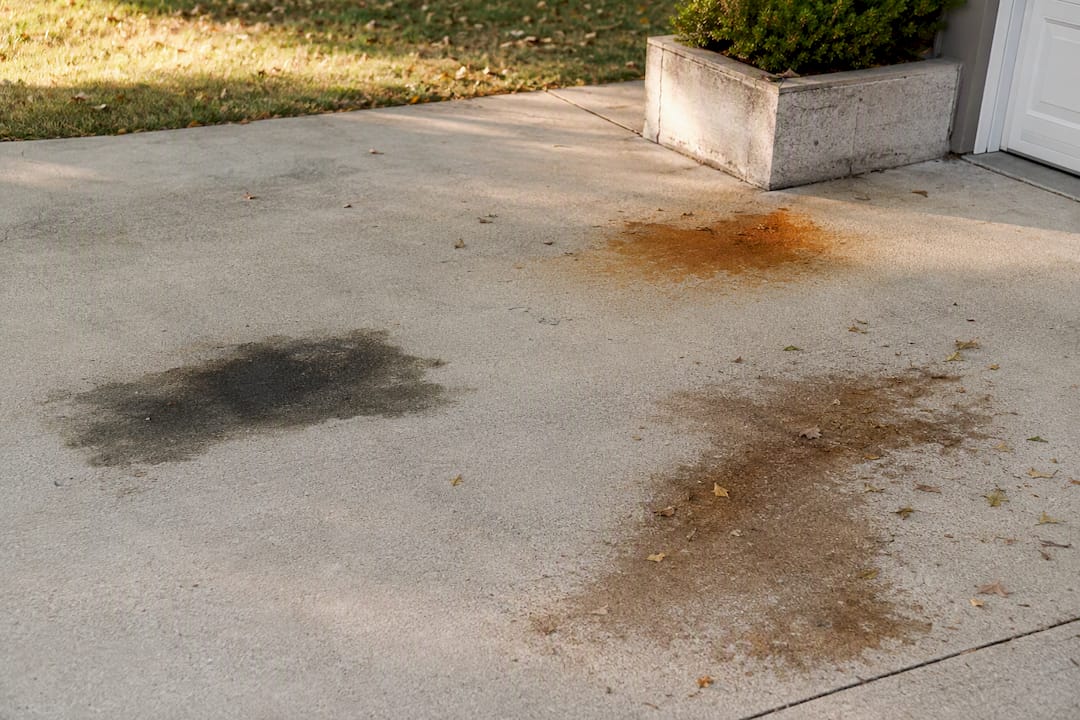
Rust stains, by contrast, look more orange-red and often trace back to a single point, like a metal planter, patio furniture leg, or dropped nail. Oil and grease stains are darker, almost black, with a slick feel and sharp edges where a car or mower leaked. Mold and algae show up as green or black patches, usually in shaded, consistently damp spots rather than following a leaf-drop pattern, and they tend to feel slightly fuzzy or slippery rather than flat.
A simple test helps confirm you’re dealing with tannins: try the detergent-and-scrub method first. Tannin stains typically lighten noticeably with basic detergent, while rust barely responds and usually needs a dedicated rust remover, and oil stains need a degreaser instead. If detergent does nothing at all, you’re probably not looking at a leaf stain, and reaching for oxygen bleach won’t help.
A Cleaning Pro’s Take on DIY Results
DIY methods handle most fresh and moderate leaf stains well when you’re patient with contact time. Where homeowners get stuck is on old, heavily saturated concrete, where cleaning alone won’t stop the next stain from setting. Professionals typically pair a soft-wash or targeted treatment with sealing, so the surface actually resists the next fall’s leaf drop instead of just looking clean until it rains again.
When It’s Time to Call in a Professional
Some jobs are worth doing yourself over a Saturday afternoon. Others aren’t, especially once you’re looking at a full driveway of set-in stains, a patio near landscaping you don’t want to risk, or concrete old enough that you’re not sure how it’ll react to bleach or high pressure. That’s the point where hiring a pro usually saves more time and money than it costs.

Capital Pro Pressure Washing handles the part most DIY guides gloss over: getting the cleaning right the first time and then locking in that result with a proper seal. As a veteran-owned company serving the Capital Region for over 10 years, the team uses soft-wash techniques that lift tannin stains without etching or discoloring the concrete the way an aggressive pressure-washer pass can, then follows up with sealing so the next leaf season doesn’t undo the work. That combination, clean now, protected going forward, is harder to pull off with a rented pressure washer and a weekend.
If your driveway, patio, or walkway is past the point where detergent and scrubbing are getting results, Capital Pro Pressure Washing’s concrete cleaning and sealing service is built for exactly that. Homeowners in the Troy area can also check out local concrete and brick cleaning options for a quicker path to a stain-free, sealed surface before the next leaf drop hits.
Sources
- University of Washington - horticulture notes on tannin stains
- How to Remove Leaf Stains from Concrete: 12 Steps (with Pictures) — WikiHow
- How to Remove Stubborn Leaf Stains from Concrete • Everyday Cheapskate
FAQ
How do I get leaf stains off my concrete?
Start with powdered dishwasher or laundry detergent and a stiff brush for fresh stains. If that doesn’t fully clear it, move to oxygen bleach or a labeled tannin remover, letting it soak for several hours before scrubbing and rinsing again.
Are leaf stains on concrete permanent?
Not usually, but they can become effectively permanent if left untreated. Sunlight and weathering fade tannin marks over time, but repeated wet leaf deposits keep re-staining the same spot faster than it can fade.
Why is my concrete staining from leaves?
Tannins, the same compounds found in tea, leach out of wet leaves and soak into porous concrete like a dye. Oak and maple leaves tend to cause darker stains than lighter-leaved species because they carry more tannin.
What is the best chemical to remove leaf stains from concrete?
Oxygen bleach, such as sodium percarbonate products including OxiClean, is generally the best option for set-in stains because it lifts pigment from deep in the pores without the plant-damage risk of chlorine bleach. For fresh stains, plain powdered detergent often works just as well.
Recommended
Services Related To This Article
Need a quote in the Capital Region?
Fast, free estimates from a local, licensed & insured team.
