
Should You Seal a Concrete Driveway? Costs and Timing
Yes, sealing a concrete driveway is worth it for most homeowners. It costs far less than replacing a slab and adds years to a surface that’s already exposed to salt, oil, and freeze-thaw cycles all winter. For most goals, a penetrating silane/siloxane sealer is the default recommendation: it soaks into the concrete, disappears once dry, and holds up 5 to 10 years. If color, gloss, or a “wet look” matters more to you than invisibility, a topical acrylic sealer does that job, though it wears faster and needs more attention.
A few timing rules matter before you touch a brush or sprayer:
-
Wait a minimum of 28 days after pouring new concrete before sealing anything.
-
Reseal topical acrylics every 1 to 3 years; reseal penetrating sealers every 3 to 10 years depending on climate and traffic.
Quick fact: A 2-car driveway sealing job commonly falls between $575 and $1,700 installed, according to HomeGuide.
Key Takeaways
Concrete driveway sealing typically costs $575 to $1,700 installed and extends slab life by blocking water, salt, and stains that cause freeze-thaw cracking.
| Point | Details |
|---|---|
| Sealer type by goal | Choose penetrating sealer for invisible, long-life protection; choose topical acrylic for color or sheen. |
| Cost range | Expect $575 to $1,700 for a standard two-car driveway, or $1 to $3 per square foot professionally. |
| Cure timing | New concrete needs at least 28 days, and ideally 60 to 90 days, before the first sealing. |
| Prep matters most | Skipping cleaning and crack repair is the top cause of early sealer failure. |
| Professional option | Capital Pro Pressure Washing combines soft-wash cleaning with sealing as one scoped service. |
Table of Contents
- Types of Concrete Driveway Sealers and When to Use Each
- Benefits and Drawbacks of Sealing a Driveway
- How Much Does It Cost to Seal a Concrete Driveway?
- How to Prepare and Apply Concrete Sealer
- When Should You Hire a Pro Instead of DIY?
- What Actually Determines Whether Sealing Pays Off
- Get Your Driveway Sealed Right the First Time
- Sources
- FAQ
Types of Concrete Driveway Sealers and When to Use Each
Not all sealers do the same job, and picking the wrong one for your climate or driveway style wastes money fast.
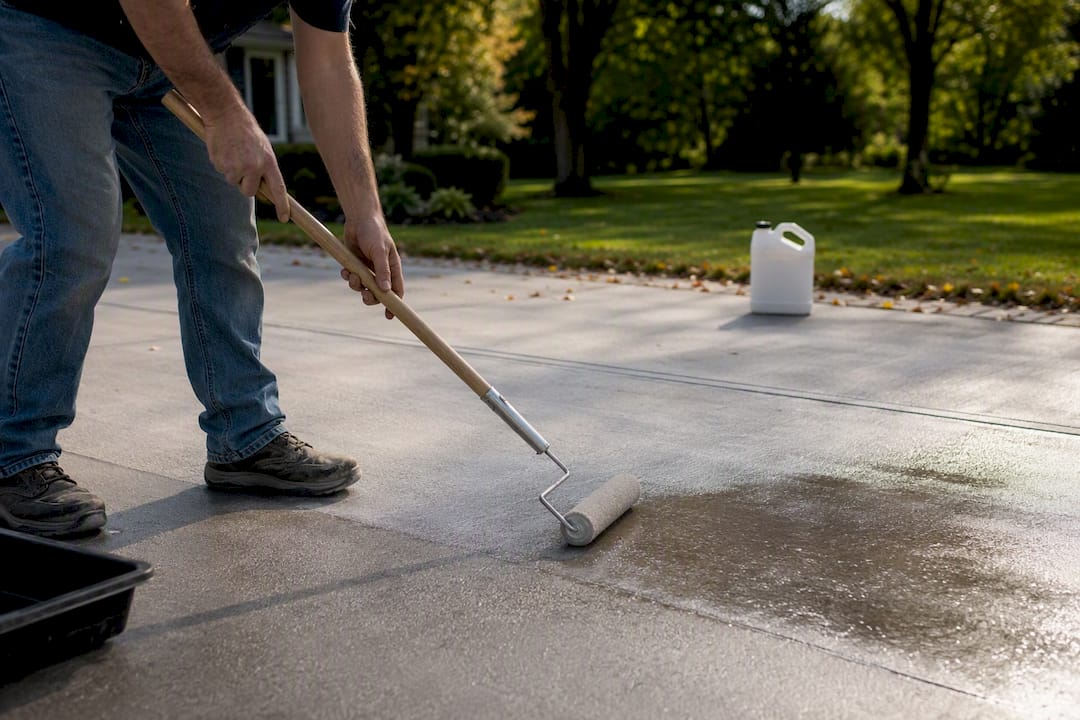
Penetrating sealers (silane, siloxane, and silicate blends) soak below the surface and chemically bond with the concrete instead of sitting on top of it. You won’t see a shine or color change, which is exactly the point. They’re the better call in the Northeast, where freeze-thaw cycles crack unprotected concrete every winter, because they let the slab breathe while blocking water absorption. Expect 5 to 10 years of service before a recoat.
Topical sealers sit on the surface and come in three main chemistries:
- Acrylic — the most common residential choice, affordable, gives a light sheen, but wears down in 1 to 3 years depending on traffic and sun exposure.
- Epoxy — thicker, more durable film, often used on garage floors or decorative driveways where a glossy, uniform look matters.
- Polyurethane — the toughest topical option, better UV resistance than epoxy, but pricier and more finicky to apply.
Stamped or decorative concrete almost always calls for a topical acrylic or polyurethane to protect color and pattern. Plain gray driveways usually do fine with a penetrating sealer, since there’s no finish to preserve.
Pro Tip: If you go topical for the shine, ask about a traction additive mixed into the sealer. A glossy driveway looks great until the first frost turns it into a skating rink.
Benefits and Drawbacks of Sealing a Driveway
Sealing solves specific problems. It doesn’t solve all of them, and it’s worth knowing both sides before you commit.
What sealing actually gets you:
- Water and road salt stop soaking into the concrete, which slows the freeze-thaw damage that cracks unprotected slabs.
- Oil, grease, and tire marks bead up or wipe off instead of staining permanently.
- Curb appeal improves, especially with a topical sealer that evens out discoloration.
What it won’t fix, and what trips people up:
- Sealer doesn’t repair existing structural cracks, spalling, or settling. That’s a separate repair.
- Topical sealers can darken concrete slightly and, without a traction additive, get slippery when wet.
- Sealing brand-new concrete too early, before it’s fully cured, traps moisture and causes peeling within a season.
Skipping proper cleaning before application is the single biggest reason homeowners end up redoing a sealing job two years earlier than expected.
How Much Does It Cost to Seal a Concrete Driveway?
Budget between $575 and $1,700 for a typical two-car concrete driveway, factoring materials and labor. That range from HomeGuide covers standard acrylic or penetrating systems on a driveway without major repairs.
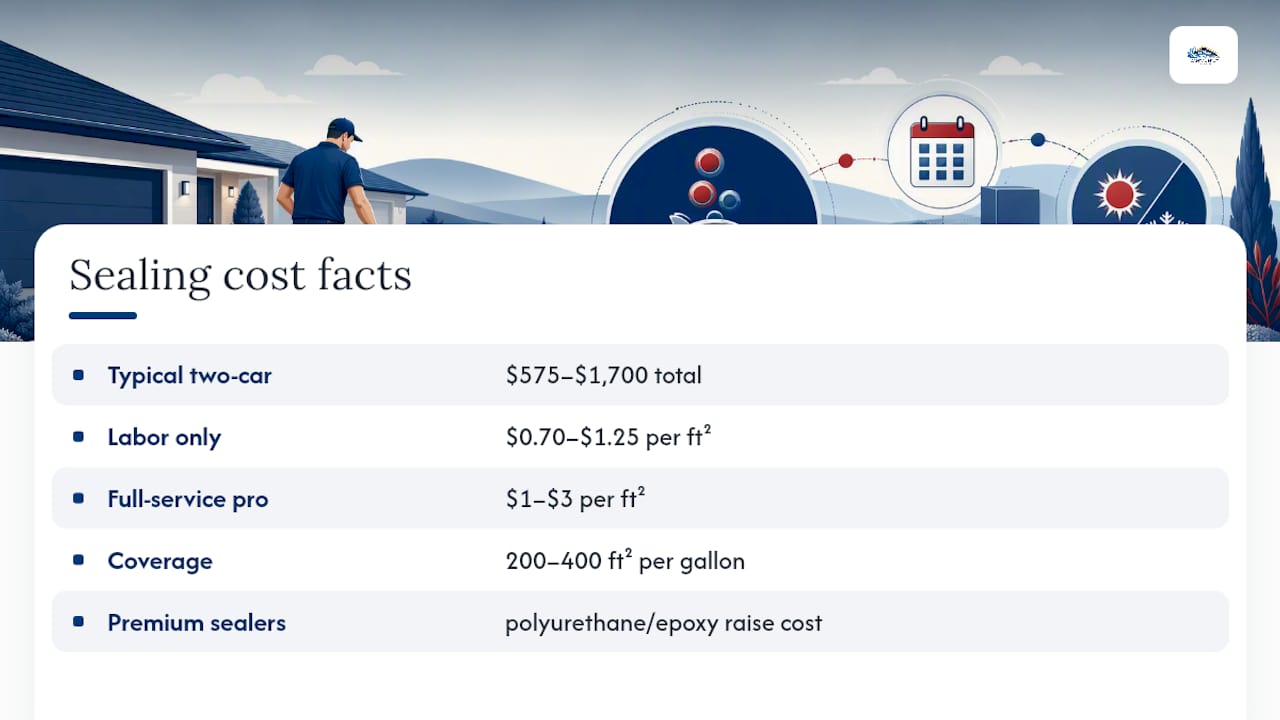
Material costs range from moderate to higher per gallon, and coverage varies by surface porosity. Most sealers cover 200 to 400 square feet per gallon, so a rougher, more porous slab drinks up more product per coat. Labor alone typically adds $0.70 to $1.25 per square foot, and full-service professional jobs, including basic cleaning and minor crack fill, land around $1 to $3 per square foot.
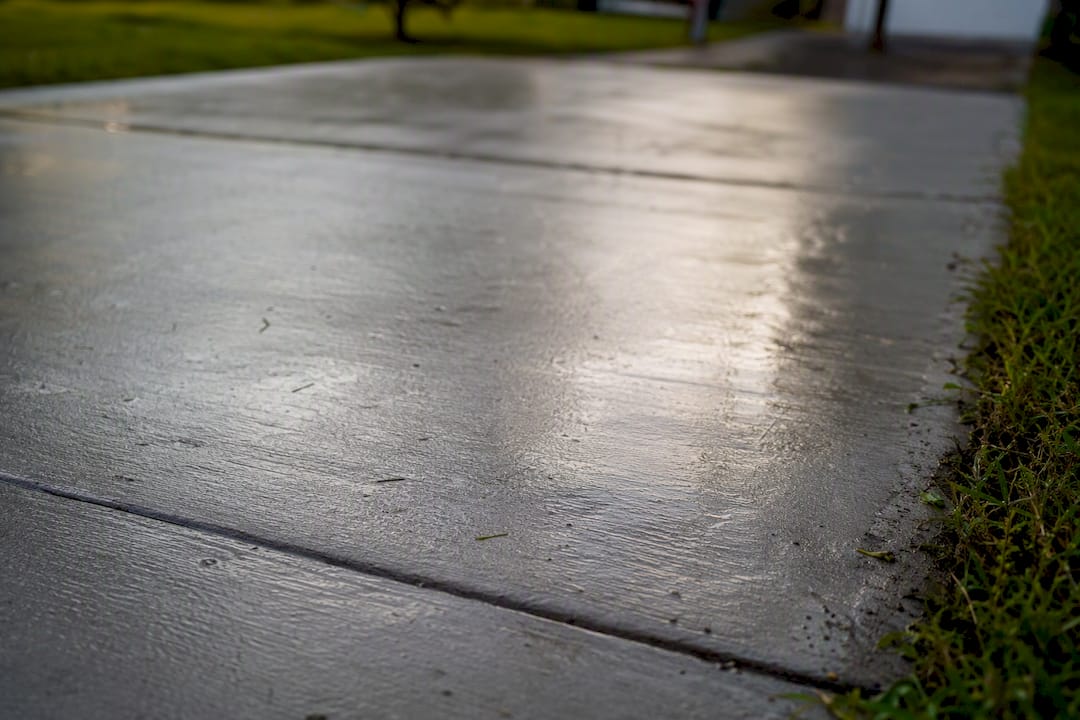
Quick math: a 600 square foot driveway at a moderate rate per square foot averages out to a mid-range cost for a professionally cleaned, repaired, and sealed job.
What pushes a quote higher: premium polyurethane or epoxy chemistries, a second coat, crack and spall repairs before sealing, hard-to-access driveways, and decorative stamped patterns that require more careful, slower application. A flat driveway with no repairs needed and a single acrylic coat sits at the low end of every range above.
How to Prepare and Apply Concrete Sealer
Getting the prep right matters more than the sealer brand you buy. Rushing this stage is why sealer jobs fail early.
- Clean thoroughly. Power wash the entire surface, degrease any oil stains with a concrete-safe degreaser, and strip loose material or old, flaking sealer residue. Skipping this step is the leading cause of peeling and early sealer failure.
- Repair cracks and spalls first. Fill cracks with a concrete crack filler and patch spalled areas before sealing. Sealer bonds to sound concrete, not damage, and it won’t hide or fix either problem.
- Apply evenly. Use a pump sprayer for even coverage, then back-roll with a paint roller to work the sealer into the pores. Apply in temperatures between 50°F and 90°F, and check the forecast for at least a 24 hour no-rain window.
- Cure and restrict traffic. Most sealers need 1 to 3 days before foot or vehicle traffic resumes. Plan two coats for most jobs, and if the driveway is brand new concrete, wait the full 28 days minimum, though many contractors prefer 60 to 90 days to let efflorescence settle before that first coat goes on.
Pro Tip: Test a small section first if you’re unsure how the surface will absorb the sealer. A dry patch that soaks in within seconds usually needs a heavier first coat than a smoother, less porous slab.
When Should You Hire a Pro Instead of DIY?
DIY sealing saves on labor, but it’s not the right call for every driveway. Hire a professional when you’re dealing with a large surface area, stamped or decorative concrete where finish consistency really shows mistakes, heavy oil staining that needs pretreatment, or any structural repairs beyond a hairline crack. DIY errors like inconsistent coats and skipped prep tend to cut sealer lifespan well short of what the product is rated for.
A solid contractor quote should spell out:
- Surface cleaning and degreasing included in the price
- Crack repair and spall patching, itemized separately
- The specific product and brand being used, not just “sealer”
- Number of coats and expected cure/traffic timeline
- Any warranty on the workmanship or product
Red flags to walk away from: a one-line quote with no mention of prep work, vague answers when you ask what product they’re applying, or a price that seems too low for the square footage involved. Capital Pro Pressure Washing’s concrete and driveway sealing service covers each of these steps as standard scope, not an upsell.
Why Trust This Guidance
This guide draws on published cost and materials data from industry sources alongside the practical field experience of Capital Pro Pressure Washing, a veteran-owned company that has served New York’s Capital Region for over 10 years.
- Specializes in soft-wash cleaning paired directly with sealing, so prep and protection happen as one workflow, not two disconnected jobs.
- Handles concrete driveways, stamped concrete, and related surfaces across Rensselaer and the wider Capital Region.
- Author: Luis T, writing from an editorial review of contractor pricing data and sealer performance research cited throughout this article.
| Point | Details |
|---|---|
| Default sealer choice | Penetrating silane/siloxane for invisible, long-lasting protection on plain driveways. |
| New concrete timing | Wait at least 28 days minimum, ideally 60 to 90 days, before the first seal coat. |
| Typical cost | $575 to $1,700 installed for a standard two-car driveway. |
| Reseal schedule | Topical acrylics every 1 to 3 years, penetrating sealers every 3 to 10 years. |
What Actually Determines Whether Sealing Pays Off
Most articles on this topic treat sealing as a yes-or-no question. It isn’t. The real question is whether you’ve matched the sealer to your climate and how the driveway actually gets used, and most homeowners skip that step entirely.
The conventional advice pushes people toward whichever sealer is cheapest on the shelf, usually a basic acrylic. That works fine for a driveway in a mild climate with light traffic. It’s a poor match for a Capital Region driveway that sees road salt, plow scraping, and dozens of freeze-thaw cycles every winter. In that setting, the sealer chosen for the house’s actual exposure matters more than brand loyalty or price per gallon.
If you take one thing from this guide, prioritize the prep work over the product. A $70 gallon of premium sealer applied over unwashed, oil-stained concrete will fail faster than a $35 gallon applied to a properly cleaned and dried surface. Get the cleaning and crack repair right first, then worry about which chemistry to buy.
— Luis T
Get Your Driveway Sealed Right the First Time
Skipping prep is the most common reason a sealing job fails early, and it’s exactly what separates a DIY weekend project from a job that actually lasts. Capital Pro Pressure Washing builds cleaning and sealing into one workflow instead of treating them as separate steps, so oil stains, old sealer residue, and hairline cracks get addressed before a single coat goes down, not after the job’s already underway.

That combined approach is what protects the multi-year lifespan a good sealer is supposed to deliver, whether you need a penetrating sealer for a plain driveway or a topical finish for stamped concrete. The concrete, driveway, and stamped concrete sealing service covers cleaning, crack repair, product selection, and application as one scope, with pricing based on your driveway’s actual condition rather than a generic square-footage guess. Request a quote and get a firm price before any work starts.
Sources
- ConcreteCalculate — sealing cost calculator
- HomeGuide — concrete sealing cost
- ConcreteNetwork — sealer comparison
FAQ
Is Sealing a Concrete Driveway Worth It?
Yes, for most homeowners. It costs a fraction of replacing a slab and protects against the water, salt, and freeze-thaw damage that shorten a driveway’s life.
How Much Does It Cost to Seal a Concrete Driveway?
A typical two-car driveway runs $575 to $1,700 installed, with professional full-service jobs averaging $1 to $3 per square foot.
What Are the Negatives About Sealing a Driveway?
Sealer adds upfront cost, needs recoating every few years, can darken the concrete, and topical types can get slippery without a traction additive. It also won’t repair existing cracks or structural damage.
What Is Best to Seal a Concrete Driveway?
A penetrating silane/siloxane sealer is the best all-around choice for plain driveways because it’s invisible and lasts 5 to 10 years. Stamped or decorative concrete does better with a topical acrylic or polyurethane sealer to protect the finish.
How Long Does Concrete Sealer Last?
Topical acrylic sealers last 1 to 3 years depending on traffic and sun exposure, while penetrating sealers last 3 to 10 years depending on climate and product.
Recommended
Services Related To This Article
Need a quote in the Capital Region?
Fast, free estimates from a local, licensed & insured team.
