
Stop Cobwebs Returning to Your House, One Day Soft Wash or DIY
A cobweb is an abandoned spider web that has stopped catching insects and started catching dust instead. It’s usually harmless. Clear visible cobwebs indoors with a vacuum brush attachment or an extendable duster, working top to bottom. If exterior cobwebs on siding, eaves, or soffits keep coming back after you sweep them away, that’s a sign to book a soft-wash cleaning rather than fight the same corners every month.
Quick Summary:
- Regular soft-wash treatments are necessary for persistent exterior cobweb buildup, especially on delicate surfaces like siding and painted trim.
- Dust, mold, algae, and biological grime often cause webs to reappear quickly, making DIY cleaning insufficient for heavy or recurring webbing.
- Most interior cobwebs are harmless dust accumulations on abandoned webs that don’t require chemical control and can be cleaned with simple tools.
- Proper prevention involves sealing gaps, trimming vegetation, and adjusting lighting to reduce insect attraction, which minimizes spider web formation.
- Professional soft-wash services are recommended when cobwebs return frequently or are combined with biological growth, with costs varying by house size and scope of work.
Table of Contents
- What Are Cobwebs, and How Are They Different From Spider Webs?
- Why Are There Cobwebs in My House and on My Siding?
- How Do You Remove Cobwebs Inside Your Home?
- Clearing Cobwebs From Siding, Eaves, and Exterior Trim
- How Do You Stop Cobwebs From Coming Back?
- When Should You Call a Professional for Cobweb Removal?
- What Does Professional Cobweb and Exterior Cleaning Typically Cost?
- Does Humidity or Lighting Affect How Fast Cobwebs Build Up?
- Can You Remove and Prevent Cobwebs Without Chemicals?
- A Practical Take on Cobwebs and When They’re Worth Worrying About
- Get Persistent Exterior Cobwebs Handled Without Renting a Pressure Washer
- Sources
- FAQ
What Are Cobwebs, and How Are They Different From Spider Webs?
A spider web is a working tool. A spider builds it, repairs torn strands, and eats the silk to rebuild it fresher and stickier. Once a spider dies, moves on, or abandons the structure, the web stops getting maintained. It dries out, loses its tackiness, and starts grabbing every dust particle that drifts past. That dried, dusty, no-longer-maintained structure is what people mean when they say “cobweb.” An entomology explainer from Western Exterminator draws the line clearly: active webs stay clean and elastic because a spider is tending them, while cobwebs go gray and brittle because nobody is.
The spiders most often responsible for cobwebs in and around houses belong to the family Theridiidae, along with several other common house spiders that favor irregular, tangled webs rather than the neat spiral shape most people picture. Instead of one clean wheel-shaped web, you get a messy net tucked into a corner where two surfaces meet, according to an IFAS extension entomology Q&A. A few things make these webs so visible once abandoned:
- Dried silk carries a static charge that pulls airborne dust toward it like a magnet
- Corners and joints trap still air, so dust settles there faster than in open rooms
- Ceiling fixtures and vents create constant, gentle air movement that feeds fresh dust to nearby webs
- Once a web goes gray with dust, it becomes obvious against paint or siding even from across a room
None of this means your house has a spider problem worth panicking over. It means old silk is doing exactly what old silk does.
Why Are There Cobwebs in My House and on My Siding?
Cobwebs cluster wherever air stays still and nobody cleans often. Indoors, that usually means ceiling corners, behind furniture, above door frames, inside closets, and the transition zones between living space and attic or garage. These spots share one trait: low foot traffic and minimal air disturbance, which lets a web sit undisturbed long enough to collect visible dust. Homes also tend to show more cobwebs during colder months when windows and doors stay shut, according to research from Oregon State University Extension, since sealed-up houses trap both dust and the spiders producing new silk.
Outdoors, the pattern shifts toward specific architectural features rather than general stillness. Look at:
- Eaves and soffit corners, where wall meets roofline and wind rarely reaches
- Porch lights and exterior fixtures, which attract flying insects that spiders treat as a buffet
- Shrubs and bushes planted close against exterior walls, giving spiders a bridge from landscaping to siding
- Window frames and shutters, especially on the shaded side of the house
If you’re seeing webs but no spiders, there are a few reasonable explanations rather than one mystery. Many web-building house spiders are nocturnal and simply aren’t visible during the day. Others abandon a web and relocate a few feet away, leaving the old silk behind to collect dust on its own. And some webs you’re spotting were built by a spider that’s already died, meaning the web is pure leftover with nothing living nearby at all.
How Do You Remove Cobwebs Inside Your Home?
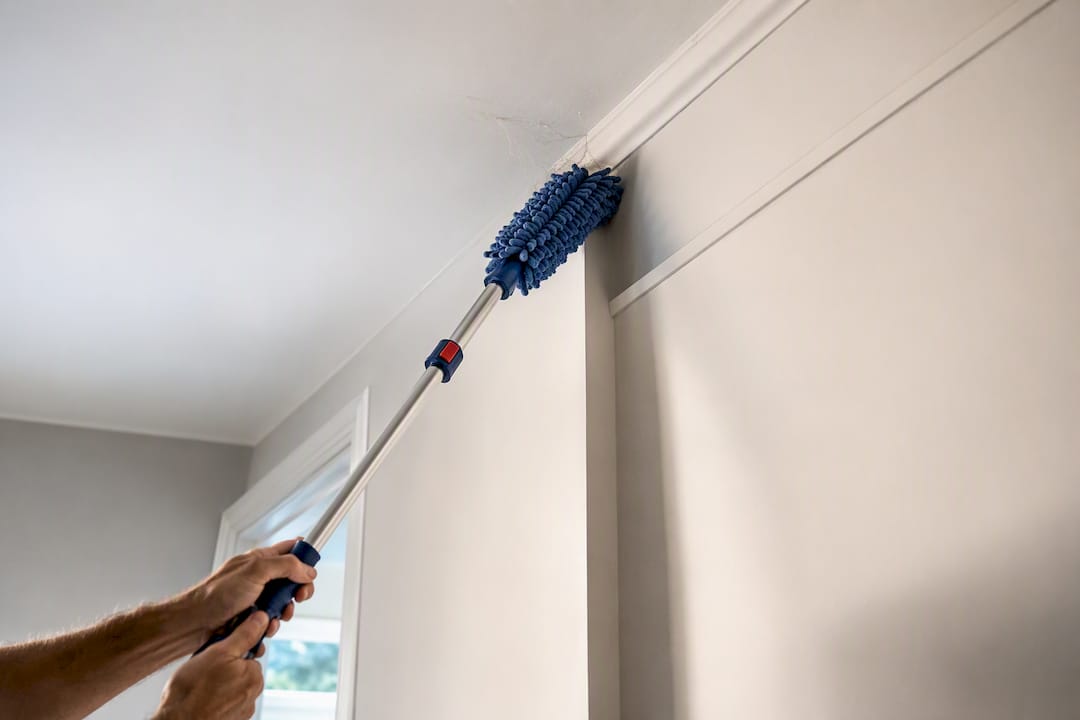
Clearing interior cobwebs is mostly about sequence and the right tools, not brute force. Work from the ceiling down so falling dust lands on surfaces you haven’t cleaned yet, rather than back onto ones you just finished.
Gather a vacuum with a soft brush attachment, an extendable duster for high ceilings and corners, a couple of microfiber cloths, and a dust mask if you’re sensitive to airborne particles or working in a room that hasn’t been touched in a while.
- Start in the highest corners of each room, using the extendable duster to sweep webs down and away from light fixtures.
- Move to wall corners, door frames, and window casings, wiping with a dry microfiber cloth to catch anything the duster missed.
- Vacuum ceiling fans, vent covers, and closet corners directly, using the brush attachment to avoid scratching paint or trim.
- Finish with a full floor vacuum pass to pick up any dust and debris that settled during the first three steps.
- Wipe down baseboards and furniture surfaces last, since these catch the bulk of what falls during dusting.
If you’re reaching a vaulted ceiling or a stairwell landing, use a stable stepladder with someone nearby rather than balancing on furniture. And if a web is clearly active, meaning a spider is still tending it, consider gently relocating the spider outside with a cup and paper rather than killing it. Most house spiders are harmless and quietly useful, since they’re eating other insects you’d rather not have indoors either.
Pro Tip: Tackle cobweb removal on a slightly humid day if you can. Static cling is weaker when there’s more moisture in the air, so dust falls away from the duster instead of sticking to it and smearing across the wall.
Clearing Cobwebs From Siding, Eaves, and Exterior Trim
Exterior cobwebs respond to two very different approaches, and picking the right one depends on how bad the buildup actually is.
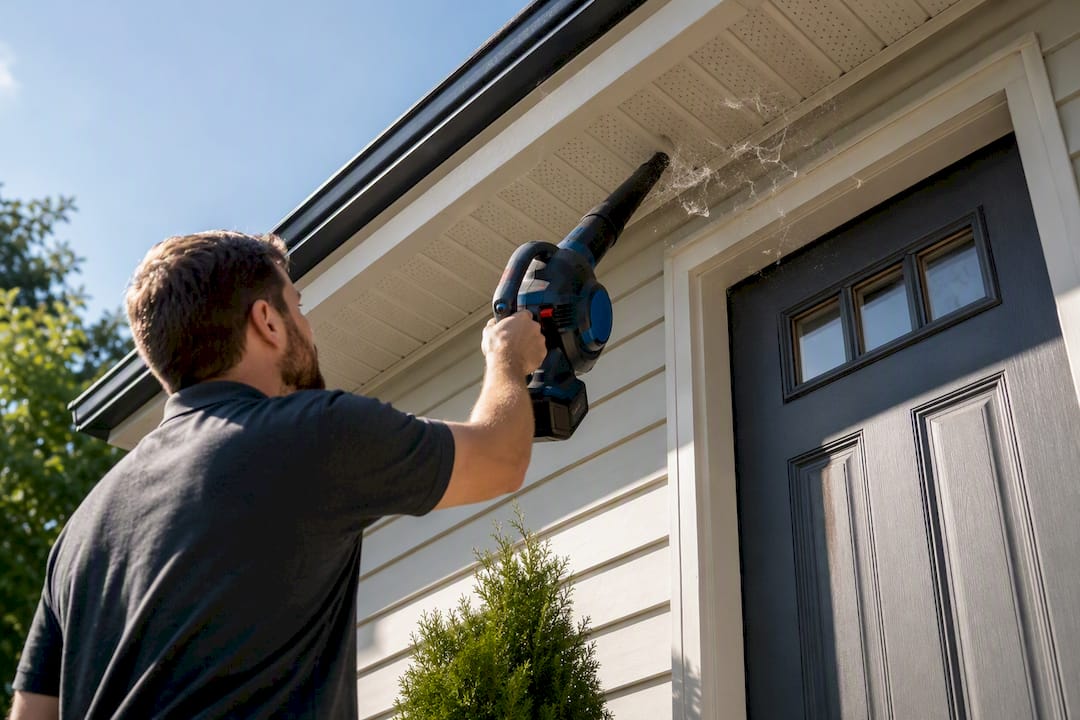
For light, occasional webbing, a broom with soft bristles, a long-handled extension duster, or even a garden hose on a gentle setting will knock most webs loose. A leaf blower works surprisingly well on porch ceilings and soffits, since the airflow strips webs off without you needing a ladder for every spot. These DIY methods take an afternoon and cost nothing beyond tools you likely already own.
Persistent or widespread webbing calls for something with more reach and more cleaning power: a soft-wash treatment. Soft-washing uses low water pressure combined with a cleaning solution designed to break down biological material, which removes cobwebs along with any algae, mildew, or pollen film sitting on the same surfaces. A homeowner’s guide comparing soft-wash and pressure-wash methods notes that soft-washing is the safer choice for siding, soffits, and painted trim, since high-pressure water can strip paint, force water behind siding panels, or crack aging caulk.
A few signs tell you DIY sweeping has hit its limit:
- Cobwebs return within a week or two of clearing them, suggesting an ongoing spider population you can’t reach with a broom
- Webbing is mixed with visible black streaking or green film, which points to mold, mildew, or algae growth rather than dust alone
- The buildup is concentrated on second-story eaves, gables, or rooflines that aren’t safely reachable from a ladder
- Your siding or trim is older, painted, or otherwise fragile enough that you’re worried a hose or pressure washer might damage it
If any of those match your situation, a professional soft-wash visit solves the cobweb problem and the underlying biological growth in one pass, instead of you re-climbing a ladder every month.
How Do You Stop Cobwebs From Coming Back?
Prevention comes down to disrupting the two things cobwebs need: still air and an undisturbed anchor point. A simple cleaning rhythm handles most of it. Dust ceiling corners and high shelves weekly to every other week indoors, and walk the exterior of your house each season to check eaves, porch ceilings, and window frames before webs have time to gather dust.
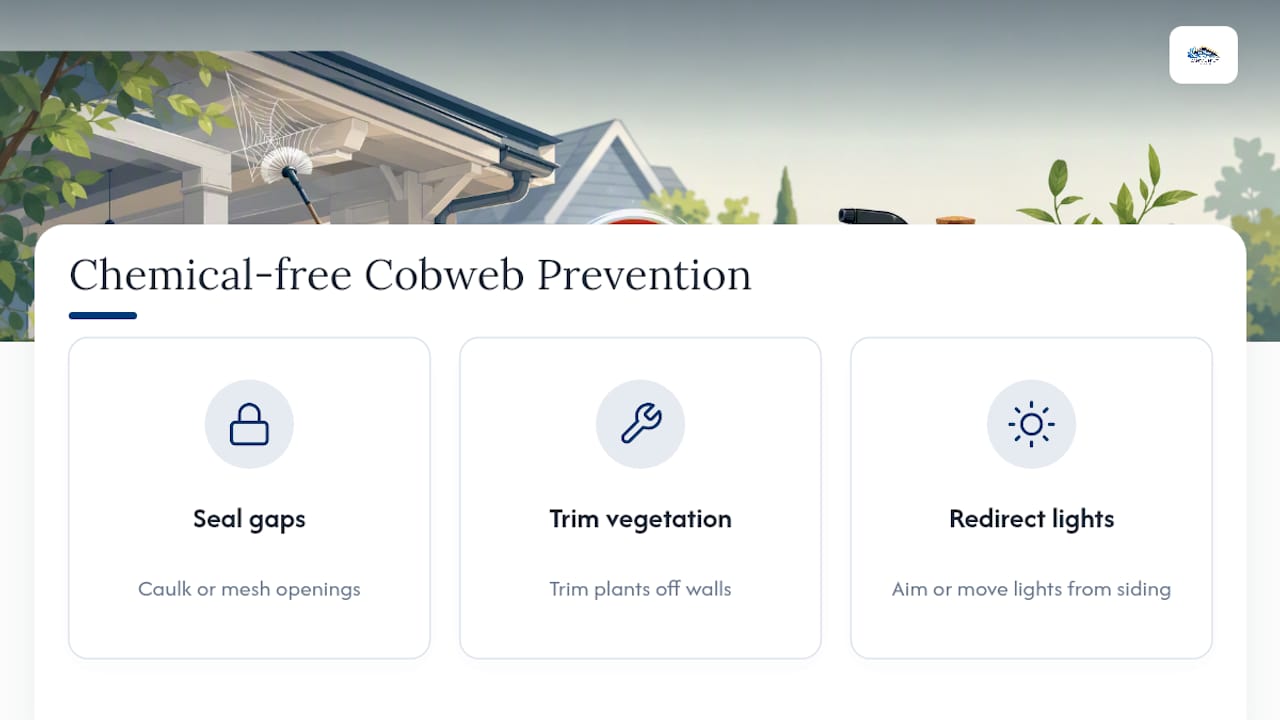
Sealing gaps matters just as much as cleaning. Spiders and the insects they hunt both get inside through the same small openings, so check window screens for tears, look at gaps around soffit vents, and make sure exterior doors seal tightly at the bottom. Trimming shrubs and tree branches back from exterior walls removes the bridges spiders use to reach your siding in the first place, and moving porch lights a few feet from the wall (or switching to motion-activated fixtures) cuts down on the flying insects that draw spiders to that exact spot.
- Vacuum interior corners, vents, and closets on a consistent schedule rather than only when webs become obvious
- Inspect and reseal gaps around vents, soffits, and window screens each fall before homes close up for winter
- Trim vegetation at least a foot away from siding and move exterior lighting away from walls where practical
- Save chemical pest control for genuine infestations rather than routine cobweb prevention
Pro Tip: Check the areas around your porch light and any exterior vent covers first when doing a seasonal walk-around. These two spots draw more new cobwebs than almost anywhere else on a house, since insects gather at the light and spiders set up shop right next to the buffet.
When Should You Call a Professional for Cobweb Removal?
DIY handles most interior cobwebs and light exterior webbing just fine. A professional earns their fee when height, recurrence, or combined biological buildup make the job harder or riskier than a broom and a Saturday afternoon can manage.
A reputable soft-wash visit typically starts with an inspection of your siding, roofline, and trim to identify what you’re actually dealing with, since cobwebs mixed with algae or mildew need a different cleaning solution than dust alone. From there, the contractor should walk you through a surface-appropriate cleaning plan, often followed by an optional sealing step on porous materials like concrete or pavers to help keep growth from returning as fast.
When vetting a contractor for this kind of work, a few checks separate the reliable ones from the risky ones:
- Confirm they carry liability insurance, since ladder work and chemical cleaners both carry real risk if something goes wrong
- Ask specifically about soft-wash experience, not just pressure washing, since the techniques and equipment differ
- Look for local reviews and, ideally, photos of completed jobs rather than stock marketing images
- Check whether they offer any kind of satisfaction guarantee or free callback if the job doesn’t hold up
Capital Pro Pressure Washing has spent over a decade working on homes across New York’s Capital Region using soft-wash methods matched to each surface, and the same crew that quotes a job is the crew that shows up to do it.
What Does Professional Cobweb and Exterior Cleaning Typically Cost?
Most soft-wash house cleanings, cobwebs included, take a single day to complete, though the exact time depends on house size, the number of stories, and how much biological growth has built up alongside the webs. A straightforward single-story home with light cobweb buildup moves faster than a two-story house with heavy algae staining on top of years of undisturbed webbing in the eaves.
Pricing varies by house size, the number of services bundled together, and how much prep work the surfaces need before cleaning starts. A house wash alone costs less than a house wash paired with roof cleaning, gutter cleaning, and window cleaning in the same visit, which is why many homeowners bundle services into one appointment rather than scheduling separate visits throughout the year. Capital Pro Pressure Washing does not publish flat rates online, since every property is different, but you can get an exact number by requesting a free instant quote that accounts for your home’s size, siding type, and the specific services you want.
Seasonal timing affects both availability and value. Spring and early summer bookings tend to fill fastest since that’s when cobwebs, pollen, and winter grime are all visible at once. Scheduling a cleaning in early spring, before webs have had all summer to rebuild, tends to keep your house looking clean longer than waiting until buildup is obvious from the street.
Does Humidity or Lighting Affect How Fast Cobwebs Build Up?
Humidity and light both shape where spiders build and how fast their abandoned webs turn into visible cobwebs. Damp, humid areas tend to attract more insects overall, which means more prey and more reason for a spider to set up in that spot. Basements, garages, and shaded exterior corners that stay slightly damp longer than the rest of the house often show heavier web activity than dry, sunlit walls.
Lighting plays an even more direct role outdoors. Porch lights, garage floodlights, and any exterior fixture that stays on after dark pull in moths, gnats, and other flying insects from a wide radius. Spiders learn quickly that these lit areas are reliable hunting grounds, which is why the corner nearest your porch light almost always collects webs faster than a shaded stretch of siding twenty feet away.
Inside the house, low-light, low-traffic rooms create the opposite kind of advantage for cobwebs: not more prey, but less disturbance. A guest bedroom that gets used twice a year, or a basement corner behind stored boxes, gives a web weeks or months to sit untouched, which is plenty of time for dust to accumulate and turn a fresh web into an obvious cobweb. Combine a humid, dim, low-traffic space with minimal cleaning, and you get the exact conditions cobwebs need to pile up fastest.
Can You Remove and Prevent Cobwebs Without Chemicals?
Most effective cobweb control doesn’t require a single chemical spray. A vacuum, a duster, a microfiber cloth, and consistent timing handle the vast majority of interior and light exterior webbing without any pesticide or cleaner involved at all.
Outdoors, a garden hose on a gentle spray setting or a leaf blower will physically knock webs loose from siding and porch ceilings, which removes both the web and any dust it’s carrying without introducing anything to your yard or nearby plants. For soft-wash services, many contractors use biodegradable cleaning solutions formulated to break down algae and mildew rather than harsh bleach-based products, which reduces runoff concerns for landscaping, pets, and nearby water sources. It’s worth asking any contractor directly what solution they use if that matters to your household.
On the prevention side, the most chemical-free method available is simply exclusion: sealing the gaps that let spiders and insects inside, trimming vegetation away from walls, and adjusting exterior lighting so it doesn’t concentrate insect activity right against your siding. None of that involves a spray bottle. If you do want a non-toxic deterrent indoors, a few natural options like peppermint oil diluted in water are commonly cited as mild spider repellents, though the evidence on how well they actually work is thin, so treat them as a minor supplement to cleaning and sealing rather than a primary strategy.
A Practical Take on Cobwebs and When They’re Worth Worrying About
Most homeowners either ignore cobwebs entirely or treat them like an emergency, and both reactions miss the point. A cobweb in a rarely used corner is just dust with good aim. What actually matters is the pattern: how fast it comes back, and whether it’s showing up alone or alongside mildew, algae, or staining you can’t fix with a duster. Routine checks beat occasional deep cleans every time, because a house that gets a quick seasonal walk-around rarely lets buildup get bad enough to need a soft-wash crew in the first place. When it does get to that point, that’s not a failure. That’s just the moment DIY tools stop being the right tool for the job.
— Luis T
Get Persistent Exterior Cobwebs Handled Without Renting a Pressure Washer
If exterior cobwebs keep coming back faster than you can knock them down with a broom, that’s usually a sign the underlying buildup, algae, pollen, or biological grime, needs more than a quick sweep. A professional soft-wash service is the alternative to guessing whether your siding can handle a rented pressure washer: a crew matched to your specific siding can help avoid risks like stripped paint or cracked trim.

Their house washing service clears cobwebs, dust, and biological staining from siding in a single visit, and it pairs naturally with roof washing for eave and soffit corners where webs cluster hardest. Homeowners dealing with webbing around gutters or window frames often bundle in gutter cleaning or exterior window cleaning at the same appointment rather than scheduling separate trips. If webs have crept into second-story window frames specifically, a specialized service like STAR Window Solutions is another option worth knowing about for that narrower job. Reputable soft-wash contractors typically back their work with satisfaction guarantees and offer free callbacks, with some providing discounts for military and first responders. Request a free instant quote and find out what a single, properly timed soft-wash visit can do for a house that’s been fighting the same corners all year.
Sources
OSU Extension Service · Oregon State University Extension · IFAS Extension · Western Exterminator · Realtor · Tru Painting
- Types of spider webs — Western Exterminator
- Soft wash vs pressure wash: A homeowner’s guide (Tru Painting blog)
- Oregon State Extension — what are all these webs showing inside my house
FAQ
Why Am I Getting Cobwebs in My House?
Cobwebs show up when a spider abandons or stops maintaining a web, and the dried silk starts collecting airborne dust. Low-traffic corners, closed-up rooms in colder months, and areas near vents or lights tend to attract the most buildup, according to Oregon State University Extension.
Is It Bad to Have Cobwebs in Your House?
Cobwebs on their own aren’t a health hazard. They’re mostly a cosmetic and dust issue, and OSU Extension notes they often just mean a small, harmless spider population is living somewhere in or around your home.
What Does It Mean When I See Cobwebs in My House?
It usually means a spider built a web in that spot at some point and either moved on or died, leaving the silk to collect dust undisturbed. It’s rarely a sign of a bigger pest problem on its own.
Why Do I Have Cobwebs but No Spiders?
Many web-building house spiders are nocturnal, so they’re active while you’re asleep and easy to miss during the day. It’s also common for a spider to abandon a web and relocate nearby, leaving the old, dusty web behind with nothing living in it.
Does Capital Pro Pressure Washing Remove Cobwebs From Siding?
Yes. Their house washing service uses soft-wash cleaning to remove cobwebs along with dust, mildew, and algae from siding, soffits, and trim. Pricing depends on your home’s size and services requested, so current details are available through their instant quote tool.
Recommended
Services Related To This Article
Need a quote in the Capital Region?
Fast, free estimates from a local, licensed & insured team.
