
How to Remove Algae From Stucco Without Damaging It
For most homeowners, the safest effective way to deal with algae on stucco is a soft wash: an oxygen-based cleaner or mild detergent applied at low pressure, followed by a thorough rinse. Skip the pressure washer entirely and go easy on chlorine bleach if you have plants nearby.
- Try first: oxygen bleach or dish soap, soft brush, garden-hose rinse.
- Avoid: high-pressure washing (it drives water behind the stucco) and straight chlorine bleach near landscaping.
- Fix the real problem: algae keeps growing on surfaces with excess moisture, so cleaning without correcting drainage, shade, or splash just buys you a few months.
Key Takeaways
Algae on stucco comes from moisture and shade, not dirt, so the fastest way to stop it returning is fixing drainage and airflow, not just cleaning harder.
| Point | Details |
|---|---|
| Diagnose before you clean | Use the wet-wipe test to confirm algae versus mold or efflorescence before choosing a cleaner. |
| Choose the gentler cleaner first | Try oxygen bleach or dish soap before reaching for chlorine bleach near plants. |
| Never pressure wash stucco | High pressure can force water behind the wall, leading to costly repairs. |
| Fix moisture sources | Gutters, flashing, overhangs, and trimmed vegetation prevent algae from coming back. |
| Call a pro for recurring or large-scale growth | Capital Pro Pressure Washing uses low-pressure soft-wash and sealing for lasting results on Capital Region homes. |
Table of Contents
- What Does Algae on Stucco Actually Look Like?
- Which Cleaners Are Safe for Removing Algae From Stucco?
- How Do You Clean Algae Off Stucco Yourself?
- When Should You Hire a Professional Instead?
- How Do You Stop Algae From Coming Back on Stucco?
- What a Professional Soft-Wash Job Actually Looks Like
- Why Most Algae Advice Gets the Priorities Backward
- Sources
- FAQ
What Does Algae on Stucco Actually Look Like?
Algae shows up as blue-green to almost black streaks, usually in broad, soft-edged patches rather than distinct spots. It tends to follow water paths: under a roofline with no gutter, below a leaky spigot, or on the north side of the house where sun never quite dries the wall.
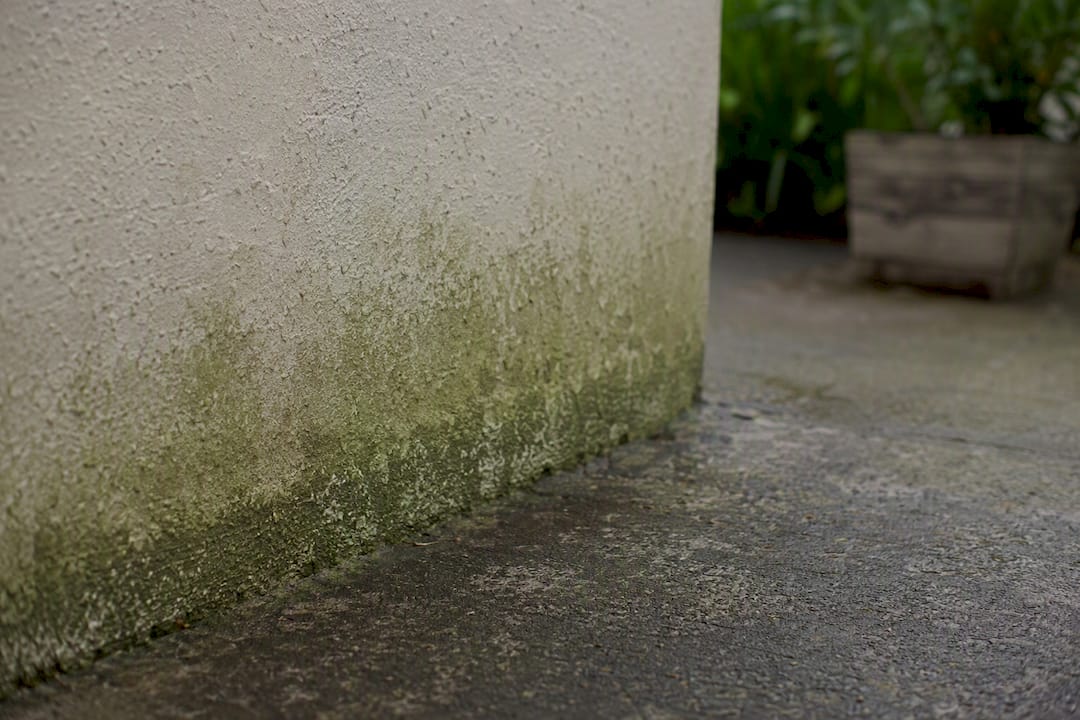
Mold looks different. It’s often grayish or black with a fuzzier, more irregular texture, and it clusters in tighter spots rather than long streaks. Efflorescence is easiest to rule out: it’s a chalky white powder that comes from mineral salts migrating out of the stucco, and it usually shows up on newer or unsealed walls rather than the shaded, damp zones algae prefers.
A simple wet-wipe test helps confirm what you’re looking at:
- Rub a damp cloth over the stain. If green or black color transfers and smears, it’s likely algae or mold.
- If the residue is powdery, dry, and white, that’s efflorescence, and cleaner won’t fix it. You need a masonry-specific treatment instead.
- If nothing transfers and the stain sits flush with the texture, you might just have dirt or pollution buildup.
Unpainted or lightly textured stucco is especially prone to this because its rough, slightly alkaline surface holds moisture longer and gives organisms like Gloeocapsa magma something to grip. You don’t need a lab test to confirm the species. If it’s green-black, streaky, and in a shaded or damp spot, treat it as algae.
Pro Tip: Check the north and east-facing walls first. Those get the least direct sun, so they dry slower after rain and almost always show algae before the rest of the house does.
Which Cleaners Are Safe for Removing Algae From Stucco?
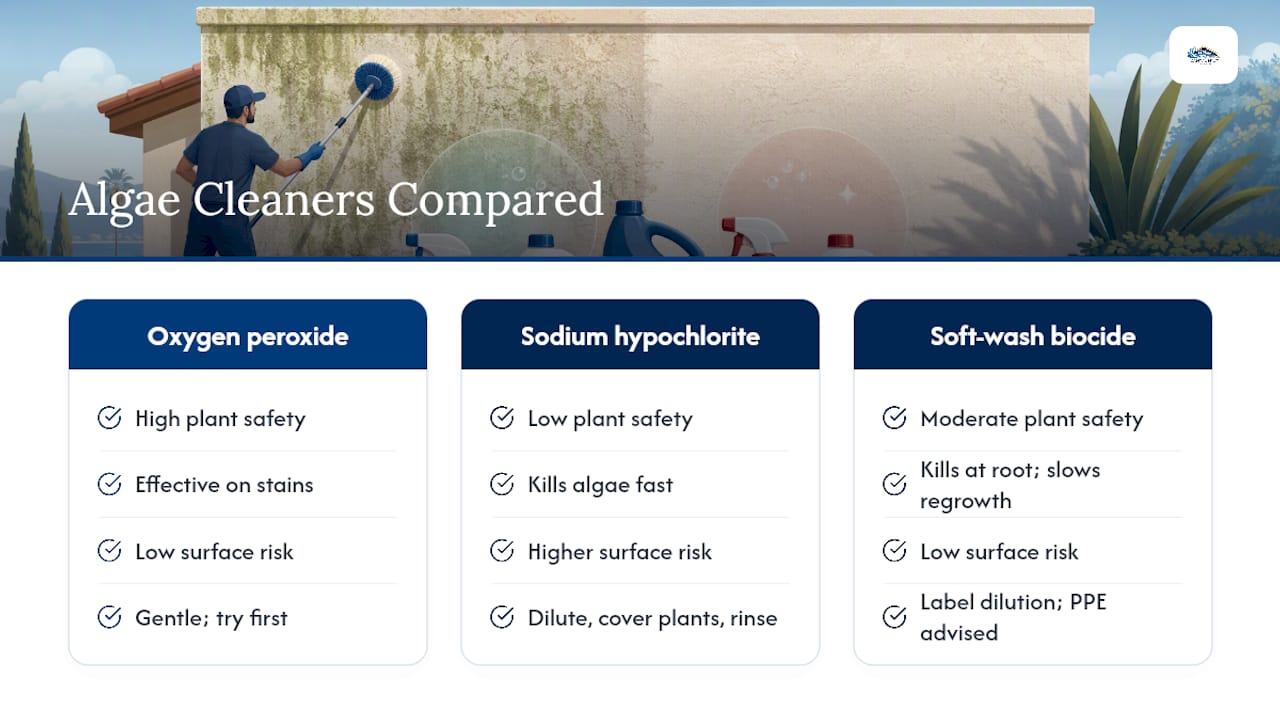
Oxygen-based (peroxide) cleaners are the safest starting point for most homeowners. They break down algae and mold stains effectively while posing far less risk to grass, shrubs, and flower beds than chlorine bleach does, according to cleaning guidance from Simple Green. For light, surface-level discoloration, plain dish soap mixed with warm water and worked in with a soft brush is often enough. It won’t touch heavier, established growth, but it’s the gentlest option and worth trying first on a fresh stain.
Sodium hypochlorite, standard household bleach, is more aggressive and kills algae fast. The tradeoff is real: it’s harsh on nearby plants if it drips or runs off during rinsing, and over-diluted or under-rinsed bleach can leave its own residue on the wall. If you use it, keep the mix light, cover landscaping with plastic sheeting first, and rinse thoroughly. Homeowner advice on stucco stains consistently flags this plant-damage risk as the main reason to reach for oxygen bleach instead when greenery is close to the wall.
Commercial soft-wash biocides, the kind professionals use, are formulated to kill algae at the root and often include a mildewcide that slows regrowth. They require label-specific dilution and basic PPE (gloves, eye protection), which is one reason many homeowners hand this part off to a pro.
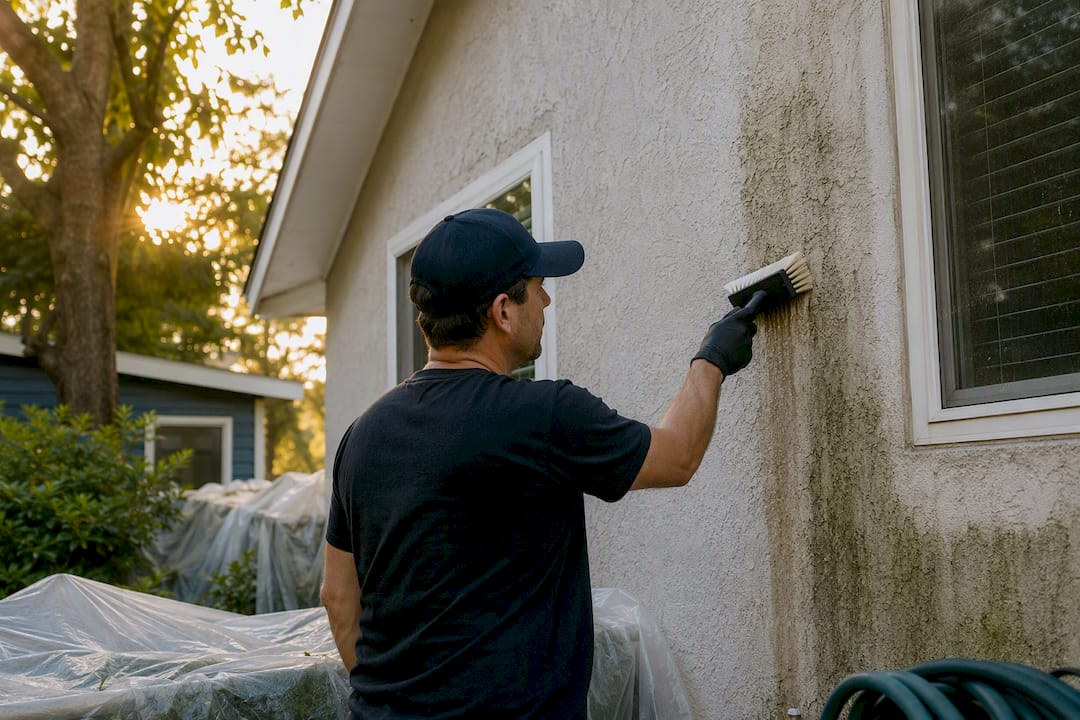
Whatever you use, don’t reach for a pressure washer. High-pressure water can force moisture behind the stucco and into the wall assembly, and once that happens you’re looking at a repair bill, not a cleaning bill. A soft brush and low-pressure rinse is the technique builders actually recommend.
How Do You Clean Algae Off Stucco Yourself?
If your stucco is painted, sealed, and in reasonably good shape, a careful DIY approach is realistic. Here’s the sequence that keeps you out of trouble:
- Protect the area. Cover plants, outdoor outlets, and window seals with plastic sheeting. Wet the ground around the foundation so any runoff dilutes before it reaches roots.
- Test a small patch. Pick a hidden section, apply your chosen cleaner, and wait 15 to 20 minutes to check for discoloration, streaking, or texture changes before treating the whole wall.
- Mix your solution. For oxygen bleach, follow the label ratio, typically a few ounces per gallon of warm water. For dish soap, a squirt per gallon is usually plenty for light staining.
- Work top to bottom. Apply the cleaner starting at the top of the wall and working down, so runoff doesn’t re-stain sections you’ve already cleaned. Let biocide-based products dwell for the time listed on the label, usually 10 to 15 minutes, before rinsing.
- Agitate gently. Use a soft-bristle brush on stubborn spots. Skip stiff wire brushes; they can scratch paint and chew into the stucco texture.
- Rinse at low pressure. A garden hose or a pressure washer set to its lowest fan-tip setting is enough. You’re rinsing residue off, not blasting the surface.
- Inspect and repeat if needed. Let the wall dry fully, then check for remaining discoloration. A second light treatment beats one aggressive pass.
- Wait before sealing or painting. Give stucco at least 24 to 48 hours of dry time before applying any sealant or paint on top of it.
Pro Tip: Work on an overcast day if you can. Direct sun dries cleaner too fast for it to fully break down algae, and it makes streaking more likely.
When Should You Hire a Professional Instead?
Some situations are worth handing off, even if you’re comfortable with a ladder and a hose. Call a pro when:
- Your home has an EIFS (synthetic stucco) exterior, since it’s more moisture-sensitive and less forgiving of DIY mistakes.
- The affected area covers most of the house or spans multiple stories where ladder access gets risky.
- Algae keeps coming back within a few months of cleaning, which usually points to a moisture issue you haven’t identified yet.
- You’re not confident mixing or handling bleach-based products safely around your landscaping.
Professional soft-wash crews use low-pressure equipment paired with commercial-grade biocides that dwell longer and kill growth at the root, not just the visible surface. Many also handle minor stucco repairs and can apply a sealer afterward to slow regrowth.
Before hiring anyone, ask about their cleaning method, the specific chemicals they use, whether they carry insurance, and if they offer any workmanship guarantee or follow-up visit.
How Do You Stop Algae From Coming Back on Stucco?
Cleaning solves the symptom. Preventing algae means addressing why that wall stays damp longer than the rest of the house. Start with the obvious culprits: clogged gutters that overflow onto the wall below, downspouts that dump water at the foundation instead of away from it, and sprinkler heads aimed at siding instead of grass.
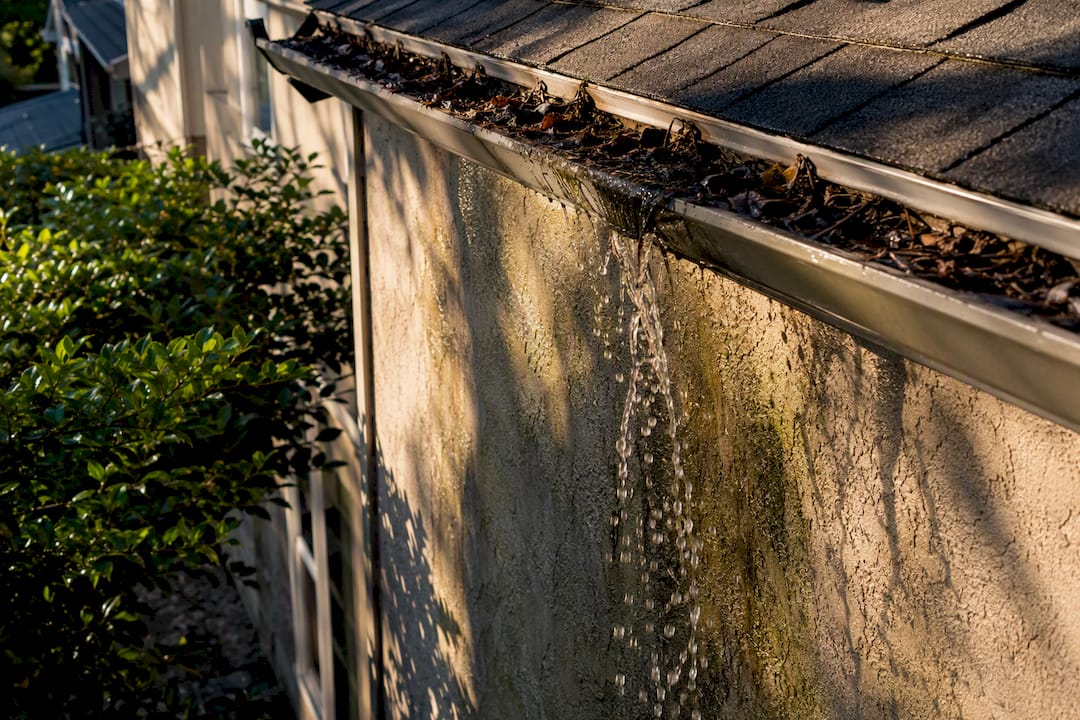
Architectural details matter more than most homeowners realize. Extending roof overhangs or adding flashing and drip edges above vulnerable sections measurably reduces how much rain actually hits the wall, which is the single biggest factor in how fast algae returns. Building-science research on stucco facades backs this up: small differences in surface temperature and humidity, often driven by shade and insulation, are what let biological growth take hold in the first place, and cutting off that moisture source does more long-term work than any cleaner.
Trim back shrubs and trees pressed against the house. More airflow and sunlight means faster drying after rain. For finishing touches, a mildewcide-infused paint or masonry sealer adds a layer of protection, but test it on a small patch first since some products slightly change the stucco’s texture or sheen. Copper strips get mentioned online as a low-effort algae deterrent; they can help in isolated spots but aren’t a substitute for fixing drainage.
Pro Tip: If one section of your house grows algae every single year no matter what you do, that’s not bad luck. It’s a sign water is landing there and not drying fast enough. Look for a gutter joint or missing flashing before you clean again.
What a Professional Soft-Wash Job Actually Looks Like
Capital Pro Pressure Washing has spent over a decade working on homes across New York’s Capital Region, and algae-streaked stucco is one of the most common calls we get, especially on north-facing walls and homes with heavy tree cover. As a veteran-owned company, we built our process around soft-wash techniques specifically because stucco doesn’t tolerate high pressure well.
A typical job looks like this:
- Inspect the wall for existing damage, cracks, or areas where water may already be getting behind the surface.
- Apply a low-pressure soft-wash treatment matched to the type and severity of growth.
- Rinse thoroughly and check for spots that need a second pass.
- Recommend a sealer where it makes sense, to slow regrowth and protect the finish.
Homeowners who ask the right questions during an inspection, what method we’re using, what’s in the solution, and how long results typically last, tend to get the clearest picture of whether soft-wash and sealing is the right fit for their home.
Why Most Algae Advice Gets the Priorities Backward
That’s backward. The building-science research is clear that surface humidity and shade drive growth, which means the wall that keeps growing algae every year has an actual, fixable cause, usually a gutter, a missing overhang, or a sprinkler hitting the wrong spot.
Homeowners who treat algae as a one-time cleaning problem end up on a yearly cycle: clean in spring, watch it creep back by fall, clean again. The ones who break that cycle are the ones who ask a harder question after cleaning: why did this section stay wet longer than the rest of the house?
I’d also push back gently on the instinct to reach for the strongest chemical available. Bleach kills algae fast, but oxygen-based cleaners do the job with far less risk to your landscaping, and the difference in effort is minimal. Start gentle, escalate only if you need to, and put more energy into the drainage fix than the cleaning method. That’s where the actual, lasting result comes from.
— Luis T
Get a Professional Soft-Wash for Your Stucco
If you’d rather skip the ladder, the chemical mixing, and the guesswork on dilution ratios, that’s exactly what a professional soft-wash service is for. Capital Pro Pressure Washing has spent over a decade cleaning homes across the Capital Region using low-pressure, plant-safe methods built specifically for sensitive surfaces like stucco, not the high-pressure equipment that can push water behind your walls.

Every job includes an inspection first, so you know exactly what’s causing the staining before any cleaner touches your walls, and we back our work with a satisfaction guarantee. If your stucco keeps growing algae no matter what you try, request a house-washing quote and we’ll walk your property, identify the moisture source, and give you a straight answer on what it’ll take to fix it for good.
Sources
- Algae & Mold Stains on Building Exteriors — Inspectapedia
- Preventing algae on stucco with flashing or overhangs — GreenBuildingAdvisor
- Biological growth on stucco — Hartwig M. Kuenzel (ORNL conference paper)
- How to clean stucco siding — Simple Green
- Silive
FAQ
Will Dawn dish soap remove algae from stucco?
Dish soap and warm water can lift light, surface-level algae when scrubbed in with a soft brush, but it won’t fully kill established growth the way an oxygen-based cleaner or biocide will.
What kills algae immediately?
Chlorine bleach kills algae on contact faster than most alternatives, but it carries more risk to nearby plants, so oxygen bleach is the safer first choice for most homeowners.
What is the best mold killer for stucco?
Oxygen-based (peroxide) cleaners are generally the safest effective option for mold and algae on stucco, and professional soft-wash biocides go a step further for persistent or recurring growth.
Will vinegar damage stucco?
Vinegar is acidic and can react with the mineral content in stucco and mortar over repeated use, so it’s best avoided as a routine cleaner; stick to oxygen bleach or mild detergent instead.
Recommended
Services Related To This Article
Need a quote in the Capital Region?
Fast, free estimates from a local, licensed & insured team.
