
Why Are There Black Streaks on My Roof? (Albany NY Roof Cleaning Guide)
Those black streaks on an Albany-area roof are algae, not dirt. What causes them and how soft washing removes them safely.
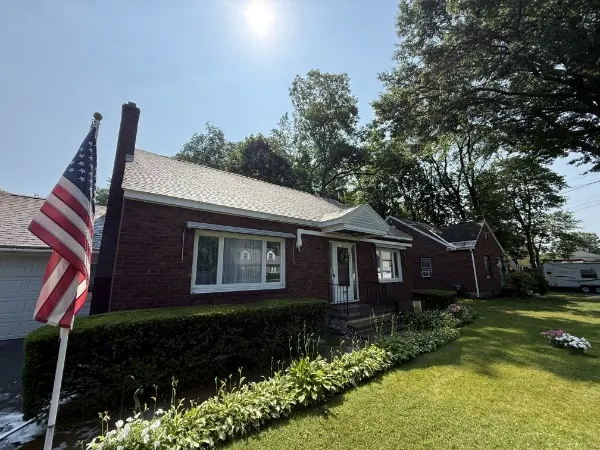
If you've noticed dark streaks running down your shingles — usually on the north-facing slope, or the side of the roof that gets the least sun — you're not imagining it, and it isn't just dirt. It's an organism, and it's been eating your roof for months or years. Here's what's actually going on, why it's common in Albany and the greater Capital Region, and the right way to deal with it without voiding your shingle warranty.
What Are Those Black Streaks, Really?
The dark stains that show up on asphalt shingle roofs are almost always caused by a blue-green algae called Gloeocapsa magma. It travels by airborne spores and lands on roofs everywhere, but it thrives in humid climates with plenty of shade and moisture — which describes the Capital Region for a good chunk of the year, especially in tree-covered neighborhoods around Albany, Delmar, and Niskayuna.
The algae feeds on the limestone filler used in most asphalt shingles. As colonies grow, they develop a dark, UV-protective coating (similar to a protective 'shell'), which is what you're actually seeing as black or dark green-gray streaking. It typically starts small, near vents, valleys, or the north slope where sunlight and drying airflow are limited, then spreads across the whole roof over a few seasons.
It's often confused with soot, tree sap, or mold, but the streaking pattern — long vertical drips that follow water runoff — is the giveaway. It's a living colony, not a stain you can just wipe off.
Why Black Streaks Are So Common in the Capital Region
Albany, Schenectady, and Troy all sit close to the Hudson and Mohawk rivers, and the region gets a healthy mix of humid summers and heavy tree cover in older, established neighborhoods. That combination — moisture plus shade — is exactly what algae needs to establish and spread. Homes with mature trees nearby, or roofs that don't get much direct afternoon sun, tend to develop streaking faster and more severely than homes in open, sunny lots.
We also see it accelerate on roofs that already have some age on them, since the limestone filler becomes more exposed as the shingle granules wear down slightly over the years.
Is It Just Cosmetic, or Does It Damage the Roof?
Both. Cosmetically, streaking drags down curb appeal and can make a well-maintained home look neglected — which matters if you're selling or just proud of your property. But it's more than appearance: as algae (and often moss, in shadier spots) builds up, it holds moisture against the shingle surface. Over time this can accelerate granule loss, which shortens the effective life of the roof and reduces its ability to reflect heat and shed water properly.
Left untreated for years, especially alongside moss growth in valleys or under overhanging branches, it can contribute to shingle lifting and, eventually, leaks.
Why You Should Never Pressure Wash a Roof
This is the part that trips up a lot of homeowners and even some inexperienced cleaning companies. Asphalt shingles are not designed to handle direct high-pressure water. Blasting a roof with a pressure washer strips away the protective granules, which are what shield the shingle from UV rays and the elements. Once those granules are gone, they don't grow back, and the shingle degrades much faster.
Most shingle manufacturers explicitly state that pressure washing voids the warranty. It's also just dangerous — steep, wet asphalt shingles and pressure washing equipment are not a safe combination for a DIYer on a ladder.
- Pressure washing strips protective granules from asphalt shingles
- It can void manufacturer warranties (ARMA specifically warns against it)
- It doesn't kill the algae at the root — it just knocks off the visible colony, which regrows quickly
The Right Way: Soft Washing
Soft washing uses low-pressure application of an algaecide/fungicide solution designed specifically for roofing materials. Instead of physically blasting the algae off, the solution kills the organism at the root, including spores that haven't visibly bloomed yet. The dead algae then rinses away naturally with rain over the following days and weeks, revealing clean shingles underneath without any mechanical stress on the roofing material.
This is the method recommended by roofing manufacturers and the one we use on every roof cleaning job in the Capital Region. It's safe for shingles, safe for the gutters and landscaping below (we take care to protect plants during application), and it lasts far longer than a pressure wash because it addresses the actual cause instead of just the symptom.
Ready for a Free Quote?
Fast callback. No pressure, no obligation.
FAQ
Frequently Asked Questions
Will the black streaks come right back after cleaning?
Soft washing kills the algae colony at the root, so regrowth is much slower than after a pressure wash. Most Capital Region homeowners go 2-3+ years before streaking becomes noticeable again, depending on tree cover and roof orientation.
Can I clean the streaks off myself?
We don't recommend it. Roofs are dangerous to work on, and store-bought sprays often use bleach concentrations that can be harsh on landscaping or gutters if not applied and rinsed correctly. A professional soft wash is safer and more effective long-term.
Does soft washing hurt my shingles or shorten their life?
No — it's the opposite. Soft washing is the manufacturer-approved cleaning method precisely because it doesn't strip granules the way high-pressure water does. Removing the algae also removes the moisture-holding buildup that can shorten a roof's life.
How much does roof cleaning cost in the Albany area?
Pricing depends on roof size, pitch, and how established the algae growth is. Request a free quote and we'll give you an exact number for your home.
What time of year is best for roof cleaning?
Spring through fall works well, whenever temperatures are safely above freezing. Many homeowners clean in spring to remove winter buildup, or in fall to head into winter with a clean roof.
Get Started
Get Your Free Quote
Takes about a minute. No obligation — we'll text or call you back fast.
