
Capital Region Homeowners: Two Washes a Year Keep Vinyl Fences Safe
The safest approach starts with a garden hose and mild dish soap, scrubbed gently with a soft brush. Save oxygen-based bleach or a conservative diluted chlorine mix for organic stains, and only on white vinyl. Pressure wash exclusively at low pressure with a wide fan tip. If the fence spans a long run, sits multiple stories up, or carries years of buildup, that’s when a soft-wash crew like Capital Pro Pressure Washing earns its fee.
Quick Summary:
- Regular cleaning with dish soap and a soft brush is sufficient for most fences, but heavy buildup or aged vinyl may require professional soft washing.
- Use diluted oxygen bleach for algae and mildew on white vinyl, but avoid using chlorine bleach on colored panels to prevent patchy discoloration.
- Pressure washing can be safe if done with a wide-angle nozzle at low pressure and kept 12 to 18 inches away, avoiding hot water and narrow tips that can damage vinyl.
- Test all cleaners on a hidden area before full application to prevent unpredictable reactions or long-term damage.
- Most DIY costs for vinyl fence cleaning remain under $40 per season, but heavy staining or long fences might justify the $150 to $400 professional fee.
Table of Contents
- What Tools and Supplies Do You Need for Vinyl Fence Cleaning?
- How Do You Clean a Vinyl Fence by Hand?
- How Do You Remove Algae, Mildew, Rust, and Other Stains?
- Is It Okay to Pressure Wash a Vinyl Fence?
- How Often Should You Clean a Vinyl Fence?
- What Do Professional Soft-Wash Crews Do Differently?
- Our Take: Most Vinyl Fence Damage Is Self-Inflicted
- Ready to Book Vinyl Fence Cleaning in the Capital Region?
- Sources
- FAQ
What Tools and Supplies Do You Need for Vinyl Fence Cleaning?
You don’t need much to get started, and that’s the point. Most vinyl fence cleaning jobs come down to a handful of items you probably already own.
Basic tools:
- Garden hose with a fan or adjustable nozzle
- Soft-bristle brush (a deck brush works for large panels)
- Sponge or microfiber cloth for detail work
- Extension pole for tall sections or two-story fence lines
- Bucket for mixing cleaner
Cleaners worth keeping on hand:
- Dish soap for routine washing
- White vinegar for mineral deposits and hard-water spots
- Oxygen-based bleach for mold, mildew, and algae
- A very conservative chlorine bleach dilution, reserved strictly for white vinyl
Safety and protection:
- Rubber gloves and eye protection any time you mix bleach products
- A tarp or drop cloth to catch drips near flower beds
- A pre-soak of nearby plants with plain water before applying any cleaner
Test every product on a hidden section first, like the fence’s back corner or a spot behind a shed. Vinyl finishes can react unpredictably, and a quick patch test beats redoing an entire panel.
How Do You Clean a Vinyl Fence by Hand?
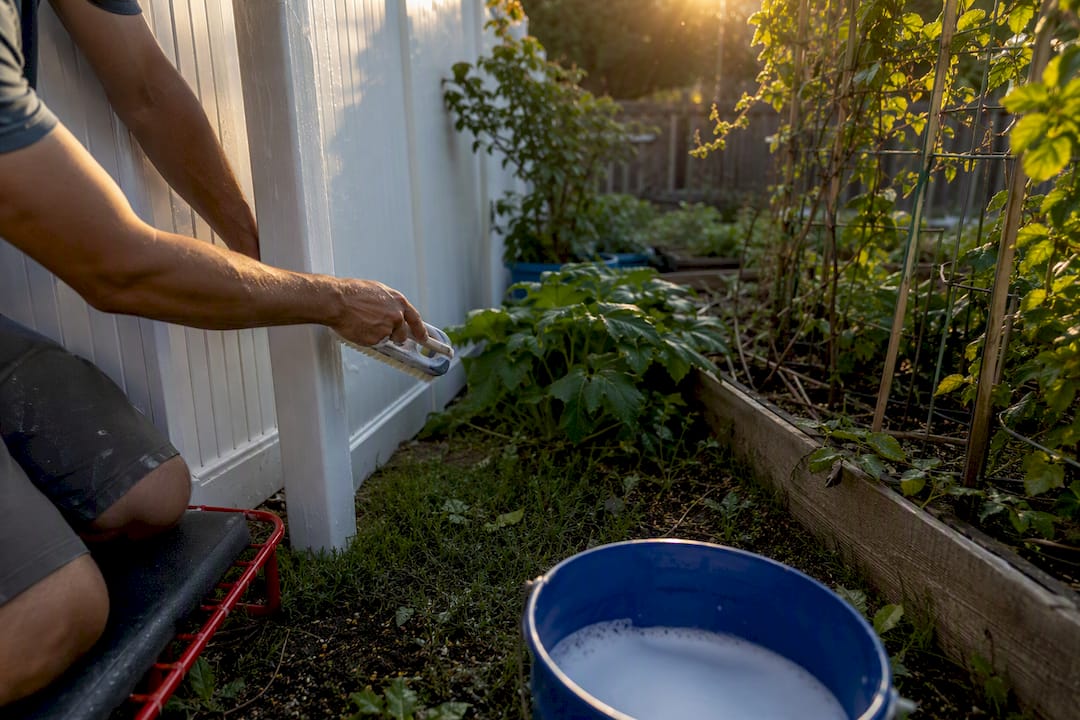
Pick a cool, overcast day if you can. Direct sun makes cleaner dry too fast, which tends to leave streaks instead of a clean rinse. Once you’ve got the right conditions, work through the fence methodically rather than jumping between panels.
- Pre-rinse the entire fence from top to bottom with your hose to knock off loose dirt, cobwebs, and dust before any soap touches the surface.
- Mix your cleaner. About a quarter cup of dish soap per gallon of warm water handles routine grime on most fences.
- Work in 3 to 4-foot sections, starting at the top rail and moving down. This keeps drips from re-dirtying a spot you already cleaned.
- Scrub gently with your soft brush, using circular motions rather than hard back-and-forth strokes that can burnish the vinyl’s finish.
- Pay close attention to gate hardware and post bases, where grime, grass clippings, and splash-back mud tend to collect and get overlooked.
- Rinse thoroughly, again working top to bottom so soap doesn’t dry on lower panels while you’re still working up high.
- Let the fence dry fully, then inspect for any marks that survived the wash. Spot-treat only what’s left, rather than re-scrubbing the whole thing.
This method mirrors what most fence manufacturers recommend: a hose, a soft brush, and mild soap handle the vast majority of buildup without any risk to the material.
Pro Tip: Clean the shaded side of the fence first. It usually holds more moisture and grows more mildew, so tackling it while your cleaner and energy are fresh saves you a second trip back.
How Do You Remove Algae, Mildew, Rust, and Other Stains?
Different stains need different chemistry, and using the wrong one can do more harm than the stain itself.
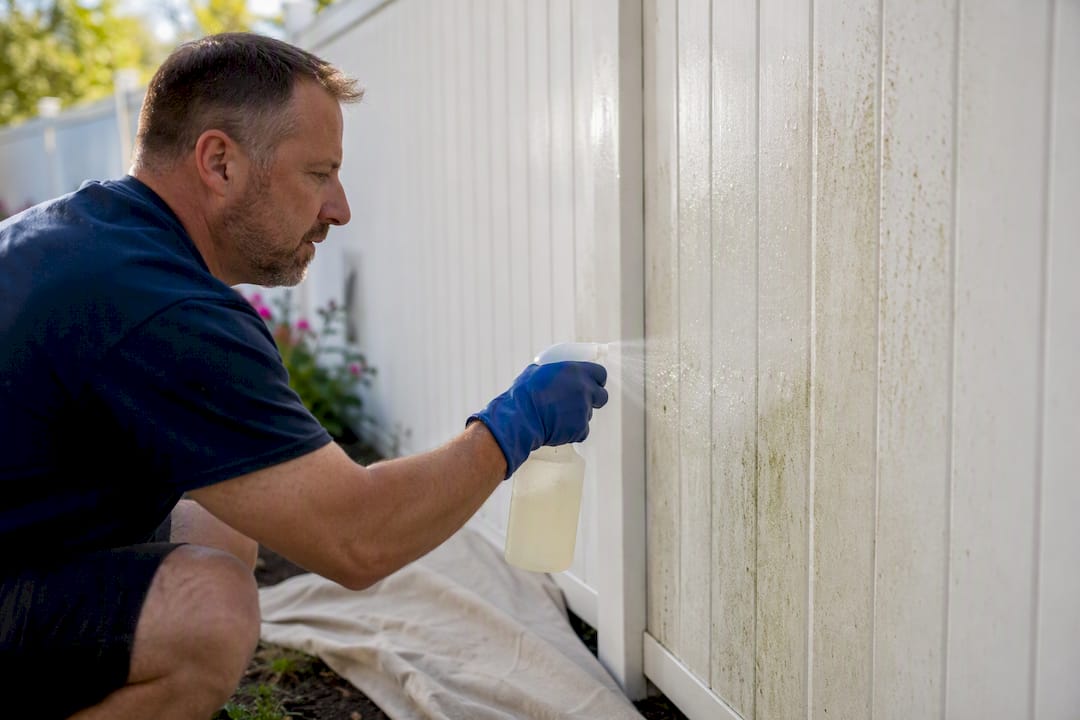
Algae and mildew respond well to oxygen bleach mixed per the label directions. If you’re dealing with a stubborn green film and the fence is white, a stronger option is one part household chlorine bleach to 5 to 10 parts water. Test it on a hidden panel first. Chlorine can leave patchy discoloration on colored vinyl, so it’s not worth the risk on anything but white. Let the mix dwell for 5 to 15 minutes, scrub lightly, then rinse the area and any nearby plants thoroughly.
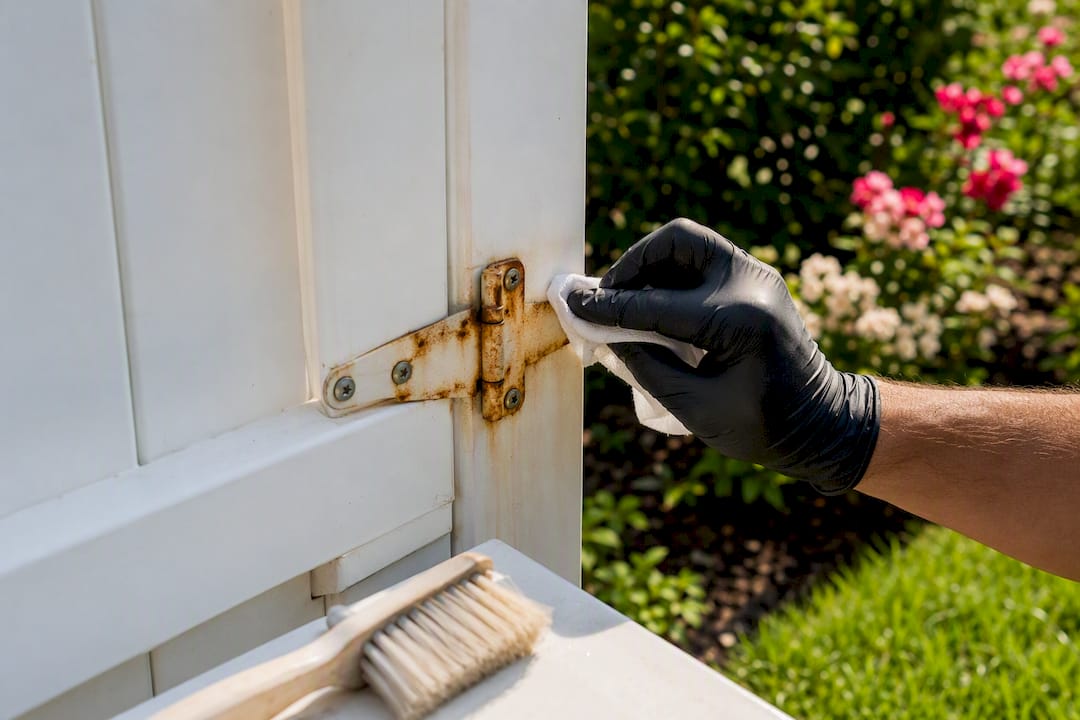
Rust stains near hinges or fasteners usually respond to an oxalic-acid cleaner or a CLR-type product. Apply it to a cloth rather than pouring it directly on the vinyl, keep the dwell time short, and rinse immediately. If the same hardware keeps rusting and staining the panel below it, swapping it for stainless steel solves the problem at the source instead of just masking it.
Paint, tar, and tree sap call for a plastic scraper to lift the bulk of it, followed by a small amount of isopropyl alcohol or Goo Gone worked in with a cloth. Go sparingly here. Harsh solvents and paint thinners degrade the vinyl’s surface finish, making it rougher and more prone to grabbing dirt in the future. Finish with a soap-and-water rinse to clear any residue.
Is It Okay to Pressure Wash a Vinyl Fence?
Yes, but treat it as a specialty tool rather than your default option. High pressure and narrow “turbo” nozzles can etch the surface or crack aging panels, which is why most cleaning guides steer everyday homeowners toward a hose and brush first.
If you do pressure wash, follow this technique:
- Apply your cleaner with the machine’s low-pressure soap nozzle, not the high-pressure tip.
- Let the cleaner dwell for a few minutes so it can break down grime on its own.
- Rinse top-down using a wide-angle tip, keeping the wand 12 to 18 inches from the surface and constantly moving.
- Skip hot water. Water above 140°F can soften PVC and warp panels over time.
- Never park the nozzle in one spot, even for a second. That’s where etching happens.
Watch out for this: narrow zero-degree nozzles concentrate enough force to gouge a groove into vinyl siding or fencing in seconds. If your machine only came with a turbo tip, buy a wide fan attachment before you touch the fence.
Protect nearby landscaping by pre-wetting plants and covering delicate beds with a tarp. If your fence runs a long distance, sits two stories high, or has started going brittle with age, that’s a strong signal to call a soft-wash professional instead of risking a crack you’ll be looking at for years.
How Often Should You Clean a Vinyl Fence?
Two full washes a year keep most fences looking new, according to general maintenance guidance for vinyl fencing. If you live somewhere humid or heavy with tree pollen in spring, plan on a third rinse, or just hose down the fence whenever you notice a yellow-green dusting settle on it.
A few habits keep buildup from returning as fast:
- Trim back shrubs and vines so they’re not holding moisture against the panels.
- Redirect sprinkler heads that spray the fence directly. Constant dampness is what feeds algae and mildew in the first place.
- Replace any rusting screws or hinges with stainless steel before they stain the vinyl below them.
- Consider a UV protectant product if your fence gets full sun exposure and you want to slow yellowing.
On cost, DIY supplies typically run $20 to $40 per season, while professional cleaning for a typical 150-foot fence often falls in the $150 to $400 range. If you’ve got the time and a fence in good shape, DIY pencils out. If you’re dealing with heavy staining, a long fence line, or you just don’t want to spend a Saturday scrubbing panels, hiring out starts to make more financial sense than the math suggests at first glance.
What Do Professional Soft-Wash Crews Do Differently?
Soft-washing swaps high pressure for the right chemistry and low-pressure application, which matters most on fences with aging or brittle vinyl where a pressure washer’s force could crack a panel. It’s also the better call for heavy, years-deep buildup that a hose and brush would take hours to work through.
If you’re vetting a contractor, ask these questions before signing anything:
- What cleaning chemistry do they use, and is it biodegradable?
- What’s the maximum PSI their equipment runs, and do they use wide-angle tips on vinyl?
- How do they protect landscaping, and do they pre-wet plants before applying cleaner?
- Are they insured, and does their contract cover accidental damage?
A contractor worth hiring should also contain runoff so cleaner doesn’t pool in your lawn, and finish with a full post-job rinse of both the fence and surrounding plant beds.
Our Take: Most Vinyl Fence Damage Is Self-Inflicted
Here’s what the research actually points to: vinyl fences rarely fail because of dirt. They fail because someone reached for the wrong tool trying to remove that dirt fast. A narrow pressure washer tip, undiluted bleach on colored vinyl, or a paint thinner meant for a totally different surface does more lasting damage than three seasons of algae ever would.
The conventional advice online leans hard on pressure washing as the default fix, probably because it looks satisfying in a video. In practice, it’s the riskiest tool on this list and the one most likely to leave you with a groove, a crack, or a discolored patch you can’t undo. A hose, a soft brush, and patience handle most jobs just fine.
If there’s one thing to prioritize, it’s testing every product and every technique on a hidden section first. Thirty seconds behind a shed panel can save you from redoing an entire fence line, or from calling a fencing contractor for a repair job that a little more caution would have avoided entirely.
— Luis T
Ready to Book Vinyl Fence Cleaning in the Capital Region?
If your fence has gone past what a hose and brush can handle, that’s exactly the gap Capital Pro Pressure Washing fills. Instead of guessing at bleach ratios or renting a pressure washer you’ll use once a year, you get a soft-wash crew that already knows the safe chemistry and pressure limits for vinyl, and can add a sealing service if your fence needs more than a cleaning.

A typical visit starts with an inspection of your fence’s condition, gate hardware, and any nearby landscaping that needs protecting before work begins. The crew pre-wets plants, applies a soft-wash solution suited to mold and algae, and finishes with a controlled low-pressure rinse instead of a high-pressure blast. That approach is also how Capital Pro Pressure Washing handles house washing across the same properties, so your fence and siding end up matching in cleanliness rather than one looking newly washed next to a still-dingy fence line.
Capital Pro Pressure Washing serves homeowners throughout Albany, Schenectady, Saratoga, Rensselaer, and the surrounding Capital Region. If your fence is due for a wash or you’re dealing with stains that haven’t budged, request a fence cleaning estimate and get a straight answer on cost and timing before committing to anything.
Sources
- How to Clean Vinyl Fences and Railings Without Damaging Them
- How to Clean a Vinyl Fence | Simple Green | US
- How to Clean Vinyl Fence With Pressure Washer: 2026 Guide - Motor For Nerd
FAQ
How do I make an old vinyl fence look new again?
A thorough two-step wash, soap and water first, then a targeted oxygen bleach treatment on any remaining mildew or algae, restores most fences without needing replacement. For fences with years of embedded grime, a professional soft-wash treatment often gets closer to the original finish than DIY scrubbing alone.
Is it okay to pressure wash a vinyl fence?
Yes, as long as you use a wide-angle nozzle, keep the wand 12 to 18 inches from the surface, and avoid hot water above 140°F. Narrow turbo tips and high pressure are the main causes of cracked or etched vinyl panels.
How do you clean green algae off a white vinyl fence?
Apply oxygen bleach per the label, or a diluted mix of one part chlorine bleach to 5 to 10 parts water since chlorine is safe on white vinyl but risks patchy discoloration on colored panels. Let it sit 5 to 15 minutes, scrub gently, and rinse thoroughly.
How do you clean a white vinyl fence without a pressure washer?
A garden hose, soft-bristle brush, and a mix of about a quarter cup of dish soap per gallon of warm water handles routine dirt and light staining. For algae or mildew, follow up with an oxygen bleach treatment and a full rinse, working top to bottom the entire time.
When should I hire a professional instead of cleaning it myself?
Call a soft-wash pro like Capital Pro Pressure Washing if your fence runs long distances, shows heavy years-deep buildup, or has started to feel brittle with age, since a DIY pressure washer mistake on aging vinyl is hard to reverse.
Recommended
Services Related To This Article
Need a quote in the Capital Region?
Fast, free estimates from a local, licensed & insured team.
