
Verify Veteran-Owned Contractors in 10 Minutes — Capital Region
Start with the Dynamic Small Business Search (DSBS) and Sam to confirm any contractor’s certified status, then widen your search to VA Vets First listings and regional veteran-business directories for options beyond the federal system. One caveat matters more than any database: plenty of excellent veteran-owned contractors skip federal certification entirely, since it’s built for government contracting, not residential jobs. Ask for documentation instead of assuming.
Quick Summary:
- Many veteran-owned contractors operate without federal certification, so verification through documentation is essential regardless of listing claims.
- Checking DSBS and SAM.gov provides official confirmation, but contractors can self-report, making in-person verification and documentation crucial.
- Certification as a VOSB or SDVOSB primarily applies to government contracts and offers benefits like set-asides, not necessarily to residential projects.
- Verifying veteran ownership involves requesting proof like DD-214, VA cards, insurance certificates, and recent references before hiring.
- Experienced veteran businesses often demonstrate longevity and a documented work history, which adds credibility beyond certification status.
Table of Contents
- Where to Search for Verified Veteran-Owned Contractors
- What Certification Means: VOSB vs SDVOSB
- How Do You Verify a Veteran-Owned Contractor?
- What to Actually Expect From a Veteran-Owned Contractor
- Hiring Checklist: Questions to Ask Before You Sign
- What Verifiable Proof Looks Like: A Real-World Example
- A Note on Trust and Verification
- A Veteran-Owned Option for Exterior Cleaning in Your Area
- Sources
- FAQ
Where to Search for Verified Veteran-Owned Contractors
Finding a verified veteran-owned contractor means knowing which database to trust and which one just collects self-reported claims. Here’s how the main resources stack up.
- Dynamic Small Business Search (DSBS): This is the system of record for VA and SBA verification purposes. If a firm claims VOSB or SDVOSB status, DSBS is where a contracting officer, or you, confirm it’s real. VA guidance now directs users here rather than the older VetCert portal.
- SAM.gov: Every business that wants federal work registers here. You can check registration status, active/inactive flags, and whatever socio-economic category the business reports. The catch: much of this is self-reported, so treat it as a starting point, not proof.
- VA Vets First verification: Historically, this program vetted firms specifically for VA contracts and reserved at least 7% of VA contracting dollars for certified veteran-owned businesses. Firms verified under this legacy system are being folded into the DSBS structure.
- National and regional veteran-business directories: Groups like veteran chambers of commerce and trade-specific directories list contractors who may not chase federal certification at all but still verify military service through documentation.
- Local contracting networks: Trade associations and referral networks in your area often flag veteran ownership on member profiles, though verification rigor varies widely.
When searching DSBS, filter by NAICS code for your trade and by state to narrow results fast. Most listings let you export a business’s profile summary, which is worth saving before you call.
What Certification Means: VOSB vs SDVOSB
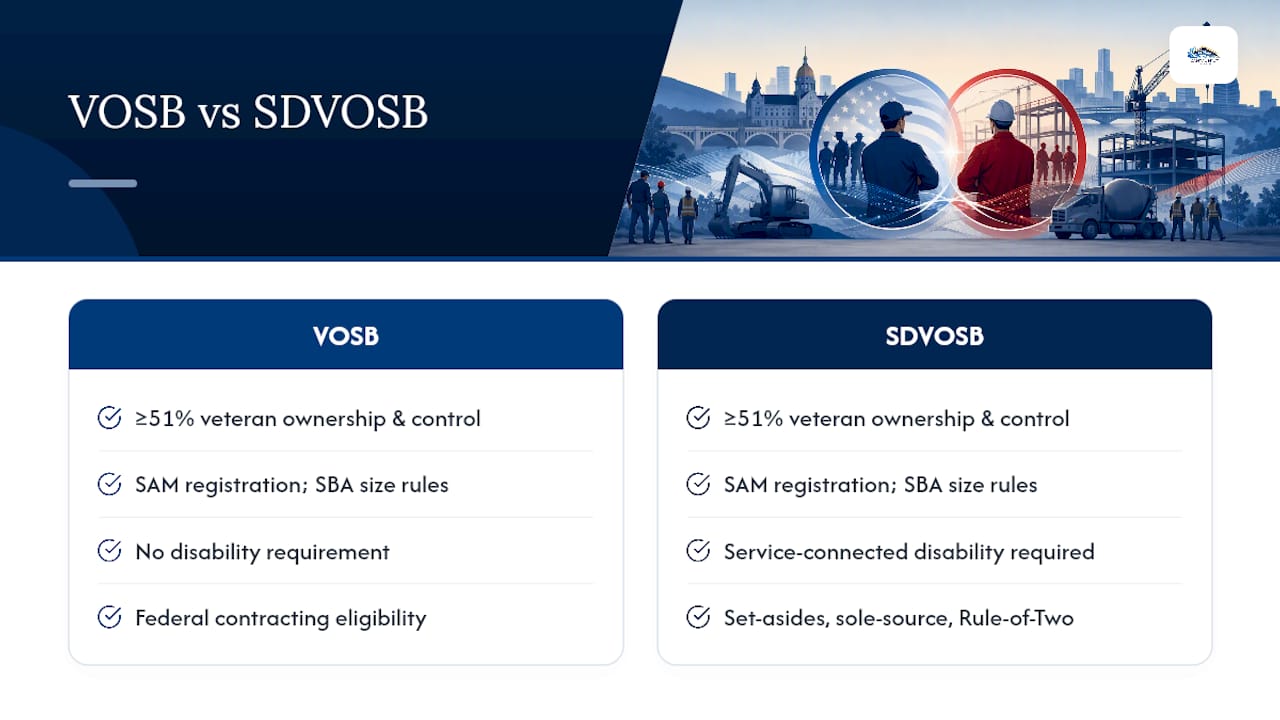
Certification confirms two things: at least 51% veteran ownership and control, and current SAM registration under SBA size standards for that business’s industry. That’s the baseline for a Veteran-Owned Small Business (VOSB).
Service-Disabled Veteran-Owned Small Business (SDVOSB) status adds a layer. It’s reserved for businesses owned and controlled by veterans with a service-connected disability, and it unlocks federal set-asides, sole-source contract authority, and priority under the “Rule of Two” when at least two qualified SDVOSBs could compete for a contract. The Veteran Small Business Certification program lays out these mechanics in detail.
Here’s the part homeowners tend to miss: none of this applies to your kitchen remodel or driveway cleaning job. Federal certification exists for firms chasing government contracts, not residential clients. A licensed, insured, veteran-owned contractor who never touched a federal bid can still do outstanding work.
What has changed recently is where you check. Federal Register rulemaking, effective January 1, 2024, tightened certification verification requirements and pushed contracting officers toward SAM and DSBS instead of the legacy VetCert interface.
How Do You Verify a Veteran-Owned Contractor?
Verification takes ten minutes if you follow a set order.
- Search DSBS and SAM.gov first. Note the exact business name, SAM registration status, and any socio-economic claims listed.
- Ask for documentation. Request a SAM registration screenshot, the DSBS listing URL, or VA verification confirmation, along with a current certificate of insurance (COI).
- Check local credentials. Confirm state or municipal licensing, pull recent references, and ask to see portfolio photos from jobs similar to yours.
If a contractor claims certification but can’t produce a DSBS link or SAM screenshot on request, that’s a red flag worth pressing on. VetCert’s own FAQ notes that many SAM entries are self-reported, which is exactly why documentation beats a website badge.
Pro Tip: Save five minutes by asking the contractor to text you their DSBS or SAM.gov listing link before the first phone call. If they can’t locate it in under a day, verify everything else twice as carefully.
What to Actually Expect From a Veteran-Owned Contractor
Veteran-owned businesses often bring habits shaped by military service: structured project management, clear communication up the chain, and a stronger sense of accountability to the community they serve. Those traits show up consistently in how these businesses operate.
What veteran ownership does not guarantee is a specific trade license, particular warranty terms, or competitive pricing. Those still need separate verification. Weigh veteran-owned status as one strong signal among several, not a substitute for checking licenses, insurance, and references directly.
Hiring Checklist: Questions to Ask Before You Sign
Run through this list before any contract gets signed:
- Proof of veteran ownership (DD-214 excerpt, VA card, or equivalent documentation)
- SAM/DSBS links if the contractor claims federal certification
- Active business license for your state or municipality
- Current insurance and a certificate of insurance naming you or your property
- At least three recent references you can actually call
- Written estimate with itemized scope
- Defined start and end dates
- Payment schedule tied to project milestones, not full payment upfront
- Written warranty terms on labor and materials
Ask directly: “Can you send me your last three completed jobs with contact info for those homeowners?” and “What happens if the project runs past the agreed end date?” A contractor who answers both without hesitation and follows up with documentation the same day is usually one worth hiring. One who goes quiet after the second question is telling you something too. For seasonal timing on top of hiring logistics, this seasonal home repair checklist for veterans is a useful companion resource.
What Verifiable Proof Looks Like: A Real-World Example
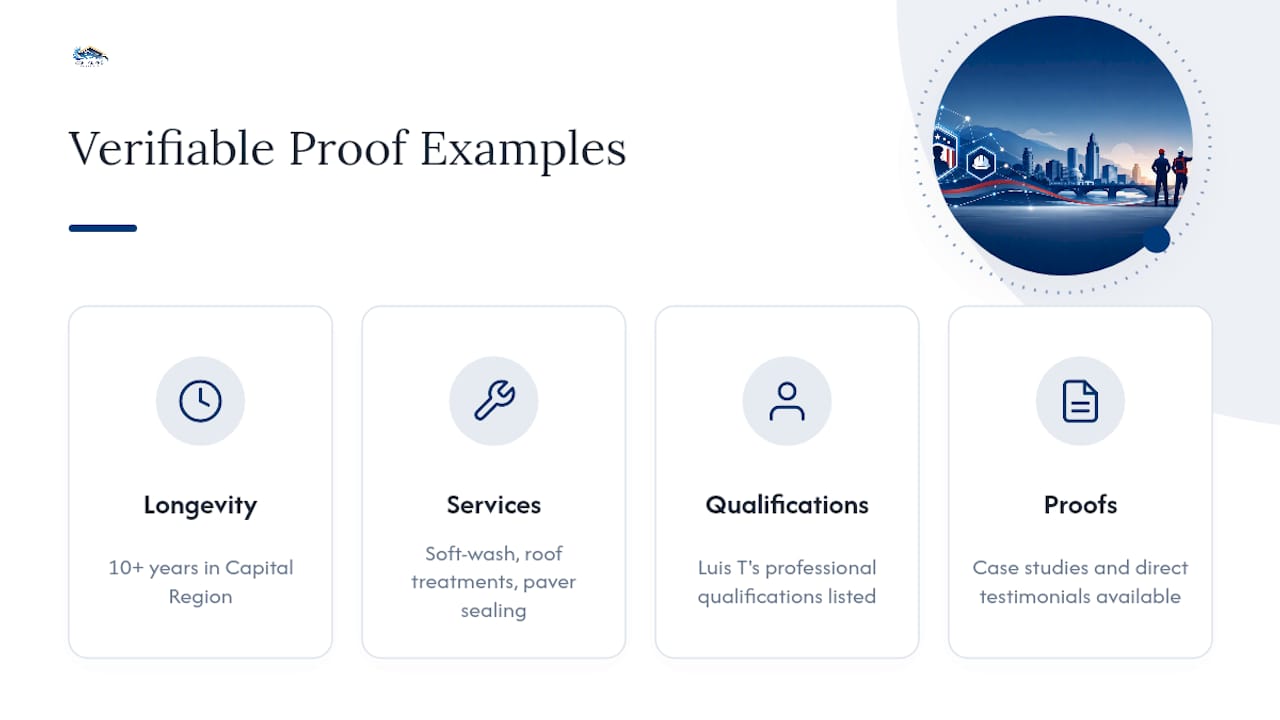
A veteran-owned company has operated in New York’s Capital Region for more than 10 years, offering soft-wash house cleaning, roof treatments, and paver sealing. That kind of longevity, combined with a documented service list, is exactly the type of proof a homeowner should expect from any contractor claiming veteran ownership.
, and all serve the same purpose: they let a stranger check the claim without taking it on faith. Ask any contractor you’re considering for the same things, in writing, before you commit.
A Note on Trust and Verification
Verification isn’t bureaucratic overkill. It protects your money and it protects the reputation of veterans genuinely building something honest. Certification is a useful filter when it applies, but plenty of skilled, trustworthy contractors never bother chasing it. Ask for proof either way, and judge the work in front of you.
— Luis T
A Veteran-Owned Option for Exterior Cleaning in Your Area
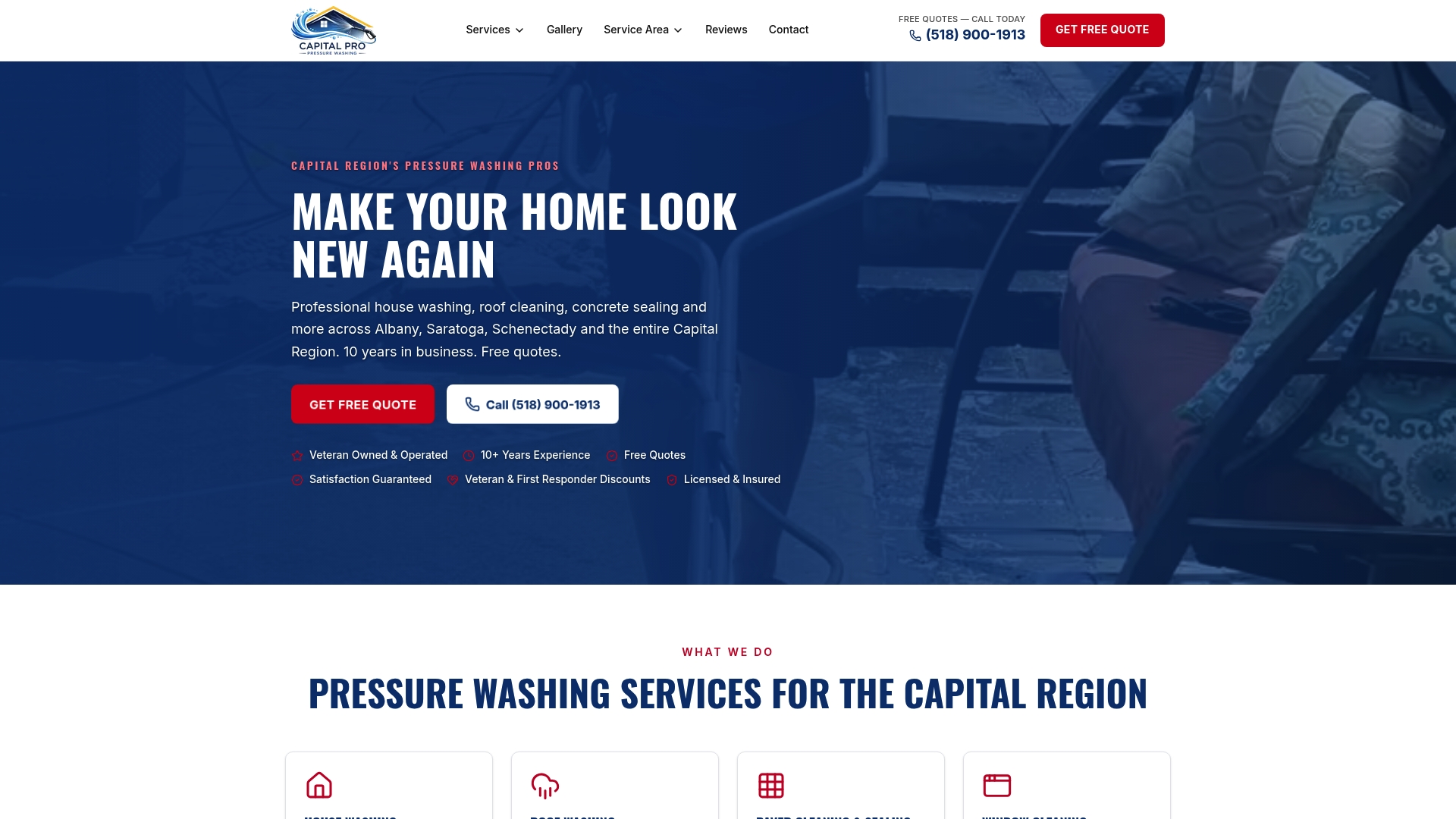
If you’ve been searching directories for a verified veteran-owned contractor for exterior work, you can find a documented option instead of a cold-call gamble. One company handles house washing, soft-wash roof cleaning, and paver cleaning and sealing across the Capital Region.
You can request the same verification you’d ask of any contractor on this list: proof of veteran ownership, a current COI, and references from recent jobs. Browse the full range of services to see what fits your property, or check the pricing guide to compare against other quotes you’ve collected. When you’re ready, request an estimate and ask directly for documentation. It’s the same standard this guide recommends for every contractor you consider.
Sources
- Veteran Small Business Certification
- Veteran Small Business Certification Changes
- Federal Acquisition Regulation: Certification of Service-Disabled Veteran-Owned Small Businesses | 89 FR 101828
FAQ
What Are the Best Veteran-Owned Companies to Hire?
There’s no single ranked list, but the strongest options are ones you can verify directly through DSBS, SAM.gov, or documentation the contractor provides, rather than relying on marketing claims alone.
Can a Veteran Get an LLC for Free?
Some states waive certain filing fees for veteran-owned LLCs, and veteran business centers often offer free formation guidance, but requirements and fee waivers vary by state and should be confirmed with your state’s business filing office.
Can a 100% Disabled Veteran Own a Business?
Yes. Disability rating has no bearing on business ownership eligibility, and a 100% disabled veteran can qualify for SDVOSB certification if they meet the standard 51% ownership and control requirements.
Is It Worth Getting SDVOSB Certified?
If you’re pursuing federal contracts, yes. Certification unlocks set-asides and sole-source authority under the Rule of Two. If your business serves residential customers exclusively, certification typically adds little practical value.
Need a quote in the Capital Region?
Fast, free estimates from a local, licensed & insured team.
