
Underground Downspout Clogged: What Homeowners Should Check First

When a downspout clogs, the problem is almost always visible and above ground: compacted leaves at the top opening, a debris plug at an elbow joint, or a packed section just above the ground outlet. That is the problem this guide addresses. Run the hose flush test first: push a garden hose into the top of the downspout and open it fully. Clear downspouts drain within a few seconds. If water backs up, overflows at the top, or trickles out the bottom, you have a blockage.
A few quick facts worth knowing before you call anyone:
- Gutters should slope at 1/4 inch per 10 feet toward the downspout. If water pools mid-run after flushing, pitch is the issue, not the downspout.
- Capital Pro Pressure Washing, a veteran-owned exterior cleaning company with 10+ years serving New York’s Capital Region, handles exactly this type of visible downspout blockage as part of its gutter cleaning service.
- A contractor who is BBB-accredited and carries proof of insurance is the right call when the hose test fails and DIY steps don’t move the clog.
Key Takeaways
A clogged downspout caught early costs a fraction of the fascia and foundation repairs a deferred blockage causes.
| Point | Details |
|---|---|
| Run the hose flush test first | Push a garden hose into the downspout top; clear pipes drain within seconds. |
| Try one safe DIY step | Remove the strainer, hand-scoop debris, and flush before calling a contractor. |
| Document before you call | Photos, hose test result, and snake depth help the crew arrive prepared. |
| Prevent with twice-yearly cleanings | Schedule gutter cleaning at least twice a year, plus after heavy leaf fall. |
| Capital Pro Pressure Washing | Provides full downspout clearing with before/after photos and a satisfaction guarantee in New York’s Capital Region. |
Table of Contents
- How do you know the problem is a clogged downspout?
- Safe DIY troubleshooting steps before you call a contractor
- When should you stop DIY and call a pro?
- What does a professional contractor actually do on-site?
- Questions to ask before you hire and red flags to watch for
- How to prevent downspout clogs from coming back
- Diagnosing and clearing underground downspout drain lines
- DIY methods for clearing a buried drain line
- What causes underground downspout drain lines to clog?
- Signs that point to a buried drain line problem
- Why prompt action on downspout clogs matters more than most homeowners realize
- Capital Pro Pressure Washing handles downspout clogs the right way
- Sources
- FAQ
How do you know the problem is a clogged downspout?
Homeowners often blame the whole gutter run when the actual culprit is a single blocked downspout. The signs are specific once you know what to look for:
- Water overflows at the downspout entrance while the rest of the gutter run drains normally
- Peeling paint or dark staining on the fascia board directly behind the downspout
- Water cascades over the gutter lip at the downspout end during rain, even when the gutter itself looks clear
- Yard pooling right at the ground outlet after a storm, with no visible flow from the spout
The hose flush test confirms it. Run the hose at full pressure into the top of the downspout for 30 seconds. A clear pipe drains immediately. Slow drainage or backflow points to a blockage somewhere in the vertical run or at an elbow joint.
Pro Tip: Tap the outside of the downspout with your knuckle while the hose runs. A hollow sound means the pipe is clear at that point. A dull, dense sound means debris is packed there. Work your way down the pipe to locate the clog depth before calling a contractor — that information cuts diagnostic time on-site.
Safe DIY troubleshooting steps before you call a contractor
These steps are worth trying once, safely. Stop after two attempts if the clog holds.
- Set up the ladder correctly. Use a ladder stabilizer hooked over the gutter edge, not leaning against the pipe itself. Maintain three points of contact at all times. Wear gloves and safety glasses.
- Remove the top strainer or leaf guard at the downspout inlet and set it aside.
- Hand-scoop visible debris from the gutter directly above the downspout opening using a gutter scoop or gloved hand.
- Flush from the top with a garden hose fitted with a jet nozzle. Typical residential hose pressure runs 40–80 PSI, enough to dislodge a fresh debris plug.
- Feed a plumber’s snake (25–50 ft manual model) from the top if flushing alone fails. Rotate slowly; don’t force it past resistance.
- Try bottom-up vacuum extraction if you can safely reach the ground outlet elbow. A wet/dry shop vacuum rated at 5.5+ HP with a sealed crevice adapter can pull a shallow clog downward when top-down methods stall.
- Reassemble and retest with the hose. If flow is steady, you’re done.
Tools to have on hand or describe to your contractor: a gutter scoop, a jet-nozzle garden hose, a 25–50 ft manual plumber’s snake, and a wet/dry vacuum with a crevice adapter.
Do not use a powered auger or a high-pressure hydro-jet as a DIY step. Both can split older aluminum downspouts or blow apart sealed elbow joints.
Pro Tip: If the snake hits resistance within the first few feet and won’t advance, stop. That resistance often means a crimped elbow or a corroded section — forcing it risks permanent pipe damage. Note the depth and tell the contractor exactly where it stopped.
When should you stop DIY and call a pro?
Some situations call for a trained crew from the start. Stop and schedule a contractor when:
- The clog resists both flushing and snaking after two careful attempts
- You notice loose, separated, or visibly corroded downspout joints
- The fascia board behind the downspout feels soft or shows rot
- The downspout outlet is at multi-story height or on a steep roofline
- Standing water persists at the ground outlet hours after rain stops
- Any section of the downspout is missing or has visible holes
When you call, have your hose test result ready: how long you ran it, whether water backed up or just slowed, and the depth where the snake stopped (if you tried one). A reputable contractor, like the crew at Capital Pro Pressure Washing, uses that information to arrive with the right equipment rather than diagnosing blind. According to professional gutter service protocols, a good crew will communicate blockage location and depth clearly and will not surprise you with unscheduled follow-up charges.
What does a professional contractor actually do on-site?
A standard downspout clearing visit follows a four-step sequence:
- Roofline and gutter inspection: The crew checks pitch, joint condition, and downspout attachment before touching anything.
- Hand debris removal: Technicians scoop and bag debris from the gutter run by hand, not just blow it around.
- Pressurized downspout flushing: Top-down flushing resolves a large majority of clogs; stubborn blockages get a plumber’s snake or bottom-up vacuum extraction.
- Flow test and photo documentation: The crew runs a final hose test and photographs the cleared outlet before leaving.
For elbow-joint clogs, a technician will disassemble the fitting, clear it by hand or snake, reseal the joint with gutter sealant, and secure it back in place. Loose fittings get re-screwed or re-riveted at the same visit.
| Step | Method | Typical Duration |
|---|---|---|
| Inspection | Visual + tap test | 5–10 min |
| Debris removal | Hand-scoop and bag | 10–20 min |
| Downspout flush | Hose or pressure assist | minutes per spout |
| Flow test and photos | Hose + camera | 5 min |
A full gutter cleaning service typically includes all four steps. Pricing varies by system size and accessibility; ask for an itemized quote that lists downspout flushing and flow testing as separate line items.
Questions to ask before you hire and red flags to watch for
Ask every contractor these four questions before booking:
- Can you provide a certificate of insurance before the visit?
- Does your quote include downspout flushing and a flow test at every outlet?
- Do you document work with before/after photos and a written report?
- Is there a satisfaction or no-clog guarantee, and what does it cover?
Per established hiring guidance, verifying insurance and insisting on an itemized quote are the two steps homeowners most often skip — and the two that matter most when something goes wrong.
Red flags to walk away from:
- Crew refuses to provide a certificate of insurance
- Quote has no line item for downspout flushing or flow testing
- Technician suggests skipping hand-clearing and going straight to pressure only
- No mention of before/after photos or written documentation
Pro Tip: Ask for a short written warranty on the cleared downspout — even a 30-day no-clog guarantee. Keep it with your home maintenance records alongside the before/after photos.
How to prevent downspout clogs from coming back
Two cleanings a year handle most homes. Add a third visit after a heavy fall leaf drop or a severe storm if large trees overhang the roofline. Ask your contractor to include a full downspout flush at every cleaning, not just a visual check.
Specific steps worth budgeting for:
- Install gutter guards or inlet strainer screens at downspout openings to block leaf debris before it compacts
- Add a splash block or 4-foot extension at the ground outlet to carry water away from the foundation
- Have a contractor re-seal any loose elbow joints annually; a dripping joint collects debris faster than a sealed one
- Trim branches that hang directly over gutter runs; a single overhanging oak can fill a downspout in one storm
Small investments in gutter services from a qualified exterior contractor typically cost far less than repairing fascia rot or foundation water intrusion caused by years of ignored blockages.
Diagnosing and clearing underground downspout drain lines
When above-ground downspouts are clear but water still pools at the outlet, the buried drain line connecting the spout to a catch basin or daylight outlet may be blocked. This is a different problem from a visible downspout clog and sits outside standard gutter-cleaning scope.
Diagnosis starts with a sewer inspection camera fed into the pipe at the ground-level cleanout port or at the downspout base. The camera identifies the blockage type and exact depth. Without a camera, you are guessing. Inspection ports installed at pipe bends give contractors and plumbers direct access without excavation.
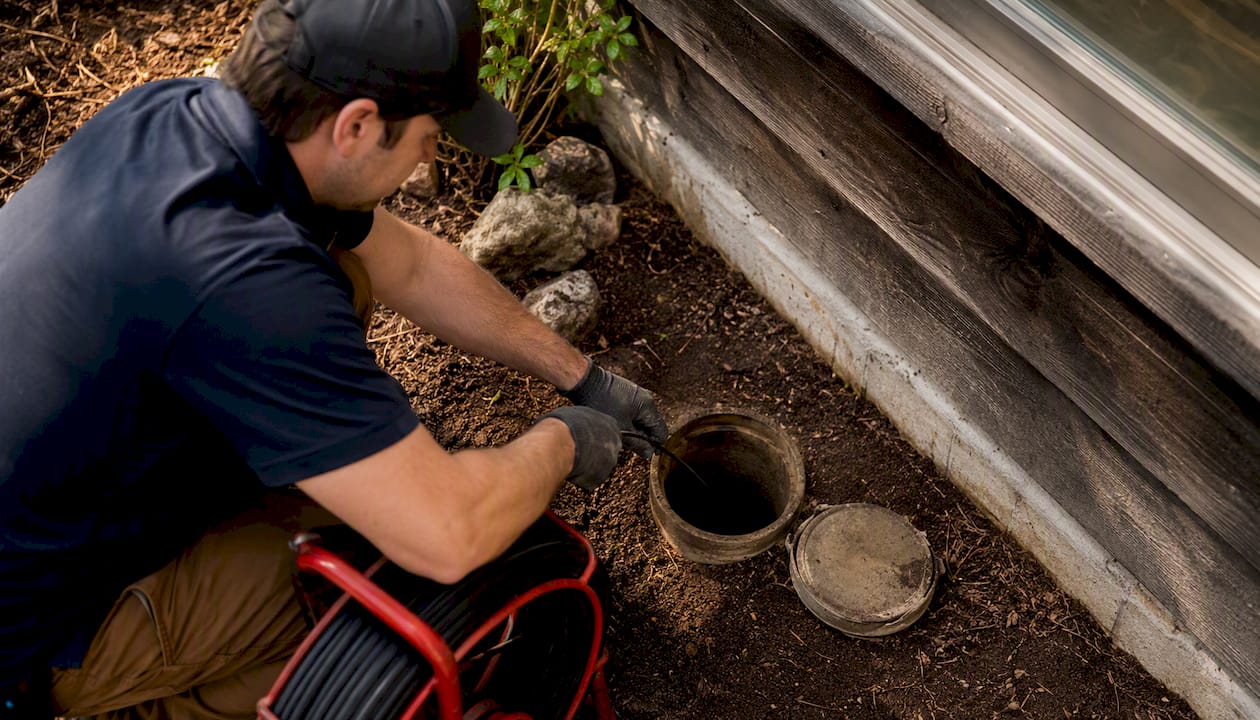
Standard gutter contractors flush downspouts only to ground level; work beyond that point requires a plumber or drain specialist with the right equipment. If your contractor confirms the above-ground pipe is clear but drainage is still slow, ask for a referral to a licensed plumber for the buried section.
DIY methods for clearing a buried drain line
Attempting to clear a buried drain line yourself carries more risk than clearing a visible downspout, but a few methods are within reach for a careful homeowner.
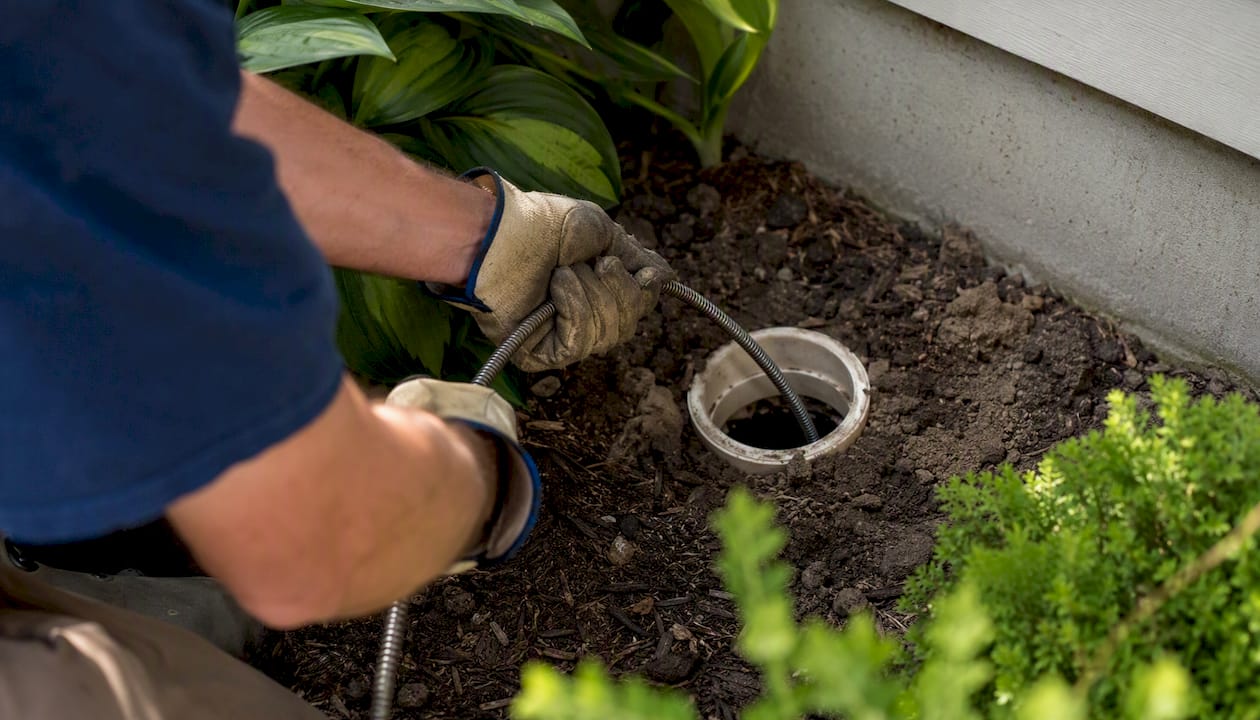
A manual drain snake (50–100 ft) fed from the cleanout port can break up soft debris clogs within the first 20–30 feet of pipe. Rotate slowly and pull debris back out rather than pushing it deeper. Wear waterproof gloves; buried drain lines carry sediment, organic matter, and sometimes standing water.
A garden hose bladder attachment (also called a drain bladder or blow bag) connects to a standard hose, seals inside the pipe, and releases a pressurized burst of water. It works on soft clogs and is safer than a full hydro-jet for a homeowner. Do not use a bladder on cracked or visibly damaged pipe.
Safety rules that apply to both methods: never work alone near an open cleanout in a confined-space situation, never use a powered auger without training, and stop immediately if you feel the snake catch on something rigid — that resistance may be a root intrusion or a collapsed pipe section, both of which need professional equipment.
What causes underground downspout drain lines to clog?
Three causes account for most buried drain line blockages:
Root intrusion is the most common. Tree and shrub roots follow moisture and can penetrate pipe joints within a few years of planting. Once inside, roots form a mesh that catches sediment and debris until the pipe is fully blocked.
Soil settling shifts pipe sections out of alignment over time, creating low spots where sediment accumulates. A pipe that once drained freely can develop a standing-water pocket that eventually turns into a solid plug.
Pipe damage from freeze-thaw cycles, ground movement, or age causes cracks and collapses. Older corrugated plastic drain pipe is especially prone to crushing under soil load. A collapsed section cannot be cleared with a snake; it needs replacement.
Sediment buildup from fine particles washing off the roof compounds all three causes. Even a clear pipe accumulates a silt layer over several seasons if it is never flushed.
Signs that point to a buried drain line problem
The clearest sign is yard pooling directly above or near the buried pipe route after rain, even when the above-ground downspout is flowing freely. Other indicators:
- The downspout drains at normal speed during the storm but water backs up minutes later, suggesting the buried pipe is full and has nowhere to go
- Slow drainage at the ground outlet that persists after a contractor has confirmed the above-ground pipe is clear
- Soft, sunken ground along the pipe route, which can indicate a collapsed section or a leak feeding the surrounding soil
- A catch basin or yard drain that fills with water and does not empty between rain events
Any of these signs warrants a camera inspection before attempting any clearing method. Guessing the cause and snaking blindly risks pushing debris into a collapse or damaging a root-filled section further.
Why prompt action on downspout clogs matters more than most homeowners realize
Most homeowners treat a slow downspout as a minor nuisance. After 10+ years in exterior cleaning, the pattern I see repeatedly is that a $150 downspout clearing, deferred for one season, becomes a $1,200 fascia replacement and a foundation drainage correction the following spring. Water that cannot exit through the downspout backs up into the gutter, sits against the fascia board, and works its way behind the soffit. By the time paint peels or wood feels soft to the touch, the damage is already weeks old.
The hose flush test takes three minutes. Running it after every heavy storm season, and scheduling a professional gutter cleaning at least twice a year, is genuinely the cheapest home maintenance habit most people skip. Downspouts are the exit point for every gallon of rain your roof sheds. When that exit is blocked, everything upstream pays the price.
Capital Pro Pressure Washing handles downspout clogs the right way
Blocked downspout draining your patience? Capital Pro Pressure Washing, a veteran-owned and fully insured exterior cleaning company serving Albany County, Schenectady County, Saratoga County, and Rensselaer County, handles the full scope: roofline inspection, hand debris removal, pressurized downspout flushing, elbow-joint disassembly and resealing, and a final flow test with before/after photo documentation. Every visit comes with a written report and a satisfaction guarantee.

No guesswork on scope, no surprise charges. If the clog resists standard methods, the crew tells you exactly what was found and what comes next. Book a house washing and gutter service visit or request a quote directly at Capitalpropressurewashing. Same insured crew, same documented results, every time.
Sources
These sources informed the diagnostic steps, hiring checklist, and contractor scope described in this guide:
- Signs of clogged gutters | Modernize
- How to Fix Clogged Gutters | Lifetime Xteriors
- How to Clean Downspouts (And Underground Drains) | Clean Pro Gutter Cleaning
- How to Hire a Gutter Cleaning Company: Vetting and Questions to Ask | GutterCleaningAuthority
FAQ
How do I know if my downspout is clogged or my gutters are pitched wrong?
Run a garden hose into the downspout top. If water backs up immediately, the downspout is blocked. If water pools mid-gutter run before reaching the downspout, pitch is the issue — gutters should slope 1/4 inch per 10 feet toward the outlet.
Can I clear a clogged downspout myself?
Yes, for shallow clogs. Remove the top strainer, hand-scoop debris, flush with a jet-nozzle hose, and try a 25–50 ft manual plumber’s snake. Stop after two attempts and call a contractor if the clog holds.
What does a professional downspout clearing cost?
Pricing varies by system size and accessibility. Ask for an itemized quote that lists downspout flushing and flow testing as separate line items; a reputable contractor provides this upfront.
What are the signs of a buried drain line clog versus an above-ground downspout clog?
Yard pooling near the pipe route after rain, slow drainage at the ground outlet after the above-ground pipe has been confirmed clear, and soft or sunken ground along the pipe path all suggest a buried line issue rather than a visible downspout blockage.
Does Capital Pro Pressure Washing include downspout flushing in its gutter cleaning service?
Yes. Capital Pro Pressure Washing’s gutter cleaning visits include inspection, hand debris removal, pressurized downspout flushing, elbow-joint resealing where needed, and before/after photo documentation, serving Albany County, Schenectady County, Saratoga County, and Rensselaer County.
Recommended
Need a quote in the Capital Region?
Fast, free estimates from a local, licensed & insured team.
