
Protect Your Yard: Soft Wash Roof Cleaning With Containment
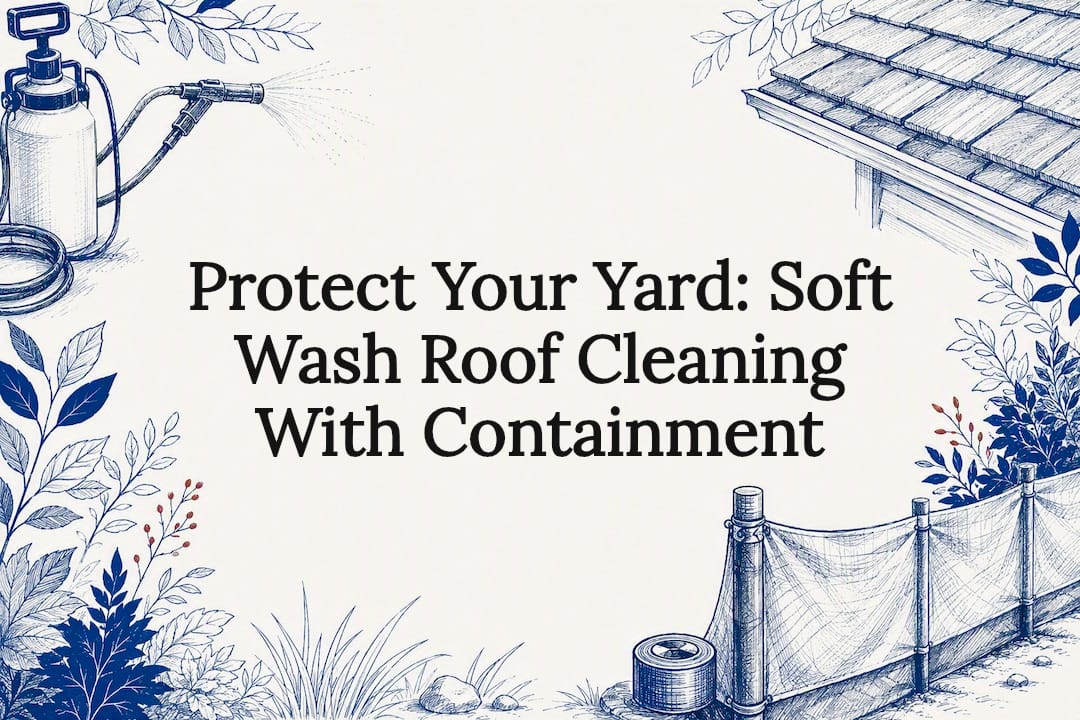
The safest effective method is a soft wash using oxygen-based (sodium percarbonate) cleaners applied with low pressure and runoff containment. This chemistry breaks down algae and moss without the aquatic toxicity of bleach, and it works fast enough that most jobs finish in a single visit. Capital Pro Pressure Washing applies exactly this approach across the Capital Region, pairing the cleaning with containment steps that protect landscaping and storm drains alike.
Quick Summary:
- Oxygen-based cleaners like sodium percarbonate are effective within a 4 to 6-hour window and should be mixed fresh for each job to maintain potency.
- Soft washing using low pressure (around 500 PSI) is recommended over pressure washing, as it prevents shingle damage and warranty voids.
- Proper containment measures, such as redirecting downspouts and using absorbent barriers, are essential to prevent runoff from harming landscaping or polluting water bodies.
- Roof material impacts cleaning methods: asphalt shingles, metal, and tile generally tolerate oxygen-based cleaners, but gentle spot tests are advised, especially for coated or wooden roofs.
- Scheduling in spring or early summer optimizes cleaning conditions and reduces the risk of freezing or excessive regrowth, with early treatment preventing persistent algae buildup.
Table of Contents
- What Makes a Roof Cleaner Eco Friendly Roof Cleaning Actually Effective?
- Soft Wash vs Pressure Wash: Which One Should Touch Your Roof?
- How Do You Keep Roof Cleaning Runoff From Harming Your Yard?
- Should You Clean Your Roof Yourself or Hire a Pro?
- How Do You Keep a Roof Cleaner for Longer?
- Why a Trained Soft-Wash Contractor Matters
- When Is the Best Time of Year to Clean a Roof?
- What’s the Right Way to Dispose of Roof Cleaning Runoff?
- Does Roof Material Change How Eco Friendly Cleaners Perform?
- An Editorial Take on Getting This Right
- Hire a Vetted Eco-Friendly Roof Cleaning Service
- Sources
- FAQ
What Makes a Roof Cleaner Eco Friendly Roof Cleaning Actually Effective?
Not every “green” label on a jug means the same thing. The chemistry that separates a genuinely eco friendly roof cleaning product from a marketing claim comes down to how fast it breaks down and what it leaves behind.
Sodium percarbonate, an oxygen-based powder, is the ingredient doing the real work in most biodegradable roof cleaner formulas. Mixed with water, it releases hydrogen peroxide and soda ash, which oxidize algae and organic staining. The compound then breaks down into water and oxygen, which is why it carries far less risk to landscaping and aquatic life than chlorine bleach or copper-based algaecides.
There’s a catch worth knowing before you buy a bag online: these cleaners have a narrow window of usefulness.
Statistic Callout: Oxygen-based cleaners stay chemically active for roughly 4 to 6 hours after mixing, then lose potency. A pre-mixed jug sitting in your garage from last weekend won’t do much on today’s job.
That short shelf life is exactly why contractors mix per job rather than stockpile diluted solution.
- Algae (the black streaking) usually clears in a single application.
- Moss and lichen often need a repeat treatment or a stronger dwell time because their root structures grip granules more aggressively.
- Metal roofing, clay tile, and painted surfaces generally tolerate oxygen-based cleaners well, though a spot test on an inconspicuous area is smart before treating the whole roof.
Soft Wash vs Pressure Wash: Which One Should Touch Your Roof?
Soft wash means applying a plant safe detergent at low pressure, letting it sit as a dwell time, then rinsing gently. It is not the same tool used to blast a driveway. Most manufacturers and roofing trade groups recommend keeping nozzle pressure at roughly 500 PSI or lower for asphalt shingles, closer to a garden hose with intent than a power tool.
Pressure washing a roof, by contrast, routinely voids shingle warranties and causes damage that isn’t always visible right away:
- High-pressure spray strips protective granules off asphalt shingles, shortening the roof’s lifespan.
- Driven water forces its way under shingles and flashing, leading to leaks months later.
- Many shingle manufacturers explicitly void warranty coverage when pressure washing is documented as the cleaning method.
Pro Tip: Before hiring anyone, ask three questions: what PSI will you use at the nozzle, what chemicals are in your mix, and what’s your containment plan for runoff? A contractor who can’t answer all three instantly probably isn’t doing soft wash.
How Do You Keep Roof Cleaning Runoff From Harming Your Yard?
Even a biodegradable roof cleaner can stress a flower bed or a koi pond if it arrives in concentrated form straight off the roofline. Containment isn’t optional if you care about the landscaping you already paid for.
Simple, practical tactics make the biggest difference:
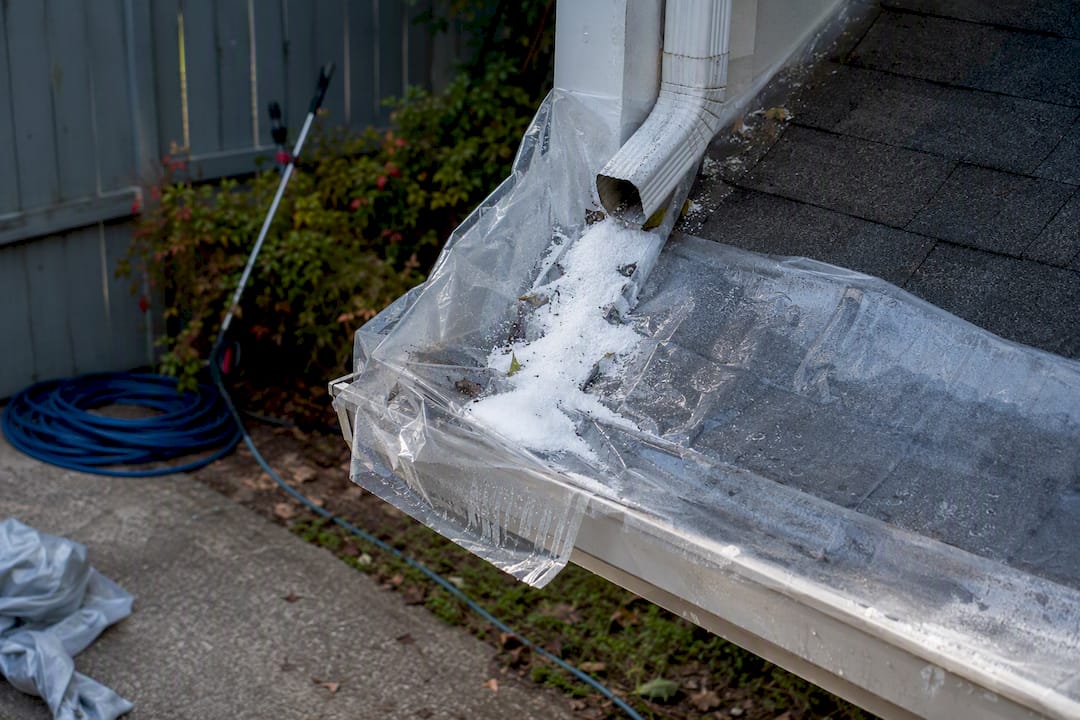
- Redirect gutter downspouts away from garden beds and storm drains before starting, a step the Virginia Cooperative Extension recommends for any exterior cleaning runoff.
- Lay absorbent barriers or temporary berms beneath heavy runoff zones to catch overflow before it spreads.
- Pre-wet sensitive plants and rinse them again afterward to dilute any residue that lands on foliage.
Statistic Callout: Sodium hypochlorite, the bleach used in older-style soft washing, can be acutely toxic to aquatic life at common dilution rates if it reaches storm drains untreated.
Neutralizing agents like sodium thiosulfate can offset chlorine-based runoff where bleach is still in use, though oxygen-based cleaners rarely require this step since they degrade into water and oxygen on their own. Discharging any cleaning runoff directly into a storm drain can trigger NPDES violations in regulated municipalities, and some contractors document their containment steps on the invoice specifically to show compliance with local permitting. Check your municipality’s stormwater rules before a large job, especially if your property drains toward a creek or wetland.
Should You Clean Your Roof Yourself or Hire a Pro?
Cost is usually the first question, and the honest answer is: it depends on roof size, pitch, and how much moss has taken hold. Most homes typically pay an amount within a broad range for a full eco-friendly soft wash, depending on factors such as roof size, pitch, and moss coverage. Steep pitches, multi-story access, heavy moss coverage, and hard-to-reach valleys all push the price toward the top of that range.
DIY is realistic for a single-story ranch with light algae staining and safe ground access. If you go that route:
- Buy an oxygen-based, non-toxic roof washing powder rather than a bleach concentrate.
- Use a low-pressure pump sprayer, not a pressure washer wand, for application.
- Wear eye protection and gloves, and keep pets and kids off wet roofing and walkways.
- Set up basic containment (redirected downspouts, tarps over vulnerable beds) before you spray a drop.
Steep roofs, second stories, and heavy moss are where professionals earn their fee. Licensed contractors carry insurance, know how to contain runoff correctly, and can pair the wash with a rejuvenation treatment that extends the clean look for a year or more, without risking a fall or a warranty dispute.
How Do You Keep a Roof Cleaner for Longer?
A clean roof doesn’t stay that way by accident. Algae and moss return fastest in shaded, damp conditions, so the maintenance that matters most is the boring stuff.
- Trim overhanging tree limbs to cut down shade and let the roof dry faster after rain.
- Clear gutters at least twice a year so trapped moisture doesn’t seep under shingles near the eaves.
- Improve attic ventilation, since trapped heat and moisture underneath the roof deck accelerates growth on the surface above it.
- Consider zinc or copper strips along the ridge line as a preventive measure, though be aware the metal ions that deter algae also wash into gutters and soil over time, so they’re a trade-off rather than a free fix.
Regrowth timelines vary by climate. Shaded, humid regions might see streaking return within a year; drier, sunnier roofs can stay clean for two or three years. A quick DIY spot treatment handles small returning patches; full professional touch-ups make more sense once growth spreads across multiple roof planes.
Why a Trained Soft-Wash Contractor Matters
Anyone with a sprayer can call themselves a roof cleaner. Doing it without stripping granules, killing landscaping, or triggering a warranty dispute is a different skill set, one built over years of jobs, not a weekend course.
Capital Pro Pressure Washing has spent over a decade specializing in soft-wash techniques across the Capital Region, and the process follows a consistent sequence on every job:
Inspect the roof for material type and existing damage, mix the oxygen-based solution fresh for that job, apply it with the correct dwell time, contain and collect runoff before it reaches storm drains or landscaping, neutralize if any chlorine-based product is involved, then do a final walk-around inspection.
Pairing the wash with roof rejuvenation and sealing services extends the clean result well beyond what a one-time wash alone delivers, and contractors offering this combination commonly back it with a service guarantee. For a full breakdown of the local process, see the roof washing service page.
Author: Luis T
When Is the Best Time of Year to Clean a Roof?
Timing changes both the results and the risk. Late spring through early fall gives oxygen-based cleaners the best working conditions, warm temperatures speed the chemical reaction, and longer daylight hours give the roof time to dry fully before evening dew sets back in.
Cleaning in freezing weather is a bad idea for reasons beyond comfort. Water that doesn’t dry before nightfall can freeze in seams and crevices, and ice expansion is a real cause of shingle cracking. Most contractors in colder climates pause exterior cleaning work once nighttime temperatures start dropping below freezing regularly, picking back up again once spring thaw is reliable.
Early spring is often the sweet spot for a different reason: it clears winter grime and the algae bloom that builds up under snow cover before summer heat sets streaking permanently into the shingles. Waiting until late summer means treating months of accumulated growth instead of catching it early.
There’s also a practical scheduling advantage to going early in the season. Roof cleaning demand spikes once warm weather hits, and contractors booking soft-wash jobs get busy fast in peak months. Scheduling in April or May, rather than waiting for a July heat wave, usually means faster availability and gives any accompanying sealing or rejuvenation treatment more dry, mild weather to cure properly before humidity climbs.
What’s the Right Way to Dispose of Roof Cleaning Runoff?
Runoff disposal is where a lot of well-meaning DIY jobs go wrong, not from bad intentions but from not knowing the rules. The core principle: nothing from a roof cleaning job should flow untreated into a storm drain, ditch, or waterway.
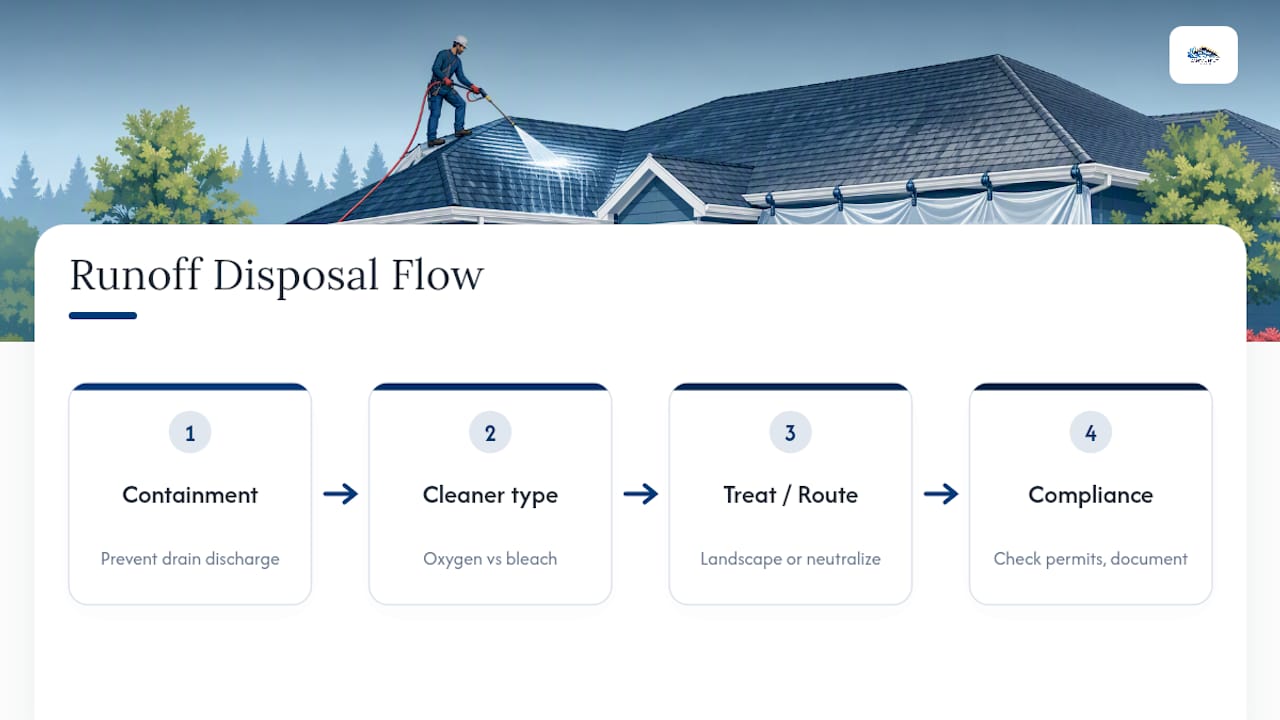
For oxygen-based cleaners, disposal is fairly forgiving since the solution breaks down into water and oxygen within hours. Directing rinse water toward a lawn or permeable landscape area, rather than a paved surface that funnels straight to a drain, is enough in most residential cases. The Virginia Cooperative Extension specifically recommends this landscape-routing approach over allowing runoff to reach pavement and storm systems.
If bleach-based products are involved anywhere in the job, treat the runoff differently. Neutralizing with sodium thiosulfate before it leaves the property reduces the aquatic toxicity risk substantially. Skipping this step is where most environmental violations happen, not from malice, but from assuming “it’s just water with soap in it.”
Commercial properties and larger residential jobs sometimes fall under municipal stormwater permitting, particularly in MS4-regulated areas. Contractors working in these zones often document their containment and neutralization steps directly on the job invoice, both as a compliance record and as proof of a responsible process. Homeowners doing it themselves should check with their local public works department if the property drains toward a creek, wetland, or municipal storm system, since rules vary by county and even by neighborhood drainage zone.
Does Roof Material Change How Eco Friendly Cleaners Perform?
Roofing material matters more than most homeowners expect when picking a cleaning approach. What works safely on one surface can etch or discolor another.
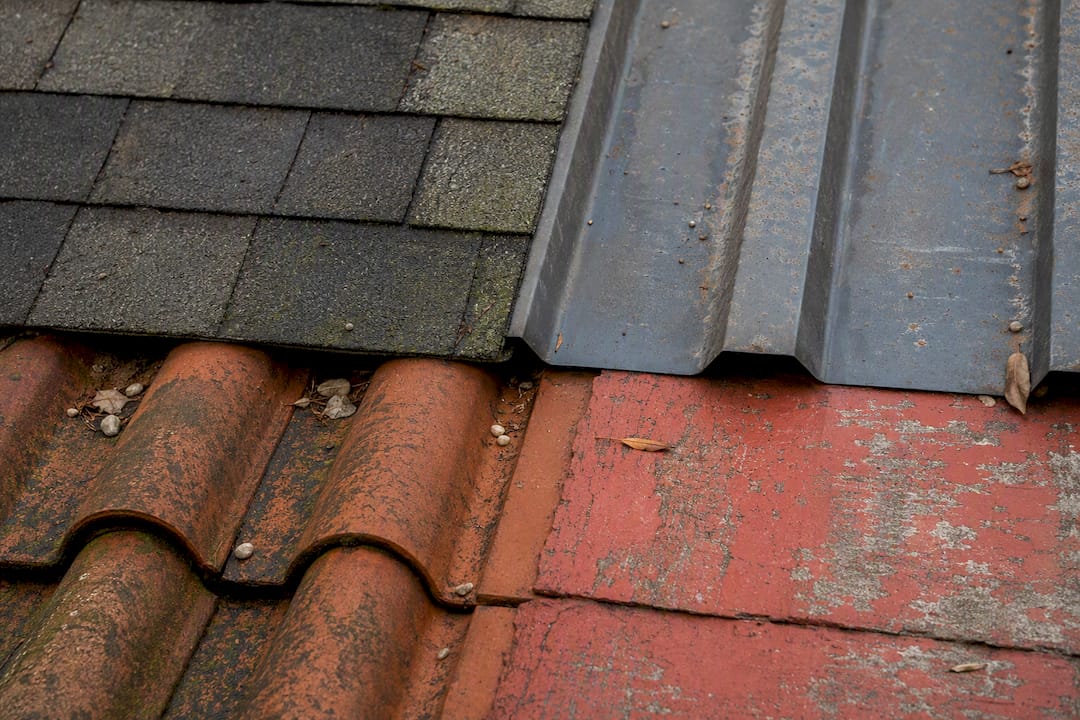
Asphalt shingles handle oxygen-based cleaners well at the recommended dwell times and low-pressure rinse. The main risk isn’t the chemical, it’s excessive water pressure stripping granules, which is the entire reason soft wash exists as a category.
Metal roofing (standing seam, corrugated panels) generally tolerates sodium percarbonate cleaners without issue, though prolonged exposure to any acidic or highly alkaline product can affect certain coated finishes over time. A quick rinse right after the dwell period keeps this from becoming a problem.
Clay and concrete tile are porous enough that oxygen-based cleaners work into surface staining effectively, but grout lines and mortar joints benefit from a gentler dwell time and a thorough final rinse to avoid leaving residue behind.
Painted or coated roofing deserves a spot test before full application. Most eco-friendly formulas are mild enough not to strip finish coatings, but “most” isn’t “all,” and a ten-minute test patch in an inconspicuous corner beats discovering a problem across an entire roof plane.
Wood shake and cedar shingle roofs are the outlier: they’re far more sensitive to both chemical exposure and pressure, and typically call for a more diluted mix and a specialist’s judgment rather than a standard application.
An Editorial Take on Getting This Right
Most homeowners searching for eco friendly roof cleaning are really asking a narrower question: will this hurt my garden, my pets, or my roof warranty? Oxygen-based soft wash answers all three better than the alternatives, and containment is what actually protects your yard, not the “eco” label on the bottle alone. Before hiring anyone, ask about the chemicals, the nozzle pressure, the containment plan, their insurance, and get the warranty in writing.
— Luis T
Hire a Vetted Eco-Friendly Roof Cleaning Service
Capital Pro Pressure Washing runs soft-wash roof cleaning built around the same oxygen-based chemistry and containment practices covered here, paired with roof rejuvenation and sealing to keep results looking sharp long after the first rinse.
Requesting a quote is straightforward: send along your roof’s approximate size, a few photos of the moss or staining you’re dealing with, and any known issues like loose shingles or leak history. That gives the crew everything needed to price the job accurately before anyone shows up. Compared to a generic pressure-washing outfit that shows up with a single high-PSI wand for every surface, Capital Pro Pressure Washing tailors the approach to your specific roof material and runoff situation, which matters more than most homeowners realize until they’ve seen a botched job next door.
Start your request through the roof washing page, and ask specifically about the containment plan and written scope of work before booking.
Sources
- Ecohome — Eco-friendly roof cleaning treatments: the complete guide
- Virginia Cooperative Extension — Best practices for exterior cleaning runoff (SPES-9)
- WashSafe — Roof Wash product and contractor usage overview
FAQ
What Is an Eco-Friendly Moss Killer for Roofs?
An oxygen-based, sodium percarbonate powder is the leading eco-friendly moss killer, breaking down organic growth into water and oxygen rather than leaving toxic residue behind.
How Much Should I Pay to Have My Roof Cleaned?
Most homes typically pay an amount within a broad range for a full eco-friendly soft wash, depending on factors such as roof size, pitch, and moss coverage.
What Are Some Eco-Friendly Roofing Options for Cleaning?
Soft wash with oxygen-based cleaners is the leading eco friendly roof cleaning method, offering low aquatic toxicity and biodegradable breakdown compared to bleach or metal-based algaecides. Capital Pro Pressure Washing applies this method along with containment steps to protect surrounding landscaping.
What Kills Green Mold on a Roof?
Green algae and mold on roofing typically respond to oxygen-based cleaners within one application, since the active hydrogen peroxide oxidizes the organic growth on contact during the 4 to 6 hour active window.
Is Pressure Washing Ever Safe for a Roof?
Pressure washing is rarely recommended for roofing since high PSI strips protective granules and often voids shingle warranties; soft wash at roughly 500 PSI or lower is the safer standard.
Recommended
Services Related To This Article
Need a quote in the Capital Region?
Fast, free estimates from a local, licensed & insured team.
